Imagine a news story breaking not on the front page of a major newspaper, but in a private group chat that quickly spreads to thousands of subscribers across the globe. This is the reality of modern citizen journalism, which relies on independent creators and decentralized networks rather than traditional editorial boards. At the heart of this shift are independent Telegram news channels, which operate as public broadcast entities outside traditional newsrooms, often run by individuals or small collectives. These channels do not work in isolation. They form complex collaboration networks that determine what stories get told, how fast they spread, and who believes them.
If you follow independent news on Telegram, you have likely noticed a pattern. A post appears on one channel, gets forwarded to three others, and suddenly it is everywhere. But behind these simple forwards lies a sophisticated ecosystem of mutual promotion, shared administration, and coordinated content strategies. Understanding these networks is crucial for anyone trying to make sense of today’s fragmented media landscape.
The Mechanics of Connection
To understand how these networks function, we first need to look at the tools available within the platform. Telegram, a cloud-based instant messaging service founded by Pavel Durov in 2013, introduced its Channel feature in September 2015. Unlike groups, which allow two-way conversation, channels are designed for one-to-many broadcasting with unlimited subscribers. This asymmetry creates a unique environment for information distribution.
Collaboration among independent channels relies on four primary technical mechanisms:
- Message Forwarding: When a user or admin forwards a message, the original source is preserved. This acts as an explicit citation, creating a visible link between channels.
- @Mentions: Channels can directly reference other channels using their @username, allowing for easy discovery and cross-promotion.
- Hyperlinks: Direct links to specific posts (using t.me/c/ URLs) enable precise attribution without cluttering the feed.
- Shared Administrators: Many independent channels share the same admins. One person might manage a local news channel, a political commentary channel, and a niche interest group, effectively cross-posting content manually.
Unlike Facebook or X (formerly Twitter), Telegram does not use an algorithmic feed to prioritize content. Posts appear chronologically. This means that if a large channel forwards your post, 100% of its active subscribers see it immediately. There is no "reach decay" caused by an opaque algorithm. This transparency makes every forward a high-value event, incentivizing channels to build reciprocal relationships.
Structural Patterns in Collaboration
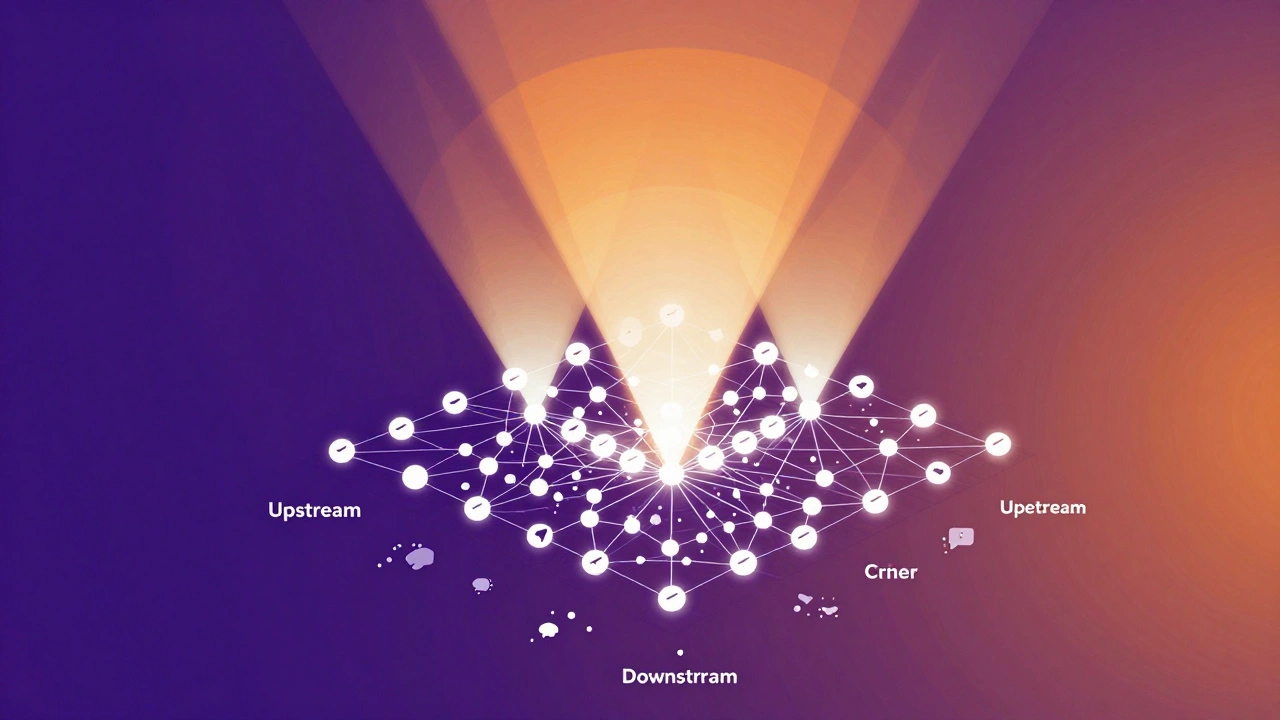
Research into these networks reveals that they are not random. They form structured graphs with distinct roles. Studies of similar ecosystems, such as the UK far-right network analyzed by Álvarez-Benjumea et al. (2022), identify three key community types that also apply to independent news channels:
- Upstream Communities: These are often discussion groups or smaller channels where raw information, rumors, or initial reports emerge. They react to events in real-time but may lack editorial polish.
- Core Communities: Tightly interconnected broadcast channels that form echo chambers. They frequently forward and mention each other, reinforcing shared narratives and establishing agenda-setting power.
- Downstream Communities: High-visibility channels that aggregate content from upstream and core sources. They have large audiences and influence broader public discourse by legitimizing or amplifying specific stories.
In the context of English-language independent news, this structure means that a story might start in a small, anonymous upstream channel, get picked up by a cluster of core political commentators, and finally reach mainstream awareness via a downstream aggregator with hundreds of thousands of subscribers. The collaboration network acts as a filter and amplifier.
| Role | Primary Function | Typical Size | Connection Type |
|---|---|---|---|
| Upstream | Initial reporting, raw data, discussion | Small (1k-10k subs) | High out-degree (many forwards sent) |
| Core | Narrative reinforcement, community building | Medium (10k-100k subs) | Dense internal connections (mutual mentions) |
| Downstream | Aggregation, mass distribution | Large (100k+ subs) | High in-degree (many forwards received) |
The Economy of Mutual Promotion
Why do these channels collaborate? Beyond ideological alignment, there is a strong economic incentive. Independent channels rarely rely on institutional advertising budgets. Instead, they monetize through paid postings and direct donations. Growth is essential for revenue.
This has led to the rise of "mutual PR" arrangements. Two channels with similar subscriber counts agree to promote each other on specific dates. Larger operations organize "PR chains," where 5-20 channels simultaneously post recommendations for one another. This informal advertising economy creates tightly knit subnetworks. If you are part of a PR chain, you are not just sharing an audience; you are signaling trust to your subscribers. In the absence of formal editorial standards, association becomes a proxy for credibility.
However, this system also creates vulnerabilities. If one channel in a collaborative cluster begins spreading misinformation or propaganda, the entire network can be tainted. Conversely, legitimate citizen journalists can gain rapid visibility by being endorsed by established nodes in the network. The barrier to entry is low, but the barrier to trust is high-and collaboration is the bridge.

Cross-Border Flows and Propaganda Risks
One of the most critical aspects of these networks is their ability to transcend borders. Research by the Center for Democracy and Rule of Law (CEDEM) in Ukraine highlights how content from sanctioned Russian propaganda channels penetrates Ukrainian information spaces via independent local channels. Even when direct access to certain channels is restricted (such as the December 2024 restrictions on EU IPs accessing sanctioned Russian channels), the *content* survives through forwarding and copying.
This phenomenon is not limited to geopolitical conflicts. In any polarized environment, independent channels may unknowingly or knowingly amplify narratives originating from foreign actors. The decentralized nature of Telegram makes it resilient to censorship but also difficult to regulate. As noted in studies of Russian media flows (Nedelkoski et al., 2023), Telegram channels can serve as both sources and sinks for information, injecting new topics into mainstream web media while absorbing official narratives.
For readers, this means that a post appearing on a seemingly independent English-language news channel may have originated from a completely different ideological or national context. Tracing the provenance of information requires looking beyond the immediate source to the broader collaboration network.
Implications for Media Literacy
As of 2026, platforms like Telegram continue to grow, with over 700 million monthly active users. In countries like Ukraine, surveys indicate that over 50% of respondents consider Telegram channels their primary news source. This reliance underscores the importance of understanding how these networks operate.
Traditional media literacy skills-checking multiple sources, verifying authorship, and recognizing bias-are still relevant, but they must be adapted for the Telegram ecosystem. Here, "multiple sources" often means checking if a story is being discussed across different clusters of channels, not just different websites. Authorship is frequently anonymous, so reputation is built through consistency and network endorsement rather than byline recognition.
The future of independent news on Telegram depends on balancing openness with accountability. While the platform’s design encourages free flow of information, the lack of algorithmic curation places the burden of verification squarely on the user and the community. Collaboration networks provide efficiency and reach, but they also require vigilance to prevent the spread of coordinated disinformation.
What defines an independent Telegram news channel?
An independent Telegram news channel is operated outside traditional newsroom structures, typically by individuals, small collectives, or activist groups. Unlike institutional channels (e.g., BBC, CNN), they lack formal editorial boards and corporate ownership, relying instead on direct subscriber support and peer collaboration.
How do Telegram channels discover new content?
Since Telegram lacks a global trending algorithm, discovery primarily occurs through explicit forwards, @mentions, and mutual promotion agreements. Users also rely on curated lists and recommendations from trusted channels within their network.
Are Telegram collaboration networks centralized?
No, research indicates they are decentralized and structured into communities. These include upstream discussion hubs, core producer clusters, and downstream aggregators. No single channel controls the entire network, making it resilient to removal of individual nodes.
Can propaganda spread through independent channels?
Yes. Studies show that content from sanctioned or state-aligned sources can enter independent networks via forwards and copied posts. Because many channels are anonymous and financially dependent on engagement, they may inadvertently amplify misleading narratives.
How do independent channels monetize?
Most rely on paid promotional posts, direct donations from subscribers, and occasional affiliate marketing. Mutual promotion networks help increase subscriber counts, which in turn raises the value of paid posting slots.