Have you ever noticed that your Telegram feed feels like it knows exactly what you think? It’s not magic. It’s your own choices, driven by your political beliefs. When you pick which news channels to follow on Telegram, a cloud-based messaging app founded by Pavel and Nikolai Durov in 2013, you aren’t just scrolling; you’re building a mirror of your own worldview. Unlike Facebook or TikTok, where algorithms push content at you, Telegram puts the steering wheel in your hands. You subscribe to what you want. This simple design feature creates a powerful link between your political attitude and the information you consume.
The result is a landscape where right-wing, left-wing, populist, and mainstream users all find their perfect home-but rarely cross paths. Understanding this dynamic is crucial for anyone trying to navigate today’s fragmented information environment. Are you getting the full picture, or just the part that confirms what you already believe?
The Architecture of Choice: Why Telegram Is Different
To understand why political attitudes matter so much on Telegram, you first have to look at how the platform works. Telegram launched its "channels" feature in September 2015. These are one-to-many broadcast tools that allow anyone to post updates to unlimited subscribers. There is no central "For You" page. There is no opaque algorithm deciding what trends. If you want to see news from The New York Times, you must actively search for and subscribe to their channel. If you prefer a far-right commentary channel banned from YouTube, you do the same thing.
This manual curation process means that every channel in your list is a deliberate choice. Research from the Oxford Internet Institute shows that while mainstream news sources like BBC and Reuters still get the majority of views (about 67% among top domains), a significant minority of traffic goes to "junk news" sites-hyper-partisan or conspiracy outlets. Crucially, these junk news views are concentrated in a small number of channels associated with specific political networks. The platform’s lack of algorithmic intervention doesn’t mean neutrality; it means that user intent drives everything.
Consider the technical specs. Telegram stores data on centralized servers, allowing posts to be forwarded instantly across millions of users. As of 2024, the platform has roughly 900 million monthly active users globally. In countries like Russia, Ukraine, and Iran, penetration is incredibly high. But in the United States, only about 2% of adults regularly get news from Telegram. Who are those 2%? They are not a random sample of the population. They are people who have actively chosen an alternative path.
The American Skew: Distrust and the Right Wing
In the U.S., the connection between political attitude and Telegram usage is stark. Pew Research Center data from 2022 reveals that among Americans who get news from "alternative social media" platforms-including Telegram, Gab, and Truth Social-66% identify as Republican or lean Republican. Only 33% lean Democrat. Compare this to Facebook or Twitter, where Democratic users dominate.
Why this skew? It comes down to trust. Among those who use alternative platforms for news, 64% believe major tech companies censor viewpoints they disagree with "a lot." Furthermore, 60% say mainstream news organizations are biased in favor of liberals. For these users, Telegram isn’t just a messaging app; it’s a refuge from perceived censorship. They seek out channels that promise "uncensored" truth. This creates a self-reinforcing cycle: distrust leads to Telegram usage, and Telegram’s open structure allows them to find content that validates that distrust.
However, this isn’t just about partisanship. It’s about ideology. Users with strong anti-establishment or populist attitudes are drawn to anonymous channels that frame themselves as "resistance" media. They often cross-subscribe to multiple ideologically aligned channels, creating a dense information bubble. If you hold conservative views and distrust the mainstream press, you are statistically likely to build a Telegram feed that looks very different from someone who trusts institutional journalism.

Conflict Zones: When Survival Drives Selection
The story changes dramatically when you move away from stable democracies to conflict zones. In Ukraine, following the full-scale Russian invasion in February 2022, Telegram became the primary source of war news. A 2023 study by Journalism Trust for Accountability found that 95.5% of Ukrainian Telegram users were primarily interested in military operations news. Here, political attitude intersects with survival instinct.
Users with pro-government attitudes followed official channels like President Zelenskyy’s or state broadcaster Suspilne News. Those skeptical of the government or leaning toward opposition narratives subscribed to anonymous "insider" channels or even pro-Russian propaganda outlets. The key difference here is issue-driven selection. People weren’t just picking channels based on abstract ideology; they were picking channels based on who they believed was telling the truth about missile strikes and front-line movements. High threat perception drove users to concentrate on fast, tactical updates rather than generalized entertainment.
A similar pattern emerged in Belarus during the 2020 protests against Alexander Lukashenko. The NEXTA Live channel, operated from Poland, surpassed 2 million subscribers. Surveys showed that younger, opposition-minded Belarusians disproportionately selected Telegram over state television. Their anti-authoritarian attitudes made them reject state media and embrace independent Telegram hubs. In these contexts, Telegram serves as a tool for civic mobilization and resistance, but it also deepens the divide between those who support the status quo and those who challenge it.
| Context | Primary Driver | Typical Channel Types | Political Attitude Correlation |
|---|---|---|---|
| United States | Distrust of Mainstream Media | Alternative, Far-Right, Populist | Strongly Conservative/Republican |
| Ukraine (War) | Survival & Real-Time Info | Military Updates, Official, Insider | Pro-Government vs. Skeptical/Opposition |
| Belarus (Protests) | Civic Mobilization | Opposition Hubs, Independent Media | Anti-Authoritarian |
| European Elections | Information Credibility | Official EU Bodies, Disinformation Networks | Pro-EU Integration vs. Euroskeptic |
The European Spectrum: From EU Institutions to Kremlin Propaganda
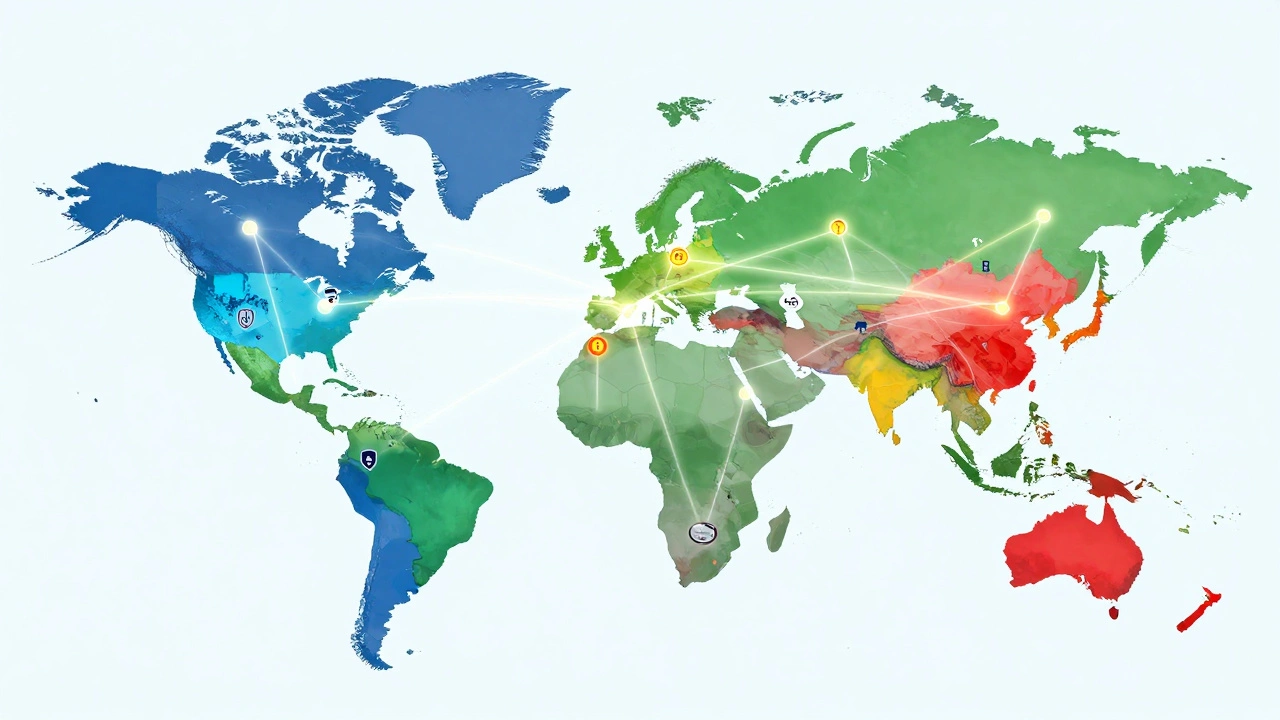
In Europe, the dynamics are more nuanced. Ahead of recent European elections, fact-checking organization CORRECTIV analyzed Telegram’s role. They found that users supportive of European integration tended to follow official channels like the European Parliament (@Europarl_EN) or independent outlets like EUobserver. These users value credibility and institutional transparency.
Conversely, users with Euroskeptic or pro-Russian attitudes were targeted by Kremlin-backed disinformation channels. These channels spread false claims about rigged ballots or compulsory conscription. The platform’s libertarian stance on moderation-founded by Pavel Durov, who emphasizes privacy and resists government pressure-makes it an attractive vector for foreign state actors. Unlike Facebook, which might remove a hate speech post quickly, Telegram often waits until legal orders are received. This lag allows disinformation to spread among receptive audiences before it is taken down.
Yet, Telegram is not monolithic. Left-wing activists in Chile and human rights groups in Iran also use the platform for coordination after domestic platforms are censored. The common thread is not a single political ideology, but a shared distrust of dominant local media ecosystems. Whether you are a right-wing populist in Ohio or an anti-regime activist in Tehran, you turn to Telegram because you feel excluded from the mainstream conversation.
Breaking the Echo Chamber: Can You See Both Sides?
Is it possible to avoid becoming trapped in an ideological silo on Telegram? Yes, but it requires effort. Because there is no algorithm to force diverse content upon you, you must manually curate a balanced feed. Some users, particularly those with moderate or undecided political attitudes, do exactly this. They subscribe to both pro-Kremlin channels like "Solovyov LIVE" and opposition channels like "Meduza Live" to compare narratives. This "triangulation" strategy helps them verify facts and understand conflicting viewpoints.
However, this behavior is rare among highly polarized users. Strong emotional investment in a political cause makes it difficult to engage with opposing views. Instead, users engage in "selective exposure," seeking out channels that confirm their existing beliefs. This is amplified by Telegram’s forwarding feature. When a sensational post gets 1 million views, it spreads rapidly within like-minded communities, reinforcing group identity.
To mitigate this, experts recommend checking for transparent editorial information. Does the channel list its editors? Is it affiliated with a recognized institution? Anonymous channels may offer exciting takes, but they lack accountability. By consciously subscribing to a mix of official, independent, and critical voices, you can break the echo chamber effect.
The Future: Regulation and Monetization
As Telegram grows, so does scrutiny. The European Union’s Digital Services Act (DSA) is pressuring platforms to improve moderation of extremist content. While Telegram’s classification under the DSA is still being debated, regulators in Germany and France have threatened fines over failure to remove election disinformation. This could change the landscape. Stricter enforcement might push extremist communities to even more obscure platforms, reducing their reach. Or, it might drive users with anti-system attitudes deeper into Telegram, viewing moderation as proof of censorship.
Monetization is also evolving. With the launch of Telegram Premium in June 2022 (priced at $4.99/month in the U.S.), the platform is introducing paid reactions and sponsored posts. This professionalizes some news channels, especially mainstream ones, while leaving smaller extremist channels reliant on cryptocurrency donations. This financial divide may further separate credible journalism from radical propaganda.
Does Telegram have an algorithm that pushes political content?
No. Unlike Facebook or TikTok, Telegram does not use a personalized recommendation algorithm for its main feed. Users must explicitly subscribe to channels. This means your feed is entirely curated by your own choices, making it highly reflective of your personal political preferences.
Who uses Telegram for news in the United States?
In the U.S., Telegram news users are a small minority (about 2% of adults). However, they skew significantly to the right. Pew Research found that 66% of news consumers on alternative platforms like Telegram lean Republican, driven by high levels of distrust in mainstream media and perceptions of censorship.
Is Telegram safe for finding unbiased news?
It depends on which channels you follow. Telegram hosts both reputable outlets like BBC and Reuters, and unverified "junk news" channels. Because there is no algorithmic filtering, you are responsible for verifying sources. Look for channels with transparent editorial teams and institutional affiliations to ensure credibility.
How does Telegram usage differ in conflict zones like Ukraine?
In conflict zones, Telegram becomes a critical tool for real-time survival information. Users select channels based on immediate needs, such as missile alerts or military updates. Political attitudes still influence selection, with pro-government users following official channels and skeptics turning to independent or opposition sources.
Can I avoid echo chambers on Telegram?
Yes, but it requires intentional effort. Since the platform doesn’t force diversity on you, you must manually subscribe to a variety of sources, including those with opposing viewpoints. Practicing "triangulation"-comparing narratives from official, independent, and critical channels-helps provide a more complete picture.