Why Telegram Groups Beat Channels for News Loyalty
Most news organizations use Telegram channels to push out headlines. That’s easy. But if you want people to stick around, care deeply, and even defend your reporting when others doubt it-you need something more. You need a Telegram discussion group.
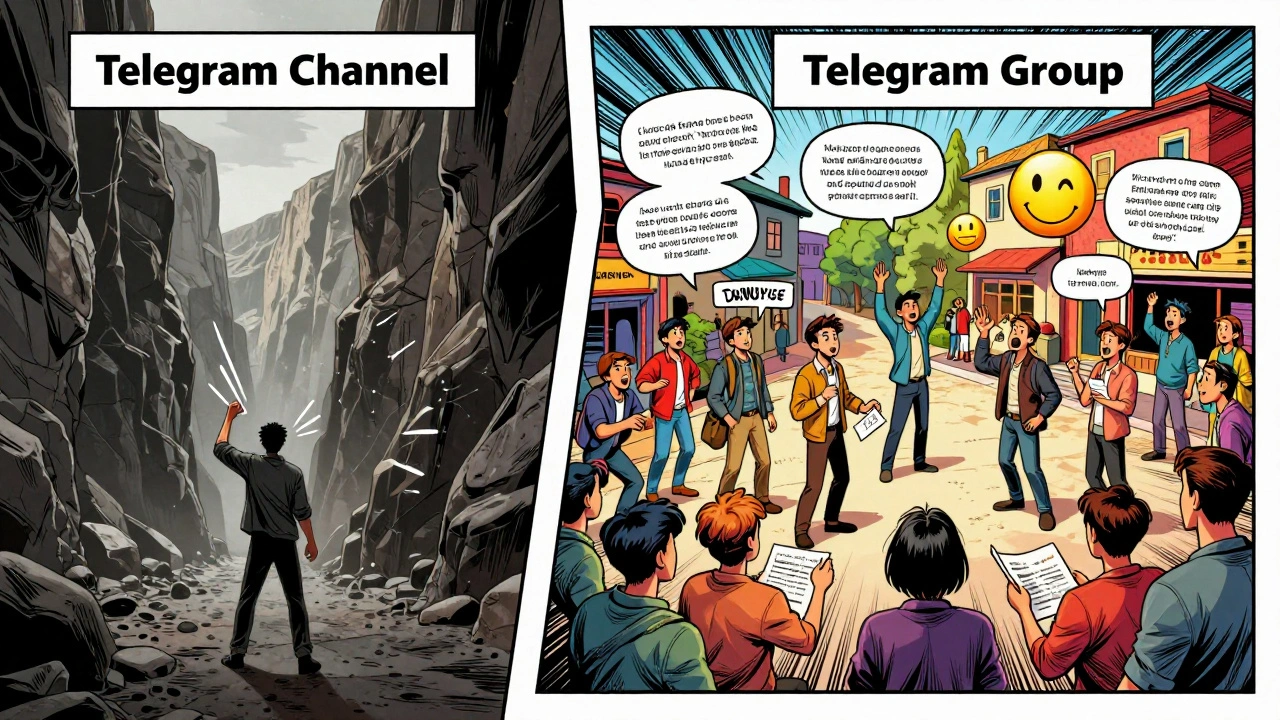
Channels are one-way streets. You broadcast. Subscribers read. Then they move on. No replies. No questions. No connection. It’s like shouting into a canyon and hoping someone hears you. Groups? That’s a town square. People talk back. They argue. They share personal stories. They ask experts for clarification. And that’s where loyalty is born.
According to Reuters Institute, news consumers in Telegram groups have 47% higher retention than those only following channels. Why? Because when you let people contribute, they don’t just consume news-they feel ownership over it. A Reddit user in r/Telegram summed it up: “I unsubscribed from three news channels but stayed in their groups because the discussions help me understand complex issues better.” That’s not a coincidence. That’s psychology.
How Telegram Groups Actually Work (And Why They’re Different)
Telegram groups can hold up to 200,000 members. That’s huge. But unlike channels, every member can post. They can share articles, videos, polls, voice notes, even memes. And they do. A news group isn’t just a place to read updates-it’s a live forum where readers dissect what they’ve seen.
Take The Financial Times. After launching Topic Threads in January 2026, their news group saw 27% more engagement. Why? Because now, instead of one chaotic flood of messages, users can discuss “U.S. Election Polls” in one thread, “Fed Rate Decisions” in another, and “Climate Policy” in a third. It turns chaos into clarity.
Compare that to a channel. A channel might get 500,000 followers, but only 2% of them ever react. In a group, even with 50,000 members, 20% might comment, ask questions, or vote in polls. That’s not just engagement-it’s conversation. And conversation builds trust.
The Trust Factor: Why People Believe News More in Groups
Pew Research found that 75% of people who get news on Telegram expect it to be mostly accurate. But here’s the kicker: those who participate in group discussions are even more likely to trust the source.
Columbia Journalism School’s 2025 study showed that 63% of group members said they trusted news sources more when they could see unfiltered conversations between readers and journalists. Why? Because transparency builds credibility. When a journalist replies to a skeptical comment-“Here’s the source for that claim”-it’s not just an answer. It’s a demonstration of accountability.
On Twitter or Facebook, algorithms bury posts. On Telegram, nothing gets hidden. If someone asks, “Is this true?” and five other people chime in with facts, links, or personal experiences, the truth doesn’t need a boost. It rises on its own. That’s why Trustpilot reviews for news organizations using groups average 4.3/5 stars-compared to 3.7/5 for channel-only users. The difference? Real dialogue.
How to Start a Telegram News Group (Step by Step)
Starting a group isn’t hard. But doing it right takes planning. Here’s how:
- Create the group and name it clearly: “Daily Briefing - Community Discussion” (not “News Updates”).
- Set rules right away: No spam. No hate speech. No unverified rumors. Post sources. Be respectful. Pin them.
- Invite your most engaged channel followers-the ones who always reply or share your posts. They’re your first community.
- Assign moderators. Find 3-5 active members who understand your standards. Let them delete spam, answer basic questions, and flag bad actors.
- Start with a weekly Q&A. Every Thursday, post: “What’s one thing you didn’t understand this week?” Answer it live. Or record a short voice note. People love hearing from real people.
- Use polls. “Do you think this policy will help or hurt?” “Which source do you trust most?” Simple questions spark debate-and keep people coming back.
North Penn Now surveyed 127 newsrooms. Those that followed this routine saw group retention jump by 35% in the first three months.
The Hidden Cost: Moderation Isn’t Optional
Here’s the truth nobody wants to admit: Telegram groups can turn toxic fast if you don’t manage them.
MPI-SP’s July 2025 research found that some news groups deleted 95% of propaganda. Others deleted less than 20%. The difference? Staff. Dedicated moderators. Time. Resources.
If you’re a small outlet and you think “we’ll just let people talk,” you’re setting yourself up for failure. Misinformation spreads 3.2 times faster in unmoderated groups, according to cybersecurity expert Anya Petrova. A false claim about an election or a health crisis can go viral before you even notice.
Don’t rely on bots alone. They catch obvious spam, but not nuanced lies. You need humans who know your audience, your tone, and your standards. Start small. Train one person to monitor the group for two hours a day. Use Telegram’s built-in tools: ban users, mute for 24 hours, restrict sending stickers or links. It’s not censorship-it’s stewardship.
When Groups Don’t Work (And How to Fix It)
Not every group thrives. Here are the three most common failures-and how to fix them:
- Too noisy: If your group has over 50,000 members and no structure, meaningful conversation drops by 40%. Fix it: Create subgroups. “Local News,” “Policy Deep Dives,” “Fact Check Corner.” Keep the main group for announcements and big discussions.
- No interaction: You post a story. Silence. Fix it: Don’t just post links. Ask a question. “What surprised you most?” “Who should be held accountable?” Give people a reason to respond.
- Only you talk: If the group feels like a channel in disguise, people leave. Fix it: Stop being the star. Hand the mic to readers. Let them share their experiences. Invite local experts to join for live chats.
ArtLink, an art news group, was dying until they started hosting weekly artist Q&As. Within six months, referrals from the group increased by 40%. People didn’t just read-they became ambassadors.
What’s Next for Telegram News Groups
Telegram is rolling out AI-powered moderation tools in Q3 2026. That’s huge. Right now, moderators spend hours deleting hate speech and false claims. Soon, AI will flag them automatically, letting humans focus on nuance-like identifying satire, context, or coded language.
Reuters Institute predicts that by 2027, 75% of major newsrooms will have dedicated community teams. That’s not a luxury anymore. It’s infrastructure-like copy editors or fact-checkers.
Independent journalists are already using groups to fund their work. In 2025, 45% of successful crowdfunded journalism projects in the U.S. used Telegram groups as their main engagement tool. Why? Because loyal readers don’t just donate-they recruit others.
Final Thought: Loyalty Isn’t Measured in Subscribers
You can have 1 million channel followers. But if only 10,000 of them ever react, you’re not building loyalty. You’re broadcasting.
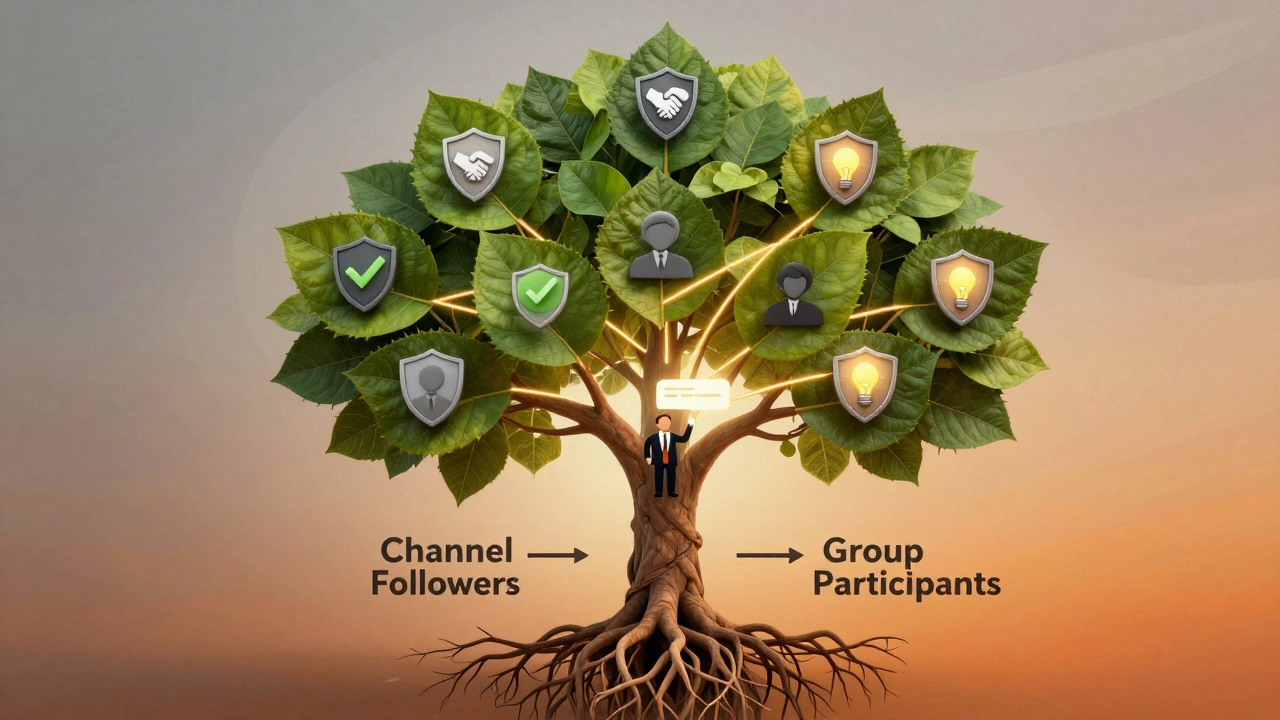
Telegram groups turn readers into participants. Participants become advocates. Advocates bring friends. Friends become loyalists. And loyalists? They’re the ones who defend your reporting when others attack. They’re the ones who tell their family, “You need to read this.”
It’s not about going viral. It’s about going deep. And that’s where real influence begins.