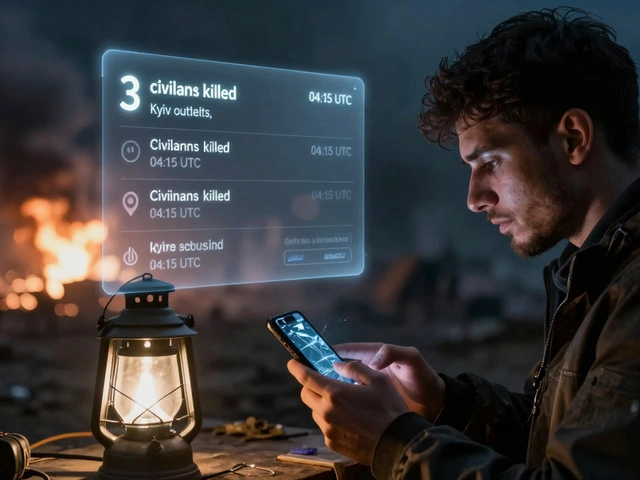
When the internet goes dark, when news outlets are silenced, and when governments block every major social platform, people still find a way to speak. In Russia, Ukraine, Iran, Venezuela, and beyond, that way is often Telegram. It’s not the flashiest app. It doesn’t have filters or trending reels. But it’s the one place where a video of a protest, a report from a war zone, or a whistleblower’s leaked document can reach hundreds of thousands - sometimes millions - before the censors even notice.
Why Telegram Works When Other Platforms Fail
Most social media platforms play by the rules set by governments and advertisers. Twitter (now X) hides posts behind algorithms. Facebook and Instagram delete content that violates vague community guidelines. WhatsApp locks everything behind end-to-end encryption, making it useless for public discovery. Telegram? It’s different. It lets anyone create a public channel with unlimited subscribers. You don’t need to join. You don’t need to follow. You just open the link, and the story is right there. This isn’t accidental. Telegram was built for freedom - not just privacy, but access. Its cloud-based system stores messages across servers in multiple countries. Even if one government demands content be taken down, the same post might still be live on servers in Dubai, Singapore, or Germany. That’s why, during Russia’s invasion of Ukraine, Ukrainian journalists used Telegram to bypass state media blackouts. One channel went from 10 followers to over 1,000 in days after posting footage of a missile strike. No algorithm boosted it. No influencer shared it. People just passed the link around.Who’s Using Telegram for News - and Where
Telegram isn’t popular everywhere. It’s dominant in places where information is controlled. According to TGStat data from February 2026, its biggest audiences are in Russia and Iran, followed by India, Uzbekistan, Belarus, Kazakhstan, and Venezuela. In Russia, 47% of urban residents under 35 now get their news primarily from Telegram, per a December 2025 Levada Center poll. In Iran, during the 2022-2023 protests, Telegram was the only app that kept working when the government shut down Instagram and WhatsApp. In Venezuela, journalists use Telegram to expose corruption that local media can’t touch. One reporter told Trustpilot in January 2026: “Without Telegram, we couldn’t report on Maduro’s corruption - local media is censored, but Telegram channels reach 200k+ people instantly.” In Hong Kong, pro-democracy channels grew to over 50,000 members during the 2019 protests. In Belarus, activists used Telegram to share protest locations after all other apps were blocked by Lukashenko’s regime. These aren’t fringe groups. They’re journalists, students, doctors, and ordinary citizens who’ve learned that Telegram is the last open window.
How Journalists Actually Use It
You can’t just post on Telegram and expect people to find you. Unlike Twitter, where hashtags and trending topics drive visibility, Telegram relies on manual sharing. A journalist in Kyrgyzstan might discover a channel reporting on mining corruption by following a link shared in a WhatsApp group. Then they’ll use tools like TGStat to track how many subscribers the channel has, how many views each post gets, and how fast it’s growing. TGStat is the unsung hero here. It’s not made by Telegram. It’s built by independent developers who reverse-engineered the app’s public data. Journalists use it to monitor protests in real time. If a channel in Russia suddenly spikes from 5,000 to 50,000 subscribers in 24 hours, it’s a red flag - something big is happening. Before Russia’s full-scale invasion of Ukraine in 2022, analysts used TGStat to spot unusual growth in military-related channels. That data helped predict the timing and scale of the attack. Telegram’s search function is terrible. You can’t type “Ukraine war updates” and get results. Instead, journalists rely on @mentions in groups, curated lists shared on Reddit, and word-of-mouth networks. Some even run bots that scrape public channels for keywords like “arrest,” “protest,” or “bombing.” It’s messy. It’s manual. But it works.The Dark Side: Criminals and Disinformation
Telegram’s openness is a double-edged sword. The same features that help journalists also help criminals. Cybercriminals use Telegram to sell stolen data, distribute malware, and coordinate attacks. According to Bitdefender’s February 2026 report, Telegram is “the dominant messaging platform in the cybercriminal underground.” And it’s not just crime. AI-generated disinformation is flooding the platform. A Pulitzer Center investigation by Nucleo found 83 bots on Telegram that use AI to create fake images and videos - including deepfake child abuse material. These bots operate in plain sight, often disguised as news channels. One channel with 120,000 subscribers was sharing AI-generated photos of “Ukrainian soldiers torturing civilians.” The images looked real. They were all fake. This isn’t just noise. It’s erosion. When people can’t tell what’s true, they stop believing anything. That’s what authoritarian regimes want. And Telegram, by design, doesn’t filter it out.
The Crackdown Is Coming
In August 2025, Telegram’s founder, Pavel Durov, was arrested in France. The reason? Authorities accused him of refusing to cooperate with investigations into illegal content on the platform. His arrest sent shockwaves through the digital rights community. For years, Telegram had been seen as a defiant bastion of free speech. After the arrest, things changed. Bitdefender reported that Telegram “relaxed its policy on responding to abuse reports,” meaning it started complying with more government takedown requests. In February 2026, Telegram removed over 2.8 million groups and channels - but never explained why. Some were criminal. Some were activist. Some were news outlets. Now, journalists are worried. If Telegram starts removing channels based on government pressure, what happens to the stories that need to be told? In Iran, activists have already seen channels disappear overnight. In Russia, independent media channels are being labeled “extremist” and banned. The platform is caught in a trap. To stay legal, it must moderate. To stay useful, it must stay open.What This Means for the Future of News
Telegram isn’t replacing traditional journalism. It’s bypassing it. When governments shut down newspapers, TV stations, and radio, Telegram becomes the new wire service. It’s not perfect. It’s chaotic. It’s full of lies and fear. But it’s alive. For now, it’s still the only platform where a single post from a citizen in a war zone can reach a global audience before the state can silence it. Forrester Research predicts Telegram’s news channel ecosystem will grow 15% year-over-year through 2027 - mostly in countries where press freedom is shrinking. The question isn’t whether Telegram will keep growing. It’s whether we’ll still be able to trust what’s on it. As AI gets better at faking reality, and governments get better at pressuring platforms, the line between truth and manipulation will blur. Journalists will need new tools. Audiences will need new skills. And Telegram? It’ll keep running - because it was never meant to be safe. It was meant to be free.Why can’t governments shut down Telegram like they do with other apps?
Telegram stores data across servers in multiple countries, making it hard for any single government to block or delete content. Unlike apps like WhatsApp or Signal, which are tied to one company’s infrastructure, Telegram’s cloud-based system spreads data globally. Even if Russia blocks Telegram locally, users can still access it through VPNs or mirrored channels hosted elsewhere.
Is Telegram safer than WhatsApp for sharing sensitive news?
It depends. WhatsApp encrypts messages end-to-end by default, making them private and unreadable by anyone - including WhatsApp. But you can’t share news publicly on WhatsApp. Telegram offers both: private Secret Chats (like WhatsApp) and public channels (unlike WhatsApp). If you want to broadcast news to thousands, Telegram is the only option. But if you’re sending a confidential tip, use Secret Chat - not a public channel.
How do journalists find reliable Telegram channels?
They use tools like TGStat to track subscriber growth, post views, and posting frequency. Channels that grow fast, post consistently, and cite sources are more likely to be trustworthy. Journalists also cross-check stories with other outlets, satellite imagery, or verified eyewitness accounts. Many rely on trusted networks - like GIJN’s community guides - to vet channels before sharing them.
Can Telegram be trusted to protect journalists’ identities?
Not always. Telegram doesn’t hide your phone number by default. If you use your real number, authorities can link your activity to your identity. Many journalists use burner numbers or virtual numbers to post. They also avoid posting from their home IP address - using public Wi-Fi or VPNs instead. Still, Telegram doesn’t offer the same anonymity tools as Tor or Signal. It’s a tool, not a shield.
What’s the biggest risk of using Telegram for journalism?
The biggest risk is being caught in a crackdown. After Pavel Durov’s arrest in 2025, Telegram started removing channels more aggressively. A channel that was safe yesterday might be banned today without warning. Journalists now assume their content could vanish at any moment. That’s why many archive posts, use backups, and share content across multiple platforms - Telegram is just one piece of their toolkit.
Will Telegram keep growing as a news platform?
Yes - but not because it’s better. It’s growing because alternatives are disappearing. In countries where governments ban Facebook, Twitter, and YouTube, Telegram is often the last app standing. As press freedom declines globally, Telegram’s role as a news lifeline will only become more critical - even if its reliability gets worse.