When your phone has only 50MB of data left for the month and the internet in your town barely loads a webpage, how do you stay informed? For millions of people in emerging markets, the answer isn’t a news website. It’s Telegram.
Telegram isn’t just another messaging app. It’s become a lifeline for news in places where traditional online media fails. In rural parts of Nigeria, remote villages in the Philippines, and informal settlements across Latin America, people rely on Telegram to get real-time updates - from election results to weather warnings - without draining their limited data. And it works because Telegram was built differently from the start.
Why Telegram Works When Other Sites Don’t
Most news websites are heavy. They load banners, pop-ups, videos, tracking scripts, and complex layouts - all of which eat up data. In low-bandwidth areas, that means endless loading circles, half-loaded pages, or just plain failure. Telegram doesn’t do that. It delivers news as messages. Text. Simple. Clean. No ads. No tracking. No bloat.
Think of it this way: when you open a news site, your phone downloads 2MB of stuff to show you a 200-word article. On Telegram, you get the same article in 15KB. That’s over 90% less data. For someone paying $0.10 per MB, that difference is everything.
Telegram’s cloud-based architecture stores content on its servers, not your device. So when you open a news channel, you’re not downloading a whole webpage - you’re pulling just the text and media you choose to view. And if your connection drops? The message waits. When you reconnect, it loads instantly. No refresh needed.
How News Channels Replace News Websites
Telegram channels are the backbone of this system. A news organization creates one public channel - like @NaijaNews or @LatAmAlert - and pushes updates directly to subscribers. No website to build. No app to download. No CMS to maintain. Just a link you share once, and it works forever.
These channels can have up to 200,000 members. That’s bigger than most local newspapers’ circulation. And because the channel is public, anyone can find it using Telegram’s built-in search. Type “weather updates” or “election results,” and relevant channels pop up - no Google required. In places where search engines are slow or blocked, this is huge.
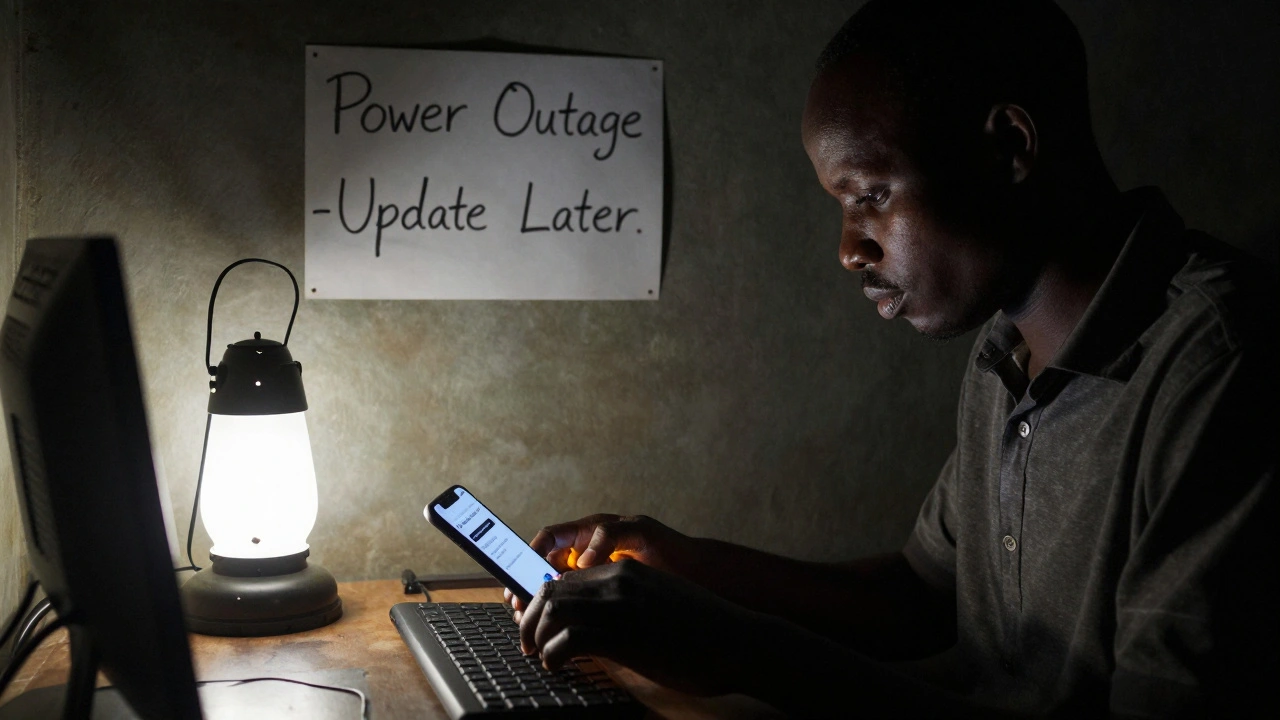
Journalists in Kenya, for example, use Telegram to broadcast breaking news during power outages. They send short text updates first. Later, when connectivity improves, they add photos or audio clips. The audience gets the news fast - even if it’s just a few lines. Then they get the full story when they can.
Mobile-First, Not Mobile-Friendly
In emerging markets, smartphones aren’t just the main device - they’re often the only device. Most people don’t have computers. They don’t have home Wi-Fi. But nearly everyone has a phone, even if it’s a $50 Android model from five years ago.
Telegram is built for this. It runs smoothly on low-end hardware. It uses minimal RAM. It doesn’t need constant updates. And it works offline: once you’ve opened a channel, you can scroll through past messages even with no internet. That’s something no news website can do.
Compare that to a news app that requires constant syncing, background updates, and login prompts. Telegram doesn’t care. You open it. You read. You close it. No login. No account. No hassle.
How News Gets Paid For - Without Credit Cards
One of the biggest hurdles for news in low-income regions has always been monetization. How do you charge people $1 a month when most don’t have credit cards or bank accounts?
Telegram solved this with Telegram Stars. It’s a native digital currency you can earn, buy, or send inside the app. News channels can now offer premium content - like exclusive reports, audio briefings, or early alerts - and get paid directly through Stars. Subscribers pay with their phone balance, not a card. No PayPal. No Stripe. No international fees.
This has turned small independent journalists into sustainable publishers. In Indonesia, a local fact-checking channel now earns over $200 a month from Stars alone. That’s enough to hire a part-time reporter. In Bolivia, a rural radio station uses Stars to fund its daily news updates. These models wouldn’t exist without Telegram’s built-in payment system.
What About Video and Images?
You might think: “If data is tight, how can they send videos?” The answer is flexibility.
Telegram lets publishers choose what to send based on network conditions. During a blackout or slow connection, they send text. Later, when the network improves, they upload a video summary - and users can download it on demand. The video doesn’t auto-play. It doesn’t consume data unless the user clicks.
Some channels even split content: a headline and summary go out first. The full video, PDF report, or audio file comes later. This tiered approach keeps the flow going, even in the worst conditions.
Real Examples from the Field
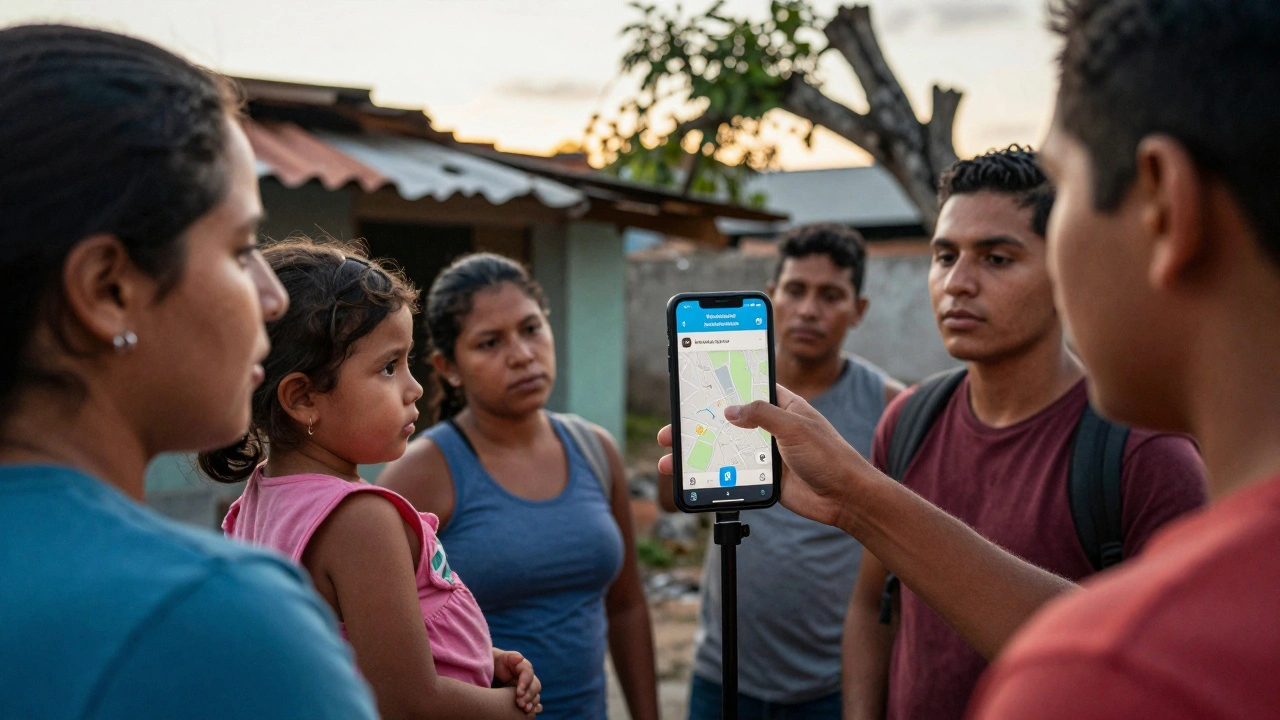
In Venezuela, where internet outages last days, independent journalists use Telegram to distribute daily news bulletins. One channel, @VerdadVZ, has over 120,000 subscribers. It started as a WhatsApp group. When WhatsApp banned mass messaging, they moved to Telegram - and grew 10x.
In India’s rural north, community radio stations now broadcast via Telegram. Farmers get weather alerts. Women’s cooperatives share market prices. Local NGOs post health tips. All without a single website.
In the Philippines, after typhoons hit, Telegram becomes the primary news source. Government agencies, NGOs, and citizen reporters all post updates there. It’s faster than radio. More reliable than Facebook. And it works even when cell towers are down - as long as one nearby phone has signal.
Limitations? Yes. But They’re Manageable
Telegram isn’t perfect. It requires a phone number to sign up. That’s a barrier in places where SIM cards are expensive or ID requirements are strict. Some channels spread misinformation because moderation is decentralized. And in countries like Iran or Russia, Telegram has been blocked - forcing users to rely on VPNs, which use even more data.
But here’s the thing: no platform is flawless. Facebook doesn’t work without high-speed data. WhatsApp can’t handle large groups anymore. Twitter (X) is full of bots and paywalls. Telegram’s flaws are outweighed by its core strength: it delivers news with the least amount of data, the fewest barriers, and the most reliability.
The Bigger Picture
Telegram’s 1 billion users aren’t just in Europe or North America. Half of them are in Asia, Africa, and Latin America - places where internet infrastructure is weak, but mobile penetration is high. That’s not a coincidence. It’s design.
Telegram didn’t set out to be a news platform. But its architecture - cloud-based, lightweight, channel-driven, and payment-enabled - made it the perfect tool for the job. News organizations didn’t have to rebuild. They just had to start posting.
For millions, Telegram isn’t an app. It’s the newsroom. The radio station. The bulletin board. The only way to know what’s happening - without spending their last dollar on data.
Can Telegram work without an internet connection?
Telegram doesn’t work without any connection, but it’s designed to handle interruptions. Once you’ve opened a news channel, your device caches recent messages. You can scroll through them offline. New messages sync automatically when you reconnect. This makes it far more reliable than websites, which need constant connectivity to load anything.
Is Telegram safer than WhatsApp for news?
Both apps use end-to-end encryption for private chats, but Telegram’s public channels are not encrypted by default - they’re meant to be open. That’s actually an advantage for news: anyone can find and join a channel. For personal messages, both are secure. For broadcasting news, Telegram’s public channels are more accessible and scalable, which is why journalists prefer them.
Do you need to download a separate app to use Telegram for news?
Yes, but it’s a small, free app available on Android, iOS, and desktop. It’s under 50MB to install and runs smoothly on older phones. Most users already have it. If not, it takes less than a minute to download and set up - far faster than installing a news app or bookmarking a website.
Can small local news outlets afford to use Telegram?
Absolutely. Setting up a Telegram channel takes five minutes and costs nothing. No hosting fees. No developers. No ads to manage. Many small outlets in Nigeria, Nepal, and Peru started with just one person using a phone. Some now earn money through Telegram Stars, turning their channel into a sustainable business without ever building a website.
How do people find news channels on Telegram?
Through Telegram’s built-in search. Just type keywords like “local news,” “weather,” or “election updates,” and relevant public channels appear. No Google. No bookmarks. No links shared via text. This makes discovery easy even for people who don’t use search engines.
Latest Posts