When the power goes out and cell towers stop working, people don’t stop needing news. In places where roads are damaged, internet is patchy, or governments shut down platforms, Telegram has become one of the last reliable ways to get urgent updates. From rural villages in Central Asia to conflict zones in Eastern Europe, millions rely on it-not because it’s perfect, but because there’s nothing better. But what happens when even Telegram starts to slow down? The answer isn’t just technical. It’s human.
Why Telegram Survives Where Other Platforms Fail
Telegram launched in 2013 with a simple promise: fast, encrypted messaging that works even on weak networks. Unlike Facebook or WhatsApp, it doesn’t force you to use your real name. It doesn’t require a phone number to join a channel. And unlike local apps that lock you into state-controlled systems, Telegram lets anyone broadcast news without permission. In places like Syria, Sudan, or parts of Ukraine, this freedom isn’t a luxury-it’s survival. In 2025, Russia began testing limits on Telegram’s multimedia features. By February 2026, the government had rolled out targeted throttling: videos, voice notes, and group calls slowed to a crawl. Photos took minutes to load. Audio messages vanished. But text? Text still moved. That’s because regulators didn’t block Telegram-they broke its most useful parts. They didn’t cut the line; they made the pipes too narrow for anything heavy. This wasn’t random. It was calculated. Telegram’s strength in infrastructure-constrained regions comes from its ability to carry rich media over unstable connections. A soldier in a trench sends a 30-second video showing enemy drone positions. A nurse in a besieged town uploads a photo of running out of insulin. A community group shares a voice note with evacuation routes. When those functions fail, the entire flow of information breaks.The Real Cost of a Slowdown
Most people think of Telegram as a messaging app. But in places with broken infrastructure, it’s a newsroom, a hospital triage system, and a military command center-all in one. When the platform slows, the ripple effects are measurable. Independent journalists in Russia reported that verification times for user-submitted videos jumped from 15 minutes to over 4 hours. Why? Because they had to wait for files to upload. They had to retry. They had to find alternative ways to confirm locations and timestamps. That delay meant stories missed deadlines. Emergency alerts got delayed. Families couldn’t confirm if loved ones were safe. Nonprofit groups that use Telegram to coordinate aid deliveries saw their workload spike. A team in Belgorod, near the Ukrainian border, told reporters they had to hire two extra staff members just to manage the backlog of delayed messages. One aid worker said, "We used to send a single voice note with coordinates. Now we send five text updates, a Google Maps link, and a photo-each one taking 10 minutes to load. We’re not saving lives faster. We’re just working harder." Even military units felt the strain. Three Russian soldiers, speaking anonymously on a Telegram channel, posted a video plea: "We use Telegram to warn each other about drone strikes. If we can’t send video, we can’t show where the threat is. We’re flying blind." Governor Vyacheslav Gladkov of Belgorod openly worried that the slowdown could cost lives. "I’m concerned that the slowdown could impact the delivery of operational information to you if the situation worsens," he said. He wasn’t talking about politics. He was talking about a siren that doesn’t ring.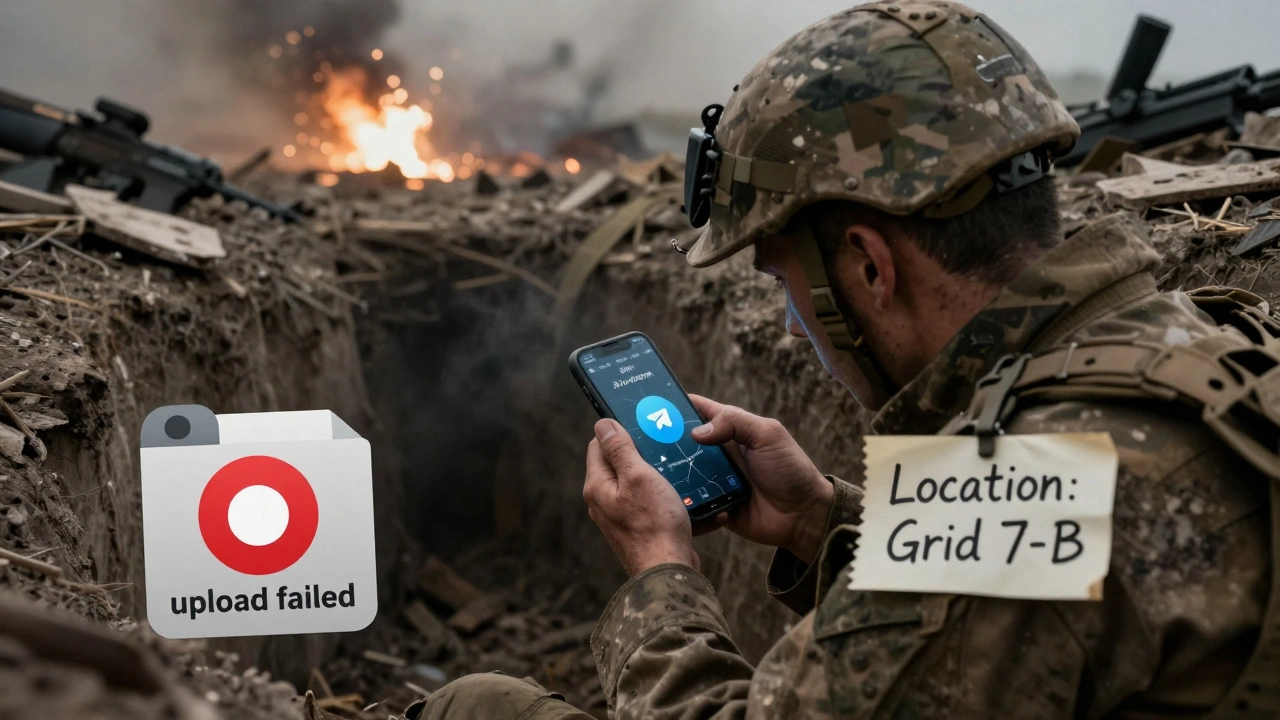
What Happens When There’s No Alternative
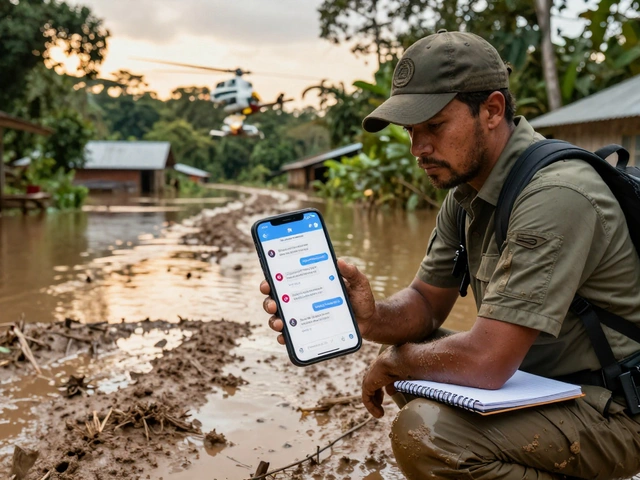
In places with weak infrastructure, people don’t have the luxury of switching platforms. There’s no backup. No cloud storage. No fiber-optic fallback. If Telegram slows, you’re stuck. Some organizations tried to move to local apps-state-approved messaging tools that integrate with public services. But those apps came with trade-offs. They required government ID. They logged every location. They handed metadata to authorities. One human rights group in Chechnya reported that after switching to a domestic platform, two volunteers were arrested based on message timestamps and location pings they didn’t know were being stored. Others turned to VPNs. But VPNs need stable internet to work. And in places where the network is already struggling, adding encryption layers made things worse. A study by the Digital Resilience Lab found that in 78% of cases, using a VPN to bypass Telegram throttling reduced connection speeds by another 40%. That meant users were trading one delay for another. The result? A growing patchwork of workarounds. People now send the same message three ways: a text update, a photo via email, and a voice note through a different app. They rely on friends with better connections to relay messages. They use SMS when they can. They post on local bulletin boards. It’s messy. It’s inefficient. But it’s what keeps them alive.Telegram Isn’t the Problem-Control Is
The Russian government didn’t shut down Telegram. They throttled it. That’s the key difference. Blocking a platform is loud. It’s obvious. Everyone knows they’re being censored. But throttling? It looks like a glitch. A bad connection. A slow server. It’s harder to protest. Harder to organize. Harder to prove. This method-targeting media-rich features while leaving text intact-is becoming a global playbook. Governments in Iran, Myanmar, and Sudan have used similar tactics. They don’t need to ban Telegram. They just need to make it unreliable enough that people give up. The deeper issue is centralization. Telegram’s servers are in one place. Its app updates come from one store. Its routing is controlled by one company. When a government pressures that single point, the whole system shudders. In infrastructure-constrained regions, there’s no redundancy. No backup network. No alternative route. The system was never designed to handle this kind of pressure. Compare that to decentralized tools like Matrix or Briar-messengers built to work offline, over Bluetooth, or through mesh networks. They’re slower to adopt. Less polished. But they don’t rely on a single company’s servers. They don’t break when a regulator flips a switch.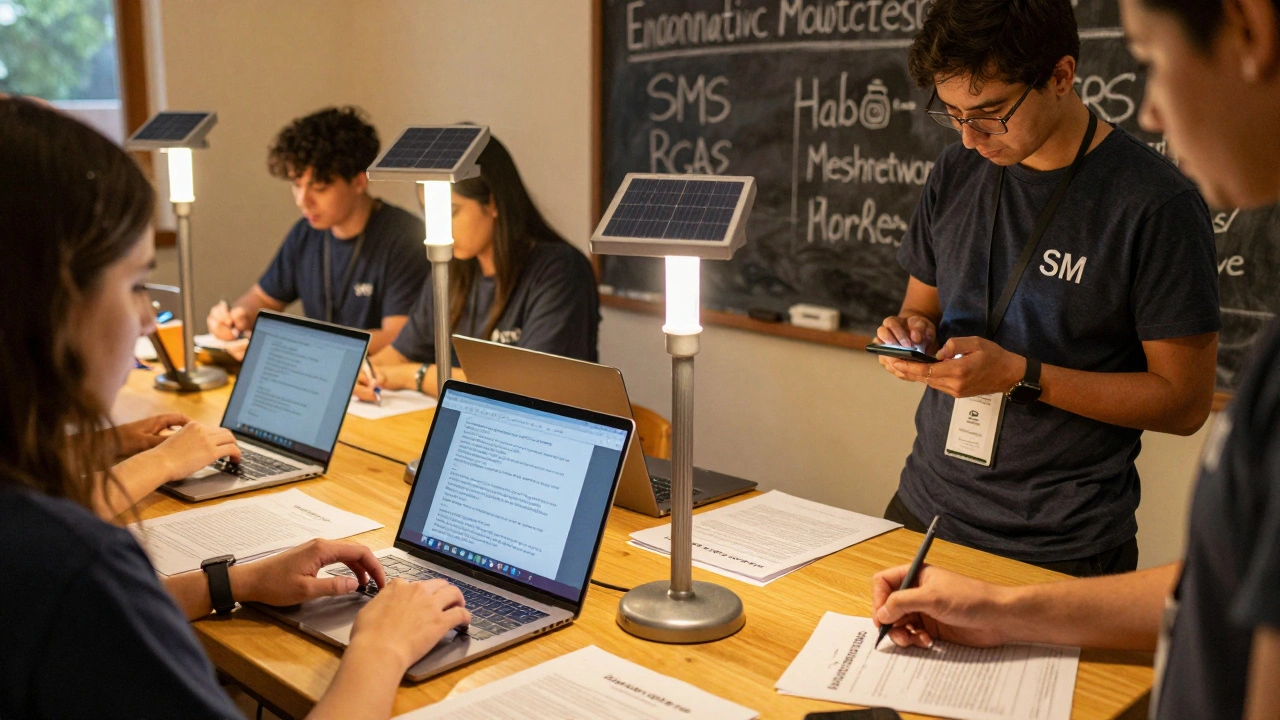
Measuring the Impact: Beyond Likes and Shares
You can’t measure Telegram’s impact in these regions with metrics like "engagement" or "clicks." Those numbers mean nothing when a hospital can’t get a message about medicine shortages. Instead, real impact is measured in:- How long it takes to verify a video from a conflict zone
- How many emergency alerts are delayed or lost
- How many extra staff hours are spent just sending the same message three times
- How many people switch to less secure platforms out of desperation
- How often families go hours without knowing if their loved ones are alive
What Comes Next?
The future of news in infrastructure-constrained regions won’t be shaped by big tech companies. It’ll be shaped by communities who adapt, improvise, and build their own tools. Some are already doing it. In Ukraine, local groups are testing offline-capable apps that store messages on phones and sync when they’re near each other. In Sudan, activists are using solar-powered Wi-Fi hotspots to relay Telegram messages between villages. In rural Indonesia, elders are teaching teenagers how to use SMS-based alert systems as backups. The lesson is clear: when infrastructure fails, resilience comes from redundancy. Not from one app that does everything. But from multiple ways to send the same message. Telegram showed us what’s possible when a single tool fills a critical gap. But it also showed us how dangerous that dependency is. The next generation of communication tools won’t be built for speed. They’ll be built for survival.Why can’t people just use WhatsApp or Facebook in these regions?
In many infrastructure-constrained regions, WhatsApp and Facebook are either blocked by governments or require stable internet that simply doesn’t exist. WhatsApp depends on phone numbers and data-heavy media, which often fail on weak networks. Facebook requires registration and real identities-something people avoid in conflict zones. Telegram, by contrast, allows anonymous channels, works on low-bandwidth connections, and doesn’t require personal details. It’s not perfect, but it’s often the only option left.
Can Telegram be completely shut down in these areas?
Complete shutdowns are rare because Telegram uses decentralized servers and encryption. Governments can’t easily block it like they do with local apps. Instead, they use throttling-slowing down videos, voice notes, and calls-while leaving text messaging functional. This creates confusion, frustration, and distrust without triggering mass protests. It’s a quieter, more effective way to control information.
How do people in these regions cope when Telegram slows down?
People use workarounds: sending the same message via SMS, email, Bluetooth, or in person. They rely on friends with better connections to relay updates. Some use VPNs, though those often slow things further. Others switch to local apps, but those usually come with surveillance risks. The most resilient communities are building their own offline systems-using mesh networks, solar-powered hotspots, or printed bulletins as backups.
Is Telegram still the best option for news in these areas?
It’s the most widely used, but not necessarily the best. Its centralized design makes it vulnerable to government interference. In places where reliability matters more than convenience, decentralized tools like Briar or Matrix are gaining traction. These tools work without internet, sync over Bluetooth, and don’t rely on a single company. They’re harder to use, but they’re harder to break. The future belongs to tools that don’t need a server to function.
What’s the long-term solution for news delivery in these regions?
The long-term solution isn’t one app. It’s redundancy. Communities need multiple, low-tech ways to share information: SMS, radio, printed flyers, mesh networks, and offline messaging apps. Governments and NGOs should invest in tools that work without power or internet-not just faster internet. Resilience isn’t about bandwidth. It’s about backup paths. When one system fails, another must be ready to take over.