When breaking news hits, where do millions of people turn first? Not Twitter. Not Facebook. Not even Google News. For a growing number of global audiences, the answer is Telegram. Major newsrooms-from BBC to Reuters to The New York Times-have quietly built massive, loyal audiences on this app, not because it’s trendy, but because it works. And if you’re trying to understand how news is changing, you need to see how these organizations use Telegram differently than any other platform.
Why Telegram? It’s Not About Virality
Most publishers chase algorithms. They tweak headlines for Instagram, fight for visibility on Twitter/X, and beg YouTube to promote their videos. Telegram doesn’t care about any of that. It’s a broadcast tool. Once you subscribe to a channel, you get every update-no filtering, no hiding, no shadowbanning. That’s why BBC News has over 1.2 million subscribers on Telegram. Not because it’s flashy. Because it’s reliable. Think about it: when a war breaks out, a stock crashes, or a political scandal explodes, social media floods with rumors. Telegram stays clean. Newsrooms post verified updates, often within minutes. No comments. No replies. Just facts. That’s why Reuters, known for its no-nonsense reporting, uses Telegram to send out real-time market shifts, diplomatic moves, and breaking events with zero fluff. Their channel doesn’t try to go viral. It tries to be accurate.Who’s Doing It Right? Real Examples
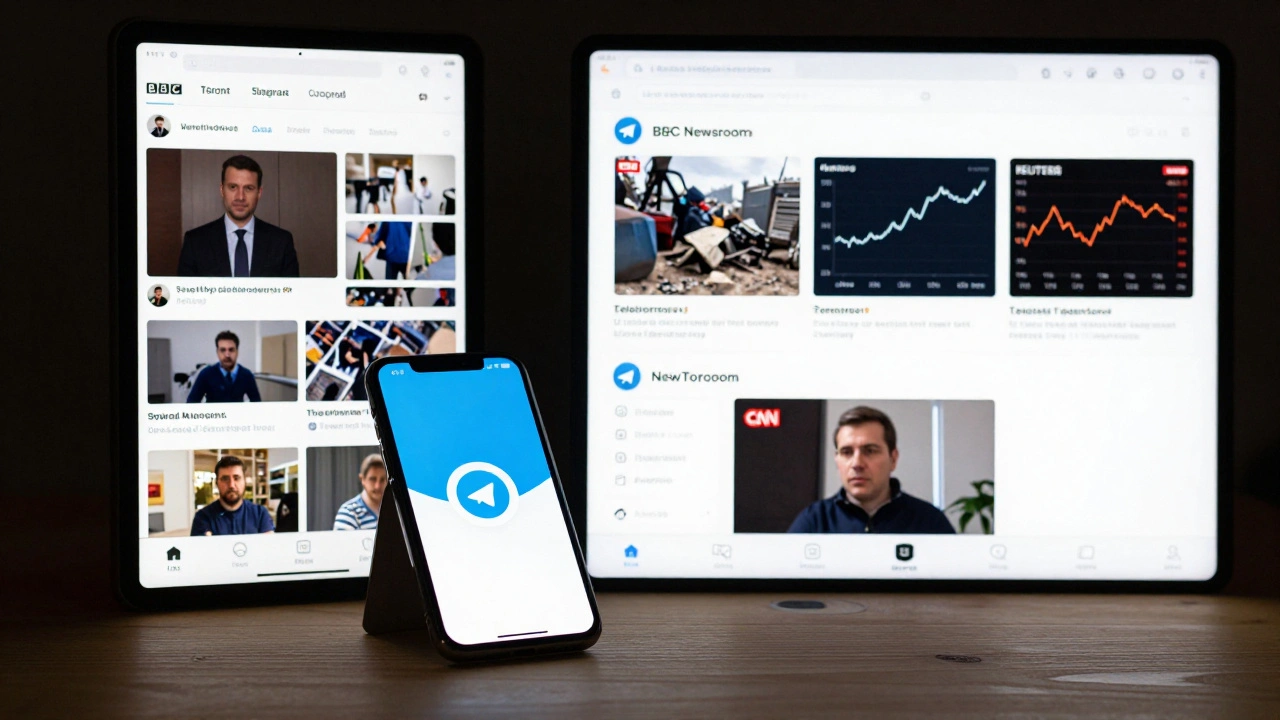
Let’s look at who’s winning on Telegram-and how.- BBC News: Posts multiple times a day with short summaries, photos, and embedded videos. Their tone is calm, balanced, and sourced. They don’t chase clicks. They build trust. Their channel is a go-to for people in Europe, Africa, and Asia who need neutral reporting.
- Reuters: Focuses on financial data, corporate moves, and global policy. Their Telegram updates often include charts, economic indicators, and quotes from official sources. If you’re an investor or policy analyst, this is your morning briefing.
- The New York Times: With 191,000 subscribers, they send three top stories daily. Each post includes a short headline, a one-sentence summary, and a direct link to the full article. No clickbait. Just quality journalism, delivered like a newsletter-but faster.
- CNN International: Uses video clips, live streams, and on-the-ground footage. Their Telegram channel feels like a 24/7 newsroom feed. Perfect for people on the move who need visuals, not just text.
- Al Jazeera English: Offers perspectives you won’t find on Western outlets. They cover conflicts in the Middle East, Africa, and South Asia with depth. Their audience includes journalists, diplomats, and expats who want context beyond headlines.
- RT News: With 194,000 subscribers, it’s one of the most active channels. Posts hourly. Covers geopolitics, sanctions, and global power shifts. Whether you agree with their stance or not, their consistency is undeniable.
Then there are the niche players. War Monitor has 134,000 subscribers just for conflict updates. Insider | News | Politics | USA hits 2.5 million by focusing on U.S. politics, crypto, and viral trends. These aren’t traditional newsrooms-but they’ve mastered Telegram’s format: fast, visual, and hyper-focused.
How They Structure Their Content
It’s not just what they post. It’s how.- Length matters: Posts are short. Usually under 200 words. If you need more, you click the link.
- Visuals are mandatory: Every post includes at least one image, video, or graphic. Text-only updates get ignored.
- Links drive traffic: Every update ends with a direct link to the full article on their website. This keeps their SEO, ad revenue, and analytics intact.
- Timing is tactical: BBC posts at 7 a.m. and 7 p.m. London time. Reuters sends updates during market hours. RT posts every hour, on the hour. They’re not guessing-they’re optimizing for when their audience is awake.
Some channels even use Telegram’s built-in features. They tag updates with emojis (🚨 for breaking, 💰 for finance, 🌍 for global) so subscribers can scan quickly. Others use pinned messages to highlight key stories or FAQs. It’s minimal, but effective.
Why This Strategy Works-And Why Other Platforms Don’t
Social media is a maze. You post, and the algorithm decides if anyone sees it. Telegram? You post, and your subscribers see it. No middleman. No pay-to-play. No shadowban. This matters most in places where internet access is restricted. In Russia, Iran, or Sudan, Telegram is often the only way to get uncensored news. Newsrooms use it to reach audiences that other platforms can’t. A journalist in Kyiv can send a video update via Telegram that reaches a reader in Tehran-without being blocked. It’s also cheaper. Setting up a Telegram channel takes five minutes. No app development. No server costs. No ad tech. Just a phone number and a content plan. Compare that to building a mobile app. Or running a TikTok ad campaign. Telegram gives newsrooms a direct line to their audience-without spending a dime on marketing.The Trade-Offs
It’s not perfect. Telegram channels don’t have comments. You can’t reply. You can’t ask questions. You can’t debate. That’s intentional. Newsrooms don’t want chaos. They want control. But it also means they lose feedback loops. They don’t know what readers care about-unless they track link clicks. Also, Telegram’s user base is smaller than Facebook’s. It’s not a mass-market tool. It’s a niche one. But that’s the point. The subscribers who join are already interested. They’re not passive scrollers. They’re active seekers. And then there’s the issue of credibility. Not all Telegram channels are trustworthy. Some are bots. Some are propaganda. That’s why major newsrooms stand out-they bring their editorial standards with them. They don’t sensationalize. They don’t exaggerate. They verify.
What You Can Learn
If you’re running a media project, a blog, or even a company newsletter, here’s what the top publishers teach us:- Build direct relationships. Don’t rely on algorithms.
- Keep it short. People are busy. Respect their time.
- Use visuals. Even if you’re text-based, add one image per post.
- Link back to your main site. Don’t abandon your home base.
- Be consistent. Post at the same time, every day. Train your audience.
- Specialize. Don’t try to cover everything. Pick one angle and own it.
Telegram isn’t replacing websites or apps. It’s supplementing them. Think of it as a live ticker tape-fast, simple, and always on.
What’s Next?
In 2026, Telegram is no longer a fringe app. It’s a news infrastructure. More publishers are launching region-specific channels: one for Latin America, one for Southeast Asia, one for Eastern Europe. Some are even testing AI-assisted summaries to auto-generate posts from their articles. The lesson? The future of news isn’t about going viral. It’s about going direct.Are Telegram news channels trustworthy?
Yes-if they’re run by established newsrooms. BBC, Reuters, The New York Times, and Associated Press maintain the same editorial standards on Telegram as they do on their websites. They fact-check, cite sources, and avoid sensationalism. But not all Telegram channels are legitimate. Always check the publisher’s official website to confirm the channel is authentic. Look for a verified badge and cross-reference with their social media.
How do I find official news channels on Telegram?
Search for the official name of the outlet followed by "News" or "Channel"-for example, "BBC News" or "Reuters News". Official channels usually have a green checkmark next to the name. Avoid channels with vague names like "World News Today" or "Breaking News 24/7"-these are often unverified. You can also find links to official Telegram channels on the publisher’s website, usually in the footer or social media section.
Can I comment or interact with newsrooms on Telegram?
No. Telegram channels are one-way broadcasts. You can’t reply, ask questions, or start discussions. If you want to engage, visit the publisher’s website, Twitter/X, or newsletter. Some newsrooms run separate Telegram groups for community discussions, but those are different from their main news channels.
Why do newsrooms use Telegram instead of WhatsApp?
WhatsApp is designed for private, group chats. Telegram is built for public broadcasting. Newsrooms need to reach thousands-or millions-of people at once. Telegram channels support unlimited subscribers, media-rich posts, and permanent archives. WhatsApp limits group sizes and doesn’t allow public discovery. Telegram is the only platform that lets publishers broadcast like a TV channel, but to individual phones.
Do Telegram channels replace websites?
No. They complement them. Telegram delivers quick updates, but websites host full articles, archives, videos, and interactive tools. Newsrooms use Telegram to drive traffic back to their main site. That’s where they earn ad revenue, collect subscriptions, and build long-term relationships. Telegram is the hook. The website is the home.