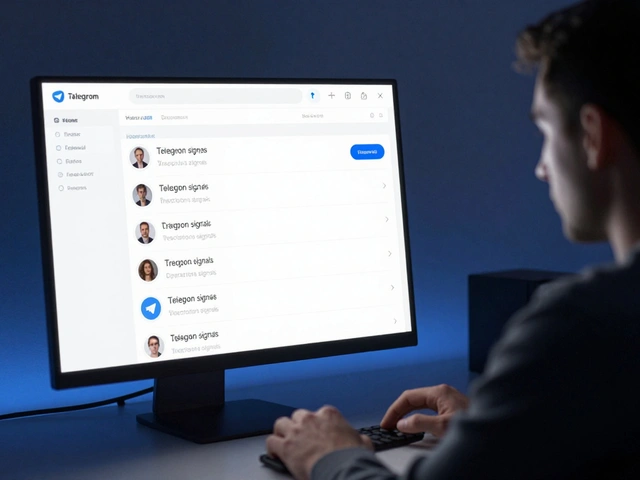
Why Newsrooms Need Auto-Reply Rules on Telegram
Telegram has become the go-to platform for news organizations to reach audiences directly. With over 900 million active users as of early 2026, it’s where people go for breaking updates, fact checks, and subscription info. But here’s the problem: Telegram doesn’t offer auto-replies for channels. That means every time someone asks, "Is this story true?" or "How do I subscribe?", a human has to respond. And when a major event breaks-elections, natural disasters, international conflicts-that’s hundreds, sometimes thousands, of identical questions flooding the channel.
Newsrooms that ignore this bottleneck waste hours of editorial time. Reporters who should be verifying sources are stuck replying to the same five questions over and over. That’s where auto-reply rules come in. They’re not just a convenience-they’re a necessity for keeping your audience informed without burning out your team.
How Auto-Reply Systems Work on Telegram
Since Telegram doesn’t build auto-replies into its platform, newsrooms use third-party tools that connect to Telegram’s Bot API. These tools act like middlemen: they listen for specific keywords in messages, then send back pre-written answers instantly. Think of it like a digital receptionist that never sleeps.
To set it up, you first create a bot using @BotFather on Telegram. Then you connect it to a service like Trengo, Respond.io, or ControlHippo. These platforms let you type out responses for common questions-like "Where can I find your correction policy?"-and link them to trigger phrases. When someone types "correction" or "update" or "fact check," the bot replies with your exact wording. No human needed.
The system runs on webhooks, which are like silent alarms that trigger when a message arrives. The bot checks the incoming text against your rules, matches the keywords, and sends the right reply in under two seconds. Cloud-based services handle the heavy lifting, so you don’t need a server or tech team to keep it running.
Top Platforms for Newsroom Auto-Replies
Not all tools are made the same. Here’s what the top newsrooms are using in 2026:
| Platform | Price per User/Month | Best For | Key Strength | Limitation |
|---|---|---|---|---|
| ControlHippo | $35 | Small to mid-sized newsrooms | Pre-built news templates, easy setup | Limited analytics, no sentiment detection |
| Respond.io | $65 | Large outlets with multilingual audiences | Dialogflow integration, 82% accuracy on non-English queries | Expensive, steeper learning curve |
| Trengo | $49 | Newsrooms using multiple channels (WhatsApp, Instagram) | Omnichannel support, CMS integrations | Minimum 3-user plan required |
| AutoResponder for Telegram (open-source) | Free (premium $9.99) | Tech-savvy teams with dev resources | Fully customizable, no vendor lock-in | Requires coding knowledge, no support |
Al Jazeera’s Arabic service saw a 73% satisfaction rate after switching to Respond.io because it could handle questions in Arabic, English, and French without manual translation. The Washington Post cut routine inquiries by 47% using ControlHippo’s news-specific templates. For smaller outlets, the free open-source option works-if you have someone who can tweak the code.

What to Auto-Reply With: Common Newsroom FAQs
Your auto-replies need to be clear, accurate, and aligned with your editorial standards. Here are the top five questions newsrooms automate-and how to answer them well:
- "Is this story true?" → "This report has been verified by our fact-checking team. Source: [link to verification page]. We update this article as new info emerges."
- "How do I subscribe?" → "Subscribe to our newsletter at [link]. Premium members get ad-free access and exclusive briefings. No paywall on breaking news."
- "Can you correct this?" → "We’ve updated this article with a correction. View changes here: [link]. We take accuracy seriously and correct errors promptly."
- "Why didn’t you cover this?" → "Our editorial team prioritizes stories based on impact, reach, and verified sources. We cover [topic] when evidence meets our standards. Learn more about our process: [link]."
- "Is this breaking news?" → "Yes. This is a developing story. We’re updating every 30 minutes. Follow this channel for live updates. Do not share unverified claims."
Notice the pattern? Each answer includes a clear action, a source, and a tone that builds trust. Avoid robotic phrases like "Thank you for your inquiry." News audiences want directness, not corporate fluff.
Big Mistakes Newsrooms Make (And How to Avoid Them)
Auto-replies aren’t set-and-forget. Many newsrooms stumble in three key areas:
- Over-automating complex questions. A user asking, "Why did you report this politically?" isn’t looking for a canned reply. That’s a conversation. Always include a human escalation path-like "Reply ‘human’ if you’d like to speak to an editor." About 63% of newsrooms now do this, per a 2025 WAN-IFRA survey.
- Ignoring message limits. Telegram caps bots at 30 messages per second. During a major event, if 100 people ask the same question at once, your bot might crash. The BBC solved this by building a queue system that delays replies by 20 seconds if volume spikes. You can copy their open-source code.
- Using vague triggers. If you set "subscribe" as a trigger, someone typing "I want to subscribe to your newsletter" will trigger it. But what if they type "how to pay" or "membership"? Use regular expressions or phrase variations. ControlHippo lets you add synonyms like "pay," "join," "membership," and "premium" to one rule.
Also, never auto-reply with links to internal documents that require login. Always use public-facing pages. If your correction policy is behind a paywall, your reply will frustrate readers instead of helping them.
Legal and Ethical Considerations
Automating responses isn’t just a tech issue-it’s a legal one. The European Data Protection Board issued new guidance in February 2025 requiring newsrooms to clearly label automated replies. Your bot must say something like: "This is an automated response. For human assistance, reply ‘help’."
And here’s the bigger concern: over-reliance on bots can create echo chambers. A 2025 Nieman Lab study found that when a major European outlet automated replies to political questions, audience dissatisfaction rose 18%. People felt like they were being brushed off. The fix? Limit automation to factual, non-opinion questions. Leave interpretation, context, and criticism to humans.

Getting Started: A 5-Step Plan
You don’t need a tech team to launch this. Here’s how to begin:
- Create a bot by messaging @BotFather on Telegram and typing "/newbot". Save the API token.
- Choose a platform based on your budget and team size. ControlHippo is the easiest for beginners.
- Map your top 5 FAQs from your channel’s message history. Look for repeats over the last 30 days.
- Write clear, concise replies that match your brand voice. Include links to public pages.
- Test it by having a colleague send test messages. Then monitor for 48 hours. Adjust triggers if replies are too broad or too narrow.
Most teams get this up and running in under 10 hours. The first week is the hardest. After that, your team will have hours back every day.
What’s Next? AI and the Future of News Bots
By mid-2026, the best systems are starting to use AI to write replies automatically. Trengo’s new AI-Powered FAQ Builder analyzed 12,000 past messages from The Washington Post and generated accurate responses with 89% accuracy. Respond.io now pulls real-time fact-checks from databases and tacks them onto replies.
But the future isn’t about replacing humans. It’s about letting humans do what they do best-investigate, explain, and connect. Auto-replies handle the noise. Journalists handle the truth.
Frequently Asked Questions
Can I use Telegram auto-replies for private groups?
No. Telegram’s Bot API only works with public channels and public groups. Private groups require manual moderation. If you’re running a members-only news group, you’ll need to respond to questions yourself or use a different platform like Discord with bot integrations.
Do auto-replies count toward Telegram’s message limits?
Yes. Every auto-reply counts as one message. Telegram allows bots to send up to 30 messages per second. If your channel gets more than 30 questions in a second, your replies may be delayed or dropped. Use queue systems or cooldown periods during major events to avoid this.
How do I track if auto-replies are working?
Most platforms like ControlHippo and Respond.io offer built-in analytics. Look for metrics like: number of replies sent, percentage of recurring questions reduced, and how many users asked for a human after an auto-reply. If over 20% of users reply with "human" or "help," you’re over-automating.
Can I auto-reply in multiple languages?
Yes, but only with platforms that support NLP and language detection. Respond.io’s Dialogflow integration can detect if a message is in Spanish, Arabic, or French and reply in the same language. ControlHippo and Trengo can do this too, but only if you manually set up separate rules for each language. Don’t rely on machine translation-always have a native speaker review the replies.
What happens if Telegram changes its API?
Telegram has a strong track record of keeping its API stable, but changes are possible. In 2025, Pavel Durov announced new moderation policies that could affect bot behavior. Always choose platforms that offer API update alerts and have a history of quick fixes. ControlHippo and Respond.io both have dedicated engineering teams monitoring Telegram’s updates daily.
Latest Posts