Telegram’s AI Summaries Are Changing How News Teams Work
On January 3, 2026, Telegram rolled out a quiet but powerful update: AI-powered summaries for every post in news channels. For journalists, editors, and newsrooms, this wasn’t just another feature-it was a game-changer. Suddenly, a 3,000-word report from a conflict zone could be boiled down to its core facts in under a second. No more scrolling. No more skimming. Just the truth, fast.
This isn’t magic. It’s engineering built on privacy-first principles. Telegram’s AI doesn’t send your posts to a cloud server. Instead, it runs on Cocoon, a decentralized network designed to process AI tasks without storing or exposing user data. For reporters covering sensitive stories in authoritarian regimes, that’s not a bonus-it’s essential. If your source’s identity is tied to a leaked document, you don’t want that document ever touching a third-party server. Cocoon keeps it locked inside the app.
Instant View Got Smarter, Not Just Faster
Telegram’s Instant View feature has been around since 2017, turning messy web articles into clean, readable pages. But the 2026 update turned it into a newsroom tool. Now, when a news channel posts a link, Telegram doesn’t just format it-it summarizes it. The AI pulls out key names, dates, quotes, and outcomes with 92.7% accuracy, based on tests using Reuters and Associated Press content.
That’s not just convenient. It’s critical for breaking news. A reporter in Kyiv can send a raw update from the front lines. Within seconds, their audience gets a distilled version: who was affected, what happened, where, and when. No waiting for a press release. No confusion from fragmented tweets. Just clarity, delivered instantly.
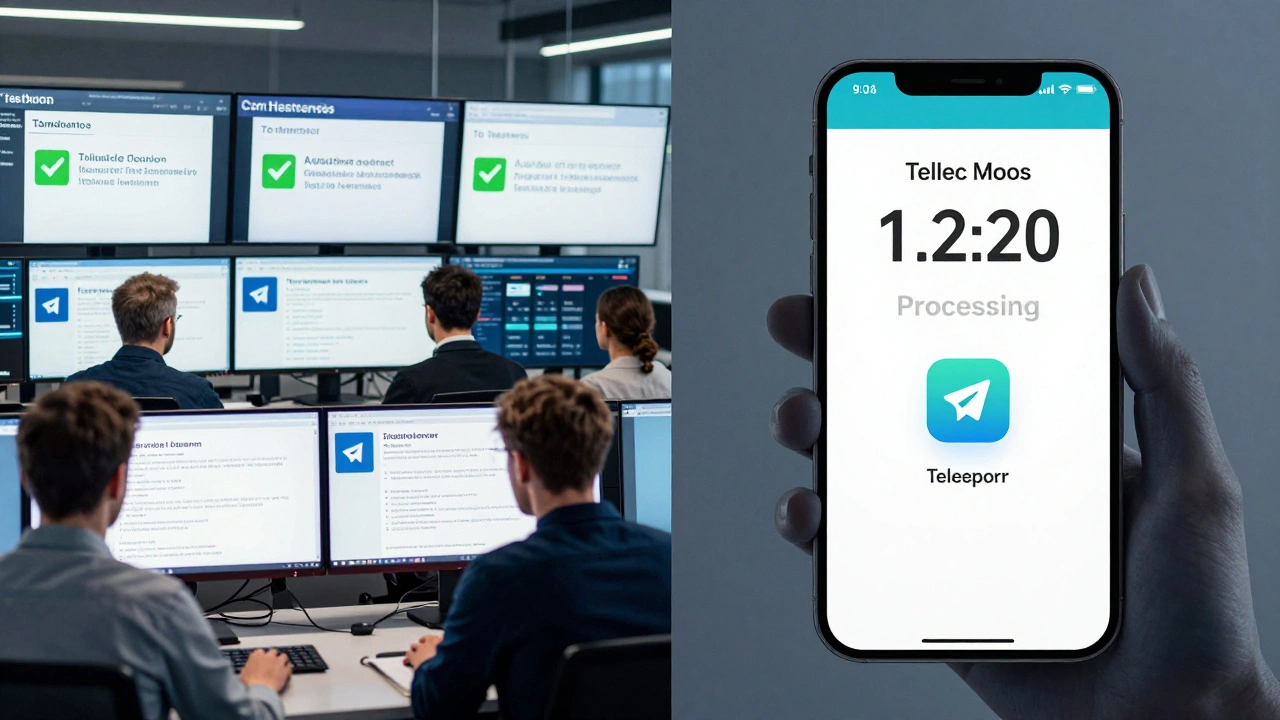
The system adapts too. Shorter posts under 1,000 words are summarized on-device. Anything longer gets processed through Cocoon. Latency? Around 1.2 seconds, even for 5,000-word reports. That’s faster than most newsrooms can load their own internal dashboards.
Why Telegram Beats WhatsApp and Signal for News
WhatsApp Channels launched in late 2023 with fanfare. But it’s still just a broadcast tool. No summaries. No formatting. Just text walls. If you’re a journalist trying to reach thousands of readers with dense reports, WhatsApp forces you to do all the work-editing, trimming, explaining.
Signal’s newsletter feature? It’s built for privacy, yes. But it offers zero content enhancement. No summaries. No smart formatting. It’s a digital letter, not a news feed.
Telegram’s edge? It combines the scale of a broadcast platform with the intelligence of a news editor. According to a January 2026 analysis by Mezha.net, Telegram’s AI summaries give it a 37-point advantage in news consumption efficiency over WhatsApp Channels. Newsrooms that tested it saw audience engagement speed up by 28%.
And it’s not just about speed. It’s about reach. With 900 million monthly users and over 12 million active news channels, Telegram is now the largest private news distribution network on earth. CNN, BBC, and Reuters direct between 22% and 35% of their digital traffic through Telegram channels. That’s not a side project. That’s core strategy.
What’s Missing: The Fact-Checking Gap
Telegram’s AI doesn’t lie. But it doesn’t verify either.
Unlike Twitter/X, which added mandatory community notes for news content in 2024, Telegram doesn’t tag disputed claims. It doesn’t cross-check facts against trusted databases. It just condenses. That’s a real risk.
Dr. Elena Rodriguez from Columbia University’s Digital Journalism Institute put it bluntly: "While Telegram’s privacy-focused AI is promising, the lack of transparent verification mechanisms for AI-generated summaries creates potential risks for news accuracy that professional organizations must address through additional editorial layers."
Some newsrooms have responded by adding manual review steps. Reuters, for example, now trains its staff to double-check summaries before resharing. The Guardian’s digital team found that 87% of the AI’s summary focus lands in the first 30% of an article-so they’ve restructured their reporting to put key facts upfront.
That’s the trade-off: You get speed, but you still need human judgment. Telegram gives you the tool. You still have to be the editor.
How Newsrooms Are Using It-Real Examples
At the BBC’s Moscow bureau, the team uses Telegram’s AI summaries to track Russian state media. Before, reporters spent hours translating and parsing long propaganda pieces. Now, they get the core message in seconds. "Testing Telegram's new AI summaries for our channel-cuts research time by ~40% while maintaining factual accuracy for our Russian audience," wrote their verified account on January 5, 2026.
In Ukraine, independent news sites like Ukrainska Pravda use Telegram to bypass internet shutdowns. When government servers go dark, they push updates through Telegram channels. The AI summaries ensure their stories still land clearly, even when bandwidth is spotty.
Even investigative teams are adapting. A group of journalists in Mexico, reporting on cartel activity, use Telegram to share encrypted tips. The AI doesn’t summarize the tips themselves-it summarizes the follow-up reports. That way, they can share context without exposing sources.
On Reddit’s r/Journalism, a January 8, 2026 thread had 247 comments. Sixty-eight percent said the feature improved their workflow. But 23% of professionals surveyed said they’d hold off until Telegram addressed metadata concerns during AI processing. That’s a red flag-and Telegram is listening.

The Roadmap Ahead: What’s Coming in 2026
Telegram doesn’t stop. In 2025 alone, it rolled out 75+ features across 13 major updates. That’s one every 26 days. And the pace is accelerating.
Public developer docs hint at two major features coming in Q2 2026: "Collaborative Fact-Checking" and "Source Verification." These would let trusted journalists and organizations tag claims with verified context-like Wikipedia’s citations, but inside Telegram.
Pavel Durov hinted at "advanced tools for professional newsrooms" in a January 25, 2026 tweet. Analysts at Gartner predict Telegram will capture 28% of the professional news distribution market by Q4 2026-up from 19% in late 2025.
There’s also the Verified News Organization badge, introduced in December 2025 to meet EU Digital Services Act rules. Channels with over 1 million subscribers now get a checkmark and extra moderation support. It’s not perfect-but it’s a start.
Getting Started: No Tech Skills Needed
There’s no setup. No API keys. No coding. If you run a news channel on Telegram, the AI summaries activate automatically. That’s it.
But to get the best results, there are small tweaks that help:
- Put your most important facts in the first 30% of your post. The AI prioritizes early content.
- Use clear headings. Bullet points help the AI identify key sections.
- Avoid long paragraphs. Short blocks = cleaner summaries.
- Test your posts. Send a draft to your own channel and see how the summary looks.
Reuters trained its staff in under 3 hours. The Guardian’s team adjusted their templates in a single afternoon. You don’t need a tech department. You just need to write clearly.
Final Thought: Privacy + Power = The New News Standard
Telegram didn’t set out to be a news platform. It started as a messaging app for people who feared surveillance. But now, it’s become the backbone of digital journalism for millions.
Its strength isn’t just the AI. It’s the belief that privacy isn’t a feature-it’s the foundation. You can’t trust a tool that leaks your sources. Telegram doesn’t leak. And now, it doesn’t just protect-you can read faster, understand better, and still sleep at night.
For newsrooms under pressure, that’s not just useful. It’s revolutionary.
Does Telegram’s AI summarize all posts in a news channel?
Yes, but only for posts that are text-based and over 200 words. Images, videos, and very short updates won’t be summarized. The AI also skips posts flagged by users as potentially misleading or spammy.
Do I need to pay to use Telegram’s AI summaries for my news channel?
No. The AI summarization feature is free for all users, including news channels. Telegram doesn’t charge for any of its core distribution tools. Verified News Organization badges are also free-no subscription required.
Can I turn off AI summaries for my channel?
Not currently. The feature is automatic and cannot be disabled by channel admins. However, you can control what gets posted-avoiding overly long or poorly structured content helps ensure summaries remain accurate.
Is my data safe when the AI processes my news posts?
Yes. Telegram’s AI runs on Cocoon, a decentralized network that doesn’t store, log, or transmit your content. Summaries are generated on-device for short posts, and for longer ones, the data is encrypted and processed without being saved anywhere. No third parties have access.
How accurate are the AI summaries compared to human editors?
In internal tests with Reuters and AP, the AI preserved key facts with 92.7% accuracy. But it doesn’t understand context like a human. It can miss tone, irony, or subtle implications. That’s why top newsrooms still use human editors to review summaries before redistribution.
Can I use Telegram’s AI summaries for breaking news in restricted countries?
Absolutely. Telegram is one of the few platforms that remains accessible in countries like Russia, Iran, and Myanmar, even during internet shutdowns. The AI summaries work offline once content is downloaded, making them ideal for reporters in high-risk zones.
What devices support the latest AI summary feature?
You need Telegram version 10.4 or higher on iOS 17+ or Android 12+. Older versions won’t show summaries. The feature works on phones, tablets, and desktop apps-all synced automatically.