Most Telegram newsrooms track their audience using basic stats: message views, subscriber counts, and forwards. But these numbers don’t tell the full story-and worse, they can put journalists and sources at risk. If you’re running a Telegram channel for investigative reporting, whistleblower tips, or local news in a restrictive environment, using standard analytics tools is like leaving your door unlocked during a blackout. You need insights without exposing identities, locations, or patterns that could be traced back to sources.
Telegram doesn’t offer built-in privacy-conscious analytics. Its native channel stats show total views, subscribers, and peak activity times-but nothing about who those people are, where they’re from, or how they interact beyond raw numbers. That’s by design. Telegram doesn’t collect user behavior data the way Google or Meta do. But that doesn’t mean you’re safe. Third-party tools claiming to "unlock" deeper analytics often work by injecting tracking pixels, logging IP addresses, or requiring users to log in via Google or Facebook. These methods destroy the very privacy you’re trying to protect.
So what’s the alternative? You don’t need fancy dashboards. You need a system built on minimal data, deliberate obscurity, and trust. Here’s how real newsrooms are doing it right.
Start With What Telegram Already Gives You
Telegram’s channel analytics are basic, but they’re also safe. View counts, subscriber growth, and forward rates are all aggregated. No personal data is attached. That’s your foundation. Use them. Track weekly trends. Notice when a post gets 10x more views than usual-was it tied to a breaking event? Did it get forwarded by another channel? That’s valuable. You don’t need to know who shared it. You just need to know it happened.
Set up a simple spreadsheet. Log each post’s date, headline, view count, and number of forwards. After 30 days, you’ll start seeing patterns. Posts about corruption spikes on Mondays. Posts with video get 40% more forwards. You’re not profiling users-you’re understanding content performance. That’s analytics without surveillance.
Never Use Third-Party Trackers
There are services out there that promise "advanced Telegram analytics." They say things like: "See which cities your readers are from," or "Track individual user engagement." These tools work by asking users to click a link that redirects through their servers. That’s how they collect IP addresses, device IDs, and even browser fingerprints. In countries where journalists are monitored, this data can be used to identify sources, whistleblowers, or even readers. One investigative team in Belarus lost three sources after using a popular analytics service that quietly logged IP addresses. The government later subpoenaed the provider.
Don’t be tempted. Even if the tool claims to be "privacy-focused," if it asks for anything beyond basic channel stats, it’s not safe. Telegram’s API doesn’t allow access to user identities. Any tool that says it can give you that data is either lying or violating Telegram’s terms.
Use Anonymous Feedback Loops
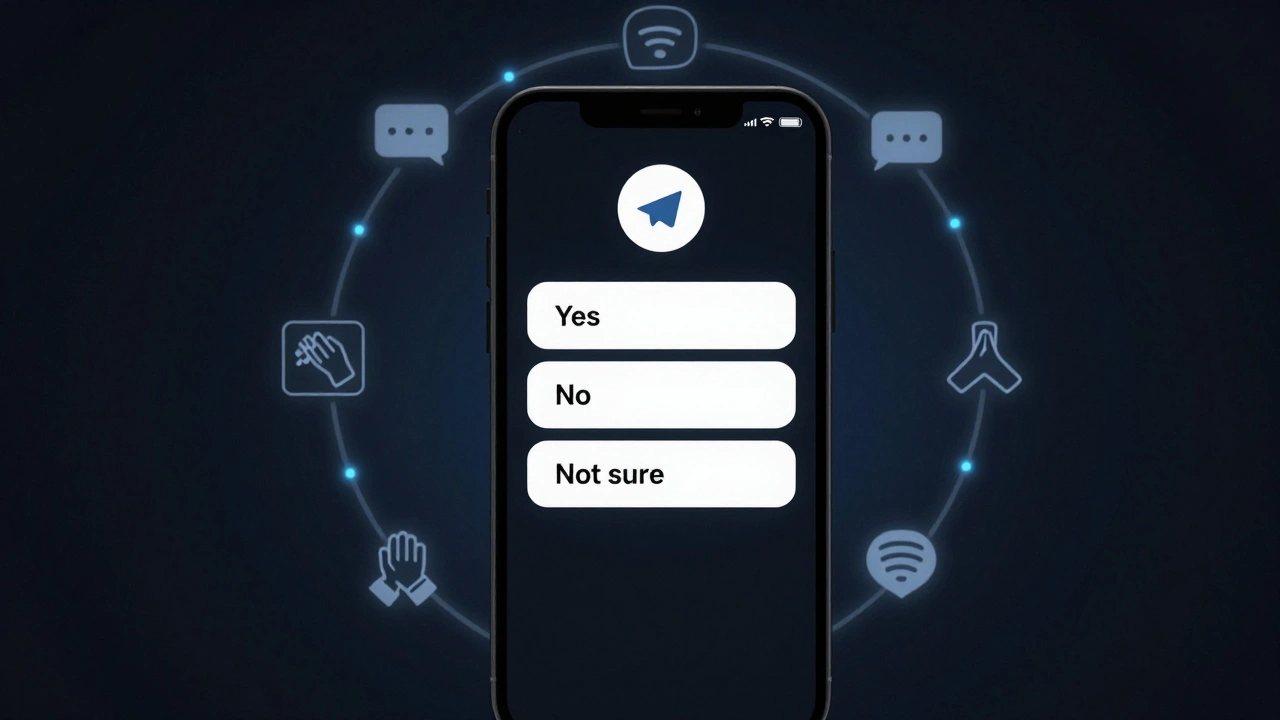
Instead of tracking who reads your content, ask readers how they feel about it-without revealing who they are. Use Telegram’s built-in poll feature. After publishing a sensitive report, add a simple poll: "Did this help you understand the situation?" with options: Yes, No, Not sure.
Polls are anonymous. No names, no IPs, no tracking. You get real-time feedback without compromising privacy. You can also use the "Report" button in Telegram. If readers flag a post as misleading or dangerous, you get a notification-but you don’t know who reported it. That’s a feature, not a bug. It lets you correct misinformation without creating a list of "suspicious" users.
Some newsrooms even set up a second, private channel just for reader feedback. It’s not public. Only those who know the invite link can join. On that channel, they post questions like: "What should we cover next?" or "Did you have trouble accessing the last report?" Responses are voluntary. No logs. No tracking. Just honest, untraceable input.
Mask Your Own Footprint
Journalists managing Telegram channels are often targeted too. If your channel has 50,000 followers and you’re posting about government abuse, your own device and network could be monitored. Use a burner phone or a dedicated device just for managing the channel. Don’t use your personal SIM card. Get a prepaid one with no ID attached.
Connect to your channel only through Tor or a trusted VPN. Never log in from public Wi-Fi. Disable Telegram’s "People Nearby" feature-it can leak your location within 50 meters. Use two-factor authentication with a password you don’t reuse anywhere else. And never, ever link your Telegram account to your email, phone number, or social media profiles.
Build a Trust Network, Not a Database
The most powerful analytics tool for a privacy-conscious newsroom isn’t software-it’s relationships. Train your most trusted readers to act as local eyes and ears. Give them a simple code word: "Signal One" means the report was received and understood. "Signal Two" means it was blocked or censored. "Signal Three" means they’re in danger and need help.
These signals aren’t tracked. They’re whispered. A single message from a reader saying "Signal Two" in response to your last post tells you more than any heatmap ever could. You know the message got through to someone who matters. You know it was suppressed somewhere. That’s insight you can’t buy with a tool.
Some newsrooms in Ukraine and Nigeria use this method. They don’t track views. They track trust. And their impact is higher than any viral post.

When You Need More-Use Open-Source Tools
If you’re part of a larger organization and need to analyze trends across multiple channels, use open-source tools that run on your own server. Tools like Telegram Stats Bot is a self-hosted, privacy-first bot that logs only aggregated channel metrics without collecting user data. It runs on a Raspberry Pi in a secure location. It doesn’t connect to the internet unless you allow it. It doesn’t store IP addresses. It doesn’t log timestamps beyond the day.
Another option is Matrix is a decentralized communication protocol that can be integrated with Telegram via bridges, allowing secure, encrypted group discussions without centralized tracking. It’s not a replacement for Telegram, but it can be used alongside it for internal team coordination, allowing you to discuss analytics without exposing your methods.
Both tools require technical setup. But they’re free. They’re open. And they don’t sell your data.
What Not to Do
- Don’t use Google Analytics, Hotjar, or Mixpanel on any Telegram-linked page.
- Don’t ask readers to fill out forms or sign up for newsletters.
- Don’t link your Telegram channel to a website that tracks visitors.
- Don’t assume "no data" means "no risk." Your silence is your protection.
Final Rule: Less Data, More Trust
Privacy-conscious analytics isn’t about getting more numbers. It’s about protecting the human beings behind those numbers. Your job isn’t to know who read your story. It’s to make sure they can read it without fear.
Some of the most impactful journalism in the last five years came from channels with fewer than 1,000 subscribers. They didn’t have dashboards. They didn’t have heatmaps. They had one thing: trust. And that’s the only metric that matters when the stakes are this high.
Can I use Telegram’s native analytics without compromising privacy?
Yes. Telegram’s native channel stats-views, subscribers, forwards-are aggregated and don’t collect personal data. They’re safe to use. The risk comes from third-party tools that add tracking, not from Telegram itself.
Why shouldn’t I use tools that claim to show reader locations?
Those tools work by collecting IP addresses or device identifiers. In authoritarian regimes, that data can be used to identify readers, sources, or even the journalist. Even if the tool claims to be "anonymous," once data leaves Telegram’s ecosystem, you lose control. Never trust external trackers with sensitive journalism.
How can I get feedback from readers without tracking them?
Use Telegram polls, the built-in "Report" feature, or a private invite-only channel. These methods let readers respond without revealing their identity. No login, no email, no tracking-just honest, untraceable input.
Is it safe to link my Telegram channel to a website?
Only if that website doesn’t track visitors. If your website uses Google Analytics, Facebook Pixel, or any other tracker, you’re exposing your Telegram audience. Use a static HTML page hosted on a privacy-respecting provider like Cloudflare Pages or GitHub Pages, with no analytics scripts.
What’s the best way to protect my own identity as a channel admin?
Use a dedicated device, a prepaid SIM card, and connect only through Tor or a trusted VPN. Disable "People Nearby," enable two-factor authentication, and never link your Telegram account to your personal email or social media. Treat your admin access like a weapon-keep it hidden, secure, and separate from your personal life.
Latest Posts