Ever wondered why a cryptocurrency price pumps even when the news looks bleak? Or why a group chat is flooded with "thumbs up" emojis while everyone is actually complaining? The answer lies in the gap between what people say and how they react. For anyone tracking markets or public opinion, Telegram sentiment analysis is the process of using natural language processing (NLP) to extract the emotional tone and public opinion from conversations within Telegram groups and channels. It turns thousands of chaotic messages into a single, actionable metric: bullish, bearish, or neutral.
But here is the catch: Telegram is a wild west of emojis, slang, and irony. If you rely on basic tools, you will likely get the wrong answer. To truly understand the pulse of a community, you need a mix of automated pipelines and a deep understanding of how people actually behave in chat groups.
The Quick Blueprint for Sentiment Tracking
Depending on your goals, you will likely follow one of these three paths. Whether you are a trader wanting real-time alerts or a researcher analyzing a month of data, here is the high-level approach:
- The Real-Time Pipeline: Use tools like n8n to connect RSS feeds from news giants (like Cointelegraph or CoinDesk) to a bot. Pass the text through an LLM like GPT-4o to summarize the mood and alert you instantly.
- The Batch Analysis: Export chat history in JSON format. Use Python and pandas to clean the data, then run a sentiment scorer.
- The Behavioral Study: Compare the actual text of messages against the emoji reactions to see if the community is agreeing with the sentiment or just signaling social approval.
Building a Technical Pipeline with Python and NLP
If you want to analyze existing conversations, you can't just dump raw text into a tool. Telegram data is noisy. You will find emojis, random links, and non-English messages that will skew your results. To get clean data, you need a rigorous cleaning process.
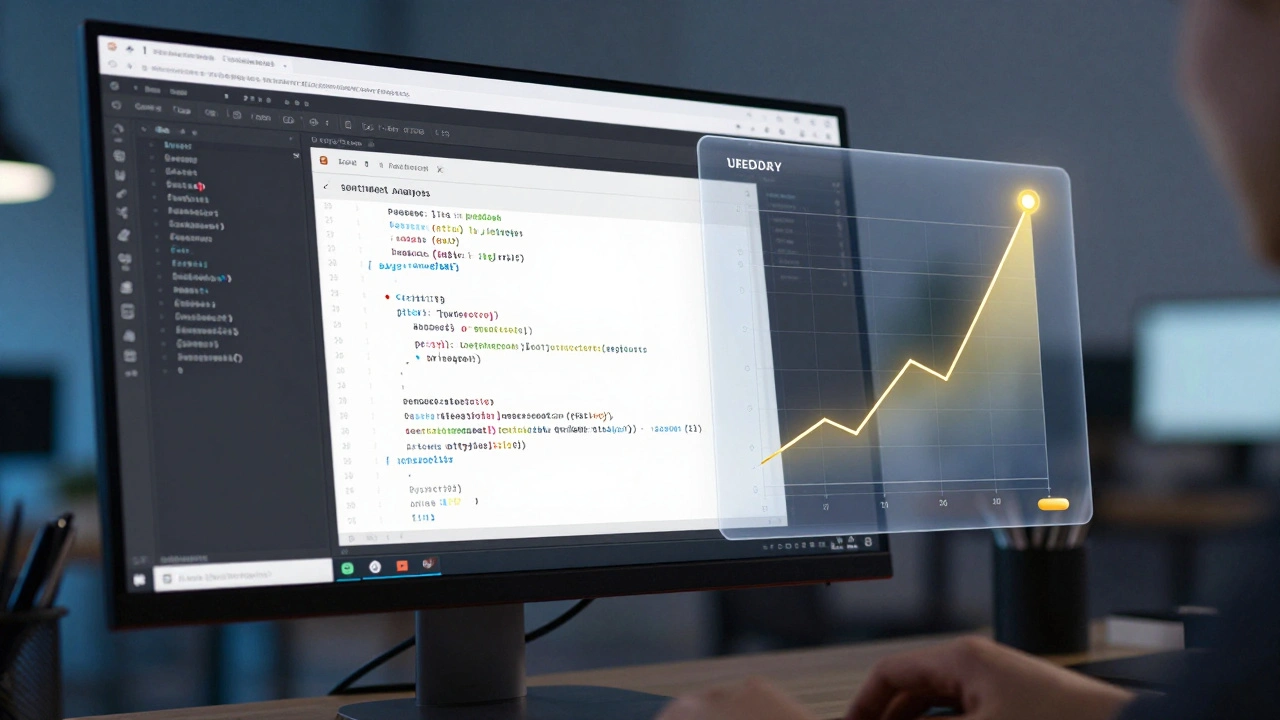
Start by exporting your data into a JSON format. From there, a typical workflow involves several stages of "scrubbing." First, you strip out the punctuation and convert everything to lowercase. Next, you use lemmatization-which basically means reducing words to their root form (e.g., "running" becomes "run")-so the computer understands they are the same concept. Finally, you remove "stop words" (common words like "the" or "and") that don't add any emotional value.
For the actual scoring, TextBlob is a great starting point. It provides a simple API for diving into a common task: calculating polarity. Polarity is a float value that lies in the range [-1.0, 1.0], where -1 is very negative and 1 is very positive. If you see a sudden spike in positive polarity across 500 messages on a specific Tuesday, you've found a sentiment event.
| Tool | Best For | Pros | Cons |
|---|---|---|---|
| TextBlob | Quick Batch Analysis | Fast, easy to set up, lightweight | Struggles with sarcasm and slang |
| GPT-4o | Nuanced Summaries | Understands context and irony | Costly for massive datasets, slower |
| Custom NLP Models | Academic Research | Highly accurate for specific niches | Requires huge labeled datasets |
The Emoji Trap: Social Approval vs. Actual Emotion
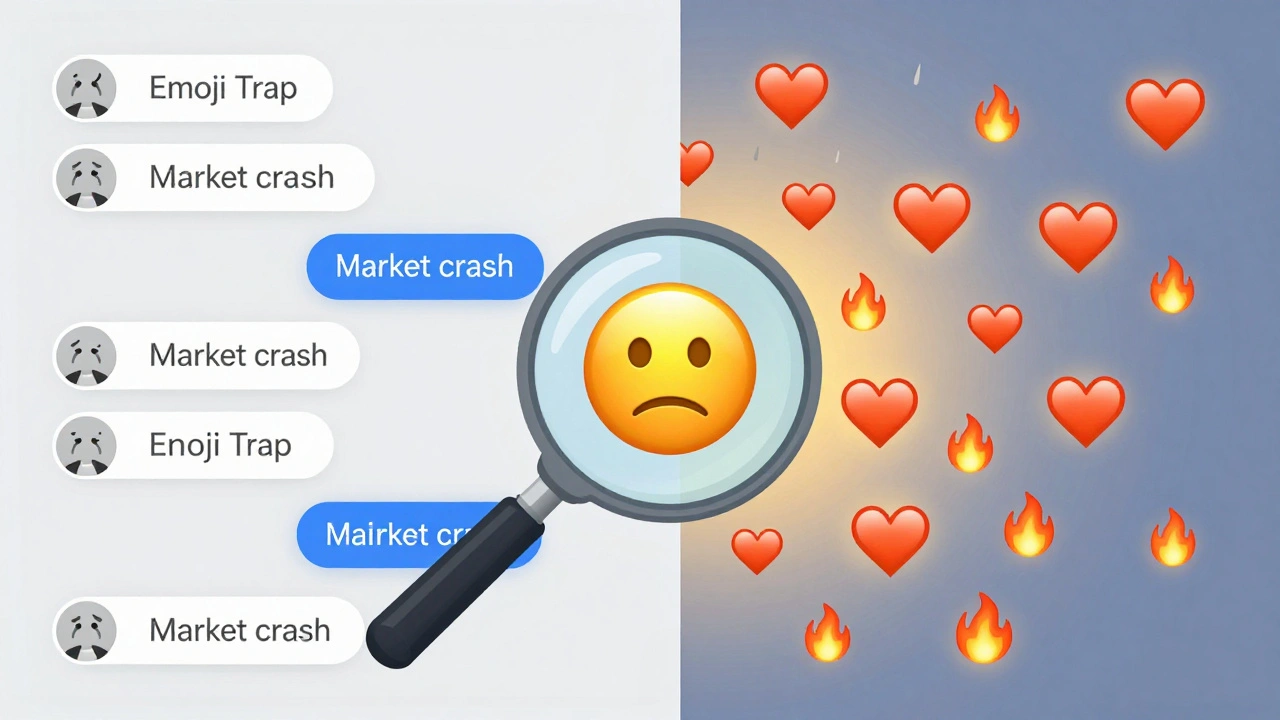
Here is where most people fail. It is tempting to assume that a "🔥" or a "👍" reaction means the user agrees with the sentiment of the post. However, academic research shows a massive mismatch. In a study of over 650,000 Telegram messages, researchers found that positive reactions often appear on messages with negative or neutral tones.
Why does this happen? On Telegram, emojis often act as markers of group identity or social endorsement. When a user reacts with a heart to a negative post about a market crash, they aren't saying "I love that we are losing money." They are saying, "I see you, and I agree that this situation sucks."
If you use emoji reactions as your "ground truth" for training an AI, your model will be biased toward positivity. To avoid this, you must analyze the text of the message and the reaction as two separate data streams. Treat the text as the expressed sentiment and the emoji as the community engagement signal.
Advanced Strategies: Semantic Frames and News Analysis
For those tracking professional news channels rather than casual chat groups, a simple "positive/negative" score isn't enough. You need to understand how news is framed. Professional analysts use a method called semantic frame analysis. This involves identifying thousands of "frames"-basically the conceptual blueprints of a story-to see how different agencies represent the same event.
For example, one news channel might frame a regulatory change as a "security upgrade" (positive frame), while another frames it as "government overreach" (negative frame). By analyzing the frequency of these frames, you can determine if a news source is intentionally pushing a specific narrative to influence the market.
Combining this with a multi-stage AI pipeline-where GPT-4o first extracts the key entities (like "Ethereum" or "SEC") and then analyzes the sentiment specifically tied to those entities-allows you to filter out the noise. This ensures you aren't just seeing that the group is "happy," but specifically that they are "happy about the latest upgrade to the network."
Common Pitfalls to Avoid
If you are setting up your own monitoring system, keep these hurdles in mind:
- The Noise Floor: Crypto groups are incredibly loud. You will deal with bots, spam, and repetitive "To the moon!" phrases. Use keyword filtering and frequency caps to stop these from drowning out genuine insights.
- Multilingual Drift: Telegram is global. A sentiment tool trained only on English will fail in a group with a mix of Russian, Korean, and English. You'll need a translation layer or a multilingual LLM.
- Irony and Sarcasm: "Great, another dip, just what I needed!" is a positive sentence to a basic tool, but it's a scream of frustration to a human. This is why LLMs are replacing basic libraries like TextBlob for high-stakes analysis.
Can I trust emoji reactions to gauge market sentiment?
Generally, no. Research indicates that emojis on Telegram often represent social approval or acknowledgment rather than emotional agreement. You should always cross-reference emoji data with the actual text of the messages to avoid a "positivity bias."
What is the best tool for real-time Telegram sentiment tracking?
For most users, a combination of n8n for workflow automation and GPT-4o for analysis is the gold standard. This setup allows you to aggregate RSS feeds and group messages, then summarize the sentiment into a digestible format delivered directly via a Telegram bot.
How do I handle the massive amount of data in a large Telegram group?
The best approach is to implement a cleaning pipeline using Python and pandas. Focus on lemmatization, removing stop words, and filtering for specific keywords related to the asset or news event you are tracking to reduce the dataset to only the most relevant messages.
What is semantic frame analysis and why does it matter?
Semantic frame analysis looks at how news is conceptualized. Instead of just scoring a sentence as positive or negative, it identifies the underlying pattern of the story. This helps analysts distinguish between official news reporting and biased, non-official influence campaigns.
Is TextBlob enough for professional sentiment analysis?
TextBlob is excellent for beginners or for getting a general sense of polarity in a large dataset. However, for professional financial or political analysis, it lacks the ability to understand context, irony, and complex linguistic structures, making LLMs a better choice for accuracy.
Next Steps for Implementation
If you're just starting, don't try to build a massive system overnight. Start with a small, exported JSON file of a single group and run a basic TextBlob script to see the polarity trends. Once you're comfortable with the data cleaning process, move toward automating the feed using n8n and integrating an LLM for more nuanced summaries.
For those scaling up, focus on building a hybrid system: use a fast, cheap NLP library for the initial filter and a powerful LLM for the final analysis. This keeps your costs low while maintaining the high accuracy needed to make real-world decisions based on community sentiment.