Trying to measure if your Telegram news campaign actually moved the needle on sales, sign-ups, or brand awareness? You’re not alone. Most marketers hit a wall trying to prove ROI on Telegram because the platform wasn’t built for advertising - it was built for privacy. Unlike Facebook or Google, Telegram doesn’t give you tools to track who saw your post, who clicked, or who bought afterward. There’s no built-in lift study. No conversion pixel. No audience segmentation. Just a message that disappears after 48 hours in some channels, and a link that might get stripped of its tracking tags before it even reaches a user.
Why Telegram Makes Ad Lift Measurement So Hard
Telegram’s core design fights against traditional advertising measurement. It uses end-to-end encryption. It doesn’t store user behavior logs. It blocks cookies. And it doesn’t let third parties access data on who viewed a channel post or clicked a link. That’s great for users who want to stay private. Terrible for advertisers who need to know if their money worked. Most ad platforms use test and control groups to measure lift. They show an ad to one group, hold back another group, then compare outcomes. Telegram won’t let you do that. You can’t isolate users who saw your post from those who didn’t. You can’t even be sure if the person who clicked your link is the same person who later bought something - especially since 38% of users switch between phone, tablet, and desktop. And then there’s the data delay. Telegram channel stats update 24 to 48 hours after a post goes live. Your Google Analytics data? Instant. But when you try to match Telegram views to website conversions, you’re guessing. You’re connecting dots that might not even be connected.What You Can Actually Track on Telegram
Telegram gives you very little. Channel subscribers. Post views. Forward counts. That’s it. You can’t see demographics. You can’t see device types. You can’t see how long someone spent reading your message. And you can’t track users across sessions. But here’s what you can do: use unique tracking links. Create a custom URL for each Telegram campaign - something likeyourbrand.com/telegram-crypto-jan2026. Then, use UTM parameters to tag it: ?utm_source=telegram&utm_medium=newsletter&utm_campaign=crypto-jan2026. This lets Google Analytics or Adobe Analytics see where traffic came from.
Problem? Telegram automatically shortens links and strips UTM parameters in preview text. So even if you put the full URL in your post, users see a clean, shortened version - and the tracking gets lost. The January 5, 2026 update partially fixed this, letting you customize link previews. But it’s still unreliable. Many users still click the preview and lose the tracking.
How to Approximate Lift Without Native Tools
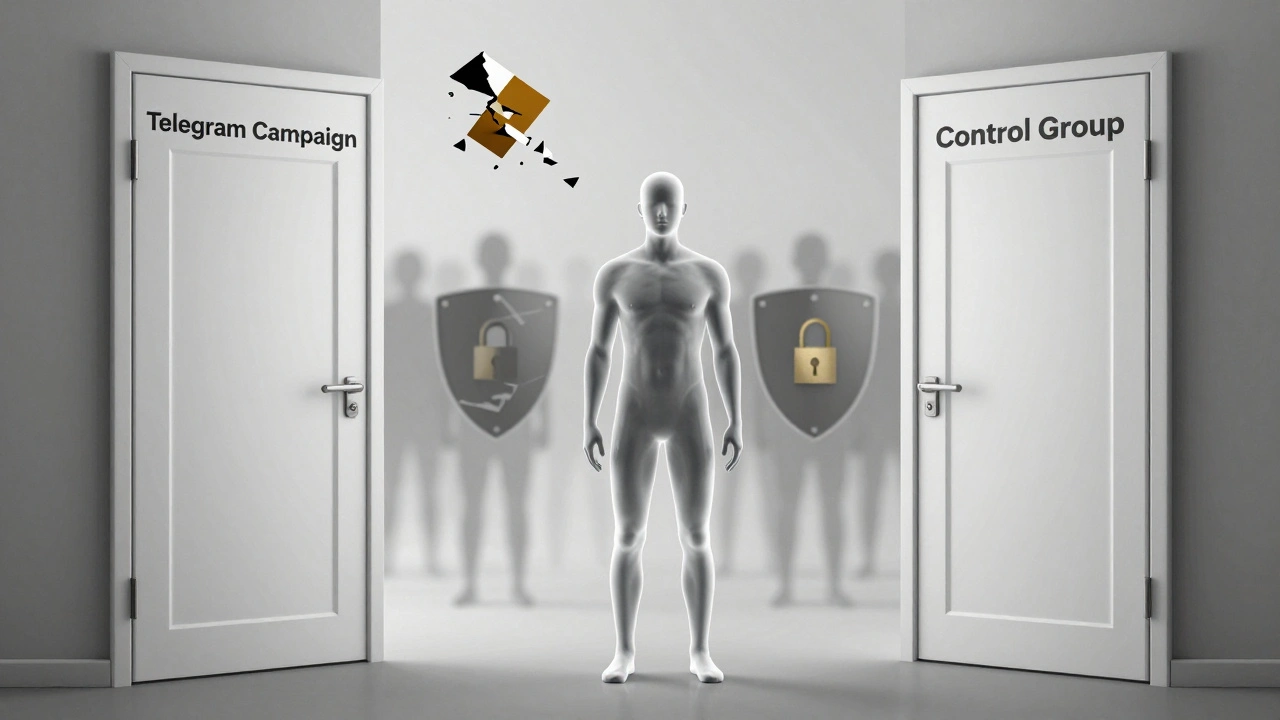
Since Telegram won’t help you measure lift directly, you have to build your own system. Here’s how the most successful marketers do it:- Create a control group. Don’t send your campaign to everyone. Pick 70% of your channel subscribers to receive the message. Hold back the other 30% - don’t tell them why. This is your control group.
- Use exclusive landing pages. Don’t send people to your homepage. Send them to a page only accessible via your Telegram link. Track visits there.
- Use promo codes. Give Telegram-only discount codes: “TELEGRAM20”. Track redemptions in your e-commerce system.
- Run surveys. After the campaign, send a short survey to both groups: “Have you heard about our new product?” “Did you visit our site?” Compare responses. If the Telegram group answers yes 22% more often, that’s your estimated lift.
- Use server-side tracking. Instead of relying on browser-based tracking (which Telegram blocks), set up a backend system that logs clicks from your custom URLs. This bypasses Telegram’s preview stripping.
Real-World Results: What Works and What Doesn’t
A crypto startup ran a Telegram campaign in December 2025 promoting a new wallet feature. They used a unique link and a promo code. They held back 25% of subscribers as a control group. After one week:- Telegram group: 1,200 visits to landing page, 187 conversions using promo code
- Control group: 420 visits, 32 conversions
Why Telegram Still Gets Used (Despite the Measurement Problems)
If it’s so hard to measure, why do people still run campaigns on Telegram? Because engagement is high. News channels in crypto, gaming, and tech see open rates of 42% - double that of email. Users trust Telegram news more than traditional media, according to a 2025 Nielsen study. In niche markets, that trust translates to action - even if you can’t prove it. Telegram’s audience is also unique. It’s full of early adopters. Tech-savvy users. People who follow channels for real-time updates. If you’re selling a new blockchain tool or a limited-edition gadget, this is your crowd. But if you’re trying to measure long-term brand building, customer lifetime value, or return on ad spend? Look elsewhere. Facebook’s Brand Lift Studies average a 3.2-point increase in brand awareness. Google’s Performance Max drives 18.7% higher sales lift. Telegram? No verified numbers. Just guesses.What’s Changing in 2026 (And What’s Not)
Telegram’s Business API is coming in Q2 2026. It might let third-party tools connect to channel data. The IAB’s Project Token is testing privacy-first measurement for messaging apps. Telegram is beta-testing it. But here’s the catch: Telegram’s leadership says privacy comes first. They’ve said it over and over. They won’t break encryption for advertisers. They won’t track users. That means any new measurement tools will be limited - maybe just aggregated stats, not individual-level data. Gartner predicts only a 22% chance Telegram will offer meaningful measurement by 2028. That’s not promising.
When to Use (and When to Avoid) Telegram News Campaigns
Use Telegram if:- You’re targeting a niche, tech-savvy audience (crypto, gaming, cybersecurity)
- Your offer is time-sensitive (limited-time drop, flash sale, event reminder)
- You’re building community trust, not tracking sales
- You’re using it as a top-of-funnel awareness tool, paired with measurable channels like Google or Meta
- You need to prove ROI to your boss or investors
- You’re selling low-ticket items where every click counts
- You need demographic targeting or retargeting
- You’re running long-term brand campaigns
What You Need to Get Started
If you’re serious about measuring Telegram campaigns, here’s what you’ll need:- A dedicated landing page for each campaign
- Server-side tracking setup (not just Google Analytics)
- Unique promo codes or discount links
- A control group of users (at least 20% of your audience)
- A survey tool (Typeform, Google Forms)
- At least 3 weeks to set up and test
- Someone who understands statistical analysis
Final Reality Check
Telegram isn’t a measurement-friendly platform. It’s a trust-based, privacy-first network. Trying to measure ad lift like you would on Facebook is like trying to weigh smoke. You can feel it. You can see its effects. But you can’t capture it cleanly. If your goal is to drive verified sales, conversions, or ROI - stick to platforms that give you data. Use Telegram for what it does best: reaching engaged, niche audiences with fast, direct messages. Build awareness. Spark interest. Drive traffic. But don’t pretend you’re measuring lift unless you’ve built your own system from scratch. The truth? Most Telegram ad lift claims you hear are just correlation - not causation. And without control groups, you’re flying blind.Can I use UTM parameters to track Telegram campaigns?
You can add UTM parameters to your links, but Telegram often strips them from link previews. Even if you paste the full URL, users see a shortened version without tracking. Server-side tracking or custom landing pages are more reliable.
Why doesn’t Telegram offer ad lift tools like Facebook?
Telegram was built for privacy, not advertising. Its end-to-end encryption and no-tracking policy mean it can’t collect user behavior data needed for lift measurement. Unlike Meta or Google, Telegram doesn’t want to track who clicks what - even for advertisers.
Is Telegram worth it for small businesses?
Only if you’re targeting a very specific, tech-savvy niche - like crypto traders or gamers - and your goal is awareness, not direct sales. For most small businesses, the cost and complexity of measuring results outweigh the benefits.
How accurate is fingerprinting for Telegram tracking?
Fingerprinting - using device and browser traits to identify users - has a 12-15% margin of error on Telegram, according to the Mobile Marketing Association. It’s better than nothing, but it’s not reliable enough for precise attribution.
What’s the best alternative to Telegram for measurable campaigns?
Facebook and Google Ads offer verified lift measurement, audience targeting, and conversion tracking. If you need to prove ROI, start there. Use Telegram only as a supplement for niche audiences.
Will Telegram ever have built-in ad lift tools?
Unlikely in the near term. Telegram’s leadership has repeatedly prioritized privacy over advertiser tools. Even new features like the Business API in 2026 will likely offer limited, aggregated data - not individual tracking.