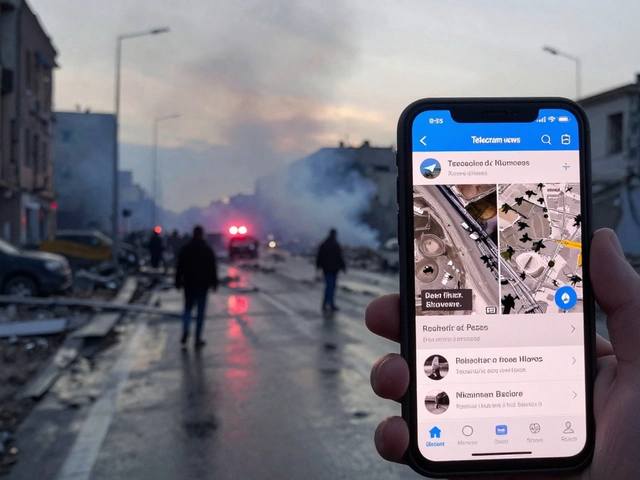
Fake news on Telegram is a messaging app launched in 2013 by Pavel and Nikolai Durov that combines public channels with private groups spreads faster than you can refresh your feed. Unlike Facebook or X, where platforms flag false content automatically, Telegram leaves the heavy lifting to users and third parties. This creates a dangerous vacuum. A rumor about an election result or a health crisis can reach millions of subscribers in closed groups before anyone knows it’s fake.
You cannot fix this problem with a single fact-check post published three days later. The damage is already done. To stop the bleed, you need a Rapid Response Team (RRT) is an organized unit designed to detect, verify, and counter misleading information within minutes rather than hours. This isn’t just about deleting posts; it’s about building a system that acts while the misinformation is still fresh. Here is how you build one from scratch.
Why Telegram Is Different From Other Platforms
If you’ve managed social media crises before, you might think you know the drill. But Telegram operates on different rules. It has over 700 million monthly active users, but its structure is unique. You have Channels are one-to-many broadcast tools that allow unlimited subscribers, which act like open-air town squares. Then you have Groups are many-to-many chat spaces capped at 200,000 members, which feel more like private clubs.
The biggest challenge? Encryption and moderation. Standard chats use client-server encryption, meaning Telegram sees the data, but they do very little to moderate it compared to Meta or Google. Only "Secret Chats" are end-to-end encrypted, making them invisible to even Telegram itself. This hybrid model means misinformation hides in plain sight in public channels while festering in semi-private groups. Your team needs to understand this landscape because you won’t have platform support to demote bad content automatically.
Assembling the Core Team Roles
You don’t need a massive staff to start, but you do need specific skills. A lean RRT typically consists of 6 to 10 people working in shifts. Think of it as a fire department: you need people who spot the smoke, people who fight the fire, and people who manage the scene.
- The Incident Lead: One person who makes the final call. They decide if a story is worth responding to and authorize the publication of corrections. They must be able to make decisions within 15 to 30 minutes.
- OSINT Analysts (2-5): These are your scouts. They monitor Telegram using scraping tools, map networks, and track language trends. They know how to use libraries like Telethon or Pyrogram to watch high-risk channels.
- Fact-Checkers and SMEs (2-6): Subject matter experts who verify claims. If a video shows a hospital explosion, they check the location and time. They cross-reference with official sources and other fact-checking organizations like Snopes or Full Fact.
- Data Scientists (1-3): They build and maintain the detection models. They look for anomalies, such as a sudden spike in forwards or bot-like behavior, using algorithms like BERTopic or Louvain clustering.
- Legal/Ethics Advisor (1): Crucial for navigating defamation laws and privacy issues, especially when dealing with sensitive political or health topics.
- Communications Specialists (1-3): They craft the counter-messaging. They turn dry facts into clear, shareable graphics and short videos that resonate with the audience.
Detection Infrastructure: Spotting the Fake Early
Speed is everything. If you wait for someone to report a lie, you’re too late. You need an always-on detection system. Start by identifying 100 to 1,000 high-risk channels and groups based on past incidents. Use the Telegram Bot API is a tool that allows developers to create bots that interact with Telegram users and channels to subscribe to these feeds.
Your detection layer should look for three things:
- Volume Anomalies: Flag messages that see a 5-fold increase in forwards within 60 minutes. Normal news doesn’t explode that fast unless it’s sensational or coordinated.
- Account Behavior: Look for fake accounts that comment synchronously to boost engagement. Research from Ruhr University Bochum and EPFL shows that propaganda spreaders often have distinct behavioral patterns, like posting at irregular intervals or using similar phrasing.
- Network Clusters: Use graph analysis to find "bridge nodes." These are accounts or channels that connect otherwise separate communities. Targeting these hubs stops the spread more effectively than chasing individual posts.
When an alert triggers, your team gets a notification instantly. This moves your detection-to-correction window from 24-72 hours down to 15-120 minutes.

Verification and Triage Process
Not every weird post is worth your energy. You need a triage system to prioritize threats. When an alert comes in, run four parallel checks within the first hour:
1. Content Verification: Use reverse image search via Google Images or TinEye. For videos, use keyframe analysis tools like InVID to check if footage is recycled from older events.
2. Source Verification: Cross-check claims against official government sites, health agencies, or trusted news outlets. Check if local fact-checkers have already debunked it.
3. Network Verification: See if the same content is spreading on X, Facebook, or YouTube. Often, misinformation starts elsewhere and migrates to Telegram. If it’s already been flagged there, you can save time.
4. Contextual Verification: Consult a domain expert. If the claim involves complex medical advice or legal procedures, get a professional opinion quickly.
Assign a risk score (1-5) based on potential harm, scale (number of subscribers), sensitivity (elections vs. celebrity gossip), and evidence of coordination. High-risk items (score above 12 out of 20) get immediate attention. Low-risk items can wait for a standard 24-hour review cycle.
Crafting Effective Counter-Messaging
Debunking isn’t just saying "this is false." You have to give people something better to share. On Telegram, long articles get ignored. You need bite-sized, visually appealing content.
Create short vertical videos (60-120 seconds) with a clear headline like "CLAIM vs FACT." Use consistent brand colors so people recognize your channel instantly. Pin these clarifications in large channels for 24-72 hours. Share infographics sized for mobile screens (1080×1920 px) that summarize the truth in 3-5 bullet points.
But here’s the secret weapon: trust. People believe their community leaders more than anonymous institutions. Work with diaspora organizations, local doctors, or religious figures. Let them forward your verified content into their private groups. Studies show that corrections from co-ethnic peers are significantly more persuasive than generic government announcements.

Escalation and Coordination
Sometimes, messaging isn’t enough. If the content violates Telegram’s Terms of Service-like terrorist propaganda or non-consensual intimate imagery-you need to escalate.
Set up a "War Room" channel on Signal or Slack for your core team to coordinate. File abuse reports through Telegram’s in-app tools or email [email protected]. Preserve all evidence: screenshots, message IDs, channel IDs, and timestamps. This archive is vital for legal action or academic study later.
Coordinate with national regulators or election commissions if the misinformation threatens public safety or democratic processes. Remember, safety comes first. Never infiltrate private groups without a clear ethical framework and safety protocol for your team members.
30-Day Rollout Blueprint
Building this team takes work, but you can launch a basic version in a month. Here is a practical timeline:
- Days 1-7: Governance and Design. Define your mission. Pick your scope (e.g., elections, health). Identify 50-200 high-risk channels. Recruit your core team of 6-15 people and partner with 10 community organizations.
- Days 8-15: Tooling. Set up your Telegram bots and data ingestion pipeline. Build an internal dashboard for triage. Implement basic keyword alerts with conservative thresholds to avoid false positives.
- Days 16-23: SOPs and Training. Write your playbooks. Define response times: 60 minutes for Tier-1 crises, 6 hours for Tier-2, 24 hours for Tier-3. Train your team on verification tools and safety practices. Run two table-top simulations to test your workflow.
- Days 24-30: Soft Launch. Go live with limited coverage, maybe one country or one topic. Track your metrics: alerts per day, average verification time, and reach of corrections. Adjust your thresholds based on real-world performance.
How much does it cost to run a Telegram Rapid Response Team?
Costs vary widely depending on scale. A small volunteer-based team might spend under $500/month on server hosting for bots and databases. A professional enterprise team with full-time analysts, legal counsel, and advanced AI tools could cost $10,000-$50,000/month. The key is starting lean and scaling as needed.
Can I automate the entire fact-checking process?
No. Automation helps with detection and initial screening, but human judgment is essential for context, nuance, and ethical considerations. AI can draft responses, but humans must verify accuracy and tone to avoid spreading new errors.
What is the best tool for monitoring Telegram channels?
For custom solutions, developers use Python libraries like Telethon or Pyrogram combined with the Telegram Bot API. For non-technical teams, commercial social listening platforms like CrowdTangle (though being deprecated) or specialized OSINT tools offer pre-built dashboards.
How do I handle misinformation in private groups?
You can’t directly access private groups. Instead, work with community ambassadors inside those groups. Provide them with verified content they can share. Focus on public channels to set the record straight, hoping the correction spreads inward organically.
Is it legal to scrape Telegram data for fact-checking?
It depends on your jurisdiction and Telegram’s Terms of Service. Generally, scraping public channels for journalistic or research purposes is tolerated, but always consult a legal advisor. Avoid scraping private chats or violating user privacy laws like GDPR.