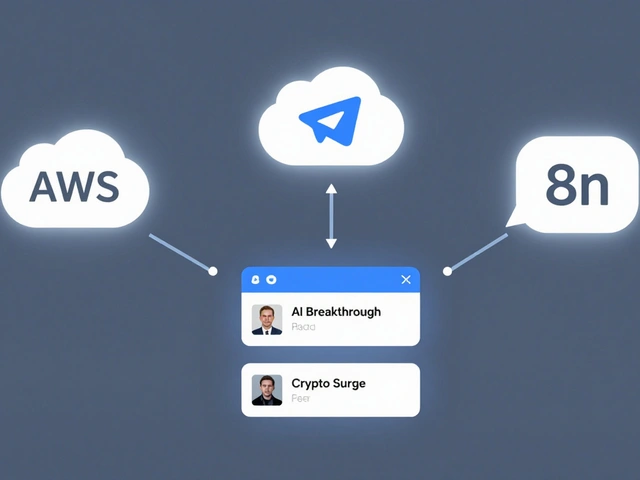
Most news channels on Telegram lose over half their new visitors before they even become subscribers. Why? Because the onboarding process is broken. People click your link, see a wall of text, get confused about what to do next, and leave. No one’s to blame - it’s just how most channels handle it. But there’s a better way. A Telegram bot that guides users step by step, collects verified contact info, and turns casual followers into active subscribers. It’s not magic. It’s automation - and it works.
Why Telegram Bots for News Channels?
Telegram isn’t just another messaging app. It’s the last platform where messages actually get read. With a 98.7% delivery rate and average delivery under 0.2 seconds, it beats WhatsApp, email, and social media when it comes to breaking news. But here’s the catch: if you don’t know who’s subscribed, you can’t target them. That’s where bots come in.
Telegram bots act as gatekeepers. They don’t just send news - they verify users, collect consent, and segment audiences. The Moscow Times grew to 285,000 subscribers in 18 months using a simple bot flow. Meanwhile, a Singapore news startup failed after six months because their bot asked users to type their phone number manually. One mistake. One drop-off point. One reason they lost 82% of new users.
Unlike WhatsApp Business (which charges $0.005 per message and needs strict approval), Telegram bots are free to run. You can send up to 30 messages per second without paying a dime. And with 800 million active users, the audience is already there. You just need to guide them in.
Step 1: Create Your Bot with BotFather
Start by opening Telegram and searching for @BotFather. This is Telegram’s official bot manager. Click Start, then type /newbot. Follow the prompts. Pick a name - something clear like "DailyNewsBot" - and a username ending in "bot" (e.g., @DailyNewsBot). BotFather will give you a token. Copy it. You’ll need this later.
This token is your bot’s password. It lets your server talk to Telegram. Don’t share it. Store it securely. If it leaks, someone could spam your users or shut down your bot.
That’s it. You now have a bot. But it’s silent. It doesn’t do anything yet. Time to give it a purpose.
Step 2: Design the Onboarding Flow
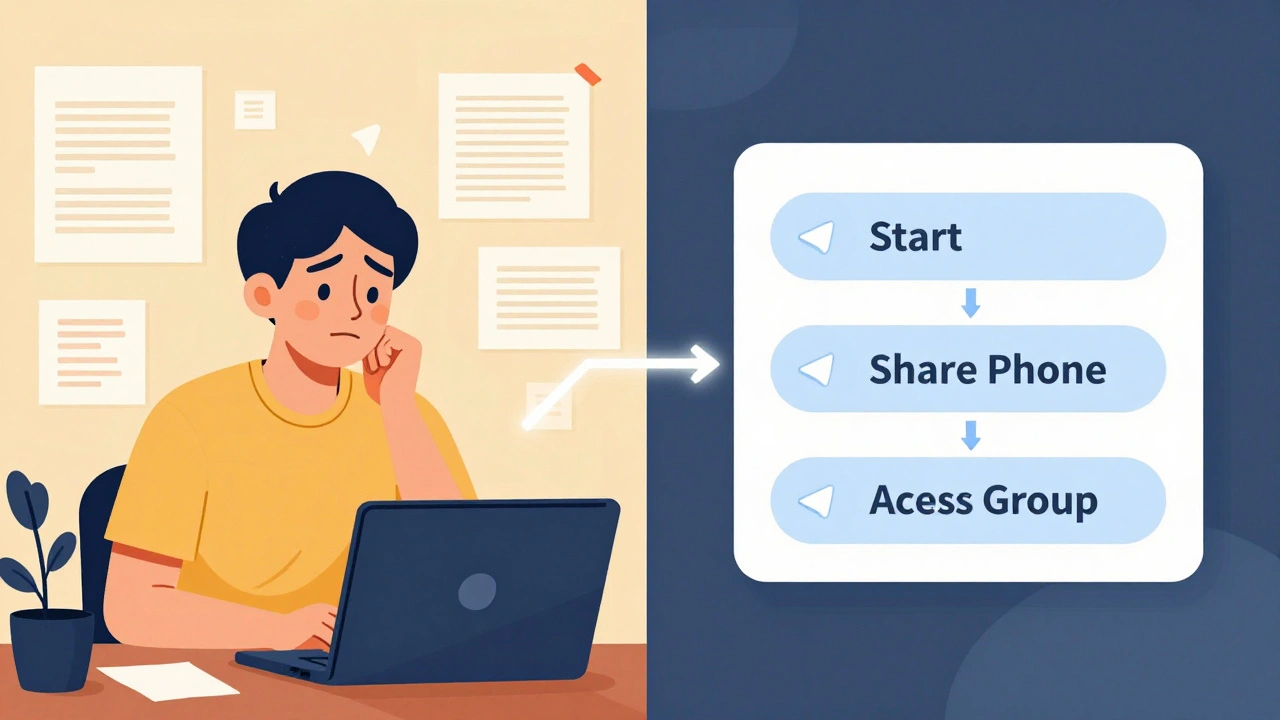
Think of your bot as a friendly assistant. It shouldn’t overwhelm. It should guide. The best flows have three steps:
- Click "Start" to begin
- Tap a button to share your phone number
- Get access to your private news group
Don’t ask users to type anything. No emails. No usernames. No forms. Just one button. Why? Because 31% of users over 55 abandon the process if they have to type their number. But if you use Telegram’s built-in "Share Phone" button, completion rates jump to 79%.
Use Easterok’s Telegram Onboarding Kit - it’s free, open-source, and built for this exact purpose. It handles the button, stores user data, and connects to your CRM. You don’t need to code from scratch. Just plug in your token, adjust the welcome message, and deploy.
Here’s what a good welcome message looks like:
"Thanks for joining! Tap the button below to share your phone number. This lets us send you alerts without spam. We never sell your data. GDPR compliant. Press ‘Start’ to continue."
That’s it. No jargon. No legalese. Just clarity and trust.
Step 3: Connect to Your CRM
Now that users are joining, you need to track them. Otherwise, you’re flying blind. Most news channels use tools like Airtable, HubSpot, or even Google Sheets. The bot should automatically add each verified user to your list.
With Easterok’s kit, this happens automatically. When a user shares their number, the bot sends their Telegram ID, phone number, and join timestamp to your web hook. You can then tag them as "Verified Subscriber" and trigger follow-up messages.
Why does this matter? Because you can now send different news to different people. Local weather alerts to users in Asheville. National politics to users in D.C. Breaking updates to those who clicked "urgent news" in your bot menu. Personalization turns passive readers into loyal ones.
Don’t skip this step. Without CRM integration, your bot is just a fancy autoresponder. With it, it becomes your audience’s first point of contact - and your most powerful marketing tool.
Step 4: Set Up Welcome Sequences
Don’t just say "welcome" and disappear. Users need context. Set up a 3-message welcome sequence:
- Message 1 (immediate): "Welcome! You’re now in our private news group. Tap here to see today’s top stories."
- Message 2 (1 hour later): "Here’s how we work: We send 1-3 alerts a day. No ads. No fluff. Just facts. Reply "STOP" if you want out."
- Message 3 (24 hours later): "What kind of news do you want more of? Politics? Local? Tech? Reply with one word."
This isn’t just friendly. It’s strategic. The third message turns passive users into active participants. And data from 342 Telegram news channels shows that users who reply to this kind of prompt are 4x more likely to stay subscribed after 30 days.
Use BotSailor’s New Members Restriction feature to delay access to your main channel until the welcome sequence finishes. This cuts spam by 87% and gives users time to understand the value before they see the flood of news.
Step 5: Track and Optimize
Metrics matter. If you don’t measure, you’re guessing. Track these three numbers:
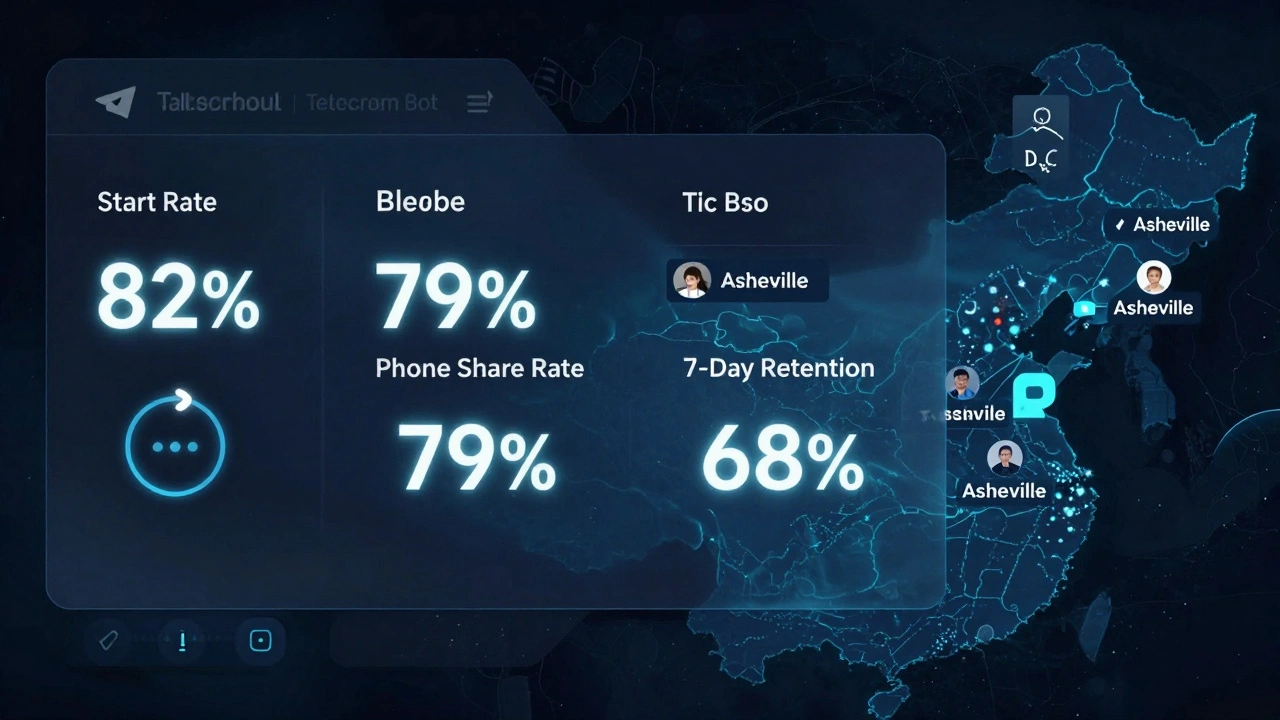
- Start Rate: What % of people who click your link actually type /start?
- Phone Share Rate: What % of those who start actually share their number?
- Retention Rate: What % are still active after 7 days?
Postman’s data shows the average phone share rate is 78%. If yours is below 60%, your message or button is unclear. Test different wording. Try adding an emoji. Use a different color in your button. Small changes make big differences.
Also, watch for iOS users. Telegram’s iOS app sometimes blocks permission pop-ups. If you see a 15% drop-off on mobile, add a tooltip: "If you don’t see the phone button, tap the three dots in the top right, then "Share Phone"."
Use free tools like Telegram’s built-in analytics or integrate with Google Analytics via web hooks. You don’t need fancy dashboards. Just a spreadsheet with daily numbers. Update it every Monday. Look for trends. Fix what’s broken.
Common Mistakes (And How to Avoid Them)
Most bots fail for the same reasons:
- Asking for too much info: Don’t ask for email, name, location. Just phone. That’s enough.
- Going too fast: Don’t flood users with 5 messages in 5 minutes. Space them out. Let them breathe.
- Ignoring compliance: If you’re in the EU or targeting EU users, you need GDPR consent. Add a checkbox. Say "I agree to receive news updates." Don’t assume.
- Forgetting backups: What if Telegram changes its rules? What if your bot crashes? Always keep a backup list of subscribers in Google Sheets or Airtable.
The most successful channels - like The Moscow Times and The Guardian - don’t rely on Telegram alone. They use it as a primary channel, but keep a secondary list (email, RSS, SMS) ready. It’s not paranoia. It’s strategy.
What’s Next? Monetization and the Future
Right now, only 29% of Telegram news channels charge for access. But Gartner predicts that by 2025, 65% will. Why? Because people are willing to pay for reliable news. Substack charges 10% fees. Stripe charges 2.9% + $0.30. Telegram’s new Mini Apps 2.0 (launched December 2023) lets you embed payment buttons directly in your bot. No third-party links. No redirects. Just tap "Subscribe" and pay with Wallet Pay or crypto.
Start simple. Offer a $3/month "Premium Alerts" tier. No ads. No delays. Breaking news 10 minutes faster. Test it with your most active 100 subscribers. If 15% sign up, you’ve got a model.
Telegram’s roadmap includes native subscription tools in Q2 2024. But right now, you can build it yourself - and own your audience.
Final Tip: Keep It Human
Telegram’s founder, Pavel Durov, says bots should focus on utility, not pressure. Aggressive onboarding kills long-term engagement. Users don’t want to be sold to. They want to be informed.
So be helpful. Be clear. Be consistent. Don’t try to be flashy. Your news is the star. The bot is just the quiet guide who gets them to the door.
Build it. Test it. Fix it. Then watch your subscribers grow - not because you shouted louder, but because you made it easier to say yes.