When people in Mali, the Democratic Republic of Congo, or the Central African Republic want to know what’s really going on with UN peacekeepers, foreign troops, or government crackdowns, they’re not turning to BBC or CNN. They’re opening Telegram. And what they find there isn’t always true.
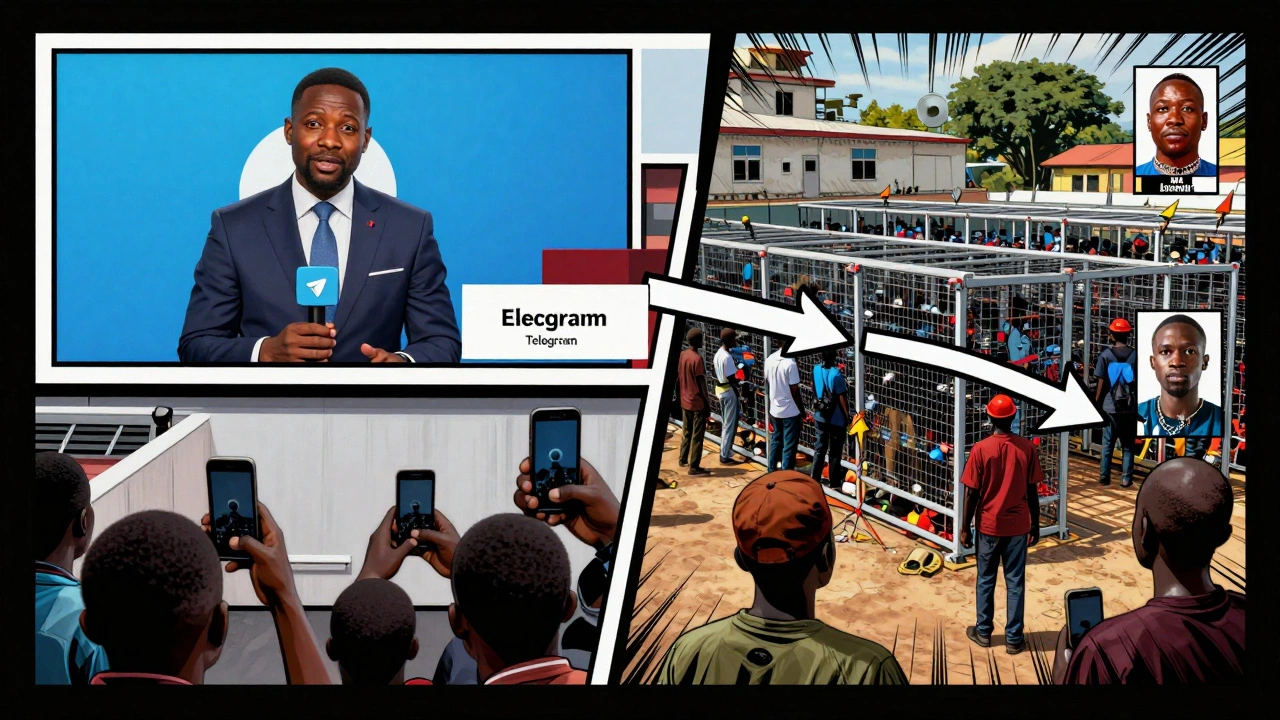
Telegram isn’t just another messaging app in the Global South. It’s become the backbone of a new kind of news network-one that bypasses traditional media, ignores fact-checkers, and spreads stories faster than governments can respond. In places where internet access is patchy, state media is controlled, and trust in Western institutions is low, Telegram’s combination of speed, secrecy, and simplicity makes it the go-to platform for both truth and lies.
Why Telegram? It’s Not About Users-It’s About Control
Most people think social media success is about how many people use it. But Telegram doesn’t need billions of users to dominate the news landscape in the Global South. It only needs a few thousand active subscribers-and the ability to forward messages to hundreds of other channels at once.
Here’s how it works: A channel called "African Initiative" might have just 21,775 subscribers. But when it posts a claim like "UN troops are smuggling weapons to rebels in Kidal," that message gets auto-forwarded to 93 other public channels. Each of those channels has its own followers. Some are local activists. Others are community groups. A few are outright bots. Together, that one post reaches over 1.6 million views in under 24 hours. And no algorithm is slowing it down.
Compare that to Facebook or Twitter. On those platforms, posts get buried if they’re controversial. Facebook’s algorithm cut down the reach of polarizing content by 68% after 2018. Twitter (now X) limits how far a tweet can go unless people retweet it manually. But Telegram? No limits. No filters. No algorithm. Just pure, unfiltered broadcast.
The Architecture of Deception
Telegram’s design is perfect for disinformation. It has three features that make it uniquely dangerous:
- Channels with unlimited subscribers-Anyone can follow a channel without approval. You don’t need to be friends with the poster.
- Forwarding to 200+ channels at once-One post can explode across dozens of networks, creating a ripple effect that looks like organic spread.
- View counters-Every time someone opens a message, it’s counted. That means operators know exactly what’s working. If a post about "French soldiers killing civilians" gets 1.4 million views, they’ll make more like it.
These aren’t accidental features. They’re built for influence. And they’re being used by state-backed actors from Russia, Iran, and elsewhere to push narratives that undermine Western-led institutions like the UN, ECOWAS, or the African Union.
A 2023 report from Disinfo.Africa found that pro-Russian Telegram channels in Mali and CAR timed their posts to coincide with military operations. One post about MINUSMA’s withdrawal from Mali hit 1.6 million views because it was sent out just hours after Malian soldiers entered a contested town. The timing wasn’t random. It was calculated.
Who’s Behind the Channels?
It’s not just random trolls. These are organized networks with budgets, translators, and schedules.
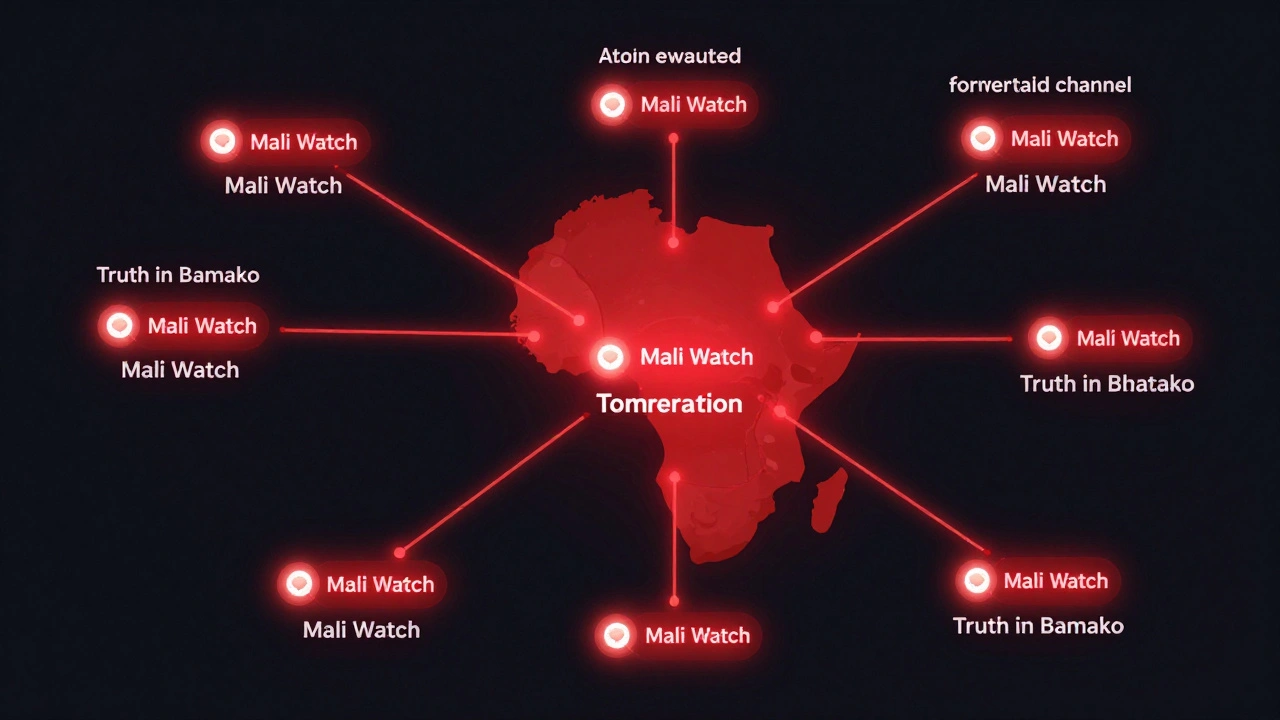
Operators create a "hub" channel-usually in Russian or English-and then hire local translators to adapt content into French, Swahili, or Hausa. A single post about "UN corruption" might take 2-3 hours to translate and localize for audiences in the DRC, Niger, and Senegal. Then, it’s pushed out through a chain of secondary channels: "Africa News Today," "Truth in Bamako," "Mali Watch," and so on.
Some of these channels are run by exiled extremists. Others are linked to Russian state media. A few are funded by foreign governments trying to destabilize regional alliances. The Oxford Internet Institute calls this "information laundering"-where false claims are tested on Telegram, then later show up on Facebook or WhatsApp, now "validated" by their viral spread.
And it works. Studies show that 87% of anti-UN narratives that start on Telegram appear on Facebook within 72 hours. By then, the damage is done. People have already shared the story with family, neighbors, and community leaders.
The Human Cost: Trust, Fear, and Confusion
It’s not just about numbers. It’s about lives.
In Mali, 68% of people surveyed by Afrobarometer in 2023 said they often couldn’t tell if Telegram news was true. A post claiming that UN peacekeepers were helping armed groups led to protests outside a UN base in Gao. A local NGO had to send teams door-to-door to correct the misinformation.
In the Central African Republic, a false claim that MINUSCA troops were selling weapons to rebels sparked riots in Bangui. The channel behind it? "Lay Low in Bangui." It had 8,000 followers. But because it forwarded its posts to 127 WhatsApp groups, the lie reached over 100,000 people in two days.
Meanwhile, in Nigeria, the same platform is being used for good. Independent journalists use Telegram to report on election fraud when state media goes silent. Channel 247 reached 850,000 concurrent viewers during Nigeria’s 2023 elections. No one could shut it down. No one could censor it.
So Telegram isn’t inherently evil. It’s a tool. And like any tool, it’s used differently by different people.
Why Doesn’t Telegram Do More?
Telegram’s CEO, Pavel Durov, says the platform "respects freedom of speech." But there’s a catch: enforcement is uneven.
Transparency International’s 2023 audit found that 92% of content removals on Telegram happened in Western languages-English, French, Spanish. Only 8% were in African or Asian languages. That means a channel spreading hate in Swahili or Arabic is far less likely to be taken down than one in German or Italian.
Even when Telegram does act, it’s too slow. In February 2024, the platform removed 1,200 pro-Russian channels after EU pressure. But by March, 92% of them had reappeared under new names. The same operators. The same content. Just different usernames.
And Telegram doesn’t even have a dedicated team for the Global South. Its moderation team is based in Europe. They don’t speak local dialects. They don’t understand regional politics. They rely on automated tools that can’t catch context.
What’s Next? AI, Bots, and the New Normal
The next wave is already here: AI-generated content.
ClearSky Security found that 17% of the images in anti-UN posts across CAR and DRC in early 2024 were AI-made. Fake photos of "UN soldiers with weapons" or "mass graves" created in seconds. No real evidence. Just pixels.
And the number of politically focused Telegram channels in the Global South is growing 31% per year. By 2026, the Oxford Internet Institute predicts a 200% increase in these networks.
Some governments are trying to ban Telegram. Mali did it in 2023. Nigeria passed a Social Media Bill in 2024 targeting "malicious actors on encrypted platforms." But bans rarely work. People just switch to mirrors, proxies, or VPNs. And if the content is compelling enough-even if it’s false-they’ll keep sharing it.
The truth? Telegram isn’t going away. It’s becoming part of the fabric of news in the Global South. Whether you’re a journalist, a citizen, or a policymaker, you need to understand how it works-not to condemn it, but to respond to it.
What Can Be Done?
There’s no magic fix. But here’s what’s working:
- Local fact-checking networks-Organizations like Dubawa in Nigeria and Africa Check are training community volunteers to spot and report false Telegram posts.
- Media literacy in schools-Teaching kids how to trace a post back to its source, check timestamps, and spot AI images.
- Collaboration with Telegram-Some NGOs are working with Telegram’s reporting system to flag high-risk content in local languages.
- Alternative platforms-Signal and Mastodon are being tested as more transparent options, but they lack the reach.
The real challenge? People trust Telegram because it feels real. It’s fast. It’s direct. It’s not filtered. And in places where official media is corrupt or silent, that’s worth more than accuracy.
Until someone builds a trustworthy alternative that’s just as fast and just as open, Telegram will keep winning.