When you see a Telegram post light up with hearts, thumbs-ups, and fire emojis, it’s easy to assume the audience loves it. But what if those reactions aren’t about how they feel - they’re about who they are?
Telegram’s emoji reaction system, updated in August 2025, lets users tap one of dozens of emojis to respond to a message. Premium users can even pick from thousands of custom emojis. At first glance, it looks like a simple way to say ‘I like this.’ But behind the scenes, it’s something far more complex: a social signaling system that often contradicts the message’s actual tone.
Emoji Reactions Don’t Reflect Emotion - They Reflect Identity
A 2025 study analyzing over 650,000 Telegram messages found that 78.3% of positive emoji reactions (👍, ❤, 🔥) were used on messages that were neutral or even negative in sentiment. That’s not a glitch. It’s the design.
People don’t react to how a message makes them feel. They react to what it says about them. A heart on a post criticizing a political opponent isn’t sympathy - it’s tribal alignment. A thumbs-up on a harsh headline isn’t approval of the content - it’s a signal to your group: ‘I’m with you.’
This isn’t unique to Telegram. But Telegram’s scale makes it visible. With 800 million active users and 2.1 million public channels, reactions are no longer casual. They’re data points. And for channel owners who treat them like sentiment scores, that’s dangerous.
The Numbers Don’t Lie - But They Don’t Tell the Whole Story
Here’s what the data shows:
- 63.7% of all reactions on Telegram are positive emojis - even though only 41.2% of messages have positive sentiment.
- Toxic messages get 42% more positive reactions than non-toxic ones in some channels.
- On news channels like YediotnewsIL, messages favoring one side of a conflict get 3x more ❤ reactions than neutral or opposing views - regardless of tone.
That’s not engagement. That’s echo-chamber validation.
One Reddit user, who runs a political news channel, noticed something disturbing: their post praising their own party’s policy got 120 reactions. The post calling out the same party’s corruption? 385 hearts. The difference wasn’t in the message quality - it was in the audience’s need to signal loyalty.
If you’re a brand or journalist relying on reaction counts to gauge success, you’re measuring the wrong thing. High reaction numbers don’t mean your content is loved. They mean it’s aligned with your audience’s identity.
Telegram’s System Is Built for Social Currency, Not Emotional Feedback
Unlike WhatsApp’s single emoji limit or Facebook Messenger’s six options, Telegram lets users stack up to three reactions per message. Premium users get access to custom emojis - including country flags, religious symbols, and niche memes.
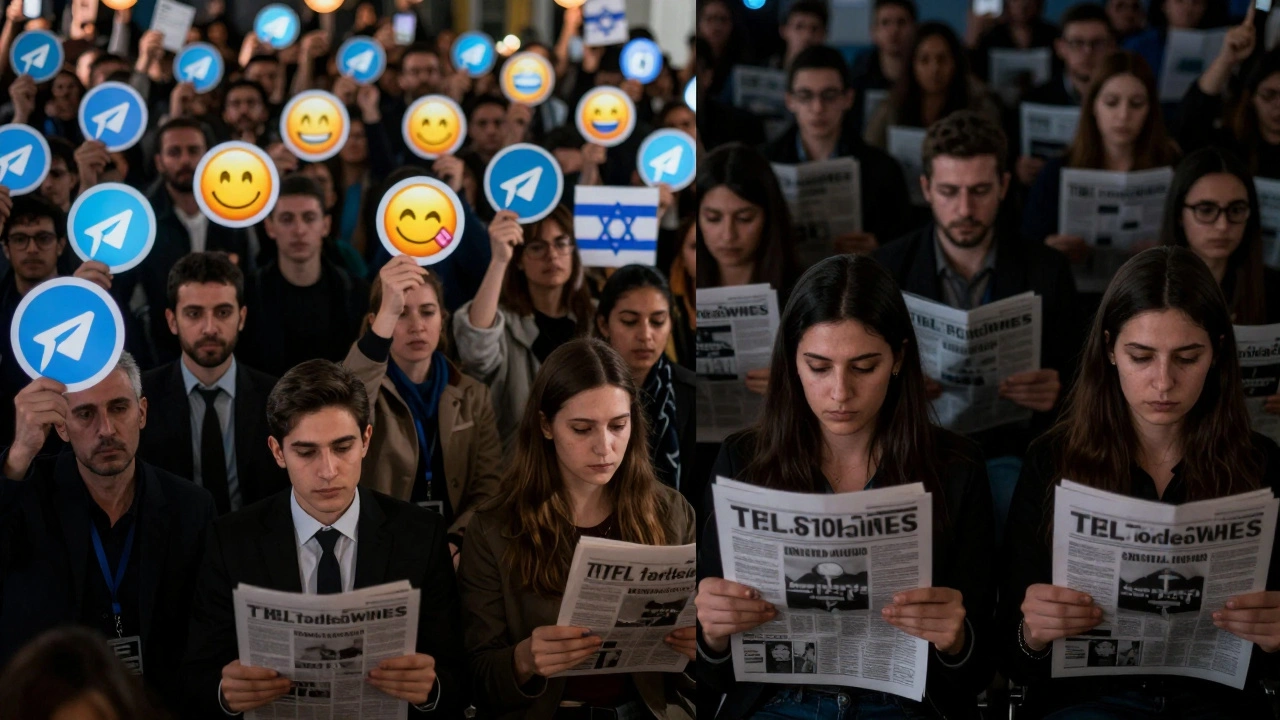
That’s not just a feature. It’s a social tool. When a news channel in Israel uses 🕎 and 🇮🇱 as primary reactions, they’re not asking for emotional feedback. They’re inviting users to declare affiliation. When a business uses 💼 or 🚀, they’re not tracking excitement - they’re tracking aspiration.
Telegram’s engineering team processes 1.2 billion reactions daily. Each one carries a 128-bit identifier tracking the emoji, user, and timestamp. That’s not for fun. That’s for analysis.
But here’s the catch: the platform doesn’t tell you what any of it means. No sentiment score. No context. Just raw counts. And that’s where most people fail.
Why Competitors Get It Right - And Telegram Doesn’t
Slack introduced contextual reaction suggestions in 2024. Type ‘great job’ and it suggests 👏, 🎉, ✅. It guides users toward meaningful signals.
Telegram? Nothing. You get a scrollable panel of hundreds of emojis. A UserTesting.com report from October 2025 found 63% of users struggled to find the right emoji in Telegram’s expanded menu. In Slack, it was 28%.
That’s not a usability issue. It’s a design philosophy. Slack wants reactions to clarify intent. Telegram wants reactions to amplify identity.
And that’s why you can’t treat Telegram reactions like you would Facebook likes. You can’t assume a fire emoji means ‘this is trending.’ It might mean ‘this matches my worldview.’
How to Actually Use Reactions as Editorial Signals
If you’re managing a Telegram channel - whether it’s news, marketing, or community - here’s how to read the signals correctly:
- Ignore single-message reactions. One ❤ doesn’t mean anything. Look at patterns over time.
- Group emojis by function, not emotion. For example:
- Like: 👍, ❤, 🔥, 👏, 💯, 🫡
- Happy: 🎉, 😁, 🤩, 🥰, 🙈
- Agree: ✅, 👌, 🤝, 🕊
- Shock: 😱, 🤯, 🤫
- Compare reactions across message types. Do positive reactions spike on controversial posts? That’s a red flag.
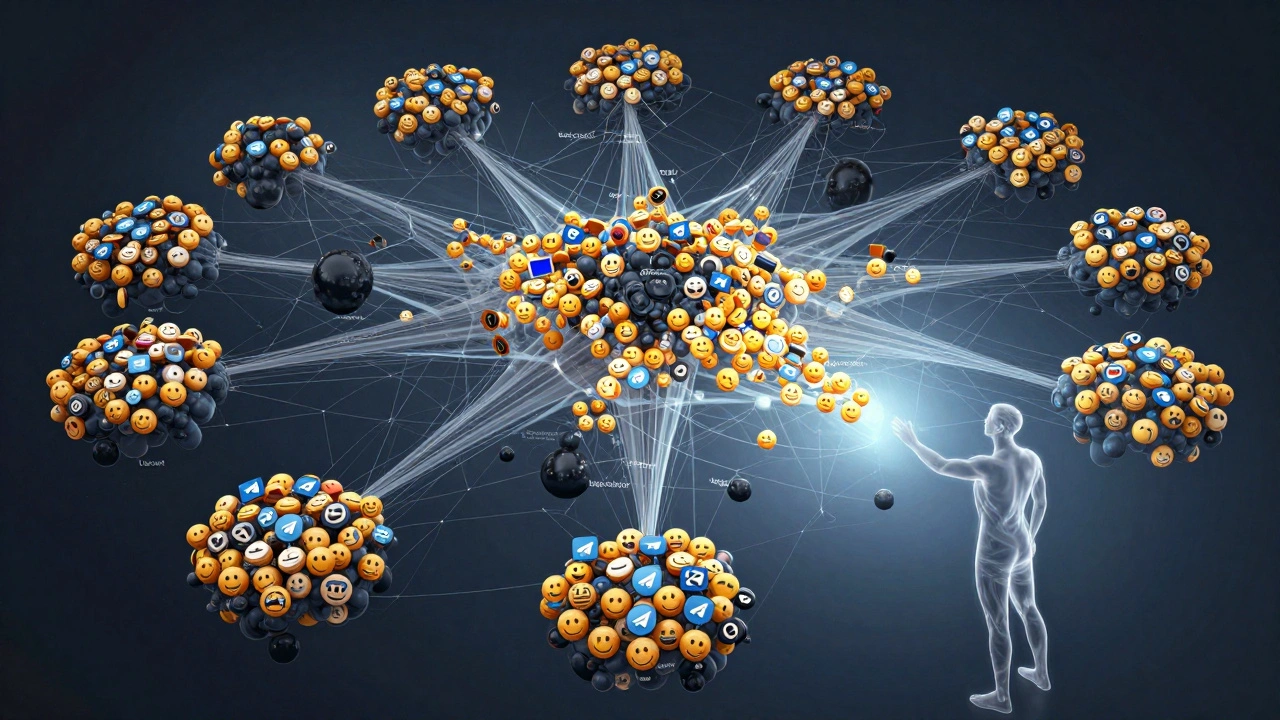
- Track reaction diversity. If 90% of reactions are 👍 and ❤, your audience isn’t engaging - they’re signaling.
- Use regression models. Studies show that combining reaction counts with message sentiment, length, and topic improves prediction accuracy by over 80%.
Datix Labs, a Telegram analytics firm, uses this method to help media outlets understand their audience. They don’t count hearts. They map reaction clusters against message themes. That’s how they discovered that posts with neutral language about conflict got more ❤ than emotionally charged ones - because the audience preferred calm, tribal affirmation over drama.
The Danger of Misreading Reactions
Here’s the real risk: you start believing your own hype.
A channel that sees 10,000 hearts on a post about a scandal might think they’ve hit the jackpot. But if those hearts are coming from people who agree with the outrage - not the truth - you’re not building trust. You’re building a mob.
Dr. Elena Morales’ research found that positive emojis on toxic content act as social cover. They make harmful speech feel normal. When someone reacts with a heart to a hateful post, they’re not endorsing the emotion - they’re endorsing the group.
For brands, this means your ‘most popular’ content might be the most damaging. For journalists, it means your ‘most shared’ stories might be the most distorted.
Telegram’s founder Pavel Durov says reactions help channel owners understand their audience. He’s right - but only if you understand what you’re seeing.
What’s Coming Next - And How to Prepare
Telegram plans to roll out ‘reaction insights’ in Q1 2026. This will give channel owners AI-driven analysis of reaction patterns - not just counts. It’ll show you if reactions cluster around certain topics, users, or emotional tones.
Until then, you need to build your own interpretation system.
Companies like InstaBoost.ge recommend treating reactions like sampling tools, not verdicts. Track them weekly. Compare them across content types. Ask: ‘Who is reacting? What are they saying? What’s missing?’
And if you’re using Telegram for business, don’t rely on reaction counts as KPIs. Use them as clues - then dig deeper. Look at replies. Check shares. Monitor user growth. Reactions are just the surface.
Final Takeaway: Reactions Are a Mirror, Not a Meter
Telegram emoji reactions don’t measure how much people like your content. They measure how much your content reflects who they are.
If you want to grow a loyal audience, don’t chase reactions. Chase alignment. Craft messages that speak to your audience’s values - not just their emotions. Because on Telegram, the loudest emoji isn’t the one that’s most liked. It’s the one that’s most loyal.
Stop asking ‘Do they like this?’ Start asking ‘What does this say about them?’