Mistakes happen. In the rush to be the first to break a story, even the most diligent citizen journalists can get a fact wrong. But on a platform like Telegram, where there is no official "correction" button or version history, a simple edit can look like a cover-up. For news channels, the difference between a trusted source and a misinformation hub often comes down to how they handle their errors. Telegram news channels is a decentralized form of digital broadcasting where administrators have total control over content, often serving as a primary news source during crises. Because the platform doesn't provide built-in tools for accountability, the burden of transparency falls entirely on the creator.
The Transparency Gap in Decentralized News
Unlike traditional outlets, Telegram operates without a centralized editorial board or a regulatory body like Ofcom. When a reporter at the BBC makes a mistake, there is a standardized protocol to fix it. On Telegram, you are the editor, the publisher, and the fact-checker. The problem is that Telegram's "edited" tag is vague; it tells the reader something changed, but not what, why, or when. This creates an ethical vulnerability.
A 2025 study published by Taylor & Francis analyzed 47 news channels during the 2023-2025 Israel-Hamas War and found a worrying trend: only 28% of channels kept visible correction logs. Most others either posted a separate message-which often gets buried in the feed-or simply edited the post and hoped no one noticed. This lack of a paper trail destroys trust. When users see a correction without context, they don't see professional integrity; they see a lack of reliability.
Why Transparent Corrections Drive Subscriber Retention
You might think that admitting a mistake makes you look weak or incompetent. In reality, it does the opposite. Data shows that channels with clear, honest correction protocols maintained an 89% audience retention rate during volatile news cycles, while those that ignored errors or "stealth-edited" dropped to 62%. People aren't looking for perfection; they are looking for honesty.
Consider the user experience. If a subscriber spots an error and the admin ignores it or deletes the post entirely, the subscriber feels gaslit. However, when a channel acknowledges the error with full context, it transforms a negative moment into a trust-building exercise. In one documented case, a user on the "Israel News Network" channel explicitly stated they regained trust in the source after a hospital explosion report was corrected with full context, despite their initial anger.
Building a Professional Correction Framework
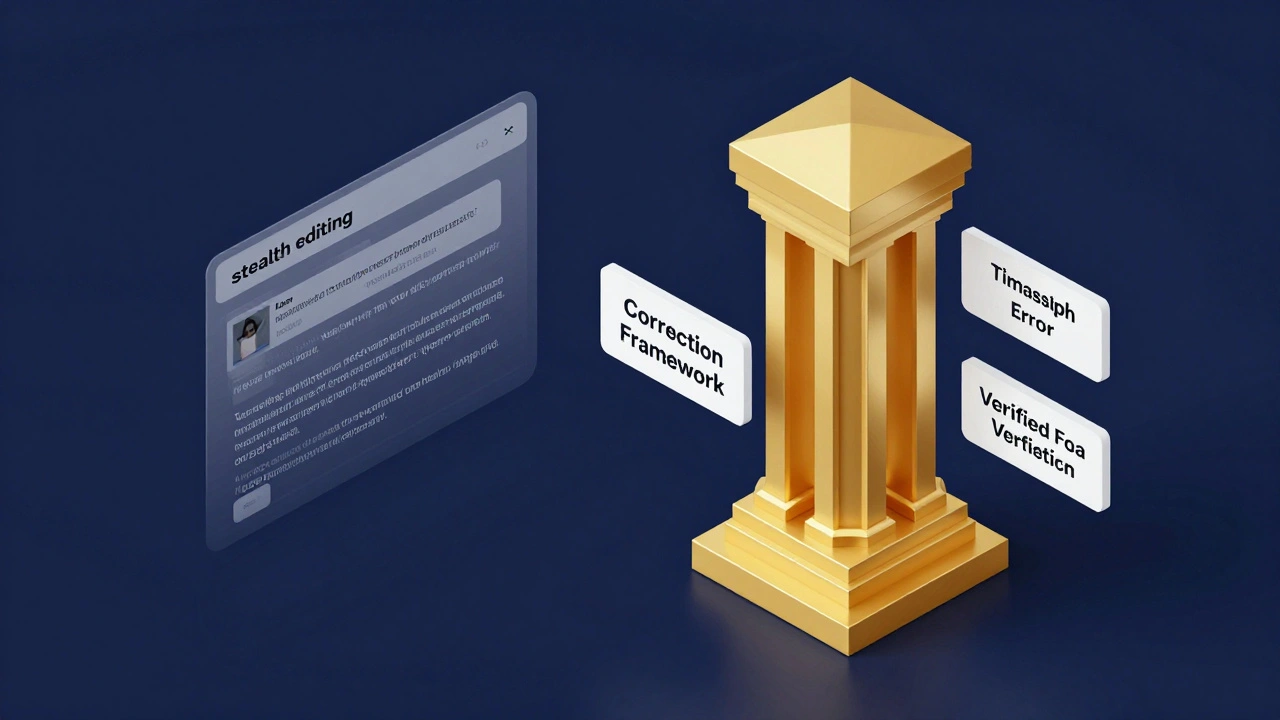
Since Telegram won't give you a correction tool, you have to build your own. The most successful channels don't just wing it; they use a standardized template. The "Israel News Today" channel, for example, used a consistent 5-point system for every single correction, which actually exceeded the standards of global agencies like Reuters.
| Element | Purpose | Example |
|---|---|---|
| Original Timestamp | Provides a clear reference point | "Correction to post from 10:15 AM" |
| Error Description | Explicitly states what was wrong | "We incorrectly stated the casualty count as 50" |
| Corrected Fact | Provides the verified information | "The verified count is 32" |
| Apology/Explanation | Maintains human connection/accountability | "We apologize for the rush in reporting" |
| Editor ID | Assigns a specific person to the fix | "Edited by: Sarah J." |
Practical Strategies for Implementing Fixes
There are two primary ways to handle a mistake on Telegram: the "Direct Edit" and the "Standalone Correction." Each has pros and cons, and the best approach usually involves a combination of both.
- The Direct Edit: Update the original post to reflect the truth. This keeps the narrative intact and prevents others from sharing the old, wrong version. However, since the "edited" tag is subtle, you should add a note at the bottom of the post: "UPDATE [Date/Time]: Corrected X to Y."
- The Standalone Post: Publish a new message dedicated to the correction. This is highly visible and shows you aren't hiding anything. The critical mistake many admins make is not linking back to the original post. A correction without a link is just another message in a flood of content.
If you have a larger team, consider creating a dedicated "Corrections Log" channel or a pinned message that catalogs every major error and fix. This level of citizen journalism is the act of non-professional journalists collecting, analyzing, and disseminating news, often using social media to bypass traditional gatekeepers. By treating your channel like a professional newsroom, you separate yourself from the noise.

Common Pitfalls to Avoid
Even when trying to be transparent, admins often fall into traps that undermine their credibility. One of the most common issues is the "Correction Loop," where a correction is issued but contains another error. This happened to the "Middle East Watch" channel, which had to correct its own correction 17 hours later. This usually happens because the admin is rushing to fix the mistake without actually verifying the new data.
Another mistake is using vague language. Phrases like "Some details have been updated" are useless. Readers want to know exactly what was wrong. Avoid the "stealth edit"-changing a factual error without any notification. In the era of screenshots and archival bots, your audience will likely notice the change, and they will assume you are trying to deceive them.
Leveraging Tools and Community Feedback
You don't have to do this alone. While Telegram lacks native tools, the community is your best asset. About 73% of users actively demand corrections when they spot an error. Instead of seeing this as criticism, view it as free peer-review. Encouraging your subscribers to point out mistakes in the comments can actually increase your authority, provided you respond and fix the error promptly.
For channels with more than 10,000 subscribers, tools like Factiverse is an automated error detection tool designed to help news channels identify factual inconsistencies in their reporting can help flag potential issues before they go viral. Additionally, staying aligned with the International Fact-Checking Network is a global collaboration of fact-checkers committed to non-partisanship and transparency in verification guidelines ensures that your process is based on global standards rather than guesswork.
Should I delete the original post if it contains a major error?
Generally, no. Deleting a post often looks like an attempt to hide a mistake, especially if users have already screenshotted it. The most transparent move is to edit the post with a clear "CORRECTION" label at the top and follow it up with a separate post explaining the error. Only delete content if it is illegal or violates safety policies.
How fast should I publish a correction?
Speed is everything. While traditional news outlets might take a few hours, Telegram users expect near-instant updates. Data shows a massive gap in trust between channels that correct errors within 24 hours and those that wait days. Aim to fix factual errors as soon as they are verified, ideally within 2 to 9 hours.
What if I don't have an editorial team to help verify facts?
Solo admins face a higher risk of error (around 33% lower accuracy than teams). If you are working alone, implement a "cooling off" period for breaking news. Instead of posting the first thing you see, wait for a second independent source to confirm. Be honest with your audience about your limitations; telling them "This is an unconfirmed report" is better than presenting it as a fact and having to correct it later.
Does the "edited" tag on Telegram satisfy transparency requirements?
No. The "edited" tag only indicates that a change was made, not what the change was. For a correction to be transparent, the reader must be able to see the original error and the new, correct information. This requires adding a manual note within the post or issuing a separate correction message.
How do I handle corrections when the error was caused by a source?
You are still responsible for the content you publish, regardless of the source. The most professional way to handle this is to state: "Our initial report relied on information from [Source], which has since been proven incorrect. We are updating the facts to [Correct Info]." This maintains your transparency while providing context about why the mistake happened.
Latest Posts