Most Telegram channel owners send the same message to everyone. That’s a mistake. If your audience spans India, Brazil, Germany, and Nigeria, sending one post at 9 AM in New York means half your readers see it at 3 AM or not at all. Worse, your jokes, references, and even tone might land flat-or worse, offend-because you didn’t tailor them. Segmenting Telegram posts by region and audience isn’t optional anymore. It’s the only way to keep engagement high, reduce unsubscribes, and turn passive followers into active participants.
Start with Where Your People Are
Telegram has over 950 million monthly active users as of early 2026. But they’re not spread out evenly. Over 20% are in India alone. Another 18% are in Brazil and Russia combined. Europe makes up nearly a third. If you’re posting at 8 AM EST for your U.S. team, you’re missing peak hours in Jakarta, Lagos, and São Paulo. That’s not just low open rates-that’s wasted effort.Use Telegram’s built-in analytics (available for channels with over 1,000 subscribers) to see where your followers are located. You’ll get a map showing concentration by country. Don’t stop there. Cross-reference that with time zone data. For example, if 40% of your audience is in India (IST, UTC+5:30), and 25% is in Mexico (CST, UTC-6), your best windows are 7-10 PM IST and 8 AM-11 AM CST. That means you either post twice or use automation tools to schedule messages per region.
Language Isn’t Just Translation-It’s Cultural Context
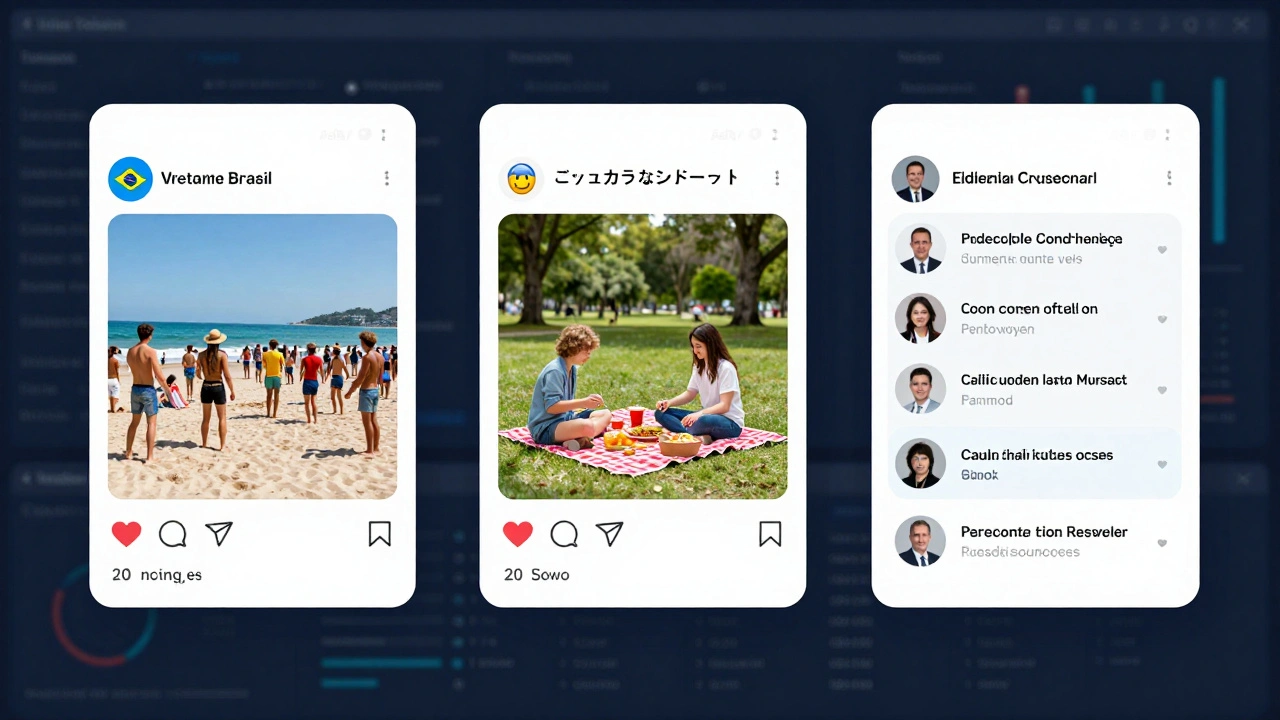
Saying “hello” in Hindi isn’t the same as saying “hi” in English. Same goes for humor, emojis, and even punctuation. A meme that works in Brazil might fall flat in Saudi Arabia. A casual tone that resonates with Gen Z in Argentina could turn off professionals in Germany.Segment by language preference, not just location. If your channel supports multiple languages, tag users based on their preferred language. You can do this manually by asking new members to reply with their language, or use bots that auto-tag users based on their profile settings. Then, create separate message templates for each language group. Don’t just translate word-for-word. Adapt idioms, references, and even image styles to fit local norms. A post about “weekend vibes” in Spain might show a beach party. In Japan, it might show a quiet park picnic. The emotion is the same. The context isn’t.
Track Who Actually Engages
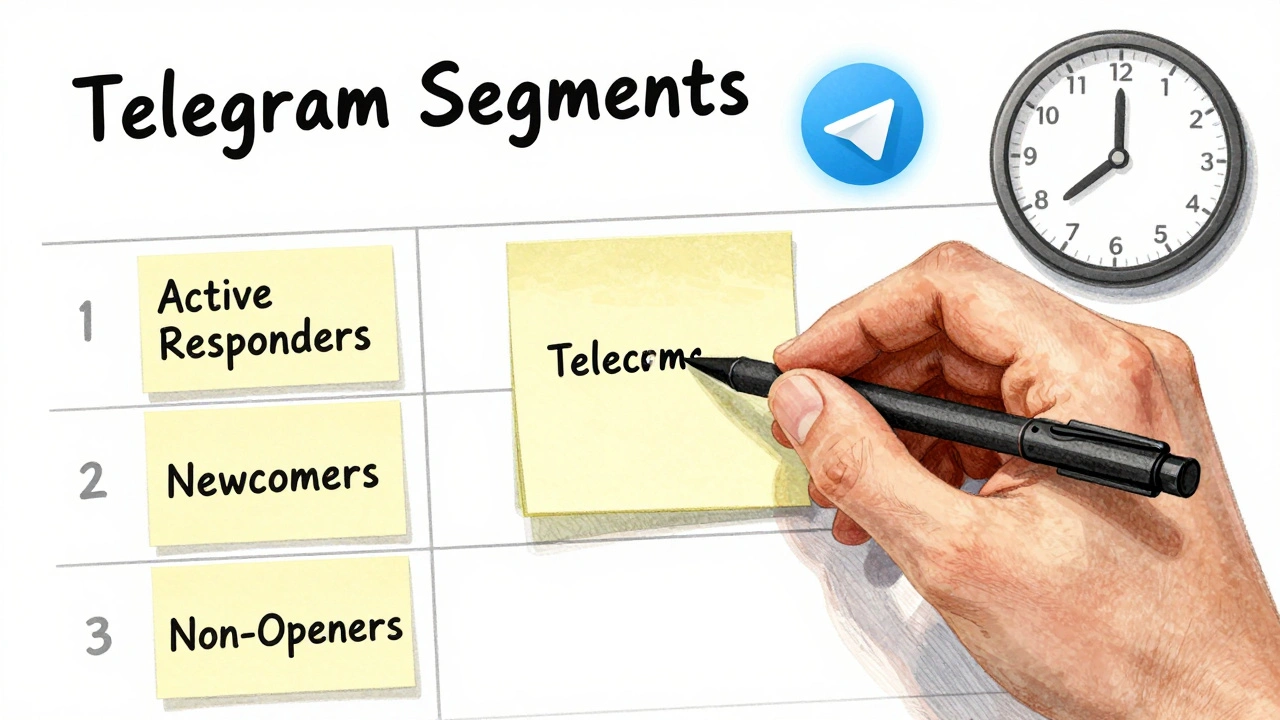
Not all followers are equal. Some open every message. Some reply every time. Others never click a link. Group them.Use Telegram’s analytics to see which posts get the most replies, clicks, and forwards. Then, create three basic segments:
- Active Responders: Users who reply, vote, or click links regularly. They’re your advocates. Send them exclusive updates, polls, or early access.
- Passive Readers: They open messages but never interact. These are your low-engagement group. Try re-engaging them with a simple question: “What topic should we cover next?”
- Non-Openers: Users who haven’t opened a message in 30+ days. They’re at risk of leaving. Send them a one-time “We miss you” message with a quick survey or incentive.
Tag these segments in a simple spreadsheet or CRM tool. Even free tools like Airtable or Notion work. You don’t need fancy software. You just need to label them and adjust your messaging accordingly.
Know Their Journey Stage
A new member who joined yesterday has different needs than someone who’s been there for a year. Segment by where they are in their journey:- Newcomers: They need onboarding. Send a welcome message with key rules, top posts, and how to get help.
- Regulars: They know the drill. Give them deeper content-case studies, behind-the-scenes, or data-heavy updates.
- Experts: These are your moderators or power users. They want to contribute. Invite them to co-create content, answer questions, or even host AMAs.
Use bots to auto-tag users based on how long they’ve been in the group. Telegram’s Bot API lets you track join dates. Combine that with message interaction history, and you can automatically assign journey stage tags. No manual work needed.
Use Timing Like a Weapon
Sending a post at 2 AM in Tokyo? You’re not being helpful. You’re being noise.Time zone segmentation is simple: find the top 3 time zones of your audience. Then schedule messages for their peak hours. For example:
- India: 7-9 PM (after work, before bed)
- Germany: 12-2 PM (lunch break)
- USA (East Coast): 8-10 AM (commute or morning scroll)
Tools like Telegram Bot API and a programmatic interface that lets developers build bots to send messages based on user attributes like location and activity can automate this. You can also use third-party platforms like CRMchat and a platform that integrates with Telegram to automate message scheduling based on time zones and user behavior to auto-send messages at the right local time. No manual scheduling. Just set it once and forget it.
Connect the Dots Across Platforms
Your Telegram audience doesn’t live only on Telegram. They’re on Instagram, Twitter, email, and maybe even WhatsApp. Use that.Integrate your Telegram channel with Zapier and a no-code automation tool that connects Telegram to other apps like Google Sheets, Mailchimp, or Notion. For example:
- If someone clicks a link in your Telegram post about a product, tag them in your email list as "interested in X".
- If they reply with "I need help", trigger a DM from your support bot.
- If they forward your post 3+ times, add them to your "influencer" segment.
This turns Telegram from a broadcast tool into a data hub. You start seeing patterns: "Users who join from Instagram engage more with video posts." Or, "People who click the pricing link in Telegram open our email 70% more often." That’s insight you can’t get from Telegram alone.
Test, Measure, Repeat
Segmentation isn’t a one-time setup. It’s a cycle.Every month, ask yourself:
- Which segment had the highest click-through rate?
- Which group stopped responding?
- Did a new region grow fast? Did we miss a cultural holiday?
Adjust your templates. Change your timing. Retrain your bot. The best Telegram channels don’t just post-they evolve. They test one variable at a time. Maybe next week, you try sending a video-only message to your active responders. The week after, you test a meme format for newcomers. Track the results. Keep what works. Drop what doesn’t.
Don’t Overcomplicate It
You don’t need AI, machine learning, or a $10,000 dashboard. Start small.Here’s your 3-step launch plan:
- Use Telegram analytics to identify your top 3 countries and time zones.
- Create 3 message templates: one for each region, with localized language and timing.
- Use a free bot (like Telegram Bot API) to auto-send messages based on user location.
That’s it. You’re now segmenting. No fancy tools. No consultants. Just smarter timing and better messaging.
Can I segment Telegram posts without a bot?
Yes, but it’s manual. You can tag users by asking them to reply with their country or language. Then, use Telegram’s built-in analytics to see who engages most. Send different messages to different groups by copying and pasting manually. It works for small channels (under 5,000 members). Once you hit 10,000+, automation becomes necessary to stay consistent.
What’s the easiest tool to start with for segmentation?
Start with Zapier and a simple Google Sheet. Set up a trigger: when someone replies to your Telegram post with their country, add them to a row in the sheet. Then, use the sheet to manually group your audience. It takes 15 minutes to set up. No coding needed. Later, you can upgrade to CRMchat or the Telegram Bot API.
How often should I update my segments?
Check your segments every 30 days. User behavior changes fast. Someone who was active last month might have gone quiet. A new region might have grown. A language preference might shift. Don’t wait for engagement to drop. Review your data monthly. Make small tweaks. That’s how you stay ahead.
Do I need to translate everything?
No. Only translate when your audience is large enough to justify it. If 15% of your followers are Spanish speakers, create one weekly post in Spanish. Don’t translate every message. That’s exhausting and unnecessary. Focus on high-impact content: announcements, promotions, or community updates. Casual updates can stay in your main language.
Can I segment by age or gender?
Telegram doesn’t collect age or gender data. But you can ask users in a poll: "Are you under 25?" or "What’s your main interest?" Use replies to guess demographics. For example, if users who reply "gaming" are mostly under 25, you can infer age trends. It’s not perfect-but it’s better than guessing.
Next Steps
If you’re just starting: pick one region. Pick one audience type (like active responders). Create one segmented message. Send it. Track the results. Then do it again next week. Growth doesn’t come from sending more posts. It comes from sending the right post, to the right person, at the right time.Latest Posts