Most of us are tired of the "filter bubble." You know the feeling: your news feed keeps showing you the same three topics because an algorithm decided you liked them two years ago. It is not actually an information overload problem; it is a filter failure. Imagine having a news curator that lives in your chat app, knows exactly what you want, and lets you change your mind in plain English. That is exactly what Dynamic Personalization is bringing to Telegram News Bots, turning a simple messenger into a powerhouse of tailored information.
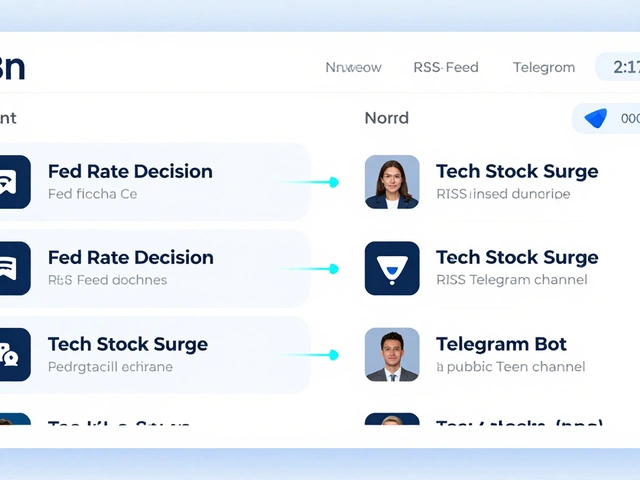
For those not in the loop, Telegram News Bots are AI-driven tools that aggregate stories from across the web and deliver them directly to your chat. Unlike a standard RSS feed or a static channel, dynamic personalization means the bot learns from your behavior and explicit commands. If you tell it, "I want more about SpaceX but less about general aviation," the bot doesn't just keyword-match; it adjusts your profile in real-time to refine what hits your inbox.
The Tech That Makes it Happen
You can't build this level of customization with basic tools. The shift happened largely thanks to the Bot API 6.2 released in late 2023. This update gave developers the ability to handle real-time response streaming. Instead of waiting for a bot to process a massive list of articles and send one giant block of text, the bot now streams answers as they are generated. This cuts the perceived wait time by about 65%, making the experience feel like a conversation rather than a database query.
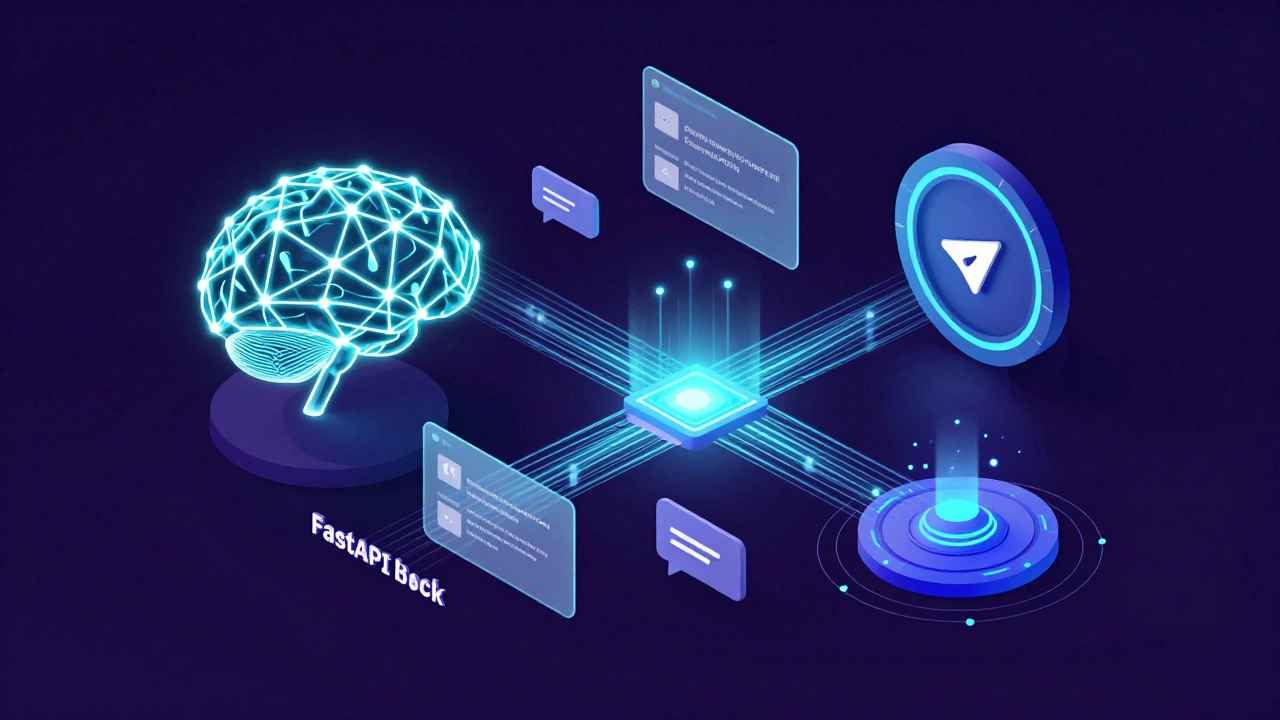
Under the hood, a high-performing bot usually relies on a FastAPI Backend to keep things snappy. The architecture typically looks like this:
- Personalization Module: The brain that tracks your likes, dislikes, and category preferences.
- AI Service: Usually an LLM that summarizes long articles into a "digest" format.
- Scheduler: A system that constantly polls news sources so you get the news the moment it breaks.
- Database: Where your interaction history is stored to ensure you don't see the same story twice.
One of the coolest additions is the integration of Mini Apps. These allow bots to see your theme settings. If you're in Night Mode, the bot's interface adjusts automatically, creating a seamless visual experience that feels like a native app rather than a third-party script.
Telegram Bots vs. Traditional Aggregators
You might wonder why you'd use a bot when Google News already exists. The difference comes down to control. Google uses passive tracking-it watches what you click across the entire web. Telegram bots often use explicit configuration. You tell the bot exactly what categories you want, which leads to much higher precision in the content you actually receive.
| Feature | Telegram News Bots | Traditional Apps (e.g., Google News) |
|---|---|---|
| Control Method | Conversational & Explicit | Algorithmic & Passive |
| User Engagement | High (2.7x more frequent) | Moderate |
| Content Breath | Narrow (5-7 key sources) | Massive (Thousands of publishers) |
| Ad Experience | Often Ad-Free | Heavy Ad Integration |
| Privacy Model | Developer-dependent | Corporate Ecosystem Tracking |
The trade-off is breadth. A bot like Newsmate provides an incredibly curated a digest, but it won't have the sheer volume of sources that a global giant possesses. However, for the 18-35 age demographic, the privacy and the "no-noise" approach are winning over the "everything-everywhere" approach.
Real-World Implementation: Building Your Own
If you're a developer, building a personalized news bot is a project that takes roughly 40 to 60 hours of work. You start with BotFather to get your API token, which is the standard first step for any Telegram bot. From there, the real work is in the personalization logic.
Simple category selection-where a user just clicks "Tech" or "Politics"-is relatively easy and can be set up in about 10 hours. But if you want a bot that understands a request like "Give me more deep-dives into semiconductor manufacturing but stop sending me Apple stock updates," you're looking at 25-30 hours of NLP (Natural Language Processing) implementation. You'll need to manage conversation context so the bot remembers what you said three messages ago.
One major pitfall to avoid is the API rate limit. Telegram restricts bots to 30 messages per second. If your bot suddenly gains 10,000 users and you try to send a morning digest to all of them at 8:00 AM, the API will shut you down. The pro move here is to implement a queue management system that staggers delivery over several minutes.
The Privacy and Trust Gap
It's not all sunshine and perfectly curated feeds. There is a real risk when it comes to data. When you use a big app, you're dealing with a company with a public privacy policy. With a Telegram bot, you are essentially trusting an individual developer or a small team with your interests and reading habits. This creates a fragmented privacy landscape.
Furthermore, because these bots don't have a centralized quality control board, they can accidentally become echo chambers or, worse, pipelines for misinformation. If a bot developer aggregates from unreliable sources, the AI might summarize a fake story with such confidence that it looks like a legitimate fact. This is why transparency features, like the "Explain My Feed" options now appearing in some EU-compliant bots, are becoming essential.
What's Next for AI News Curation?
We are moving toward a world where bots won't just aggregate text, but will use multimodal preference learning. This means the bot might analyze the videos you watch or the images you interact with to better understand your tastes. There are rumors about an in-house LLM from Telegram that could push content relevance accuracy to 85% or higher by the end of the year.
We are also seeing a shift in how these bots make money. Instead of selling your data to advertisers, developers are using Telegram's new monetization framework to offer subscription plans. You pay a few dollars a month for a truly premium, ad-free, hyper-personalized news experience. It is a return to the "curated newsletter" feel, but powered by AI and delivered in a chat bubble.
What makes a news bot "dynamic" compared to a regular one?
A regular bot sends the same content to every user in a channel. A dynamic bot uses a personalization module to track individual user preferences, interaction history, and explicit feedback to curate a unique feed for every single subscriber.
How do Telegram news bots handle the massive amount of daily news data?
They use a combination of scheduled scrapers and AI services. Instead of processing everything, the bot filters for specific keywords and categories defined by the user, then uses an LLM to summarize the most relevant pieces into a digestible format.
Is it safe to share my news preferences with a Telegram bot?
It depends on the developer. Since bots are third-party tools, you should check the bot's privacy policy. Be cautious about providing sensitive personal information beyond your topical interests.
Can I customize the delivery time of my news digest?
Yes, most advanced personalized bots include a scheduler that allows users to set a specific time for their "Daily Digest," ensuring they get their news at the most convenient moment, such as during a morning commute.
Do these bots cost money to use?
Many offer a free basic version, but because running LLMs for personalization is expensive, many developers now use Telegram's subscription framework to charge for premium features like advanced NLP tuning or more sources.
Next Steps for Users and Devs
If you are a user looking for a better way to stay informed, start by searching for bots that offer "conversational preferences." Test them by giving a complex command to see if the bot actually adjusts its output or just ignores you. If you're a developer, focus your efforts on the WebApp framework to make your bot's interface feel less like a chat and more like a professional news dashboard.
Regardless of which side you're on, the goal is the same: getting the right information at the right time without the noise. As AI continues to merge with messaging, the "app" as we know it is slowly being replaced by a series of smart, personalized conversations.