You open Telegram, and there it is. A video of a world leader declaring war, or a CEO announcing a stock crash. It looks real. The lighting is perfect. The voice matches the person perfectly. But what if I told you that by May 2026, your eyes and ears can no longer be trusted? With AI tools like HeyGen and Synthesia producing flawless synthetic media, the old rule of "seeing is believing" is dead. On Telegram, where messages spread faster than truth can catch up, this isn't just a nuisance-it’s a security risk.
The problem isn’t just that deepfakes exist; it’s that they are getting better while our ability to spot them is staying flat. Research shows human detection accuracy hovers around 55%, which is basically guessing. So, how do you protect yourself when every piece of news could be fabricated? You stop relying on intuition and start using a layered verification system. This guide breaks down exactly how to verify content on Telegram in 2026, moving beyond simple skepticism to concrete technical checks.
Why Traditional Detection Fails on Telegram
First, we need to kill a myth: you cannot reliably detect deepfakes by looking for "glitches." In earlier years, you might have looked for weird blinking patterns or unnatural lip movements. Today, those artifacts are gone. Tools like ElevenLabs for audio and Sora for video have eliminated the tell-tale signs that humans used to rely on.
A 2024 meta-analysis of 56 academic papers published in ScienceDirect confirmed what many journalists feared: human detection rates are statistically indistinguishable from a coin flip. Worse, ex-post detection software-tools that scan existing files for statistical anomalies-often fails against 2026-era deepfakes, dropping below 50% accuracy. This creates a dangerous phenomenon known as the "liar's dividend." Because convincing fakes are so easy to make, people begin to doubt even real evidence. If you see a video of an event, someone can always claim it’s a deepfake, even if it’s not. Relying solely on detection tools leaves you stuck in this loop of uncertainty.
This is why Telegram is such a difficult environment. Unlike platforms with centralized moderation, Telegram’s encrypted nature and rapid forwarding features allow disinformation to circulate before any fact-checker can touch it. To survive here, you need more than just a detector; you need a verification workflow.
Specialized Tools for Telegram Verification
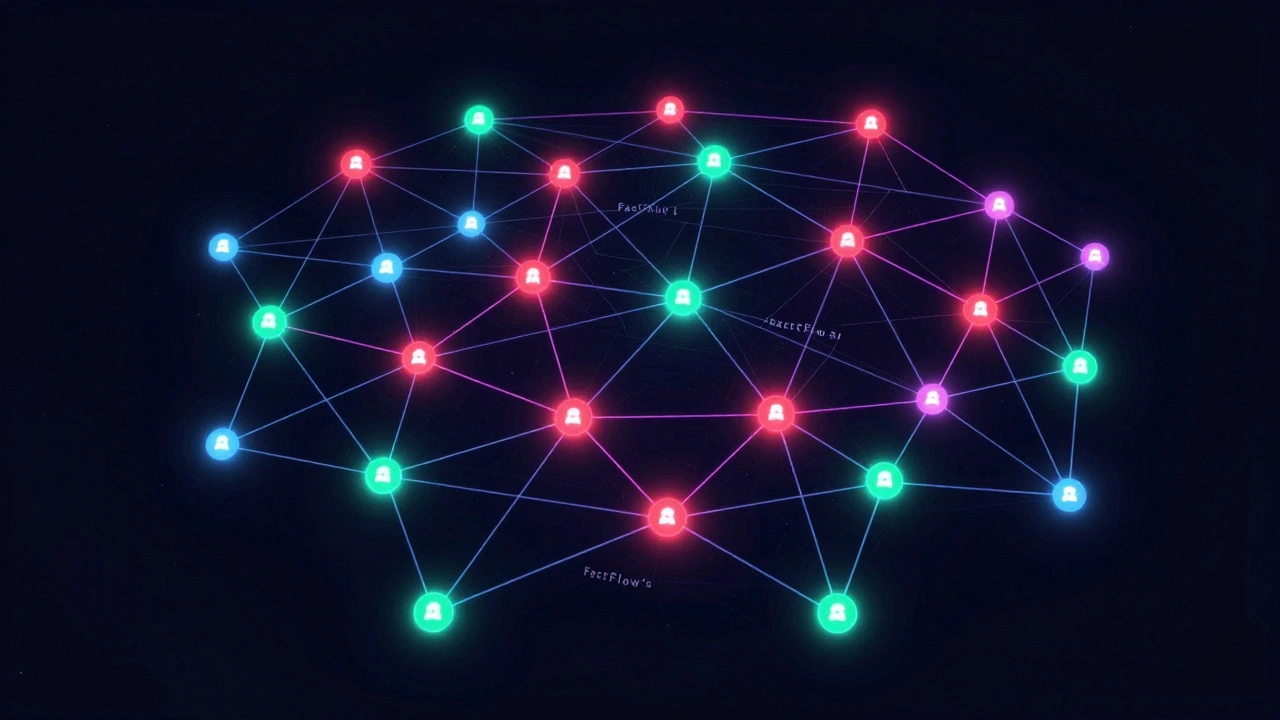
Since general-purpose detectors fall short, specialized tools designed for Telegram’s ecosystem are essential. One standout example is FactFlow, developed by the Spanish fact-checking organization Newtral. Created for the JournalismAI Innovation Challenge, FactFlow uses an open-source AI model called Qwen trained on over one million messages from suspicious Telegram accounts.
FactFlow doesn’t just look at a single video. It maps networks. It helps investigative journalists identify disinformation actors and track how false narratives spread across channels. For the average user, however, the most accessible tool is the Fact Check Explorer. This resource allows you to paste a phrase, data point, or link to see if it has already been verified. Results are categorized simply as "true," "false," or "misleading."
Another critical step is checking archives. Sites like Archive.org let you compare viral content against historical records. If a video claims to show a breaking event, but similar footage appears in an archive from three years ago, you’ve found your answer. Always cross-reference with these databases before sharing.
| Tool / Resource | Primary Function | Best For | Limitation |
|---|---|---|---|
| FactFlow | AI-powered pattern detection & network mapping | Journalists & researchers | Requires technical setup |
| Fact Check Explorer | Searches existing fact-checks | General users | Only works if content is already checked |
| Archive.org | Historical comparison | All users | Depends on prior archival existence |
| TrueScreen | Source-level forensic certification | Legal & high-stakes verification | Requires original capture device |
The Rise of Source-Level Certification
If detection is flawed, the only remaining solution is prevention through certification. This is where TrueScreen changes the game. Instead of asking "Is this fake?" after the fact, TrueScreen asks "Was this captured on a trusted device?"
When content is recorded using TrueScreen’s mobile app, Forensic Browser, or Chrome extension, it undergoes immediate forensic certification. This process verifies the device’s integrity, applies real-time hashing, and seals the file with a legally admissible timestamp. This removes the authentication question from the realm of guesswork. The content is authenticated for what it *is*, not what it *looks like*.
In this model, deepfake detection becomes secondary. If a video comes from a certified source, you don’t need to run it through five different AI detectors. The forensic guarantee stands regardless of how advanced future AI generators become. For Telegram users receiving high-stakes information-like financial alerts or legal documents-insisting on source-certified content is the only way to ensure absolute authenticity.
Understanding Content Provenance Standards (C2PA)
While TrueScreen focuses on capture, the industry is also adopting C2PA (Coalition for Content Provenance and Authenticity). C2PA is a standard for embedding metadata into files that documents their lineage. It doesn’t detect deepfakes; instead, it tells you who created the file and what edits were made.
Think of C2PA as a digital passport for media. If a news outlet publishes a video with C2PA tags, you can verify that the file originated from their camera and hasn’t been altered since. As more major publishers adopt C2PA, you’ll be able to use compatible viewers to check these credentials directly on Telegram. Look for files that include this provenance data; its absence in professional journalism should raise a red flag.
Protecting Your Own Digital Identity
Verification isn’t just about spotting fakes; it’s about preventing your own face and voice from being used in them. Attackers often scrape public photos to train custom models. To combat this, you need proactive defense.
Start with basic privacy settings. Set your social media accounts to private, limit post visibility to friends, and disable facial recognition features where available. Regularly audit your online presence by searching your name and images on search engines. Remove outdated content and close unused accounts.
For stronger protection, consider using "data poisoning" tools like Glaze and Nightshade. These tools subtly alter your images in ways invisible to the human eye but disruptive to AI training algorithms. While research suggests these methods may weaken as AI evolves, they currently offer a layer of temporary protection. Additionally, check sites like "Have I Been Trained" to see if your photos appear in known AI datasets. Under regulations like the GDPR, you can also request companies to remove your data from their training sets.

Advanced Verification for High-Stakes Scenarios
For businesses and institutions dealing with KYC (Know Your Customer) processes, the stakes are higher. The World Economic Forum’s 2026 report highlights specific technical countermeasures against deepfake attacks:
- Device Path Verification: Ensures video feeds come from native, trusted hardware paths, blocking synthetic injections.
- Active Liveness Checks: Uses randomized prompts and dynamic lighting (like screen flashes) to expose synchronization errors in real-time face swaps.
- Latency Analysis: Measures reaction time to detect non-human response patterns.
- Telemetry Correlation: Checks for virtual webcam drivers or unexpected Windows services that signal injection attempts.
These measures are crucial for financial institutions and secure platforms. If you’re verifying a high-value transaction via Telegram, insist on multi-modal verification that includes these dynamic checks, not just a static photo or video.
A Practical Checklist for Telegram Users
To summarize, here is your action plan for navigating Telegram news in 2026:
- Pause Before Sharing: If it triggers urgency or strong emotion, stop. That’s a common deepfake tactic.
- Check Archives: Use Archive.org to see if the footage is recycled.
- Use Fact Check Explorer: Search for existing verifications of the claim.
- Demand Provenance: Look for C2PA metadata or TrueScreen certification for critical content.
- Verify Out-of-Band: Confirm breaking news through a second, independent channel outside Telegram.
- Protect Yourself: Keep your social profiles private and use Glaze/Nightshade on public images.
The goal isn’t to become paranoid; it’s to become precise. By combining technological tools with healthy skepticism, you can cut through the noise and find the truth.
Can I trust my eyes to spot a deepfake on Telegram?
No. Research indicates human detection accuracy is around 55%, which is essentially random guessing. Modern AI tools have removed visual glitches, making manual inspection unreliable.
What is the best tool for verifying Telegram content?
For general users, Fact Check Explorer is highly effective for checking existing claims. For journalists, FactFlow offers advanced network mapping. For absolute proof, source-level certification via TrueScreen is the gold standard.
How does C2PA help with deepfakes?
C2PA doesn't detect fakes but provides a digital history of the file. It shows who created the content and what edits were made, allowing you to verify its origin rather than analyzing its appearance.
What is the "liar's dividend"?
It refers to the systemic doubt caused by the prevalence of deepfakes. Even when content is real, bad actors can claim it is fake, creating confusion that detection tools alone cannot resolve.
How can I prevent my face from being used in a deepfake?
Keep social media accounts private, limit image visibility, and use data poisoning tools like Glaze and Nightshade. Regularly audit your online presence and opt out of AI training datasets where possible.