Most Telegram channel owners guess what their audience wants. They post news, share links, drop memes, and hope something sticks. But what if you could know what your audience actually cares about-before you hit send?
Poll data isn’t just a fun way to pass time on Telegram. It’s a direct line to your audience’s preferences, timing, and behavior. Used right, it transforms your editorial strategy from guesswork into a precision tool. Channels that use polls wisely see 2-4x higher engagement, better retention, and more consistent growth. Here’s how to turn poll responses into real editorial decisions.
Start with the right kind of polls
Not all polls are created equal. A simple "Yes or No" about today’s weather won’t tell you much. But a well-designed poll can reveal patterns that shape your entire content calendar.
Telegram supports two main poll types: single-answer and multiple-answer. Use single-answer polls for clear choices like:
- "Which topic should we cover next?" (Options: AI updates, crypto news, productivity tips)
- "What time should we post?" (Options: 8 AM, 12 PM, 6 PM, 9 PM)
Use multiple-answer polls to uncover layered preferences:
- "Which of these do you want more of?" (Select up to 3: Technical deep dives, quick news briefs, community Q&As, industry interviews)
Pro tip: Always include an "Other" option. You’ll be surprised how often people use it to tell you something you didn’t think of.
Track what really matters: engagement metrics
Views alone don’t tell the story. A post with 10,000 views and 50 reactions is less valuable than one with 3,000 views and 800 reactions. Polls help you spot the difference.
Focus on three key poll-related metrics:
- Response rate - How many people voted? If 30% of your subscribers respond, you’re doing well. Below 10%? Your topic or timing is off.
- Reaction depth - Are people just voting, or are they replying with comments? A poll with 500 votes and 120 replies signals high engagement. That’s your sweet spot.
- Share rate - Did people forward the poll? If yes, your content is resonating beyond your channel. That’s organic growth in action.
For example, a channel that posted a poll asking, "Which crypto regulation update matters most?" got 1,200 votes and 300 comments. The comments revealed confusion around EU MiCA rules. The next day, they posted a 3-minute explainer video. It got 8x more views than their usual posts.
Let polls reveal your audience’s hidden segments
Your subscribers aren’t one group. They’re layered.
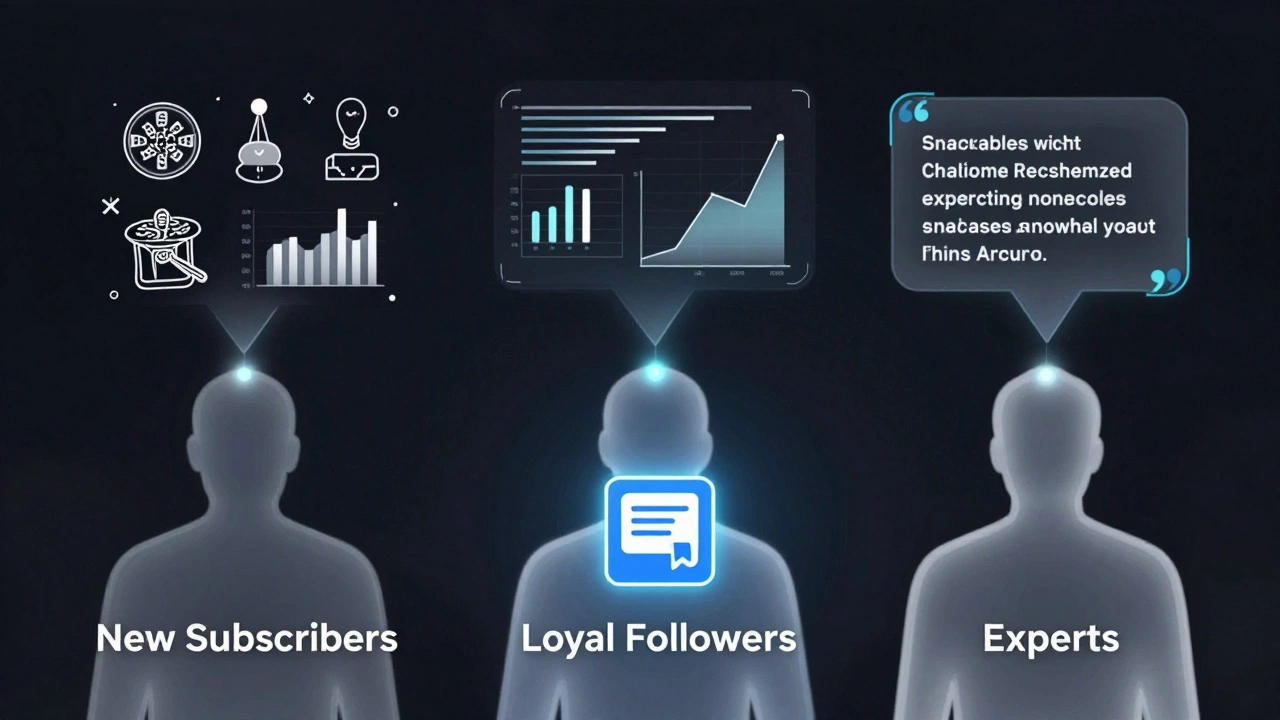
One study of 17 Telegram channels found that users under 25 preferred visual, snackable updates (like infographics or short polls). Users over 35 responded better to detailed breakdowns, data charts, and expert quotes.
Here’s how to find your segments:
- Run a poll: "How long have you been in this channel?" (Less than 3 months / 3-12 months / Over a year)
- Follow up with: "What kind of content do you value most?"
Then cross-reference the results. You might discover that new subscribers love quick news alerts, while long-term members want exclusive analysis. Now you can split your content: one post for newcomers, another for loyal followers.
Don’t assume age is the only factor. Job role matters too. Polls like "Are you in tech, finance, or another field?" can reveal that engineers want code snippets, while marketers want conversion case studies.
Link poll results to your posting schedule
When you post matters as much as what you post.
One channel noticed their polls got 70% more votes on Tuesday and Thursday evenings. They checked their post analytics and found their highest-viewed content was also posted on those days. They adjusted everything: news briefs went out at 7 PM on Tuesdays, deep dives on Thursdays at 8 PM. Within a month, their average views per post jumped 42%.
Use this simple rule: Match your content type to your audience’s peak activity.
- Quick polls → Morning hours (people check phones on the way to work)
- Long-form analysis → Evening (after work, when people have time to read)
- Community polls → Weekends (more free time, more replies)
Test this for 2-3 weeks. Track the numbers. Then stick to what works.
Use tools to turn raw data into strategy
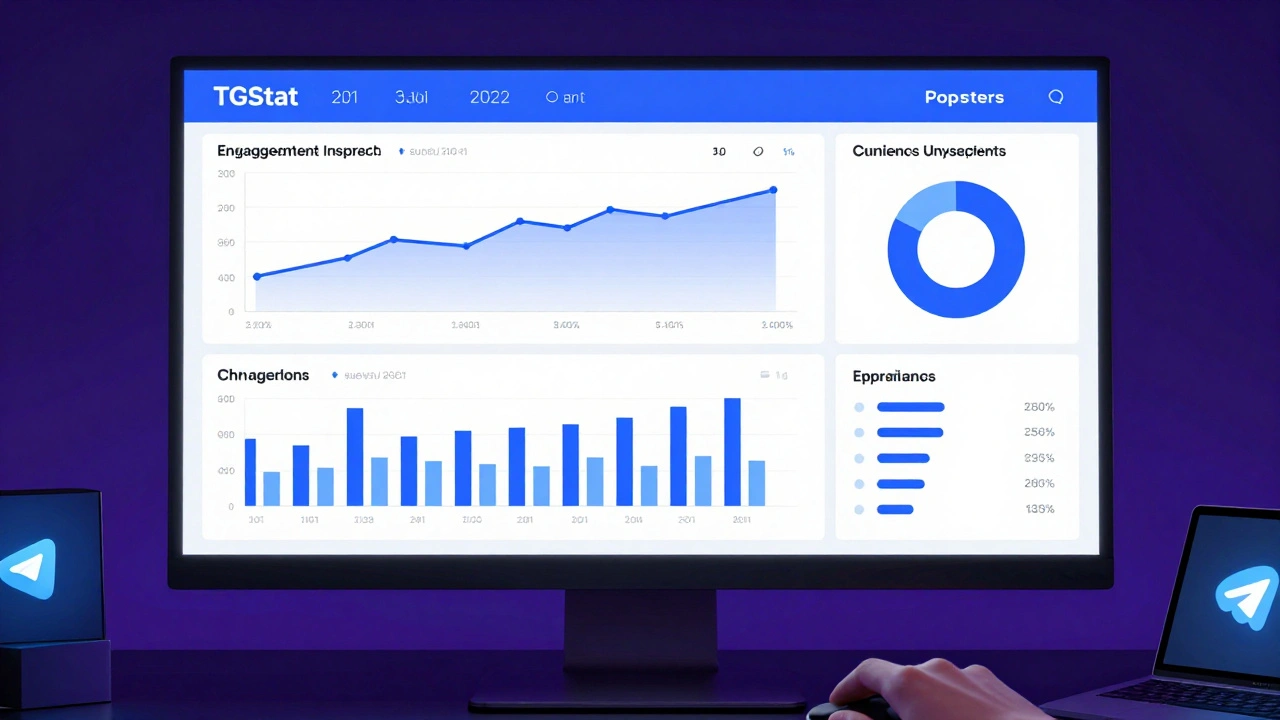
You don’t need to manually count votes. Tools like TGStat and Popsters do the heavy lifting.
TGStat pulls data from over 14,000 channels. It shows you:
- Average views per post
- How often your audience shares your content
- When your followers are most active
Popsters breaks down performance by content format:
- Which text length gets the most views?
- Do polls with images perform better than text-only ones?
- Is your engagement dropping after 3 posts a week?
These tools don’t replace your judgment-they amplify it. You still decide what to do. But now you’re not guessing. You’re acting on evidence.
Turn feedback into action-and show it
Here’s the secret most channels miss: Respond to the feedback.
If 80% of voters say they want more tech tutorials, don’t just post them. Say this:
"You asked for more tech breakdowns. Here’s the first one-let us know if this format works. We’re listening."
That single message does three things:
- It proves your poll wasn’t a one-off-it’s part of a system.
- It builds trust. People feel heard.
- It encourages future participation. They’ll vote again because they know it matters.
Channels that do this see 30-50% higher repeat poll participation. That’s not luck. That’s strategy.
Measure what moves the needle
You don’t need to track everything. Focus on four areas:
- Engagement - Daily. Track poll response rates and replies. If they drop, change your topic or timing.
- Conversion - Weekly. Did a poll lead to more link clicks? More sign-ups? More replies? That’s your ROI.
- Audience growth - Monthly. Are people joining because of your polls? Check new subscriber sources.
- Content ROI - Monthly. Which poll-driven content got the most views, shares, and replies? Double down on that.
Visualize it. Use simple charts: a line graph for engagement trends, a bar chart comparing content types, a pie chart showing audience segments. You don’t need fancy software. Google Sheets works fine.
What to avoid
Don’t poll about everything. Too many polls feel like a survey farm. Your audience will tune out.
Don’t ignore low-response polls. If a poll gets 5 votes, it’s not useless. It’s a signal. Maybe the topic was too niche. Maybe the timing was off. Dig into why.
Don’t assume your audience is like yours. A tech founder might love deep dives. But 60% of your subscribers might be students who want quick tips. Let data-not your gut-guide you.
What’s next? Automate and scale
Tools like n8n and Telegram bots can now auto-trigger polls based on triggers: after a new subscriber joins, after a post gets over 500 views, or every Monday morning.
Imagine this: Every Monday, a bot asks, "What’s your biggest challenge this week?" Responses are logged. On Wednesday, the channel posts a tailored tip based on the top answer. No manual work. Just smart, consistent feedback loops.
This isn’t sci-fi. It’s already being used by top Telegram channels. You can start small-automate one poll a week. Then two. Then build a system.
Final thought: Polls aren’t a feature. They’re a mindset.
Telegram has 700 million users. Most channels compete for attention with noise. The ones that win? They listen. They adapt. They build content that answers real questions-not assumptions.
Every poll is a conversation. Every vote is a clue. Use them. Not just to measure. But to lead.
How often should I run polls on my Telegram channel?
Run polls once a week at most. Too many polls overwhelm your audience and reduce response quality. Stick to one high-impact poll per week-preferably on a consistent day like Tuesday or Thursday. This builds anticipation and makes responses more reliable. If you’re testing new content formats, run a poll every 3-4 days for 2 weeks, then pause to analyze.
Can polls help me grow my subscriber base?
Yes, but indirectly. Polls themselves don’t bring in new subscribers. But when people see their feedback shape future content, they’re more likely to stay-and share your channel. A poll that sparks conversation often gets forwarded. That’s how growth happens. One channel saw a 22% increase in new subscribers after running a poll that asked, "Who should we interview next?"-and then featured the top choice.
What’s the best way to analyze poll results without spending hours?
Use TGStat or Popsters. Both auto-collect poll data and show trends over time. For quick analysis, focus on three numbers: response rate (aim for 15%+), top choice (what got the most votes), and reply volume (are people commenting?). If the top choice matches your editorial goals, double down. If not, pivot. No need to over-analyze-just act on the clear signals.
Should I use polls for every type of content?
No. Use polls for strategic decisions: topic selection, timing, format, and audience segmentation. Don’t poll about weather, memes, or random opinions. Save polls for content that directly affects your editorial calendar. For example: "Should we do daily briefs or weekly deep dives?" is worth polling. "Do you like this meme?" is not.
How do I know if my poll data is reliable?
Look at consistency. If your poll results change wildly week to week without a clear reason (like a major news event), your audience might be confused or your question might be unclear. Reliable data shows trends over time. For example, if "technical deep dives" consistently get 60%+ votes across 4 weeks, that’s a pattern. If it jumps from 20% to 80%, investigate-was the poll poorly worded? Was it posted at 3 AM? Don’t trust single polls. Trust patterns.