When a breaking news alert pops up on Telegram, it can feel like you’re getting the story first. But in reality, you might be getting a lie. Telegram has become one of the most important sources for real-time news-especially in conflicts, disasters, and political upheavals. With over 800 million users, it’s where governments, activists, and ordinary people share updates faster than any traditional outlet. But here’s the problem: 78% of news channels on Telegram aren’t officially verified, and many are made to look real. If you’re a journalist, a blogger, or even just someone who shares news with your community, you need to know how to tell what’s true before you hit publish.
Start with the Blue Badge-But Don’t Trust It
Telegram shows a blue checkmark next to some channels. It looks like Twitter’s verification, but it’s not the same. That badge only means the channel owner proved they control an account on at least two other platforms-like Twitter, Facebook, or YouTube-and linked it in their Telegram bio. It doesn’t mean the content is accurate. Telegram itself says this verification is "not an endorsement of any opinions or content." So a channel might have a blue badge because it’s linked to a real newsroom’s Twitter account-but that doesn’t mean every message it sends is true. In fact, some bad actors create fake channels with similar names and get verified by linking to a real but unrelated account. Always check the exact username. A channel named @BBCNewsOfficial on Telegram might be fake if the real BBC uses @BBCNews on Twitter. Look for consistency across platforms.Find the Channel ID-It’s Your Secret Weapon
Every Telegram channel has a unique ID. It looks like this:-100156723489102. This number is your key to cross-checking. Use the bot @TheGetAnyID_bot to get the ID of any channel. Once you have it, plug it into TGStat (a public OSINT tool that tracks 12.7 million Telegram channels). TGStat shows you how long the channel has existed, how fast its subscribers are growing, and how often it posts.
Legitimate news channels grow slowly and steadily-maybe 5% to 15% per day during a crisis. Fake channels? They explode. One moment they have 1,000 subscribers, the next they have 50,000 after a viral post. Then they go silent. That’s a red flag. Bellingcat’s 2025 OSINT Handbook found that disinformation channels often post 50+ messages in under an hour, then disappear for days. Real newsrooms post 8 to 12 times a day, consistently.
Check External Links Like a Detective
Look at the channel description. Does it link to a Twitter, Facebook, or YouTube profile? Click each one. Is the account verified there too? Does the bio mention the Telegram channel? If the channel says it’s "official" but the Twitter account doesn’t link back, it’s fake. In 2025, The Guardian caught a fake Hamas channel because it claimed to be verified but had no link to any verified social media account. The channel was created in March 2025-but the real Hamas account on Twitter was verified in 2018. That mismatch alone was proof. Also, check the creation date. Legitimate news channels are usually at least 18 months old before they break major news. BBC, Al Jazeera, Reuters-all have channels that existed for years before they became go-to sources. If a channel popped up last week and is now claiming to be the "official" source of military updates? It’s not.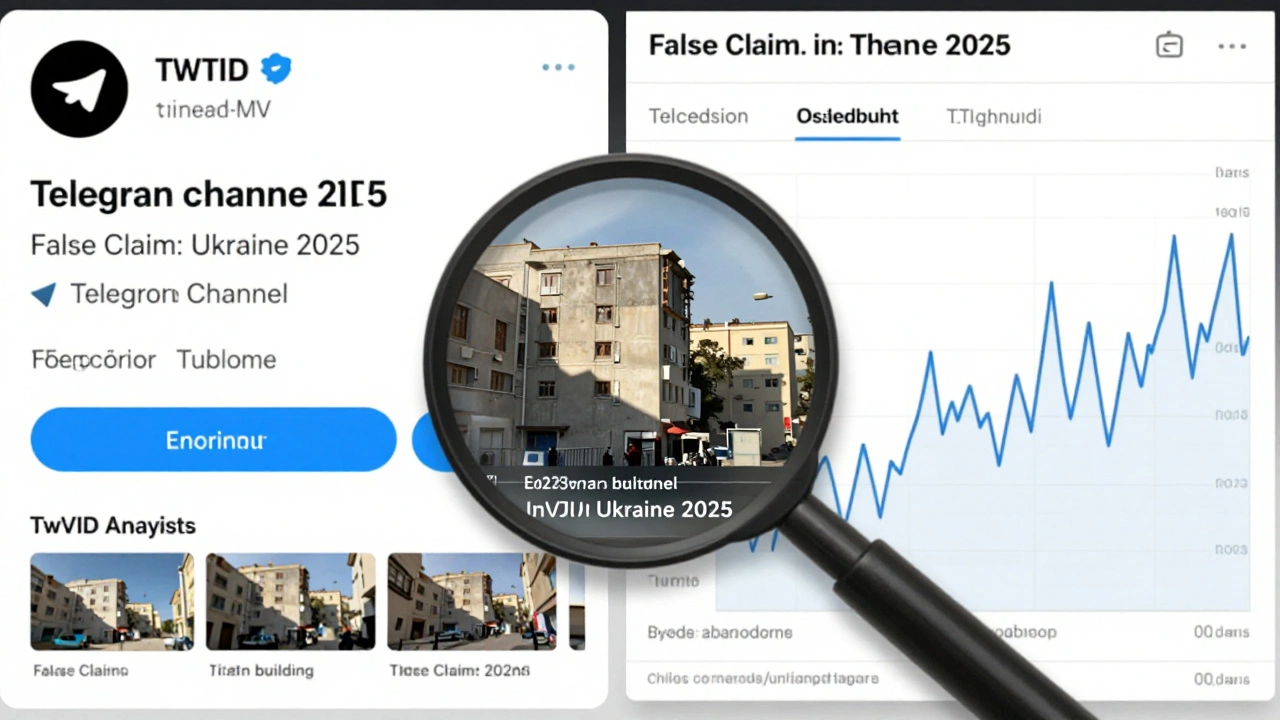
Use Reverse Search Tools on Images and Videos
A photo of a bombed building. A video of explosions. They look real-but are they? Maybe they’re from last year. Or from a different country. Use InVID or Google Lens to reverse-search the media. InVID can analyze video metadata, check timestamps, and even pinpoint the location using shadows and building angles. Google Lens finds where the image has appeared before. Journalists report a 68% success rate using InVID to verify video content from Telegram. If the same image was posted in Syria in 2023 and now shows up on a Ukraine news channel claiming it’s from last week? That’s misinformation.Require Three Independent Sources
Never publish based on one source-even if it looks perfect. The most trusted newsrooms follow the "TRIAD method":- Verify the Telegram channel itself (blue badge, ID, history)
- Find confirmation on a second platform (Twitter, YouTube, official government site)
- Get human confirmation (a trusted source on the ground, a known contact, or a verified journalist)
Document Everything
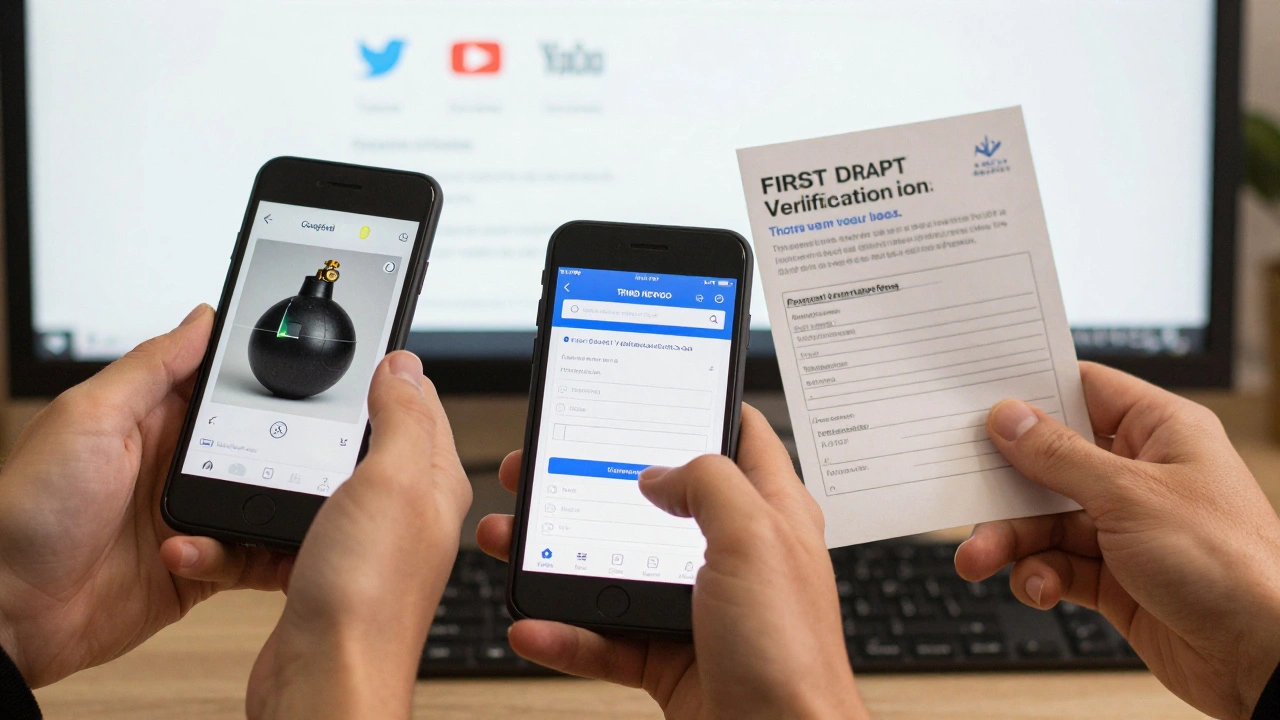
You can’t remember every detail. So write it down. Use the First Draft Verification Canvas-a free template adopted by 65% of newsrooms since 2024. It asks you to record:- Channel name and ID
- Verification status on external platforms
- Media verification results
- Time and date of verification
- Names of sources contacted
Watch for New Tricks
Telegram is evolving. In November 2025, they rolled out passkey authentication-biometric login for channel owners. That should make impersonation harder. Google’s new AI tool, Project Signal (launched January 2026), can analyze 127 behavioral patterns and spot fake channels with 88% accuracy. But don’t wait for AI to save you. Human judgment still matters more. Also, be aware of regional laws. Spain’s 2025 Digital Safety Act requires age verification for news channels. That’s complicated. It doesn’t help you verify truth-it just adds paperwork. Some European newsrooms say it slowed their verification process by 18%.What If You’re Wrong?
Mistakes happen. But you can reduce them. If you’ve followed these steps, you’ve done more than 90% of people sharing news on Telegram. The goal isn’t perfection-it’s confidence. If you can answer these questions:- Is the channel verified on two other platforms?
- Does the ID match known sources?
- Is the media real and properly dated?
- Do two other independent sources confirm it?
Telegram isn’t going away. It’s becoming the frontline for breaking news. But truth doesn’t come from speed. It comes from patience. Take the extra 15 minutes. Verify. Cross-check. Document. Then publish.
Can I trust a Telegram channel just because it has a blue checkmark?
No. The blue checkmark on Telegram only confirms the channel owner controls an account on two other platforms like Twitter or YouTube. It does not mean the content is accurate, true, or even from a legitimate organization. Many fake channels use this system to appear credible. Always check the exact username, external links, and history before trusting anything.
How do I find a Telegram channel’s unique ID?
Use the bot @TheGetAnyID_bot. Just send the channel’s username (like @BBCNews) to the bot, and it replies with the ID in the format -100 followed by 13 digits. This ID is essential for checking the channel’s history and ownership on tools like TGStat or in official databases.
What’s the difference between Telegram and Twitter for verifying news?
Twitter (X) has paid verification and Community Notes, where users can add context to posts. Telegram has no paid verification, no crowdsourced fact-checking, and 57% of its news channels operate anonymously. Telegram’s verification is stricter (requires two external platforms) but offers no content moderation. That makes it harder to spot lies, but also harder for bad actors to fake legitimacy if they don’t have pre-existing verified accounts.
Can I use free tools to verify Telegram content?
Yes. Tools like InVID (for video), Google Lens (for images), and TGStat (for channel stats) are free and reliable. The First Draft Verification Canvas is also free. You don’t need expensive software. What you need is time, patience, and a method. Journalists have verified major stories using only these free tools.
How long should a Telegram news channel exist before I trust it?
Legitimate news channels typically exist for at least 18 months before they break major news. Data from the BBC and The Guardian shows 91% of verified channels were created at least six months before their first major post. A channel that suddenly appears with 100,000 subscribers during a crisis is almost always fake.
What should I do if I accidentally share false news from Telegram?
Correct it immediately. Post a clear update saying the previous information was unverified and incorrect. If you’re publishing on a platform, delete or edit the original post and replace it with the correction. Transparency builds trust. Hiding mistakes destroys it. Many newsrooms now include a "correction log" as part of their verification process.