Telegram has become one of the most popular platforms for breaking news. From financial updates to geopolitical events, millions rely on its channels for real-time information. But with great speed comes great risk. Misinformation, spam, and coordinated disinformation campaigns flood these channels daily. So how do news organizations keep their Telegram channels clean, trustworthy, and compliant with global laws? The answer isn’t just one tool-it’s a system. A living, breathing mix of people, bots, and policies working together.
Why Telegram News Channels Need Strong Moderation
Telegram channels can have unlimited subscribers. The New York Times’ channel has over 2.3 million. Al Jazeera’s hits 3.1 million. That’s not a group chat-it’s a broadcast network. And unlike Twitter or Facebook, Telegram doesn’t automatically filter content. If you don’t set rules, chaos follows.
In 2025, Telegram processed over 1.2 billion daily messages. News-related content made up nearly 30% of that. That’s 360 million news messages every day. Without moderation, even a small percentage of false or harmful posts could mislead hundreds of thousands. And it’s not just about lies. Spam bots flood channels with fake crypto alerts. Scammers impersonate trusted outlets. Hate speech spreads under the guise of "political commentary."
After Pavel Durov’s arrest in August 2024, Telegram faced intense pressure from the EU’s Digital Services Act (DSA) and similar laws worldwide. They had to change. By mid-2025, they started moderating private chats-a huge shift from their old "no moderation in private" stance. News channels now operate under stricter rules. And they have to prove they’re following them.
The Human Layer: Admins and Moderators
Bots can’t think. They can’t judge context. That’s where people come in.
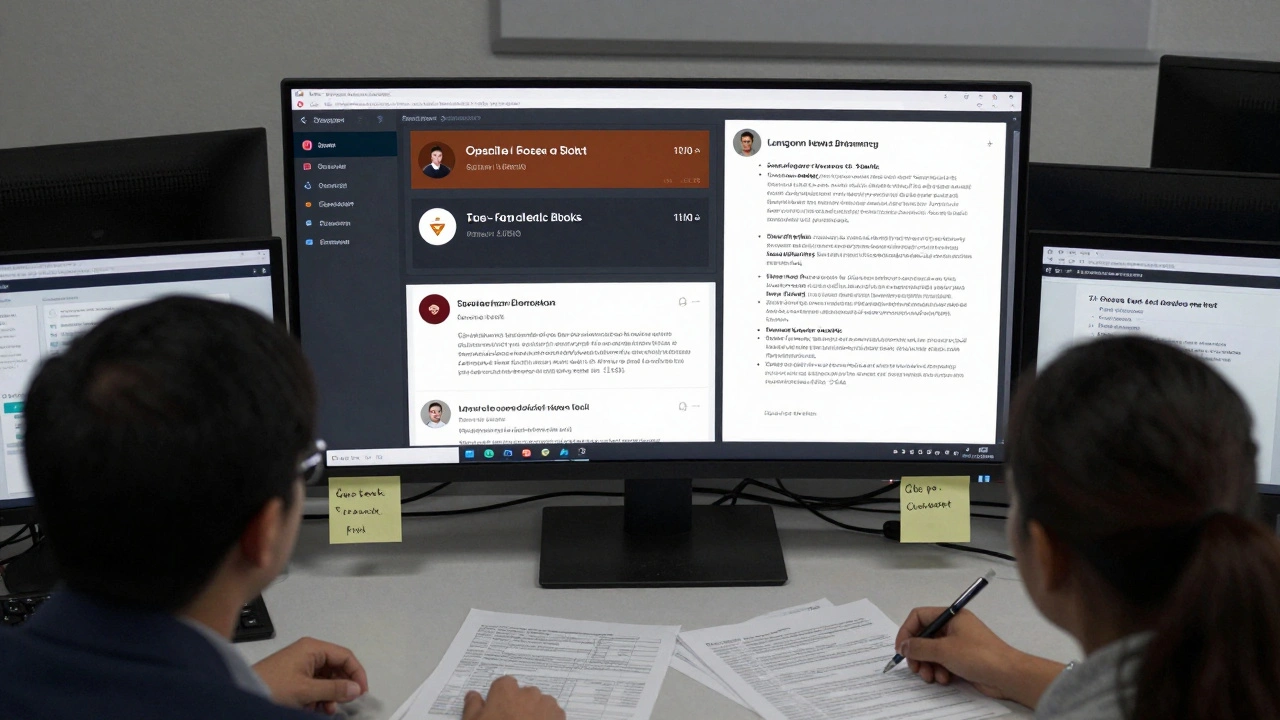
Every major news channel on Telegram has a small team of human moderators. These aren’t volunteers. They’re often journalists, editors, or community managers hired specifically to handle Telegram. Their job? Review flagged content, respond to user reports, and make final calls on borderline posts.
Permission levels matter. In a typical setup:
- Owner-Full control. Can delete the channel.
- Admin-Can add/remove other admins, delete messages, ban users.
- Moderator-Can delete messages and ban users, but can’t change admin roles.
- Member-Can only read or send messages if allowed.
Newsrooms like The Guardian use this structure to split work. One moderator handles spam, another watches for hate speech, and a senior editor reviews anything flagged as potentially illegal. This reduces burnout and increases accuracy.
Admin logs are mandatory under the DSA. Every action-ban, delete, warn-is recorded for 365 days. That’s not just for compliance. It’s for accountability. If a post gets wrongly removed, the team can trace why. If a user appeals, they can show proof.
The Bot Layer: Automation at Scale
Humans can’t watch 1.2 billion messages a day. Bots can.
Telegram’s API supports over 12,000 moderation bots. Some are simple. Others are AI-powered. Here’s how they work in practice:
- Keyword blockers-Block messages containing banned words like "fraud," "fake news," or specific names tied to disinformation campaigns. Channels can list up to 500 keywords. Case-sensitive. Regex support lets you block "BTC scam" and "btc scam" at once.
- Spam filters-Detect bots by behavior: sending the same message 10 times in 30 seconds, posting links too fast, or using 10+ hashtags. Telegram’s native system catches 17 different patterns.
- Fact-check integrations-Bots like TrustCloud connect to FactCheck.org. If a message claims "Ukraine bombed a hospital," the bot checks the claim against trusted databases and flags it.
- Geo-fencing-A news channel based in Germany can auto-block keywords that are legal in Brazil but illegal in the EU. This is now standard for EU-based channels.
One of the most effective bots is Turrit’s OSINT framework. Used by over 2,000 news teams, it processes 47,000 moderation requests daily. It doesn’t just block-it learns. If a user keeps posting the same false claim, the bot adds them to a watchlist and alerts human moderators.
Speed matters. Telegram’s native tools handle 8,500 messages per second. Third-party bots like TrustCloud’s ComplianceBot hit 12,300. That’s critical during breaking news. When a major earthquake hits, hundreds of posts flood in. Bots filter the noise. Humans handle the nuance.
The Policy Layer: Rules That Evolve
Rules aren’t static. They change with the law, the threat, and the audience.
Most news channels now have a public moderation policy. It’s not a legal document-it’s a plain-language guide posted in the channel bio or pinned message. It answers:
- What content is banned? (e.g., hate speech, misinformation, impersonation)
- How are reports handled? (e.g., "Reply to any post with \"report\" to flag it")
- What happens if you’re banned? (e.g., "You can appeal via DM within 7 days")
Some channels go further. CoinMarketCap splits its 178,000-member group into 20 topic threads-price alerts, exchange updates, educational posts. Each thread has its own moderation rules. Price alerts? No spam. Educational? No opinion masquerading as fact.
Policies must also adapt to location. In the EU, DSA requires transparency reports every six months. In the U.S., there’s no such law-but many channels still follow EU standards to avoid legal risk when users are global. In Southeast Asia, only 34% of news channels follow even basic moderation rules. That’s a problem. A false claim in Indonesia can spread to a Telegram channel in Canada within minutes.
The biggest policy shift? Moderating private chats. Telegram used to say private messages were off-limits. Now, if a private chat contains illegal content and is reported, they can review it. Critics say this opens the door to surveillance. Supporters say it’s the only way to stop criminal networks.
Real-World Successes and Failures
Not every channel gets it right.
Al Jazeera’s team reduced fact-checking workload by 68 hours a week using bots that flag geopolitical misinformation. That’s over a full workweek saved. The Guardian cut hate speech by 78% after using Turrit’s keyword system. These are wins.
But failures happen too. In September 2025, cybercriminals created over 1,200 fake BBC News channels. They used similar logos, similar names. They sent malware links. It took Telegram 72 hours to remove them. Over 147,000 users clicked. That’s a system failure.
Another case: a Russian disinformation channel targeting Ukrainian elections stayed active for 67 days. Why? It used coded language. "The Kyiv government is corrupt" was fine. But "Ukraine is a puppet state" triggered a flag. The bot missed the nuance. A human didn’t see it until it was too late.
And then there’s inconsistency. On Reddit, users reported identical posts being removed in one channel within 47 minutes but left up for three days in another. That’s not a bot problem-it’s a policy and training problem. If moderators aren’t trained the same way, enforcement is random.
How to Build Your Own Workflow
If you’re running a news channel on Telegram, here’s how to build a workflow that works:
- Start with clear rules-Write a 5-sentence moderation policy. Post it in your channel description.
- Use two layers-Bots for the obvious stuff (spam, links, keywords). Humans for the gray areas.
- Set up admin logs-Enable logging. Keep records for a year.
- Test your bots-Try sending test messages with banned keywords. Do they catch them? Adjust sensitivity.
- Train your team-Hold a 30-minute weekly sync. Review flagged posts. Share lessons.
- Use geo-fencing-If you have users in the EU, activate region-specific rules.
- Update regularly-New scams emerge weekly. Update your keyword list every 10 days.
Most teams take 87 hours to set up their first full workflow. That’s about two weeks of part-time work. After that, maintenance takes less than 5 hours a week.
The Future: AI, Verification, and the Tightrope Walk
Telegram’s next updates are coming fast. By Q2 2026, they’ll roll out real-time multilingual fact-checking. Imagine a post in Arabic about a war crime. The bot translates it, checks it against global databases, and flags it-all in under 5 seconds.
They’re also testing blockchain-based audit trails. Every moderation action gets recorded on a public ledger. No one can delete it. That’s huge for transparency.
But the biggest challenge remains: balancing freedom and safety. The EU wants more removals. Russia wants more surveillance. Activists fear censorship. Telegram is trying to please everyone-and failing at times.
Right now, 58.3% of news professionals say Telegram is "moderately safe." That’s up from 32.1% last year. But it’s still below WhatsApp’s 76.4%. The gap isn’t about technology. It’s about trust.
People don’t trust Telegram because it’s powerful. They trust it because they believe the people behind it are fair, consistent, and transparent. That’s what you need to build-not just bots, not just rules-but a reputation.
Latest Posts