Telegram isn’t just another messaging app. For newsrooms, it’s become one of the fastest-growing distribution channels-faster than email newsletters, more reliable than social media feeds, and far more direct than traditional websites. But here’s the problem: most newsrooms still run on old staffing models built for print deadlines and website CMS workflows. They’re not built for the real-time, community-driven nature of Telegram.
Telegram channels can hit 500,000 subscribers in under six months if the content is right. But managing that kind of audience? That’s not just hitting ‘send’ on a story. It’s a full-time operation requiring new roles, new workflows, and new ways of thinking about who does what in the newsroom.
Why Telegram Demands a Different Staffing Model
Most newsrooms staff for one thing: producing content. Reporters write. Editors approve. Designers make graphics. That’s it. But on Telegram, publishing is only half the job. The other half is engagement.
Telegram users don’t just read-they reply, argue, share screenshots, forward to groups, and demand updates. A breaking news post on Telegram can spark 2,000 comments in 15 minutes. If no one’s monitoring those replies, the channel loses trust fast. If someone responds with facts, corrections, or context, that same post can go viral again.
Look at Bellingcat an investigative journalism group that built a Telegram channel with 870,000 subscribers by turning every post into a live investigation. They don’t just post reports. They post clues. They ask followers to help identify vehicles in drone footage. They reply to every comment with a source or correction. Their staff includes not just reporters, but community moderators and verification specialists.
That’s not a fluke. It’s a model. And it requires different people than a traditional newsroom.
The Four New Roles You Need on Your Telegram Team
If you’re serious about Telegram, you need to add these four roles to your staffing structure. They’re not optional extras. They’re core to keeping your channel alive and trusted.
- Telegram Editor - This person doesn’t just format stories. They tailor every piece for Telegram’s format: short headlines, punchy first lines, embedded media, and clear calls to action. They know that 78% of Telegram news reads happen on mobile, and that posts longer than 300 words get dropped by 62% of users. They test headlines with A/B variants before sending.
- Community Moderator - This role handles replies, flags misinformation, and surfaces user tips. They don’t delete comments. They curate them. They turn user questions into follow-up stories. At Meduza a Russian-language independent news outlet with a Telegram channel of over 2.1 million subscribers, their moderator has a daily log of top 10 user questions and passes them to reporters. That’s how they found their biggest exclusive of 2025.
- Verification Specialist - Telegram is full of rumors. Every breaking news post gets flooded with fake videos, doctored documents, and false claims. This person uses reverse image search, metadata analysis, and cross-checking with local sources to validate everything before it’s reshared. They work alongside the editor to tag unverified claims with clear disclaimers.
- Analytics Tracker - Telegram doesn’t give you nice dashboards like Google Analytics. You need to manually track open rates, forward counts, reply volume, and peak engagement times. This person uses Telegram’s built-in stats, third-party tools like Telegraph a third-party analytics platform built for Telegram publishers, and logs daily trends. They tell the team: "Don’t send at 9 a.m. on Mondays. Send at 6 p.m. on Tuesdays. That’s when your audience is awake and ready to share."
How Staffing Looks in Practice: A Real Example
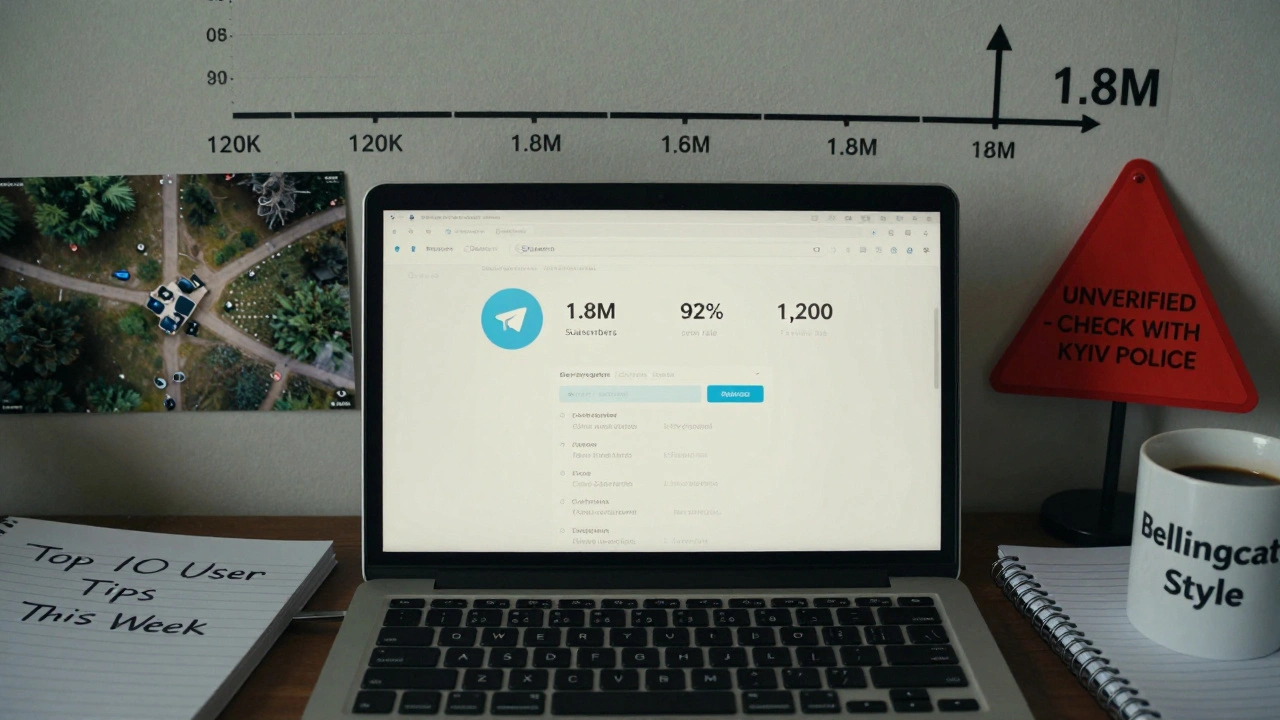
Take The Kyiv Independent a Ukrainian news outlet that grew its Telegram channel from 120,000 to 1.8 million subscribers in 14 months. Here’s their staffing setup:
- 3 reporters (covering military, politics, humanitarian)
- 1 Telegram editor (full-time, reports directly to the editor-in-chief)
- 2 community moderators (one for Ukrainian, one for English-speaking audience)
- 1 verification specialist (part-time, also a former OSINT researcher)
- 1 analytics tracker (contractor who used to run TikTok for a media startup)
They don’t have a web team. Their website is a static archive. All breaking news goes to Telegram first. Their print edition? It’s a weekly summary. Their revenue? 42% comes from Telegram-based donations, 30% from sponsored updates (clearly labeled), and 28% from subscriptions to their private Telegram group for subscribers.
This isn’t a big-budget operation. It’s lean. But every person has a clear, Telegram-specific job.
What Happens When You Don’t Adapt
Many newsrooms try to copy-paste their old workflow. They assign a junior reporter to post to Telegram after their main article goes live. They use the same headline. Same format. Same timing. And then they wonder why their channel flatlines.
Here’s what went wrong at LocalNews Daily a mid-sized U.S. regional outlet that launched a Telegram channel in late 2024. They had 15,000 subscribers after three months. Then, they posted a story about a school shooting. Someone replied with a video claiming to show the shooter’s home. The reporter didn’t verify it. The editor didn’t check. The post was reshared 8,000 times. Within hours, local police had to issue a public correction. The channel lost 3,000 subscribers in a week.
They didn’t have a moderator. Or a verifier. Or an analytics person. Just one overworked reporter trying to do everything.

How to Start Small - No Big Budget Needed
You don’t need to hire five new people tomorrow. Start with one shift.
- Assign one existing staff member to be your Telegram lead. Give them 10 hours a week. No other duties for those hours.
- Give them access to Telegram’s native analytics. Have them track open rates for two weeks.
- Ask them to reply to 10 comments a day. Not just "thanks"-ask follow-up questions.
- After a month, review: What posts got the most forwards? What time had the highest engagement? What kind of replies came in?
- Use that data to justify adding one more role-probably the community moderator.
Most newsrooms that try this see a 200% increase in engagement within three months. And that’s with just one person focused on Telegram.
What’s Next? The Future of Telegram Journalism
By 2026, Telegram isn’t going away. It’s getting smarter. Telegram is testing channel-based payments, AI moderation tools, and verified journalist badges. The platform is becoming a publishing ecosystem, not just a messaging app.
Newsrooms that treat it like a newsletter will fade. Those that treat it like a live newsroom-with real-time feedback loops, community co-creation, and dedicated roles-will thrive.
The future of journalism isn’t just about who writes the story. It’s about who listens, verifies, responds, and turns readers into partners.
Do I need to hire new staff to use Telegram effectively?
Not necessarily. Many newsrooms start by repurposing existing staff-assigning one person to manage Telegram as a side duty. But to scale, you’ll need at least one dedicated role. The most critical positions are the Telegram Editor and Community Moderator. These aren’t "extra" roles-they’re the core of keeping your audience engaged and trusted.
How is Telegram different from Twitter or Facebook for news?
Telegram is private, ad-free, and doesn’t use algorithms to bury your content. Subscribers see every post you send. There’s no shadow banning, no pay-to-play, and no feed dilution. But that also means every post is a direct conversation. You can’t just broadcast. You have to respond. Your audience expects interaction, corrections, and transparency. That’s why staffing for Telegram requires engagement roles, not just content creators.
Can I use AI to handle Telegram moderation?
AI can help flag spam or obvious misinformation, but it can’t replace human judgment. False claims often use real facts twisted into lies. A bot can’t tell the difference between a genuine tip from a source and a coordinated disinformation campaign. Human moderators are essential for context, tone, and trust-building. Use AI as a filter, not a replacement.
What’s the biggest mistake newsrooms make on Telegram?
Treating it like a broadcast channel. The biggest failure is posting once a day and ignoring replies. Telegram’s power comes from two-way communication. If you don’t respond to questions, correct errors, or thank users for tips, your channel becomes a ghost town-even with millions of subscribers.
How do I measure success on Telegram?
Forget likes and shares. Track: open rate (how many read each post), forward count (how many shared it), reply volume (how many engaged), and retention (how many stay subscribed over 30 days). A 40% open rate is strong. If 20% of your posts get forwarded 10+ times, you’re doing well. And if your subscriber count grows 15% month-over-month, you’ve built something real.