Telegram isn’t just another messaging app. For millions of users, it’s where political identity gets shaped, reinforced, and broadcast - often in ways mainstream platforms won’t allow. If you’ve ever wondered why some people get their news from Telegram instead of Twitter, Facebook, or even YouTube, the answer isn’t just about privacy. It’s about belonging. And that belonging is deeply tied to political identity.
Who Uses Telegram for News - And Why
Most Americans still don’t use Telegram for news. Pew Research found that only 2% of U.S. adults get news from it. But that small percentage isn’t random. Among those who do, about two-thirds identify as Republican or lean Republican. That’s not a coincidence. It’s a pattern.
Why? Because Telegram lets people build communities that feel safe from censorship, surveillance, or social pressure. It doesn’t algorithmically push content like TikTok or Instagram. Instead, users choose who to follow, what channels to join, and what messages to amplify. For many, that means opting out of mainstream news and into echo chambers that confirm their worldview.
These aren’t just passive readers. They’re active participants. A study of 125 Telegram channels found that over 60% of them grew in size over time. That means people weren’t just joining - they were inviting friends, sharing posts, and building networks. The channels that grew the fastest were the ones tied to far-right ideologies: pro-Trump groups, white nationalist forums, and anti-government militias. In fact, far-right channels made up nearly 95% of the channels studied. Far-left channels? Just 5.6%.
The Architecture of Polarization
Telegram’s design makes this kind of growth possible. It offers encrypted private chats, public channels with unlimited subscribers, and no centralized moderation. There’s no content review team deciding what’s too extreme. That freedom attracts activists - and extremists.
Think about it: if you believe the government is lying about elections, vaccines, or immigration, where do you go to find others who believe the same thing? Mainstream platforms ban you. Telegram? You get a channel. You get followers. You get a community that validates your views without asking questions.
And it’s not just about text. Visual content dominates. Memes, edited videos, and image macros spread faster than articles. A study of 200,000 images from Russian far-right Telegram channels showed how users weren’t just consuming propaganda - they were creating it. They made memes of Putin as a hero, Biden as a puppet, and Zelensky as a traitor. These weren’t state-sponsored ads. They were made by everyday users who saw themselves as part of a movement.
This is what’s called co-production of propaganda. People aren’t just reading lies. They’re making them. And they’re sharing them with their networks. That’s how misinformation becomes culture.
Counterpublics and the Erosion of Trust
On Telegram, users don’t just consume news. They construct alternate realities. Researchers call these spaces “counterpublics” - communities that reject mainstream narratives and build their own truth systems.
For example, one channel might focus on Christian nationalism, another on anti-vaccine conspiracies, and a third on historical revisionism about the Civil War. But they all share the same DNA: distrust of institutions, belief in hidden agendas, and a sense of moral righteousness.
What happens when someone scrolls through these channels every day? Their understanding of politics changes. They start seeing mainstream media as liars. They begin to doubt scientific consensus. They feel like they’re the only ones who “see the truth.”
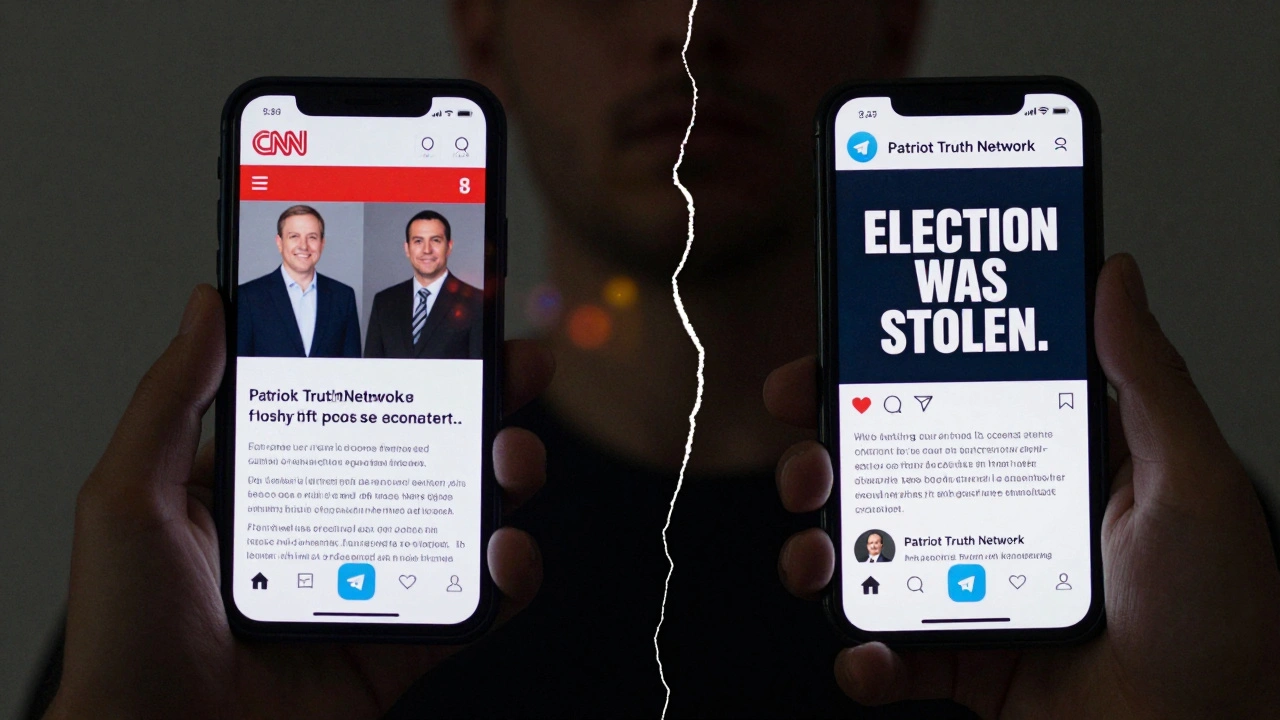
And here’s the twist: many of these users still read mainstream news. They watch CNN in the morning, then scroll through Telegram at night. That creates a kind of mental whiplash. One source says the election was fair. Another says it was stolen. One says climate change is real. Another says it’s a hoax. The result? Confusion. Disengagement. A growing number of people just stop trusting anything.
Global Patterns, Local Effects
This isn’t just an American problem. In Russia, Telegram is a hub for state-aligned propaganda disguised as grassroots activism. Far-right Russian channels use memes to glorify Putin, demonize Ukraine, and promote imperial nostalgia. They don’t need Kremlin orders. They just know what to post to sound loyal.
And in the U.S., similar dynamics play out. Channels tied to the Christian Nationalism a political ideology that blends evangelical Christianity with American patriotism, often advocating for laws based on religious doctrine movement use Bible verses alongside militia symbols. Others mix White Supremacy a belief system centered on the superiority of white people and the need for racial separation with Anti-Government Militancy a political stance that rejects federal authority and promotes armed resistance. These aren’t random. They’re carefully curated identities.
One channel might be called "Patriot Truth Network" - no overt hate symbols, no banned keywords. Just a steady stream of posts about "election fraud," "cultural decay," and "the coming civil war." It’s subtle. And that’s why it works.
Why Telegram Survives Moderation
Telegram’s founders say they don’t moderate content. That’s not just a policy - it’s a business model. By refusing to remove extremist channels, they attract users who’ve been banned elsewhere. It’s a magnet for the marginalized, the radicalized, and the defiant.
But here’s the uncomfortable truth: most users aren’t extremists. They’re regular people - teachers, nurses, small business owners - who just happen to follow a few channels that push conspiracy theories. They don’t think of themselves as part of a movement. But their clicks, shares, and comments are fueling one.
Studies show that even moderate users who spend time on these channels gradually shift their views. They don’t suddenly become neo-Nazis. But they start doubting facts. They stop trusting experts. They begin to believe that “both sides” are equally bad. That’s how polarization spreads - not through loud extremists, but through quiet, repeated exposure.
What This Means for Democracy
Telegram doesn’t create political identity. But it accelerates it. It takes existing beliefs - distrust of government, fear of cultural change, anger at elites - and gives them a home. A home with no moderators. No fact-checkers. No algorithm to show you a different perspective.
The result? Communities that grow stronger, more isolated, and more convinced of their own righteousness. And when those communities start organizing - whether to protest, to vote, or to take action - they do it with a shared narrative that mainstream media can’t touch.
That’s why this matters. It’s not about whether Telegram is good or bad. It’s about what happens when a platform designed for privacy becomes the primary source of political truth for millions. When people stop getting news from newspapers or TV and start getting it from anonymous Telegram channels, democracy loses its common ground.
The Real Danger Isn’t Extremism - It’s Normalization
The scariest part? Most of this content doesn’t look extreme. It looks like news. It looks like opinion. It looks like truth.
One channel posts a video titled “Why the Media Hides the Truth About Border Security.” Another shares a meme: “They said COVID was a hoax… now they say climate change is real. Who’s lying?” These aren’t hate-filled rants. They’re carefully crafted questions - designed to make you doubt.
And that’s the real power of Telegram. It doesn’t shout. It whispers. And over time, those whispers become louder than the facts.
Why do so many Republicans use Telegram for news?
Research shows that around 66% of Telegram news users identify as Republican or lean Republican. This isn’t accidental. Telegram’s lack of content moderation appeals to those who feel censored on mainstream platforms. Many believe mainstream media is biased against conservative views, so they turn to Telegram for alternative narratives. The platform’s encrypted, anonymous nature lets them share content without fear of being banned or tracked.
Is Telegram more dangerous than other social media platforms?
Telegram isn’t inherently more dangerous - but its design makes it more effective for spreading extremism. Unlike Facebook or Twitter, it doesn’t use algorithms to surface content or enforce community rules. That means extremist channels can grow unchecked. Far-right groups dominate the platform, with nearly 95% of studied channels being right-wing. While other platforms remove harmful content, Telegram lets it thrive - making it a magnet for conspiracy theories and radicalization.
Can Telegram be used for political organizing without spreading hate?
Yes - but it’s rare. Telegram is used by activists in authoritarian countries to organize protests, share uncensored news, and protect identities. In places like Iran or Belarus, it’s a lifeline. But in the U.S., the vast majority of active channels are tied to far-right ideologies. The platform’s tools - channels, bots, group chats - are neutral. But the people using them are overwhelmingly drawn to polarizing, conspiratorial content.
Do people on Telegram know they’re consuming misinformation?
Most don’t. They believe they’re getting the truth others are hiding. The content is often framed as investigative journalism - not conspiracy. Memes and short videos make false claims feel plausible. Studies show that repeated exposure to these narratives, even without direct lies, changes how people perceive reality. They don’t think they’re being misled - they think they’re being awakened.
How does Telegram compare to other platforms like Discord or Signal?
Signal is encrypted and private, but it’s designed for one-on-one or small group chats - not mass communication. Discord has moderation tools and community rules. Telegram is the only platform that combines massive public channels, anonymous posting, and zero content moderation. That’s why it’s become the go-to for political communities that want to grow without limits. You can have 100,000 subscribers on Telegram and still avoid detection. No other app allows that.
Telegram isn’t going away. And it won’t be fixed by banning a few channels. The real challenge is understanding how a tool built for privacy became a factory for polarization. The answer isn’t in technology - it’s in human behavior. People aren’t using Telegram because they hate the truth. They’re using it because they’ve stopped believing there’s one to begin with.
Latest Posts