You check your phone. Three new notifications from Telegram is a cloud-based instant messaging service founded in 2013 by Pavel and Nikolai Durov. One is an air raid alert, one is a market update, and one is a meme. You want the alerts and the updates. You don’t want the meme, but you definitely don’t want anyone tracking that you clicked them. This is the core tension of modern news consumption: we crave content tailored to our specific interests, yet we fear the surveillance required to deliver it.
In 2026, this isn't just a philosophical debate. With Telegram boasting over 900 million monthly active users, it has become a primary news source for millions, particularly in regions like Ukraine, Iran, and Brazil. But here is the hard truth: Telegram’s current model offers very little actual "privacy-preserving personalization." It offers user-driven curation masked as privacy. If you are relying on Telegram to keep your reading habits secret while serving you relevant news, you need to understand exactly what data is leaving your device and where the real risks lie.
The Myth of Total Privacy on Telegram
Let’s clear up a common misconception first. Many users believe that because Telegram markets itself as a secure messenger, all their interactions-including news channel subscriptions-are end-to-end encrypted and invisible to the company. They are not.
Telegram uses its custom MTProto 2.0 is the proprietary encryption protocol developed by Telegram for client-server communication. protocol for most chats. For standard channels and groups (where 99% of news is consumed), messages are encrypted between your phone and Telegram’s servers. However, Telegram holds the decryption keys. This means they technically have access to the content of every post you read, every channel you join, and every bot you interact with.
End-to-end encryption (E2EE) exists only in "Secret Chats," which are peer-to-peer and cannot be used for broadcast channels. So, when you subscribe to a news channel, Telegram knows who you are (via your phone number and IP address) and what you are reading. Their policy states they do not sell this data or use it for targeted advertising, but "policy" is not "code." As seen in recent years, Telegram has cooperated with law enforcement by handing over IP addresses and phone numbers in terrorism cases. If the platform can see your data, true privacy-preserving personalization is impossible at the server level.
How Personalization Actually Works Right Now
Since Telegram doesn’t build deep behavioral profiles like Facebook or Google, how does personalization happen? Currently, it happens in two ways: contextual ads and manual curation.
1. Contextual Sponsored Messages: When you see an ad in a public channel, it is not targeted based on your past behavior. It is targeted based on the language of your app and the topic of the channel you are currently viewing. This is "weak" personalization. It respects your privacy because it doesn’t track you across the internet, but it’s also blunt. You might get an ad for winter coats in July if you’re reading a fashion channel in a cold climate.
2. User-Driven Curation: Most "personalization" on Telegram is done by you. You decide which channels to join. You mute the noisy ones. You save the important posts. This puts the burden of filtering on the user. While this keeps your data off advertisers’ radars, it is inefficient. You have to hunt for quality sources rather than having a smart system surface them for you without spying on you.
| Platform | Data Collection Level | Personalization Method | Privacy Risk |
|---|---|---|---|
| Telegram | Medium (Metadata + Content Access) | Contextual Ads + Manual Curation | Low (No Ad Profiling) but Server-Side Visibility |
| Google News | High (Cross-site activity, location, history) | Behavioral Profiling & AI Ranking | Very High (Centralized Data Hoarding) |
| Brave News | None (On-Device Only) | Local Machine Learning | Minimal (Data Never Leaves Device) |
The Future: On-Device and Federated Learning
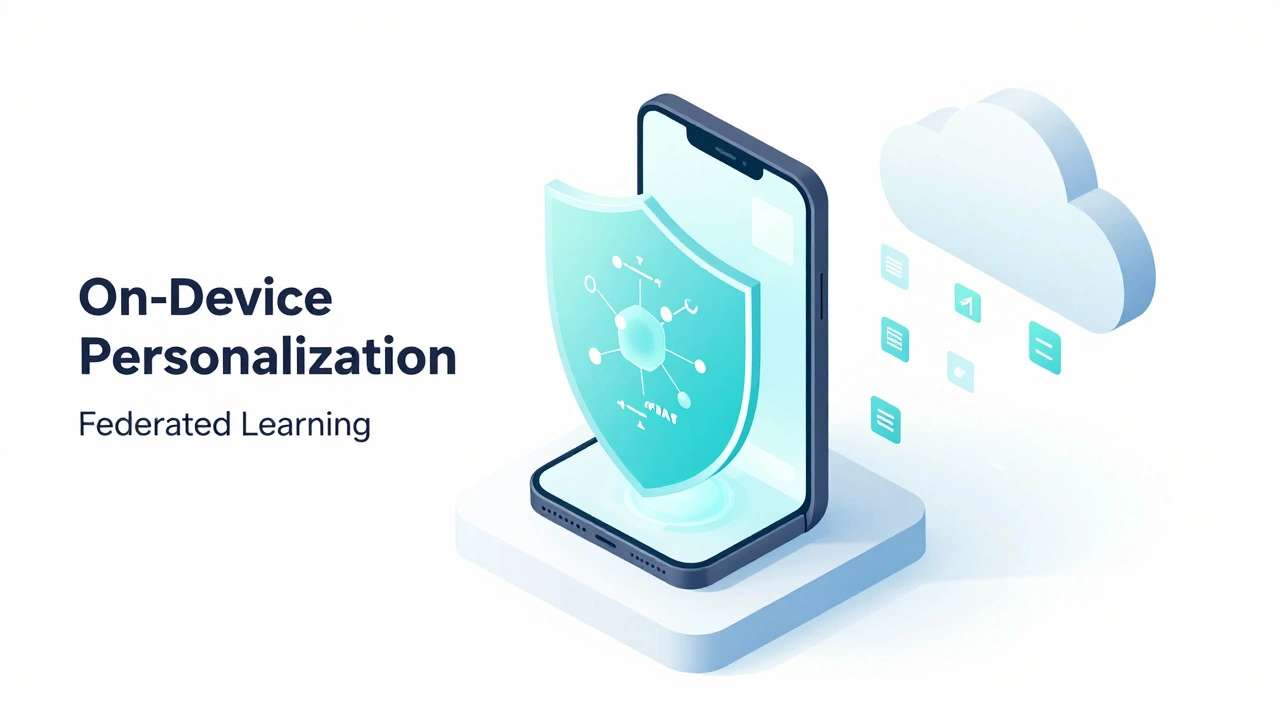
If we want personalization that is both accurate and private, we need to move away from server-side profiling. The industry is slowly moving toward On-Device Personalization is a technique where machine learning models run locally on the user's hardware, processing data without sending it to central servers.. This is already happening in other apps. Your phone predicts your next word in a text message using a model trained locally. Brave News is a privacy-focused news aggregator integrated into the Brave browser that processes user preferences locally. ranks stories on your computer, never sending your click history to the cloud.
For Telegram, this future looks like this:
- Local Interest Modeling: Your Telegram app analyzes which posts you save, forward, or spend time reading. This data stays on your phone. A local algorithm learns that you care about tech and politics, but ignore sports.
- Federated Learning: To improve the global model without stealing your data, Telegram could use Federated Learning is a machine learning approach where a model is trained across multiple decentralized devices holding local data samples, without exchanging them.. Instead of sending your raw data to the server, your phone sends only small, anonymized updates to the model’s parameters. The server aggregates these updates from millions of users to improve the overall recommendation engine, but it never sees individual user histories.
- Differential Privacy: To prevent hackers or insiders from reverse-engineering who sent which update, noise is added to the aggregated data. This ensures that no single user’s contribution can be identified, providing a mathematical guarantee of privacy.
Academic research, such as studies published in IEEE Access and ACM CIKM, has proven that these methods can achieve 85-95% of the accuracy of traditional surveillance-based recommenders. The technology exists. The question is whether Telegram will implement it.
The Bot Trap: Where Privacy Really Leaks
While Telegram’s official infrastructure is relatively conservative with data, the ecosystem around it is wild. Millions of users rely on third-party bots for news digests. These bots are built using the Telegram Bot API is the interface allowing developers to create interactive bots within the Telegram platform., released in 2015.
Here is the catch: Bots are third-party services. When you chat with a news bot, that conversation is processed by the developer’s server, not Telegram’s. Unless the bot explicitly implements end-to-end encryption (which most don’t), the developer sees everything. They see your queries, your clicks, and potentially your Telegram ID.
Many news bots store user preferences on their own databases. Some are reputable; others are data harvesting operations disguised as convenience tools. In 2024, community discussions highlighted growing concerns about bots logging interaction data for resale or profiling. If you want privacy, assume any bot you interact with is recording your behavior. The safest route? Stick to official channels and avoid interactive bots unless you trust the developer implicitly.
Practical Steps for Privacy-Conscious Readers in 2026
Until Telegram rolls out native on-device personalization, you have to take matters into your own hands. Here is how to maximize your privacy while staying informed:
- Disable Contact Syncing: Go to Settings > Privacy and Security and turn off "Sync Contacts." This prevents Telegram from uploading your entire address book to its servers, reducing the metadata linked to your account.
- Avoid Link Previews for Sensitive Topics: While Telegram generates previews server-side, disabling them in settings can reduce the amount of URL data associated with your outgoing messages, though this mainly affects DMs, not channel reads.
- Use Self-Hosted RSS Bridges: Advanced users can set up a local RSS reader (like Miniflux) and use a self-hosted bot to forward selected articles to a private Telegram channel. This way, the personalization happens on your server, not Telegram’s. Tools like `rss-to-telegram` on GitHub make this feasible.
- Curate Ruthlessly: Unmute and leave channels that don’t serve you. Don’t let algorithms (or lazy curation) dictate your feed. Active management is the best defense against passive tracking.
The Monetization Pressure Cooker
We must also talk about money. Telegram is not a charity. It needs to pay for servers and staff. In 2022, they launched Telegram Premium is a paid subscription tier offering enhanced features like faster downloads and exclusive stickers., costing around $5/month. In 2024, they introduced revenue sharing for channel owners via sponsored messages.
This creates a conflict of interest. To increase ad revenue, Telegram needs better targeting. Better targeting usually requires more data. While Pavel Durov has repeatedly stated that Telegram will not resort to invasive ad profiling, the temptation is immense. We’ve already seen privacy features, like controlling who can message you, moved behind the Premium paywall. This signals a shift: privacy is becoming a luxury feature rather than a default right.
If Telegram introduces a "Smart Feed" in the future, watch closely. Does it require enabling cloud sync? Does it ask for permission to analyze your reading history? If so, the promise of privacy-preserving personalization is being hollowed out by monetization strategies.
Conclusion: Vigilance Over Convenience
True privacy-preserving personalization on Telegram is not here yet. What we have is a platform that allows you to curate your own news feed without selling your behavioral profile to advertisers. That is a win compared to Facebook or Google, but it is not perfect. The server still sees your activity, and third-party bots pose significant risks.
The future lies in on-device processing and federated learning. Until Telegram adopts these technologies natively, your best bet is to treat Telegram as a delivery pipe, not a curator. Keep your data local, limit your bot interactions, and stay skeptical of any new feature that promises "better recommendations" in exchange for more permissions. In the world of digital news, your attention is the product. Make sure you’re not paying for it with your privacy.
Is Telegram truly private for reading news?
Not entirely. While Telegram does not sell your data for targeted ads, it can technically access the content of non-secret chats and channels because it holds the decryption keys for cloud storage. Your IP address and phone number are also stored. It is more private than social media platforms, but less private than end-to-end encrypted messengers like Signal.
What is federated learning in the context of Telegram?
Federated learning is a method where machine learning models are trained on your device using your local data. Only the improvements to the model (not your actual data) are sent to the server. This allows Telegram to improve its recommendations globally without ever seeing your personal reading history.
Are Telegram news bots safe for my privacy?
Most are not. Bots are third-party applications that process your messages on external servers. Unless the bot explicitly uses end-to-end encryption, the developer can see your interactions, queries, and potentially link them to your Telegram ID. Use bots sparingly and only from trusted sources.
How does Telegram monetize without tracking me?
Telegram primarily monetizes through Telegram Premium subscriptions and contextual Sponsored Messages. These ads are targeted based on the language of your app and the general topic of the channel you are reading, not your personal behavioral history.
Can I customize my news feed without losing privacy?
Yes, by manually curating your channels and using local tools. You can subscribe to specific channels, mute irrelevant ones, and use self-hosted RSS bridges to filter content before it reaches Telegram. This keeps the decision-making process offline and under your control.