If you manage Telegram ad campaigns today, sponsors aren't paying just for visibility anymore. They want concrete proof that their money drives real conversations. In the landscape of 2026, the pressure is on agencies and channel owners to deliver transparent, data-backed reports that go beyond vanity metrics. You can't just hand over a screenshot of view counts; you need to explain what those views mean for the business.
The core challenge lies in the platform's unique architecture. Unlike legacy social networks that track cookies and device IDs across the web, Telegram operates on a model of context-based advertising rather than behavioral tracking. This shifts the responsibility of reporting onto you. When you report performance to a sponsor, you are selling confidence in the audience quality, not just raw numbers. If your reports look like vague estimates, you risk losing future contracts. Let's break down how to turn raw campaign data into compelling sponsor reports that justify every dollar spent.
Understanding the Core Metrics
Before you create a report, you need to understand which numbers actually hold weight with sponsors. In 2026, the definition of a successful campaign has evolved significantly from early Telegram advertising. A simple "reach" number doesn't tell the whole story, especially when dealing with high-value niches.
Click-Through Rate (CTR) is the first baseline metric sponsors look for. Historically, official sponsored posts hover between 0.9% and 2.4%. If your report shows a CTR lower than 0.5%, the creative likely failed to resonate with the targeted topic. However, context matters here. An organic post in a niche community might see lower clicks but higher engagement, while an official ad blast aims for volume. Be clear about whether you are measuring broadcast reach or community interaction.
Beyond clicks, the cost per conversation is where ROI gets calculated. In direct outreach scenarios, a well-targeted campaign can yield response rates of 10-25%. If you are managing Official Telegram Ads, expect a different calculation model. For a typical campaign targeting 10,000 impressions, you might get 200 clicks at a standard 2% CTR. That translates to roughly 5 to 20 actual conversations, resulting in a cost per conversation ranging from $16.67 to $200 depending on your bidding strategy. Your report needs to normalize these figures so sponsors understand the efficiency of each lead generated.
View-through time is another underrated metric. Since Telegram allows detailed tracking of message interactions, check if users opened the ad and stayed engaged for more than a few seconds. Shorter dwell times suggest the ad appeared but was ignored immediately due to poor targeting or irrelevant copy. Including this data adds depth to your report, showing you care about genuine attention, not just fleeting impressions.
Choosing the Right Platform for Data Access
Where you run the campaign dictates what data you can report. As of March 2026, the ecosystem is split between official services and third-party aggregators, each offering different levels of transparency.
The Telegram Ad Platform provides built-in statistics directly in the interface. You get an overview of creation date, Cost Per Mithousand Impressions (CPM), allocated budget, and total views. The platform tracks specific user actions like channel subscriptions or bot interactions triggered by the ad. However, the barrier to entry is high; minimum budgets typically begin around $2,000 USD. If your sponsor has a smaller test budget, this platform won't provide enough granularity relative to their spend.
For smaller budgets, third-party solutions offer more flexible reporting structures. Telega.io is designed for accessing thousands of channels with real-time metrics. Their minimum spend often starts at $100, making them suitable for testing phases. Similarly, AdsGram offers budget-friendly options starting from $10 per 1,000 impressions. These platforms often come with dedicated dashboards that allow you to export data more easily than waiting for manual CSV downloads from official sources.
Collaborator takes a different angle by focusing on influencer marketing. Here, you are buying specific placements from verified profiles. The reporting here relies heavily on verifying the authenticity of the profile itself. Since this model uses customizable ad formats, you can request screenshots or video proofs of the live post alongside the statistical data. This hybrid approach works well for brands looking for trust signals rather than pure scale.

Structuring the Sponsor Report
When you sit down to compile the final document, avoid dumping raw spreadsheets onto a client without context. A structured narrative converts data into actionable insights. Your report should be divided into three distinct sections: Execution, Performance, and Insight.
- Execution: Start with what happened. List the dates, the specific channels used, and the target topics selected. Mention the Total Cost and the exact CPM achieved. If you utilized specific features like targeting premium users or those with positive wallet balances, highlight this here. It explains why certain segments performed better.
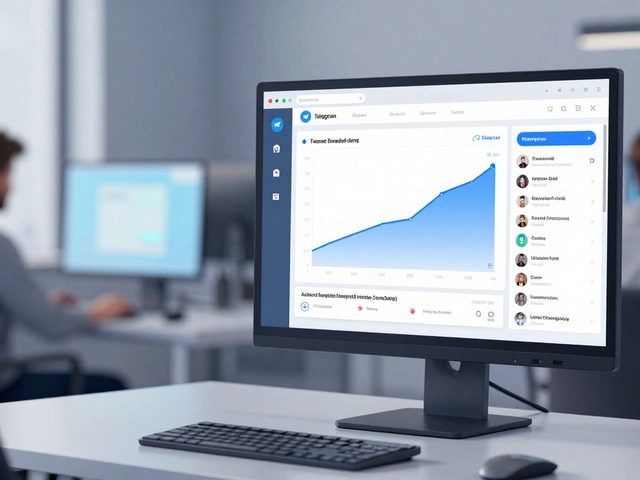
- Performance: Present the hard numbers. Use charts for visual impact. Show Views, Clicks, and Conversion Count. Crucially, calculate the Cost Per Acquisition (CPA) or Cost Per Conversation. If the data isn't available via API, manually aggregate these from the dashboard logs before sending.
- Insight: This is the most important part for retaining clients. Don't just show the numbers; explain them. Did a specific day of the week drive higher traffic? Was a certain emoji in the headline responsible for the spike in engagement? Propose adjustments for the next cycle based on this analysis.
Navigating the Data Limitations
You will face questions about data accuracy. Unlike traditional ad networks, Telegram does not share user behavioral data for targeting purposes. This means you cannot attribute a sale back to a specific user ID weeks later if they leave the ecosystem. Sponsors sometimes find this frustrating coming from platforms with robust pixel tracking.
To mitigate this, emphasize the stability of your data. Because Toncoin (TON) settlement and internal metrics operate within a closed loop, the impression counts are generally accurate regarding what the network delivers. There is less risk of bot-driven fraud compared to some open ad exchanges. Explain to sponsors that the lack of external tracking is a privacy feature, not a technical flaw. It preserves the platform's content quality and prevents the degradation of user experience.
Another limitation is the lack of real-time automated APIs for many third-party tools. As of late 2025 and into 2026, integration with external Business Intelligence tools remains sparse. Most agencies still rely on manual weekly exports. Set expectations early: tell sponsors you will deliver a PDF summary weekly and a raw data dump monthly. This manages their need for immediate feedback against the reality of the current infrastructure.

Future-Proofing Reports for Mini Apps
A growing segment of 2026 advertising involves Mini Apps. These embedded applications now represent over 500 million monthly interactions globally. If your campaign directs traffic to a Mini App, you need to capture app-specific metrics.
Standard ad metrics stop at the link click. To truly impress sponsors, partner with your ad agency or developers to install SDKs that track in-app events. Did the user complete a purchase? Did they play five rounds of the game? If you can layer these internal conversion metrics on top of the external Telegram ad spend data, you become indispensable. The gap between ad click and app action is where the real business value lies, and bridging that gap in your report demonstrates advanced expertise.
Cost Transparency and Budget Management
Sponsors hate hidden fees. Whether you are managing a large institutional campaign through official ads or smaller influencer buys, clarity on costs builds trust. Document every fee associated with the transaction.
| Platform Type | Minimum Spend | Est. Starting CPM | Best Use Case |
|---|---|---|---|
| Official Telegram Ads | $2,000 USD | $0.34 (0.1 TON) | Large Scale Brand Awareness |
| Telega.io | $100 USD | Varies by Channel | Testing Small Campaigns |
| AdsGram | $10 / 1,000 Imp | $0.01 - $0.10 | Budget-Conscious Niches |
| Direct Channel Owners | Negotiable | Highly Variable | Long-Term Community Building |
Always clarify if the budget includes VAT or agency fees. In international contexts, currency fluctuations can affect final costs. If you are paying in TON coins, specify the exchange rate used for the invoice versus the actual spend. This level of financial detail protects you from disputes later when reconciling accounts.
What is the average CPM for Telegram Ads in 2026?
As of March 2026, the starting bid for official Telegram Ads is 0.1 Toncoin, which equates to approximately $0.34 USD. However, actual costs fluctuate based on targeting specificity. High-competition niches like finance or technology may drive the CPM up to $0.50 or higher depending on the auction dynamics during peak viewing hours.
Can I track conversions outside of Telegram?
Tracking off-platform conversions is difficult because Telegram prioritizes user privacy and does not share behavioral data or pixel information. You must rely on attribution methods like UTM parameters in links or specific promo codes passed through the ad to bridge the gap between the ad click and an external website conversion.
Is daily reporting possible with Telegram Ads?
The official Telegram Ad Platform allows you to view stats in increments of minutes or days. While you can manually download data daily, fully automated real-time dashboards are limited. Most agencies provide daily snapshots or weekly summaries rather than continuous live feeds unless using specialized third-party tools.
How do I verify that impressions are real users?
Telegram maintains strict anti-bot measures for its ad inventory. Verification comes from analyzing engagement ratios; legitimate audiences usually show natural variation in click-through rates. If impressions are abnormally high with zero clicks on relevant messaging, it may indicate low-quality placement, warranting a review of the channel list.
What happens if a campaign hits its budget limit early?
Campaigns stop serving automatically once the daily cap or total budget is reached. If you plan for longer runs, monitor the remaining budget closely in the Statistics tab. Setting a buffer of 10-15% extra funds ensures your campaign runs for the full intended duration without unexpected pauses due to mid-month market price fluctuations.