Telegram is where news breaks - fast. But it’s also where lies spread faster. With over 950 million users as of November 2025, the platform has become a global hub for real-time updates, especially during crises. Yet unlike Twitter or Facebook, Telegram doesn’t fact-check anything. No labels. No warnings. No algorithm to downrank false claims. That’s why transparency dashboards have become essential tools for journalists, researchers, and even everyday users trying to tell truth from noise.
Why Telegram Needs Transparency Dashboards
Telegram’s design makes it perfect for spreading information - and misinformation. End-to-end encryption protects private chats, but public channels operate in the open, with no oversight. A single post from an unverified channel with 50,000 subscribers can reach millions before anyone questions it. During the Russia-Ukraine war, Bellingcat documented how false claims about bombings, troop movements, and civilian casualties went viral on Telegram before being debunked days later - if at all. The problem isn’t just volume. It’s speed. A false claim about a chemical attack in March 2025 hit Telegram channels with an Engagement Rate by Reach (ERR) of 9.3%, meaning nearly one in ten people who saw it reacted. By the time fact-checkers flagged it, the post had been reshared across 1,200 channels. That’s why raw metrics like views and likes don’t help. You need context. That’s where transparency dashboards come in. They don’t verify content directly - Telegram’s API won’t let them. Instead, they track signals that correlate with accuracy. Think of them as credibility indicators built from the outside in.How Transparency Dashboards Measure News Accuracy
No dashboard can see inside private Telegram channels. But they can watch what happens in public ones. Here’s how the top platforms measure accuracy indirectly:- Channel Citation Index (CCI): This tracks how often other credible channels link to or quote a news post. If @meduzapro (a trusted Russian-language outlet) shares a claim, and five other major channels follow suit, the CCI score climbs. According to TGStat’s February 2025 report, channels with a CCI above 75 have an 82% chance of being verified by independent fact-checkers.
- Engagement Rate by Reach (ERR): This is (reactions per post) divided by (reach per post), multiplied by 100. Verified news channels average a 4.7% ERR. Misinformation channels? Around 1.2%. But here’s the catch: sensational lies often spike ERR. That March 2025 chemical weapons claim? It had a 9.3% ERR - higher than most real news. So ERR alone is dangerous.
- Source Propagation Patterns: Zelkaa’s system maps how a story spreads. Did it start in a small, obscure channel? Or did it emerge from a known source like a government agency or major news outlet? Their algorithm identifies original sources with 92.7% accuracy. That’s how one analyst traced a fake earthquake rumor back to a single user in Kyiv in 12 minutes.
- Sentiment Analysis: Brand24 analyzes 27 languages to see how users react. Negative sentiment spiked 41% on posts later proven false, while positive sentiment was higher on verified claims. But it’s not perfect - sarcasm in Arabic or Ukrainian posts often gets misread, lowering accuracy to 68% in some dialects.
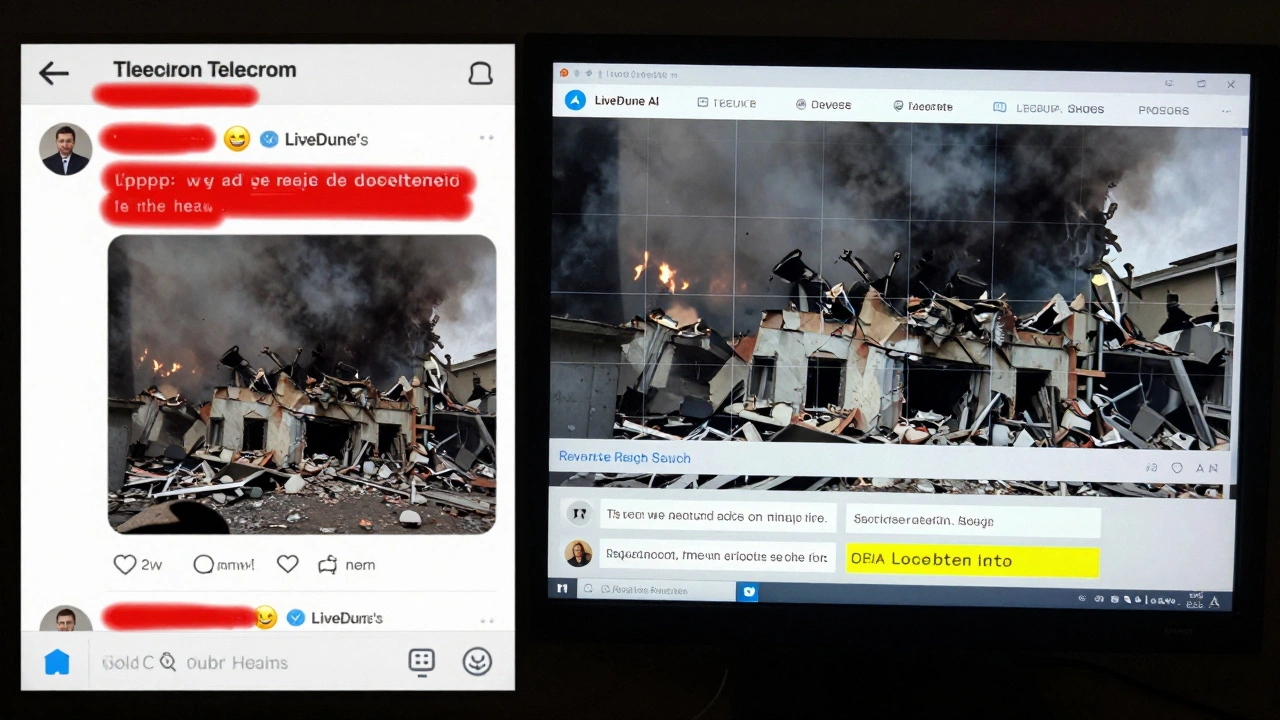
- Image and Video Verification: LiveDune checks image metadata, reverse-searches frames, and cross-references with databases like InVID. It catches 78.4% of manipulated media. But it can’t verify text. A fake photo with a true caption? It passes.
These metrics aren’t perfect. But together, they create a pattern. A post with high CCI, low ERR, clean propagation, and verified media? It’s likely real. One with low CCI, high ERR, and unknown origins? Red flag.
Top Platforms Compared
| Platform | Channels Monitored | Key Strength | Key Weakness | Price (Monthly) |
|---|---|---|---|---|
| TGStat | 1.2 million | Best global channel database, CCI scores, 24-month history | No sentiment analysis, poor data for channels under 10K subscribers | $199 |
| Brand24 | 400,000 | Best cross-language sentiment analysis (89.7% accuracy in English) | Fails on sarcasm, slow to flag false claims (avg. 47 min delay) | $299 |
| Zelkaa | 650,000 | Best at tracing original sources, 92.7% accuracy | Limited historical data, no media verification | $179 |
| LiveDune | 500,000 | AI-powered image/video verification, 78.4% accuracy | Can’t verify text, expensive for freelancers | $249 |
| Telegram Native Stats | Only your channels | Free, real-time views and growth | No credibility metrics, useless for third-party analysis | $0 |
For most users, TGStat is the go-to. It’s the most comprehensive, with the largest database and the only platform that tracks CCI at scale. But if you’re focused on misinformation in non-English regions, Zelkaa’s source tracing is unmatched. Brand24 is ideal for teams needing sentiment trends. LiveDune shines if you’re fighting deepfakes.
What These Tools Can’t Do
It’s easy to overestimate what dashboards can achieve. Here’s what they can’t do:- Access private channels: About 63% of Telegram’s active channels are private. That’s where the most dangerous disinformation hides - group chats, encrypted communities, invite-only networks. No dashboard can touch these.
- Verify text claims instantly: If someone posts, “Ukraine bombed a hospital,” no tool can confirm it without human fact-checking. Dashboards only show how likely it is to be true based on patterns.
- Stop misinformation in real time: Brand24 takes 47 minutes on average to flag a false claim. In that window, the post spreads to thousands. These tools help you react - not prevent.
- Work equally well everywhere: CCI scores are 37% more reliable in Western Europe than in Eastern Europe. Why? Because credible channels cite each other more often there. In regions with fewer trusted outlets, the metrics break down.
Dr. Joan Donovan from Harvard puts it bluntly: “Current tools give us proxies, not proof.” They’re like weather radar - they show where storms are likely, but you still need to look out the window.
How to Use These Tools in Practice
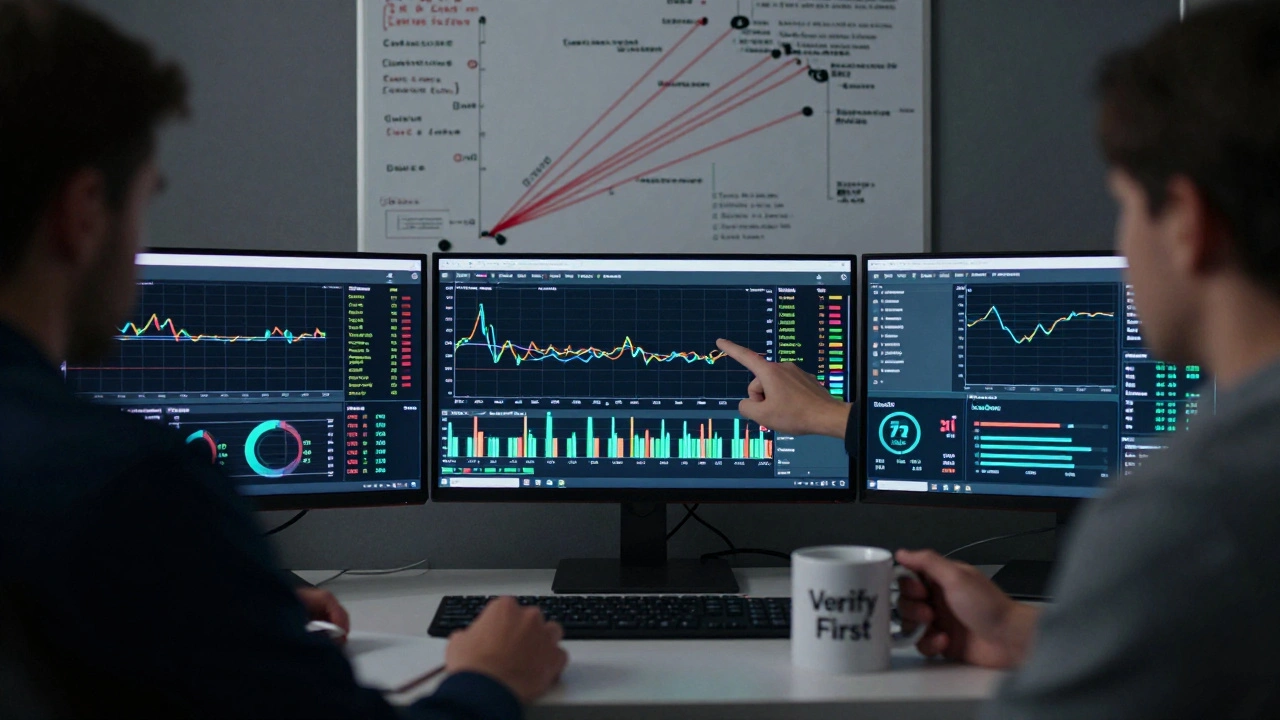
You don’t need to be a data scientist to use these dashboards. Here’s how professionals do it:- Start with CCI: If a post has a CCI below 40, treat it as unverified. Above 75? It’s likely credible - but still double-check.
- Check ERR: If the ERR is above 7%, be suspicious. High engagement doesn’t mean truth - it often means outrage.
- Trace the source: Use Zelkaa or manual search to find the original post. If it came from a channel with 200 followers and no history, it’s probably fake.
- Verify media: Run images through Google Reverse Image Search or InVID. If they’re stolen from 2022 or edited, it’s disinformation.
- Combine tools: Cross-reference TGStat’s CCI with Google Fact-Check Tools. One user reported cutting false positives from 34% to 11% by doing this.
Most professionals take 2-3 weeks to learn how to interpret these metrics. Brand24’s own survey found that users who spent just 10 minutes a day using the tools improved their accuracy rate by 61% in three weeks.
The Future of Telegram Transparency
The market is growing fast. Telegram analytics hit $87.3 million in revenue in 2024 - up 42% from 2023. New features are rolling out:- TGStat’s new AI credibility scorer (beta as of November 2025) cross-references claims with 17 fact-checking databases and gives a 0-100 score. Early tests show 84.2% accuracy.
- Brand24 is launching team collaboration tools in January 2026, letting multiple users annotate and verify posts together - a direct response to users working in isolation.
- Startups like SentryDock are exploring blockchain-based “credibility ledgers” that could permanently log whether a claim was verified or debunked.
But the biggest hurdle remains Telegram itself. Its API limits access to public data only. Without deeper integration, these tools will always be playing catch-up. Gartner predicts only 5-7 platforms will survive by 2027 - and only if they standardize metrics across the industry.
For now, the best defense isn’t a dashboard. It’s skepticism. Use the tools. But never trust a single metric. Always ask: Who said it? Where did it start? Who else is saying it? And why does it feel so urgent?
Telegram won’t fix itself. But you can learn to read between the lines - with the right tools, and the right questions.