Every morning, millions of people open Telegram to check the latest headlines. A channel with 500,000 subscribers shares a breaking story: "Government secretly approves new surveillance law." The message is urgent, emotional, and comes with a screenshot of a "leaked document." Within minutes, it’s forwarded to 20 group chats. By noon, it’s trending. By evening, it’s been debunked - but not before thousands believed it.
This isn’t a hypothetical. It’s happening every day on Telegram. Unlike Twitter or Facebook, Telegram doesn’t flag misleading content. There’s no algorithm to downrank false claims. No fact-checking labels. No warning banners. Just channels, bots, and users forwarding whatever they’re told to believe. And that’s why teaching media literacy to Telegram news subscribers isn’t optional - it’s urgent.
Why Telegram Is a Perfect Storm for Misinformation
Telegram’s design makes it ideal for spreading unverified news. Channels can have millions of subscribers. Anyone can create one. No verification. No moderation. Posts go out instantly. Comments are turned off. There’s no way to trace how a message spread - or who started it.
Compare that to a newspaper. You see the editor’s name. You know the outlet’s reputation. You can look up their corrections policy. Telegram? You see a channel called "Global News Alert" with a green checkmark (which means nothing - Telegram doesn’t verify channels). You don’t know if it’s run by a journalist, a bot farm, or someone in a basement in Minsk.
And here’s the kicker: people trust Telegram because it feels private. They think, "If it’s on Telegram, it must be real - no one would risk sharing fake news here." That’s a dangerous illusion. Telegram is one of the most popular platforms for misinformation in Eastern Europe, Southeast Asia, and Latin America. In the U.S., it’s growing fast among communities that distrust mainstream media.
What Media Literacy Actually Means (Not Just "Check the Source")
Most people think media literacy is about checking if a source is "reliable." That’s step one - but it’s not enough.
Media literacy is the ability to:
- Access media critically - not just click, but ask: Why did I see this?
- Analyze the message - Who made it? What’s their goal? What’s left out?
- Evaluate the evidence - Is there proof? Can I find it elsewhere?
- Act responsibly - Should I share this? Who might it hurt?
- Create thoughtfully - If I post something, am I adding truth - or noise?
For example, take that "leaked government document" again. A media-literate person wouldn’t just Google it. They’d ask:
- Is this document formatted like real government papers? (Real ones have headers, watermarks, file numbers.)
- Can I find the same claim in any official government website or trusted news outlet?
- Who benefits if I believe this? (A political group? A scammer selling "anti-surveillance" software?)
- Has this channel ever been wrong before? (Check past posts - they often repeat patterns.)
This isn’t about being cynical. It’s about being curious.
Teaching Media Literacy on Telegram: 5 Practical Steps
You can’t force people to learn. But you can make it easy - and useful.
1. Build a "Truth Check" Bot
Telegram bots can respond to messages. Create a simple bot that users can tag when they see suspicious content: @TruthCheckBot "Government approved surveillance law".
The bot replies with:
- A quick verdict: "Likely false - no official sources confirm this."
- A link to a public archive of past debunked claims (hosted on a simple website).
- A 30-second audio clip explaining why it’s misleading.
This works because it’s fast, invisible, and doesn’t shame the user. It’s like a GPS that says, "Detour ahead," not "You’re lost."
2. Turn Subscribers Into Fact-Checkers
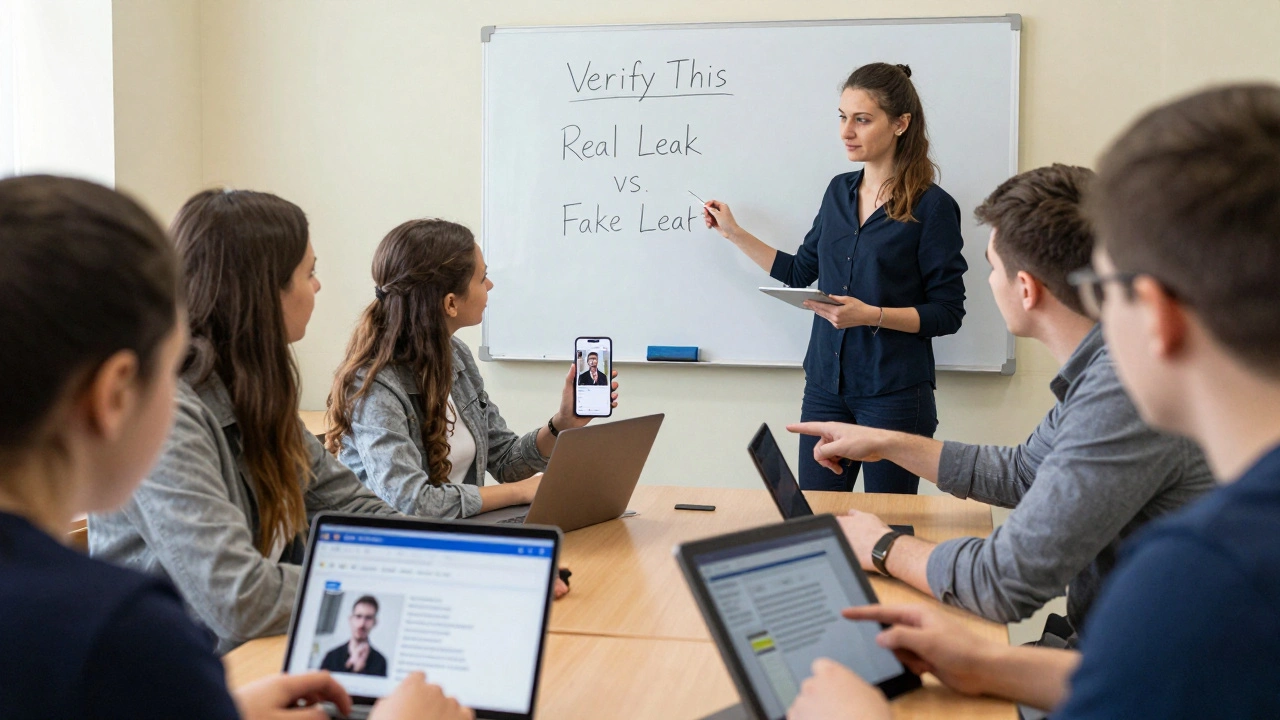
Instead of just sharing news, run weekly "Verify This" challenges. Post a suspicious headline every Monday. Invite subscribers to:
- Search for the same claim on Google News
- Check the source’s history
- Use reverse image search on any photos
Then, on Friday, share the results. Show who found the truth. Celebrate them. Make it a game. People love to feel smart - and they’ll keep checking if they know they’ll be recognized.
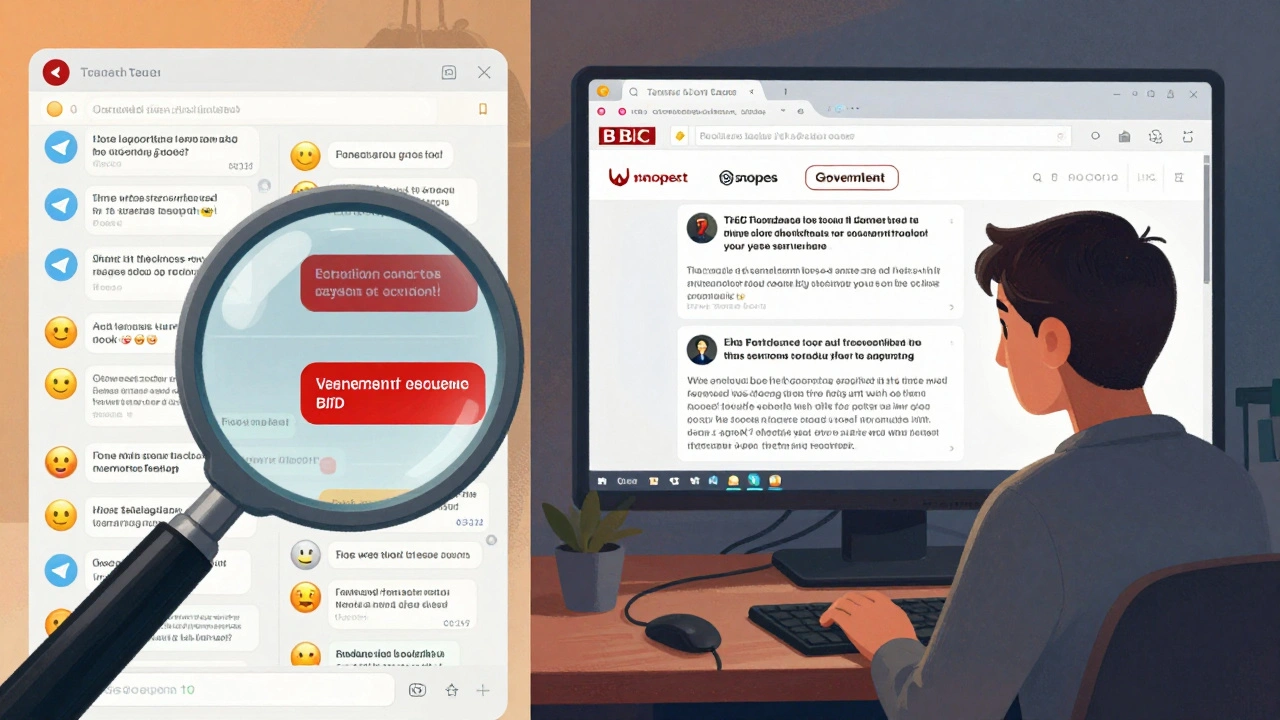
3. Teach Lateral Reading - Not Just Vertical
Most people read vertically: they scroll down the same channel, trusting the same voice.
Lateral reading means jumping sideways. Open 3 other tabs:
- One with a trusted news site (AP, Reuters, BBC)
- One with a fact-checking site (Snopes, PolitiFact)
- One with a public database (like the Wayback Machine or official government portals)
Teach subscribers: "If you can’t find the same claim in two trusted places, don’t trust it." This is the single most effective habit you can build.
4. Expose the Hidden Patterns
False news doesn’t look random. It follows patterns:
- Emotional triggers - "They’re stealing your freedom!"
- Urgency - "This is disappearing in 10 minutes!"
- Anonymous sources - "A source inside the ministry says..."
- Perfect blame - "It’s always the other side."
Make a simple chart. Post it once a week. "Here’s what a real leak looks like vs. what a fake one looks like." People remember visuals. They forget facts.
5. Encourage Reverse Sharing
Ask subscribers: "What would you share if this were true?" Then ask: "What would you share if this were false?"
This flips the script. Instead of asking, "Is this true?" - you’re asking, "What would make me believe this?" That’s how you uncover bias.
Real-World Example: How a Telegram Group in Ukraine Changed
In 2023, a Telegram channel in Lviv called "Ukraine Today" had 300,000 subscribers. It shared unverified war updates - often false. One teacher, Olga, started a side channel: "Verify Ukraine." She posted one debunked claim a day. With screenshots. With timestamps. With links to official Ukrainian government sites.
At first, people mocked her. Then, someone noticed she was right 17 days in a row. Subscribers started asking her before sharing. Within 6 months, "Verify Ukraine" had 120,000 followers. The original channel lost 40% of its audience.
Why? Because she didn’t yell. She showed. She didn’t say, "You’re wrong." She said, "Here’s how to tell."
What Happens When People Learn
Research from Stanford and MIT shows that people who learn media literacy skills become better at spotting lies - even when those lies match their beliefs.
One study tested 1,200 people on political misinformation. Half got a 20-minute media literacy lesson. The other half didn’t. The trained group was 43% better at identifying false claims - even if the claim supported their political side.
That’s the power of this skill. It doesn’t make you liberal or conservative. It makes you smarter.
People who practice media literacy:
- Share less misinformation
- Ask more questions before forwarding
- Trust verified sources more
- Report false content more often
This isn’t about censorship. It’s about clarity.
What You Can Do Right Now
If you run a Telegram news channel:
- Start tagging your posts: "Source: [link]" - even if it’s just a screenshot of a news site.
- Pin a message: "How to verify news on Telegram" - with 3 simple steps.
- Reply to false claims with a short video: "Here’s why this isn’t true."
If you’re a subscriber:
- Before sharing, pause. Ask: "Would I say this out loud to a friend?"
- Search the headline in quotes on Google. If nothing comes up - be suspicious.
- Follow one fact-checking channel. Let it be your anchor.
Media literacy isn’t a course. It’s a habit. And habits grow when they’re simple, repeated, and rewarded.
Why This Matters More Than Ever
In 2026, misinformation isn’t just about politics. It’s about health, money, safety.
False claims about vaccines. Fake investment schemes. Scams that use AI-generated voices. All spread through Telegram.
Every time someone shares a lie, they don’t just mislead - they erode trust. In institutions. In neighbors. In truth itself.
But every time someone pauses, checks, and asks - they rebuild it.
You don’t need to be a journalist. You don’t need a degree. You just need to care enough to ask: "How do I know this is real?"
Why can’t Telegram just fact-check its own content?
Telegram is designed as an encrypted messaging platform, not a news publisher. It doesn’t monitor content, moderate channels, or verify identities. Its philosophy is privacy-first, not truth-first. That means users bear the responsibility for evaluating what they see - which is why teaching media literacy is essential.
Can I teach media literacy without being an expert?
Yes. You don’t need to know everything. You just need to model curiosity. Ask questions like: "Where did this come from?" or "Has anyone else reported this?" Share simple tools like reverse image search or Snopes. Your role isn’t to be right - it’s to help others learn how to check for themselves.
What’s the easiest way to spot a fake news channel on Telegram?
Look for three red flags: 1) No clear author or organization behind the channel, 2) Posts with all caps, exclamation marks, or urgent language like "SHARE NOW," and 3) No links to sources - just screenshots or videos with no context. Real news outlets always cite where they got their info.
Do younger people on Telegram need media literacy too?
Absolutely. Many young users assume Telegram is private, so content must be true. They don’t realize bots can mimic journalists, and channels can be bought. Studies show teens are more likely to believe false claims if they come from a "verified"-looking channel. Media literacy isn’t for older generations - it’s for everyone online.
How long does it take to build media literacy skills?
You can start seeing results in days. Learning to pause before sharing, or to search one claim on Google, changes behavior immediately. Building deep critical thinking takes weeks or months - but the first step is always the same: ask one question before you hit forward.
Latest Posts