Most people think of Telegram as just another chat app for sending photos and memes. But look closer at what is happening in the background, and you see a massive infrastructure shift. By now, in early 2026, this platform has quietly grown into a primary engine for how news travels across the world. It isn't just moving messages between friends anymore; it is carrying entire political narratives, breaking stories, and community alerts. With roughly one billion monthly active users globally, the scale is no longer theoretical-it is the daily reality for nearly 12.5 percent of the human population. Understanding where these users live and how they consume information is critical for anyone trying to navigate the modern media landscape.
The Geographic Divide: Where Telegram Truly Lives
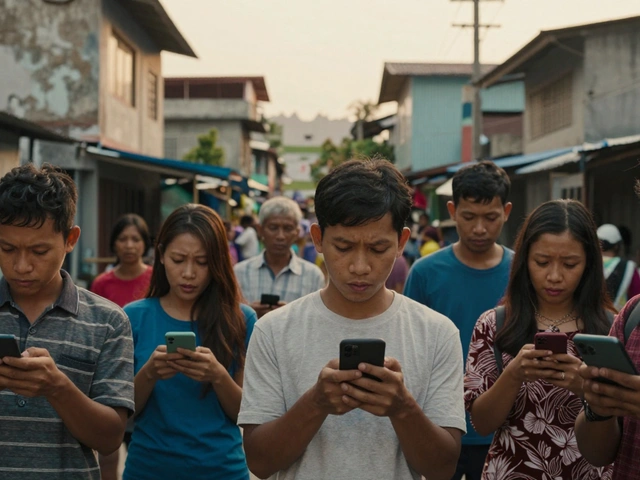
You cannot talk about Telegram adoption without getting specific about location because the app does not grow evenly. The map looks nothing like Twitter or Facebook. While Western tech giants often show strong numbers in the United States, Telegram is a different story entirely. In the U.S., penetration is actually quite low, sitting around eight percent of the population. Compare that to Asia, which holds the largest share of the user base at approximately 38 percent. This imbalance changes the center of gravity for global information.
India is the clear heavyweight champion here. With over 104 million app downloads, it represents nearly half of the country’s population engaging with the service regularly. When news happens there, it flows through Telegram channels faster than traditional broadcast networks can cut to air. Following India, Russia remains a powerhouse market with 34.4 million downloads. Even though the app has origins in St. Petersburg, it moved its headquarters to Dubai to adapt to geopolitical shifts, yet the Russian cultural connection remains tight. Indonesia ranks third among Asian nations with over 27 million downloads, proving the appeal spans linguistic barriers.
| Country | Downloads (Millions) | Primary Use Case |
|---|---|---|
| India | 104.04 | Social Networking & News |
| Russia | 34.40 | Communication & Journalism |
| Indonesia | 27.21 | Community & Commerce |
| United States | 26.85 | Privacy & Niche Communities |
| Brazil | 21.94 | Political Discourse |
In Latin America, the picture is vibrant but different again. Brazil leads the region with almost 22 million downloads, followed closely by Mexico. Here, the app serves a dual purpose: personal messaging and political organization. It acts as a town square for communities that might feel ignored by mainstream cable news. The Middle East and North Africa (MENA) region, holding 8 percent of the global user base, relies on the platform heavily for political discourse. Users in these regions often employ the app to bypass local censorship or access unfiltered reports, making it a lifeline for transparency.
Who Is Behind the Screen? The Demographic Shift
Knowing where the users are helps, but knowing who they are matters even more for news editors. If you are looking at engagement metrics, the demographic skews surprisingly young and predominantly male. Roughly 59.4 percent of the active user base identifies as male, leaving women at about 40.6 percent. While this gender gap exists, it doesn't mean the female audience is absent; it is simply smaller than platforms like Instagram or Pinterest.
Age distribution tells a clearer story of potential. The core power users are young adults. The largest segment, representing over 30 percent of all users, falls between 25 and 34 years old. Combine that with the 18-to-24-year-old bracket, which makes up another 23.7 percent, and you realize that more than half of the people talking on Telegram are under 35. This concentration creates a "digital native" environment where users expect speed and direct access. They do not sit around waiting for a nightly bulletin. They want real-time updates delivered via push notification.
Engagement habits are intense but short. Data from 2025 indicates that while users spend about three hours and 45 minutes a month on the platform, they open the app frequently-averaging 21 times a day. The sessions themselves are quick, lasting roughly 2.24 minutes each time. This behavior pattern suggests a "snackable" consumption model. Users aren't reading deep-dive feature articles within the app itself; they are checking headlines, verifying breaking news, and sharing links elsewhere. For a journalist, this means the first few seconds of your headline determine everything.

News as the Core Utility
This brings us to the critical pivot point. Most people believe they use messaging apps strictly for private conversation. The actual usage data flips that assumption upside down. Approximately 80 percent of Telegram users identify the app as their principal source of news. This is not a small fringe behavior; it is the dominant way the platform is utilized.
How does this work? It works through public channels. A broadcaster in Mumbai, a blogger in Moscow, and a community organizer in São Paulo can all run channels that subscribers join with one click. Unlike social media feeds that hide posts behind algorithms, Telegram delivers every message directly to the subscriber’s inbox. If a major event occurs, the news is pushed instantly to potentially millions of devices simultaneously.
This creates a unique pressure dynamic for misinformation. Because verification filters are minimal compared to legacy news sites, false information can spread with the same velocity as truth. In regions like Eastern Europe, where Telegram functions as a primary news source, the distinction between a verified government announcement and a rumor circulating in a large channel can blur. For organizations looking to report on this, understanding that the audience trusts the channel subscription relationship more than a brand logo is key. Trust is placed in the curator of the channel, not necessarily the original publisher of the story.
The Gap Between East and West
There is a stark asymmetry when we compare news consumption in the West versus the rest of the world. In the United States, despite having high download numbers compared to some smaller nations, the cultural adoption for news is limited. Only 8 percent of Americans use the app, compared to the much higher percentages in India or Russia. Western audiences still rely heavily on legacy social media or broadcast television for news aggregation.
This creates a two-tier information ecosystem. Asian and Eastern European perspectives have amplified distribution capabilities through Telegram because the infrastructure is already built. A story trending in Jakarta might ripple through the network in Beijing or London before it hits New York because the tools for mass dissemination are embedded in the mobile OS of those regions. Meanwhile, American newsrooms struggle to find audiences on the platform because their own domestic readership is largely absent.

Growth Trajectories and Future Projections
Even at 1 billion users, the momentum shows no sign of slowing. From 2019 to early 2023 alone, the user base saw a 230 percent increase. Current forecasts projected for 2026 suggest we are stabilizing around the 1 billion mark, but the rate of entry continues in developing markets. The Asia-Pacific region recorded nearly 63 million app downloads in just the third quarter of 2024. This kind of volume suggests that in the next decade, being active on Telegram will be considered essential for any global communication strategy.
The competitive landscape is also shifting. While WhatsApp remains a titan with 17+ hours of monthly engagement per user, Telegram is eating away at market share with its cloud-based architecture. It allows users to keep multiple device syncs without requiring them to be tethered to their phone. This flexibility attracts professional journalists who need to check feeds on desktop, tablet, and phone simultaneously.
What This Means for Journalists
If you are producing content for the world, ignoring Telegram is no longer an option. The strategy isn't about reposting your website link and hoping for engagement. You need to build a presence directly on the platform. Create a dedicated channel. Use the bot features to automate updates. But crucially, you must verify your audience.
Because the platform allows for anonymous broadcasting, the barrier to entry for publishers is incredibly low. This democratizes the voice but dilutes authority. To stand out, news organizations must verify their identity within the ecosystem. Using the verification badge available to public figures and brands helps anchor trust. Furthermore, engaging with the specific regional nuances-such as the privacy-focused needs of European users versus the community-building needs of Brazilian users-will determine success.
Is Telegram safe for sharing sensitive news?
Telegram offers end-to-end encryption in "Secret Chats," but standard groups and channels are server-client encrypted. For general news distribution, it is secure against casual interception, but technically savvy actors may view server-side risks.
Why is Telegram so popular in Russia and India?
High popularity stems from cultural adoption, peer-to-peer growth, and in some cases, perceived freedom from local internet restrictions or censorship compared to other platforms.
Can I monetize a news channel on Telegram?
Yes, many channels use paid subscriptions (TGFS) or sell advertising space within sponsored posts. Telegram Premium features also offer revenue sharing opportunities for content creators.
Does Telegram censor content?
Telegram adheres to strict policies regarding illegal content but generally maintains a neutral stance on political speech. However, individual countries can block access to the app entirely via ISP-level firewalls.
How does Telegram compare to WhatsApp for business?
Telegram supports larger community sizes (up to 200,000 members per group) and offers better administrative tools for managing large-scale broadcasts, whereas WhatsApp is primarily focused on private connections.