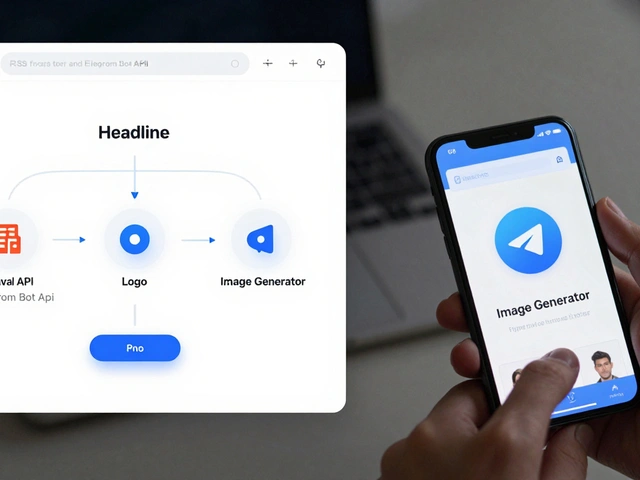
Imagine this: your breaking news story drops at 8:00 AM. You hit "publish" on your Telegram news bot, a automated account built on the Telegram Bot API that delivers real-time updates to subscribers. Within seconds, your server logs start filling up with red flags. HTTP 429 errors. Your bot has been throttled. The message queue backs up. By the time you fix the issue, the news cycle has moved on, and your audience has already seen the headline elsewhere.
This is the reality for thousands of developers building high-volume notification systems on Telegram. Unlike email marketing platforms or SMS gateways that offer clear SLAs and predictable bulk-sending capabilities, Telegram’s ecosystem relies on dynamic, often undocumented rate limits designed to keep the platform stable for its nearly 900 million monthly active users. If you are running a news bot, understanding these limits isn’t just about avoiding errors-it’s about ensuring your content actually reaches your readers.
The Hard Numbers: Understanding Telegram's Rate Limits
To build a reliable bot, you first need to know the boundaries you are working within. Telegram does not publish a single, static document listing every limit, but official documentation and extensive community testing have revealed consistent patterns. These limits apply to the Telegram Bot API, the HTTP-based interface launched in June 2015 by Telegram Messenger LLP for building automated interactions.
Here are the critical constraints you must respect:
- Global Limit: Approximately 30 messages per second across all chats combined. This is the hard ceiling for outbound requests from your bot token.
- Per-Chat Limit: Roughly 1 message per second to any single user or group chat.
- Group/Channel Limit: No more than 20 messages per minute to the same group or channel.
- Broadcasting: For large-scale notifications to many different users, the limit remains around 30 messages per second, but Telegram recommends spreading large broadcasts over 8-12 hours if possible.
When you exceed these thresholds, the API returns an HTTP 429 status code. Crucially, the response includes a JSON field called retry_after, which tells your bot exactly how many seconds it must wait before sending another request. Ignoring this value doesn’t just pause your current batch; it can trigger temporary blocks that last minutes or even hours.
| Platform | Global Outbound Limit | Per-Recipient Limit | Paid High-Volume Option |
|---|---|---|---|
| Telegram (Free) | ~30 messages/sec | ~1 message/sec | No |
| Telegram (Paid Broadcast) | Up to 1,000 messages/sec | Higher (dynamic) | Yes (via Telegram Stars) |
| WhatsApp Business API | Variable (based on quality rating) | Strict opt-in required | Yes (per-conversation fee) |
| Email (SendGrid/Mailgun) | Thousands per second | Daily caps vary | Yes (tiered pricing) |
Note that administrative endpoints like getChatMemberCount or getChatAdministrators have different, less documented limits. Developers report being able to call these methods at rates of 1-2 calls per second without hitting 429 errors, but resource-heavy queries should still be queued carefully. Always assume these limits are dynamic and can tighten based on your bot’s reputation or recent activity spikes.
Architecting for Reliability: Queues and Backoff Strategies
Knowing the limits is step one. Step two is building infrastructure that respects them automatically. You cannot rely on simple loops to send messages to thousands of users. Instead, you need a robust queuing system.
The most effective approach uses a message queue, such as Redis-backed BullMQ, RabbitMQ, or Kafka. When a new news alert is generated, you don’t send it immediately. You push the message payload into the queue. Worker processes then pull these jobs and send them via the Bot API, strictly adhering to the 30 messages/second global cap.
Consider using a token bucket algorithm, a rate-limiting method that allows bursts of requests up to a certain threshold before enforcing strict spacing. This ensures that if your worker process is idle for a moment, it can catch up quickly without exceeding the long-term average. However, always implement exponential backoff. If a worker receives a 429 error, it should wait for the specified retry_after duration plus a small buffer (e.g., +1 second) before retrying. This prevents the "thundering herd" problem where multiple workers simultaneously try to resend failed messages.
Frameworks like GrammY, a popular TypeScript framework for building Telegram bots with middleware support and Telegraf offer plugins and libraries to help manage this. For example, GramIO’s broadcast library implements persistent queues that handle retries and horizontal scaling out of the box. If you are building from scratch, ensure your database stores the state of each sent message. This leads us to the next critical reliability factor: idempotency.
Idempotency and Handling Duplicate Updates
Telegram’s Bot API does not guarantee exactly-once delivery. Network hiccups, webhook timeouts, or server restarts can cause your bot to receive the same update twice or miss one entirely. For a news bot, this means you might accidentally send the same breaking headline to a user two times in a row.
To prevent this, implement idempotency checks. Before sending a message, check your database to see if that specific article ID (or GUID) has already been sent to that specific chat ID. If it has, skip the send operation. This requires a lightweight storage layer-often Redis for speed or PostgreSQL for persistence-that tracks chat_id and last_sent_article_id.
Additionally, design your messages to be self-contained. If a message is delayed by ten seconds due to rate limiting, it should still make sense when it arrives. Avoid referencing "the previous message" unless you are certain it was delivered. Use absolute timestamps and clear headlines so each notification stands alone.

Webhooks vs. Long Polling: Choosing the Right Update Method
How your bot receives incoming data affects its overall reliability. Telegram offers two methods: long polling (getUpdates) and webhooks (setWebhook). For high-volume news bots, webhooks are almost always the better choice.
Long polling requires your server to constantly ask Telegram, "Do you have any new updates?" This creates unnecessary latency and overhead. Webhooks, on the other hand, allow Telegram to push updates directly to your server endpoint via HTTPS. This is faster and more efficient.
However, webhooks introduce a new constraint: your server must respond to the webhook request within approximately 10 seconds. If your processing logic takes longer, Telegram will mark the webhook as failed and eventually disable it. To solve this, use an asynchronous pattern. Your webhook endpoint should immediately acknowledge receipt of the update (returning a 200 OK status) and then pass the data to your background queue for processing. Do not attempt to send outbound messages directly inside the webhook handler if those sends might trigger rate limits or take time to complete.
A pro tip from the developer community: Telegram allows you to respond to a webhook with a method call (like sendMessage) directly in the HTTP response body. This counts as one request from Telegram to your server but does not count against your outbound 30 requests/second limit. While complex to implement, this technique can significantly boost throughput for interactive bots.
The Paid Broadcast Option: Breaking Through the Ceiling
If your news bot serves hundreds of thousands of subscribers and you need near-instant delivery during major events, the free tier’s 30 messages/second limit may be too restrictive. Spreading a broadcast over 8-12 hours defeats the purpose of "breaking news."
In mid-2024, Telegram introduced paid broadcasting, a feature allowing bots to bypass standard rate limits by paying with Telegram Stars. By setting the allow_paid_broadcast parameter to true in your send methods, you can achieve throughput of up to 1,000 messages per second.
The cost is 0.1 Telegram Stars per message. As of 2026, this translates to roughly $0.002 per message. Sending 1 million alerts would cost approximately $2,000. For many professional newsrooms, this is a viable operational expense compared to the cost of lost engagement or the complexity of managing multiple bot tokens.
Even with paid broadcasting, do not ignore error handling. Paid broadcasts reduce the frequency of 429 errors but do not eliminate infrastructure failures. Keep your queuing and backoff strategies in place, but you can relax the global throttle settings significantly.

Optimizing User Experience: Digests and Channels
Technical limits are only half the battle. The other half is user experience. Bombarding a user with 50 individual messages an hour during a busy news day will lead to unsubscribes, regardless of whether your bot stays under the rate limit.
Consider implementing digest modes. Allow users to choose between "Real-time Alerts" (for truly breaking stories) and "Hourly Summaries" (batching the top 5-10 headlines into a single message). This reduces your outbound message volume dramatically while keeping users informed.
Another powerful strategy is leveraging Telegram Channels, a server-side broadcast feature that allows admins to post messages to unlimited subscribers without hitting bot rate limits. Posting to a channel counts as one message from your bot to Telegram. Telegram then handles the fan-out to all subscribers internally. Many successful news operations use a hybrid model: a primary channel for broad announcements and a bot for personalized, topic-specific feeds. This keeps your bot’s rate consumption low while maximizing reach.
Troubleshooting Common Reliability Issues
Even with perfect architecture, issues arise. Here are common scenarios and how to address them:
- Sudden Bursts During Major Events: Elections, disasters, or viral moments can spike traffic. Ensure your queue has enough capacity to absorb these bursts without dropping messages. Monitor queue depth closely.
- Regional Blocking: In some countries, access to Telegram is restricted or throttled by ISPs. This is outside your control, but you can detect high failure rates from specific geographic IP ranges and adjust expectations accordingly.
- Ignoring Retry-After: Never ignore the
retry_afterfield. If you continue to send requests after receiving a 429, Telegram may block your bot token for extended periods. Implement alarms that notify your team if 429 errors exceed 1% of total requests in a 5-minute window. - Webhook Timeouts: If your server goes down or responds slowly, Telegram disables the webhook. Set up health checks and auto-restart mechanisms (using tools like systemd or Docker restart policies) to ensure your endpoint is always available.
By combining conservative engineering practices with Telegram’s newer monetization options, you can build a news bot that is both scalable and reliable. The key is to treat rate limits not as obstacles, but as design constraints that force you to build more resilient systems.
What happens if I exceed Telegram's bot rate limits?
If you exceed the limits, Telegram’s Bot API returns an HTTP 429 error with a retry_after field indicating how many seconds you must wait. Continuing to send requests after this warning can result in temporary blocking of your bot token, lasting from minutes to hours.
Can I increase my Telegram bot rate limits for free?
You can contact @BotSupport on Telegram to request manual limit increases, but there are no public criteria or guarantees. Most developers achieve higher throughput by optimizing their architecture (using channels, batching messages) or by adopting paid broadcasting.
How much does paid broadcasting cost on Telegram?
Paid broadcasting costs 0.1 Telegram Stars per message. As of 2026, this is approximately $0.002 per message. This allows you to send up to 1,000 messages per second, bypassing the standard 30 messages/second free limit.
Should I use webhooks or long polling for a news bot?
Webhooks are recommended for high-volume news bots because they provide lower latency and reduce server overhead. However, your webhook endpoint must respond within ~10 seconds, so you should process updates asynchronously using a message queue.
Does posting to a Telegram Channel count against bot rate limits?
No. Posting to a channel counts as a single message from your bot to Telegram. Telegram handles the distribution to all subscribers internally, so it does not consume your per-user or global outbound rate limits. This makes channels ideal for mass broadcasts.