When you think of where people get their news, you probably picture scrolling through Facebook feeds or watching YouTube videos. But there is a quiet shift happening behind the scenes. Telegram is a cloud-based instant messaging platform that has evolved into a major hub for uncensored news distribution and community building. It now serves over 1 billion users globally. While it started as a secure chat app, its role in journalism and information sharing has exploded. The question isn't just whether people use it, but who they are, why they choose it over traditional platforms, and how they consume information differently.
If you want to understand the digital media landscape in 2026, you have to look at the data behind Telegram's audience. This isn't just about tech enthusiasts anymore. It’s a diverse group spanning continents, professions, and political leanings. Let’s break down exactly who is reading the news on Telegram and what drives their behavior.
The Core Demographic: Young, Male, and Tech-Savvy
The face of the Telegram news consumer is younger than the average social media user. If you are between 18 and 34, you are part of the dominant force on this platform. Data from 2026 shows that users aged 25-34 make up nearly 30% of the total user base. When you add the 18-24 cohort, which represents almost 24% of users, more than half of all Telegram users fall into this young adult category.
Gender plays a significant role here too. Men dominate the platform, accounting for roughly 57% of users, while women make up the remaining 43%. This skew suggests that Telegram appeals strongly to audiences that prioritize technical functionality and privacy features over social validation metrics like likes and shares. Older demographics are present but smaller; users aged 65 and older represent only about 5% of the audience. This means Telegram is not yet a mainstream news source for seniors, unlike Facebook or television.
Professions That Drive News Consumption
It makes sense that tech workers would flock to a platform known for its encryption and bot capabilities. Indeed, IT and Internet professionals form the largest professional block, representing over 20% of users. Within this group, software developers and web developers are heavily concentrated. These users don’t just passively read news; they often build tools, create bots, and manage large communities around specific topics.
However, the audience is expanding beyond code. Marketing and PR experts now make up nearly 12% of the user base. Writers have seen a massive 119% growth in adoption since 2020. Even bankers have jumped on board, with a 97% increase in usage. This shift indicates that knowledge workers across industries are using Telegram not just for communication, but as a primary feed for industry-specific intelligence and breaking news that might be censored or buried on other platforms.
Regional Hotspots: Where Telegram Rules
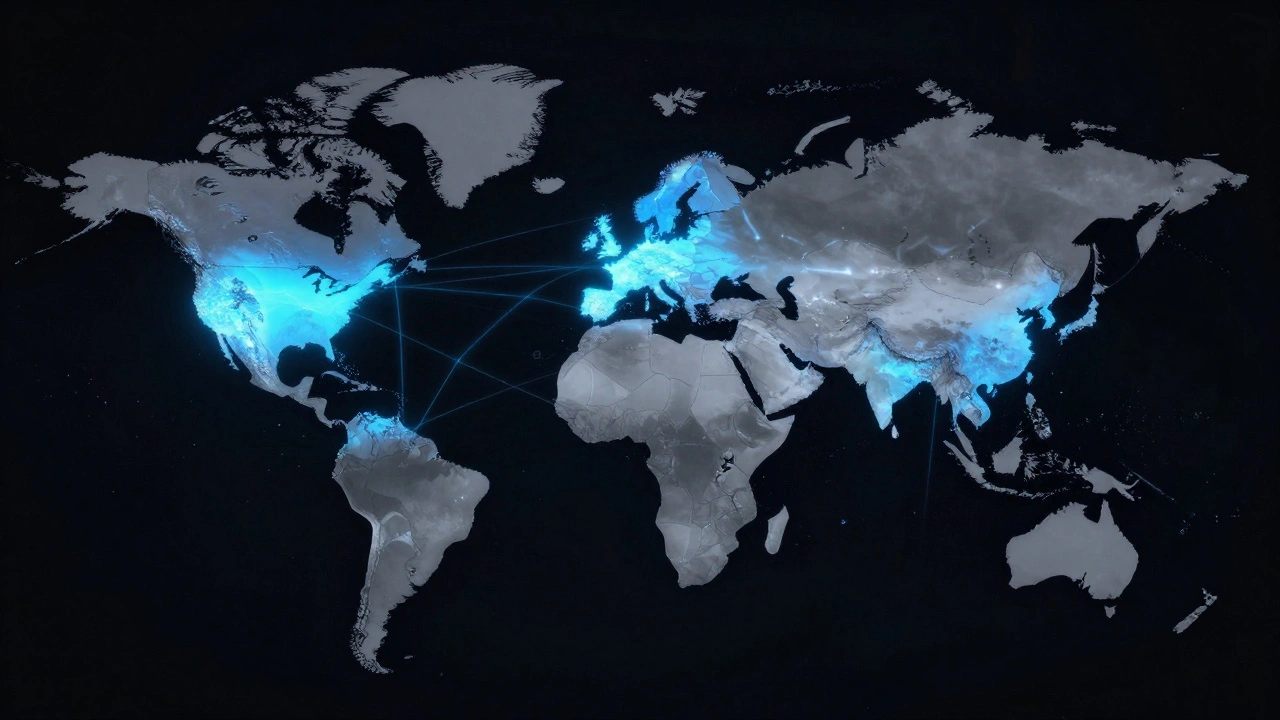
Geography dictates how much influence Telegram has as a news source. In some countries, it is a niche tool. In others, it is the internet.
| Country | Penetration Rate | Key Context |
|---|---|---|
| Uzbekistan | >70% | National communication staple |
| Russia | ~50% | Major alternative to domestic media |
| India | 45% | Largest absolute user base (83.8M downloads in 2023) |
| Brazil | 38% | High engagement in Latin America |
| Mexico | 34% | Growing regional hub |
| United States | 27% awareness, 2% news usage | Niche, politically skewed audience |
| France/UK/Netherlands | 10-13% | Lower penetration, early adopters only |
In Uzbekistan, Telegram is practically the national internet. With over 70% of the population using it, it functions as the primary channel for both personal communication and public news. In Russia and India, high penetration rates mean that Telegram channels are often faster and more trusted than traditional broadcast media. In contrast, Northern European countries like France, the UK, and Sweden show much lower usage, hovering around 10-13%. Here, Telegram remains a tool for specific interest groups rather than a mass-market news aggregator.
The U.S. Anomaly: Low Usage, High Political Bias
The United States presents a fascinating case study. While 27% of American adults know what Telegram is, only 2% actually use it to get their news. Compare that to Facebook (31%) or YouTube (25%), and Telegram seems insignificant. But look closer at the 2% who do use it for news, and you see a distinct pattern.
This small segment is heavily Republican. According to Pew Research Center data, approximately 66% of alternative social media news users (including Telegram) identify as Republican or lean that way. Only 33% identify as Democrat. This is the opposite of the demographic split seen on Facebook or Twitter/X. For these users, Telegram offers a space free from the content moderation policies they often criticize on mainstream platforms. They value accuracy on their own terms, with 75% expecting news on Telegram to be mostly accurate, despite the lack of editorial oversight.

Behavioral Patterns: How People Consume News on Telegram
News consumption on Telegram is active, not passive. Unlike an algorithmic feed that decides what you see, users must consciously subscribe to channels. This leads to highly curated experiences. Survey data reveals that 85% of Telegram users follow at least one news channel. Beyond general news, half of users follow political channels, and nearly 60% follow educational or entertainment channels.
The structure of Telegram supports this behavior. Channels can have up to 200,000 members, allowing for massive broadcast capabilities without the noise of group chats. Users spend an average of 3 hours and 45 minutes per month on the app. Daily access is common, with 67% of American users logging in every day. This frequency turns Telegram into a habitual news source, similar to checking email, rather than a leisure activity like browsing Instagram.
Why Choose Telegram Over Other Platforms?
The choice to use Telegram for news comes down to three main factors: privacy, censorship resistance, and segmentation. Users are tired of algorithms that push outrage or ads. Telegram allows them to build a custom news diet. If you are interested in cryptocurrency, local politics, or international conflict reporting, you can find dedicated channels that provide raw, unfiltered updates.
Additionally, the platform’s resistance to government takedown requests in certain jurisdictions makes it attractive for journalists and activists in restrictive environments. For the average user, it simply feels cleaner. There are no targeted ads interrupting your news feed, and your data is not being sold to third-party marketers. As digital fatigue grows, this simplicity is becoming a powerful draw.
Is Telegram safe for getting news?
Safety depends on the source. Telegram does not fact-check content. You are responsible for verifying the credibility of the channels you follow. However, the platform’s encryption ensures your private conversations remain secure, even if the public news channels you join are unmoderated.
Who is the typical Telegram user in 2026?
The typical user is male, aged 25-34, and likely works in technology, marketing, or media. They are digitally literate, value privacy, and prefer curated content over algorithmic feeds.
Why do Republicans in the US use Telegram for news?
Many Republican-leaning users view Telegram as a refuge from the content moderation policies of mainstream platforms like Facebook and Twitter. They appreciate the ability to share and receive news without fear of deplatforming or shadow-banning.
How does Telegram compare to WhatsApp for news?
WhatsApp is primarily designed for private, small-group communication. Telegram is built for broadcasting. Its channel feature allows one-to-many communication with hundreds of thousands of subscribers, making it far more suitable for news distribution and public discourse.
Is Telegram growing in rural areas?
Yes. Rural populations in regions like Iowa and the East Midlands of England have seen significant growth in Telegram adoption since 2020, suggesting the platform is expanding beyond urban tech hubs.