Think about the last time you scrolled through a news channel on Telegram. It feels like the Wild West, right? For years, the platform has leaned hard into a "privacy-first" identity, but that's increasingly clashing with the real-world need to stop organized abuse and extremism. When we talk about regulatory governance in this space, we aren't just talking about lawyers in suits; we're talking about a high-stakes tug-of-war between a massive messaging app, government watchdogs, and the NGOs that actually do the groundwork to find harmful content.
The Role of NGOs in Exposing the Gaps
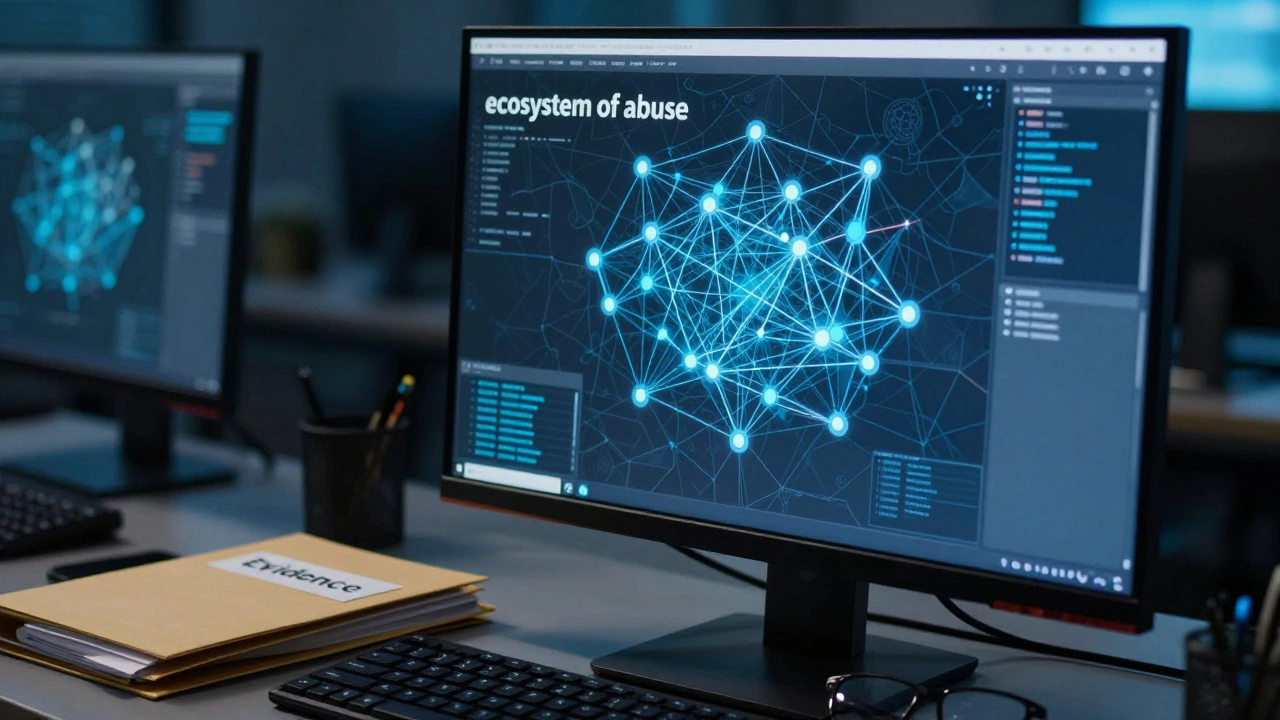
Government agencies often lack the agility to find where the "bad actors" are hiding. That's where non-governmental organizations (NGOs) come in. These groups act as the eyes and ears on the ground, documenting how platforms are actually being used. For example, in April 2026, a European non-profit called AI Forensics did exactly this. They didn't just guess; they documented a full-scale "ecosystem of abuse" across Spain and Italy, where harmful materials were being sold and distributed openly within news-style channels.
When NGOs bring this data to the table, they move the conversation from "we think there's a problem" to "here is the evidence." This pressure is what pushes platforms to change. Child-protection NGOs have played a similar role, specifically after the arrest of child pornography distributors in Cambodia. While the arrest was a win, the NGOs pointed out that the systemic loopholes in Telegram's reporting system are what allowed the crime to happen in the first place. They aren't just asking for more arrests; they're asking for a change in how the platform operates.
The Regulatory Hammer: Australia's eSafety Example
What happens when a platform ignores the warnings from NGOs and regulators? You get the kind of friction we saw with Australia's eSafety Commissioner. In March 2024, the Commissioner issued transparency reporting notices to several tech giants, including Meta and Google. They wanted to know how these companies were handling terrorist and violent extremist material under the Online Safety Act.
Most companies played ball. Telegram, however, took a different route. They missed the May 6, 2024, deadline by a staggering 160 days. This wasn't just a clerical error; it was a signal of resistance. The result? A massive infringement notice of approximately $1 million AUD issued in February 2025. This is a critical case study in regulatory governance: the fine wasn't actually for the content on the app, but for the failure to be transparent about safety measures. It shows that regulators are now targeting the process of compliance, not just the end result.
| Feature/Metric | Traditional Platforms (Meta, Google, X) | Telegram |
|---|---|---|
| Reporting Timelines | Generally adhered to regulatory deadlines | Significant delays (e.g., 160 days late in AU) |
| Content Promotion | Heavy reliance on recommendation algorithms | Minimal/No promotion algorithms |
| Regulatory Stance | Proactive engagement/lobbying | Reactive/Contesting fines as "disproportionate" |
| DSA Status | Many designated as VLOPs | Pushing back against VLOP designation |
The DSA and the Battle over VLOP Status
In Europe, the conversation is all about the Digital Services Act (DSA). The key term here is Very Large Online Platform (VLOP). If a service is designated as a VLOP, it faces much stricter rules. We're talking about mandatory risk assessments, transparency regarding how their algorithms work, and a higher standard for removing illegal content.
Telegram argues that it isn't a VLOP in the traditional sense because it doesn't use the same mass-distribution algorithms that Facebook or TikTok use. They claim their lack of a "discovery" algorithm actually makes it harder for abuse groups to spread. However, NGOs disagree. They argue that the sheer scale of the user base makes Telegram a systemic risk regardless of whether it uses a "For You' page" or not. If an NGO can find a network of abuse in Italy within minutes, the "no algorithm" defense starts to look thin.
Telegram's Internal Safety Framework
To be fair, Telegram isn't doing nothing. They have a set of terms of service that explicitly ban child sexual content and non-consensual materials. They use a mix of AI-powered moderation and human staff to scrub the platform. If you've ever reported a channel, you're interacting with this system.
The problem is that this "reactive" model-waiting for a user to report a violation-is often too slow. NGOs are pushing for a "proactive" model where platforms use better detection tools before the content even reaches a user. Telegram maintains that their current system is more effective than the VLOPs because they don't amplify the content via bots. But as regulatory pressure mounts, the gap between "we try our best" and "we meet legal standards" is closing.
Bridging the Gap: From Adversaries to Partners
Right now, the relationship between Telegram, NGOs, and regulators is largely adversarial. We see lawsuits, million-dollar fines, and scathing reports. But for a news ecosystem to actually be safe, this needs to shift toward a collaborative framework. What would that look like?
- Standardized Data Sharing: Imagine if NGOs could feed verified lists of abuse networks directly into Telegram's moderation AI in real-time.
- Third-Party Audits: Instead of Telegram saying "we're safe," an independent body (supported by NGOs) could audit their moderation efficacy.
- Clearer Escalation Paths: Creating a fast-track for NGOs to report high-harm content that bypasses the standard user-report queue.
The current trajectory suggests that Telegram will eventually be forced into compliance, either by the weight of DSA regulations in Europe or escalating fines in markets like Australia. The question is whether they will wait for the court orders or start building a structured partnership with the very NGOs that are currently calling them out.
Why is Telegram more difficult to regulate than Facebook or X?
Telegram's architecture prioritizes privacy and lacks the central algorithmic promotion found on other platforms. This makes it harder for regulators to track how harmful content spreads and allows the platform to argue that it doesn't "amplify" bad actors in the same way a traditional social feed does.
What is the impact of the Digital Services Act (DSA) on Telegram?
The DSA allows the European Commission to designate platforms as Very Large Online Platforms (VLOPs). If Telegram is designated as such, it must undergo mandatory risk assessments and provide much greater transparency about its moderation practices or face massive fines based on a percentage of its global turnover.
How do NGOs influence safety on Telegram?
NGOs like AI Forensics conduct deep-dive research to map out abuse networks and illegal marketplaces. By publishing these findings and presenting them to regulators, they force the platform to acknowledge specific failures and pressure governments to impose stricter oversight.
What was the result of the Australian eSafety dispute?
After Telegram delayed its response to transparency notices by 160 days, the eSafety Commissioner issued a fine of approximately $957,780. While Telegram initially contested this, they eventually dropped their legal challenge, though the event highlighted the platform's resistance to transparency requirements.
Does Telegram use AI for content moderation?
Yes, Telegram employs a combination of AI-powered tools and human moderators to identify and remove content that violates its terms of service, particularly regarding child safety and non-consensual materials.
Latest Posts