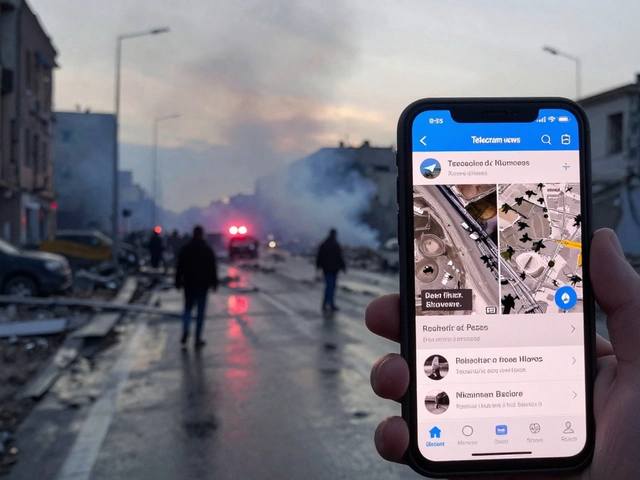
Text is losing its grip on the news cycle. While we used to scroll through endless walls of paragraphs, the shift toward "ear-share" is happening right now. In 2026, Telegram is a cross-platform instant messaging service that has evolved into a powerhouse for real-time news distribution . We are seeing a massive spike in the use of voice notes and audio briefings as primary news formats. It isn't just about convenience; it's about the intimacy and speed that a recorded voice provides over a typed report. If you're a news creator or a consumer, you've probably noticed that a 2-minute audio clip often hits harder than a 500-word article.
Key Takeaways for News Creators
- Audio content drives higher engagement and a more personal connection with the audience.
- Telegram's native OGG Opus format allows for efficient, high-quality audio delivery.
- Standard Bot API limits (20MB) can be bypassed using local servers for long-form briefings.
- AI-driven transcription and summarization are essential for accessibility and archiving.
Why Audio is Winning the News Race
Why are we suddenly swapping reading for listening? It comes down to cognitive load. Listening to an audio briefing allows a user to multitask-commuting, cooking, or walking-while staying informed. For journalists, Voice Notes provide a way to deliver raw, immediate commentary without the delay of editing and formatting a text post. This "on-the-fly" reporting creates a sense of urgency and authenticity that feels more like a conversation and less like a press release.
This trend is already being scaled by state-run media and independent journalists globally. For instance, in Persian-language news circles, Telegram has become a portable alternative media hub where audio briefings bypass traditional censorship or formatting hurdles. When a reporter can record a quick update and hit send, the news reaches the audience in seconds, not minutes.
The Technical Backbone: OGG Opus and Bitrates
Under the hood, Telegram doesn't just send a random audio file. It uses the OGG Opus is a highly efficient lossy audio codec designed for speech and general audio over the internet codec. Specifically, voice messages are encoded at approximately 163kbps. This is a sweet spot for news: it keeps the file size small enough for fast loading on mobile data while maintaining clear voice quality.
For those running automated news channels, the math is simple: a 20MB file typically holds about 15 to 20 minutes of audio. For most daily briefings, this is plenty. However, if you're producing deep-dive investigative audio, you'll hit a wall with the standard Telegram Bot API. To solve this, professional outfits are moving toward running the Bot API Local Server via Docker. This shift jumps the upload limit from a measly 20MB to a massive 2GB, allowing for multi-hour recordings without the need for aggressive compression that ruins audio quality.
| Feature | Standard Bot API | Local Bot API Server (Docker) |
|---|---|---|
| Max File Size | 20 MB | 2000 MB (2 GB) |
| Typical Audio Length | 15-20 Minutes | Multiple Hours |
| Setup Complexity | Low (Cloud-based) | Medium (Requires Server) |
| Use Case | Quick news alerts | Long-form podcasts/briefings |
Solving the Accessibility Gap with Transcription
Audio is great, but it's a nightmare for searchability and accessibility. You can't "Cmd+F" a voice note. Telegram Premium users have native transcription, but for the average user, the limits are tight-often restricted to just a couple of messages per week. Furthermore, the native engine (powered by Google Speech-to-Text) sometimes struggles with the complex technical jargon often found in political or financial news.
To bridge this gap, the community has turned to third-party AI integrations. One of the most effective workflows involves using a Whisper Model is an automatic speech recognition (ASR) system trained by OpenAI on a large dataset of multilingual audio for transcription and Llama 3 is a large language model developed by Meta that excels at text generation and summarization for condensing the news. By forwarding a voice note to a specialized bot powered by Groq's API, a user can get a full transcript and a bulleted summary in seconds. This turns a transient audio clip into a permanent, searchable record.
Automating Your Audio News Pipeline
If you're managing a news brand, doing this manually is impossible. The goal is a seamless pipeline where audio is recorded, distributed, and transcribed automatically. Tools like Make.com is a visual automation platform that connects different apps to create automated workflows allow you to set up triggers: whenever a new voice message hits a specific channel, it's sent to Google Cloud Speech services and the resulting text is posted back to the channel for those who prefer reading.
Another powerhouse for this is MindStudio is an AI workflow platform used to build custom AI agents and delivery systems . It enables a reverse workflow where AI-generated audio is pushed directly into Telegram chats using bot tokens and file URLs. This allows news organizations to turn text-based reports into audio briefings automatically, catering to both reader and listener demographics simultaneously.
Privacy and Archival Workflows
News often involves sensitive information. When professionals use transcription bots, they often employ a "Private Forwarding" protocol. They forward a public news clip to a private bot, get the text, and then scrub the chat history. This ensures that the audio content doesn't linger in a vulnerable cloud state.
For archival purposes, the process is straightforward but vital. On iOS and Android, users can hold a message and share it to their files. On desktop, the "Save As" option in the three-dot menu is the gold standard. Since most transcription tools support OGG, you don't usually need to convert to MP3, but having a conversion tool handy is a pro tip for those dealing with legacy archival software.
What is the best way to send long audio briefings on Telegram?
For files longer than 20 minutes (roughly 20MB), the standard Bot API will fail. The most reliable method is to deploy a Telegram Bot API Local Server using Docker, which increases the upload limit to 2GB and removes the strict download constraints.
How can I transcribe Telegram voice notes for free?
While Telegram Premium offers native transcription, free users can use third-party bots powered by OpenAI's Whisper model via Groq's API. These bots often provide more accurate transcriptions and summaries than the native Google-powered version.
Why use OGG Opus instead of MP3 for news?
OGG Opus is specifically designed for speech and provides better quality at lower bitrates (like 163kbps). This ensures that news briefings load instantly even on poor mobile connections without sacrificing the clarity of the journalist's voice.
Can I automate the conversion of text news to audio on Telegram?
Yes, by using platforms like MindStudio or Make.com. You can create a workflow that takes a text article, passes it through a text-to-speech AI, and uses a Telegram bot token to push the resulting audio file into your channel.
How do I archive voice notes from a news channel?
On desktop, use the three-dot menu and select "Save As." On mobile, long-press the audio message and use the share icon to save the file to your device's internal storage or a cloud folder. These are typically saved as .ogg files.
Next Steps for Newsrooms
If you're still relying solely on text, you're leaving engagement on the table. Start by introducing a "Morning Briefing" voice note-keep it under 3 minutes and record it raw. As you scale, look into integrating a Whisper-based transcription bot to make your audio searchable. If your briefings grow into podcasts, move your bot to a Docker-based local server to avoid the 20MB limit. The future of news isn't just read; it's heard.