For over a decade, the idea of a "digital sanctuary" where the company didn't peek at your messages was Telegram's biggest selling point. But the dream of absolute platform neutrality hit a wall in August 2024 when Pavel Durov is the founder and CEO of Telegram who faced arrest in France over the platform's failure to combat organized crime was detained by French authorities. This wasn't just a legal skirmish; it was a wake-up call that changed how the app handles your data and illegal content forever.
If you've used the app recently, you might have noticed things feel different. The platform that once claimed it wouldn't monitor private chats is now actively scrubbing content and cooperating with governments. This shift isn't about a sudden change of heart-it's about survival in a world where CEOs are now being held personally responsible for what happens on their servers.
The Breaking Point: Why the Old Model Failed
Telegram's original philosophy was simple: provide a secure space and stay out of the way. They leaned heavily into end-to-end encryption is a system of communication where only the communicating users can read the messages to ensure privacy. While this sounds great for activists and journalists, it created a massive blind spot for law enforcement.
The French prosecutor's office revealed a staggering statistic: Telegram ignored 2,460 legal requests between 2013 and 2024. For regulators, this made reporting crimes on the platform feel like "yelling into the void." This lack of response turned the app into a hub for money laundering, fraud, and the distribution of abusive material. When the authorities finally stepped in, they didn't just sue the company; they went after Durov himself, charging him with complicity in organized crime.
How the Moderation Model Actually Changed
The transition from a "hands-off" approach to a regulatory-compliant model happened almost overnight. Telegram had to pivot from a libertarian fortress to a cooperative service. Here are the specific changes that moved the needle:
- User-Led Reporting: In a total reversal of its previous stance, Telegram now allows users to flag "illegal content" within private chats. Moderators can now review these reports, breaking the old rule that private communications were strictly off-limits.
- Feature Removal: The company scrapped the "People Nearby" feature, which had become a playground for scammers to find and target victims. They also disabled media uploads on their standalone blogging tool to cut down on illicit file sharing.
- Active Cooperation: Telegram has shifted from ignoring requests to providing compliance updates. In South Korea, officials noted that the app now often removes flagged content within 24 hours-a massive leap from the previous era of total silence.
| Feature/Policy | Historical Model (Pre-2024) | Current Model (2026) |
|---|---|---|
| Private Chat Monitoring | Strictly prohibited / No access | User-flagged content is reviewed |
| Legal Request Response | Often ignored ("The Void") | Average 24-hour turnaround |
| Feature Set | Open (e.g., People Nearby) | Restricted to prevent fraud |
| CEO Liability | Avoided via platform neutrality | Direct legal accountability |

The Legal Pressure Cooker
Telegram doesn't operate in a vacuum. It is currently wrestling with a patchwork of global laws that are becoming increasingly aggressive. The most significant of these is the Digital Services Act is a European Union regulation that mandates strict content moderation and transparency for online platforms (DSA). The DSA requires platforms to have clear mechanisms for removing illegal content and to be transparent about their moderation algorithms.
Durov has argued that these laws are "outdated pre-smartphone legislation" and that holding a CEO personally liable for user-generated content kills innovation. But the reality is that the era of the "unaccountable founder" is ending. When the Financial Crimes Enforcement Network is a U.S. bureau that safeguards the financial system from illicit activity (FinCEN) took action against criminal marketplaces like Huione Guarantee and Xinbi Guarantee on Telegram, the company complied. This shows that when the legal heat is high enough, even the most privacy-focused platforms will fold.
The Privacy Paradox: Can You Have Both?
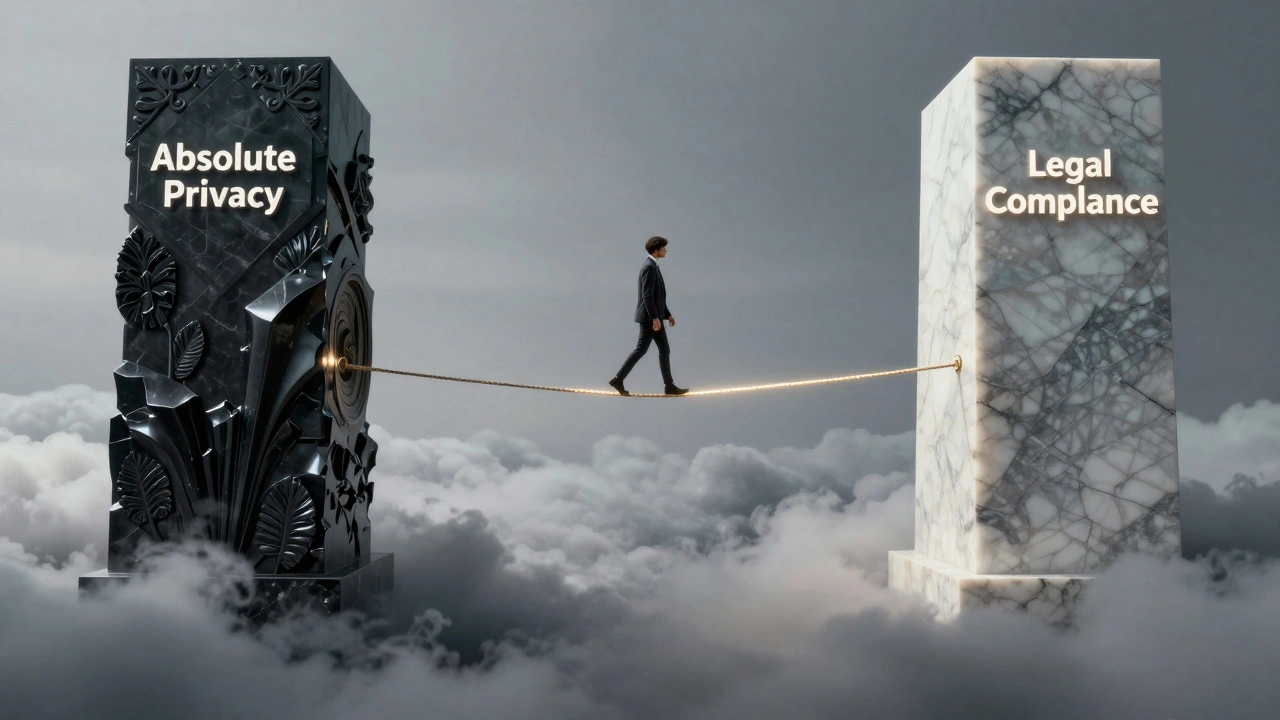
The core of this conflict is a technical one. If a platform is truly encrypted, the company *can't* see the messages, so they *can't* moderate them. If they build a "backdoor" or a reporting system that allows them to see content, the encryption is no longer absolute.
Telegram is trying to walk a tightrope. They want to keep users who crave privacy while satisfying governments that demand safety. By implementing user-flagging, they've shifted the burden of detection from the company's algorithms to the users themselves. This allows them to claim they aren't "spying" on everyone, only looking at what is reported.
What This Means for the Future of Messaging
Is this a permanent change or just a temporary shield against French prosecutors? Industry experts are split. Some believe Telegram has finally grown up and accepted that scale requires responsibility. Others think that once the immediate legal threats fade, the platform might drift back toward its minimalist roots.
Regardless, the "Durov Precedent" has sent a shockwave through the tech world. Other encrypted apps now know that "we can't see the data" is no longer a legal shield. We are moving toward a world where platform architecture must be designed with regulatory governance in mind from day one, rather than as an afterthought once the police arrive at the door.
Does Telegram now read all my private messages?
No, they don't read everything. However, they have introduced a system where if a user flags a message as illegal, moderators can review that specific piece of content. This is a shift from their previous policy of zero access to private chats.
Why was Pavel Durov arrested in France?
Durov was arrested because French authorities believe Telegram's lack of moderation and refusal to cooperate with legal requests made the platform complicit in organized crime, including fraud, money laundering, and the sharing of abusive material.
What is the Digital Services Act (DSA) and how does it affect Telegram?
The DSA is an EU law that forces big tech platforms to remove illegal content quickly and be transparent about how they moderate. It puts pressure on Telegram to move away from its "hands-off" approach to avoid massive fines and legal action within Europe.
What happened to the 'People Nearby' feature?
Telegram removed the 'People Nearby' feature because it was being heavily exploited by scammers and fraudsters to find and target victims, making it a liability for the company's reputation and legal standing.
Is Telegram still safer for privacy than WhatsApp or Signal?
It depends on your definition of safety. While Telegram still offers strong encryption, its new willingness to cooperate with law enforcement and allow reporting in private chats means it is no longer a "black box" in the way it once claimed to be.