For years, Telegram built its reputation as the ultimate safe haven for privacy, famously claiming that no one-not even the government-could peek into your messages. But that era of absolute defiance has hit a wall. If you've been following the news, you know that the platform's stance on law enforcement shifted almost overnight. The catalyst? The August 2024 arrest of CEO Pavel Durov in France. What started as a legal battle over complicity in organized crime and the distribution of illegal material ended with a fundamental rewrite of how Telegram handles your data.
Now, the platform uses Transparency Reports is quarterly disclosures that document how many times Telegram has handed over user information to government agencies. While these reports are presented as a win for openness, they actually signal a massive increase in compliance with judicial orders. For anyone running news operations or community channels, this is a critical shift in platform risks that could change everything about how you operate.
The Pivot from Privacy to Compliance
To understand where we are, we have to look at the policy shift. For a long time, Telegram's response to data requests was essentially a polite "no." However, section 8.3 of the updated Privacy Policy now makes it clear: if a judicial authority confirms you are a suspect in a criminal case that violates their terms, Telegram will perform a legal analysis and may disclose your IP address and phone number.
This isn't just a change in wording; it's a change in behavior. Before 2024, the number of fulfilled requests was negligible. After the legal pressure in France, those numbers didn't just grow-they exploded. The platform also took steps to limit the tools criminals used to hide, like removing new media uploads for certain users and tweaking the "People Nearby" feature to reduce the risk of illicit meetups. They've even leaned into AI-driven moderation to scrub the search function of drug and weapon sales.
Decoding the Numbers: Who is Getting the Data?
If you look at the actual data from the transparency reports, the scale of the shift is staggering. The United States provides the most shocking example of this trend. In early 2024, Telegram responded to a mere 14 requests affecting 108 users. By the end of the year, that number skyrocketed to 900 occasions where phone numbers and IP addresses were handed over, impacting 2,253 users. That is a 6,300% increase in fulfilled requests in just a few months.
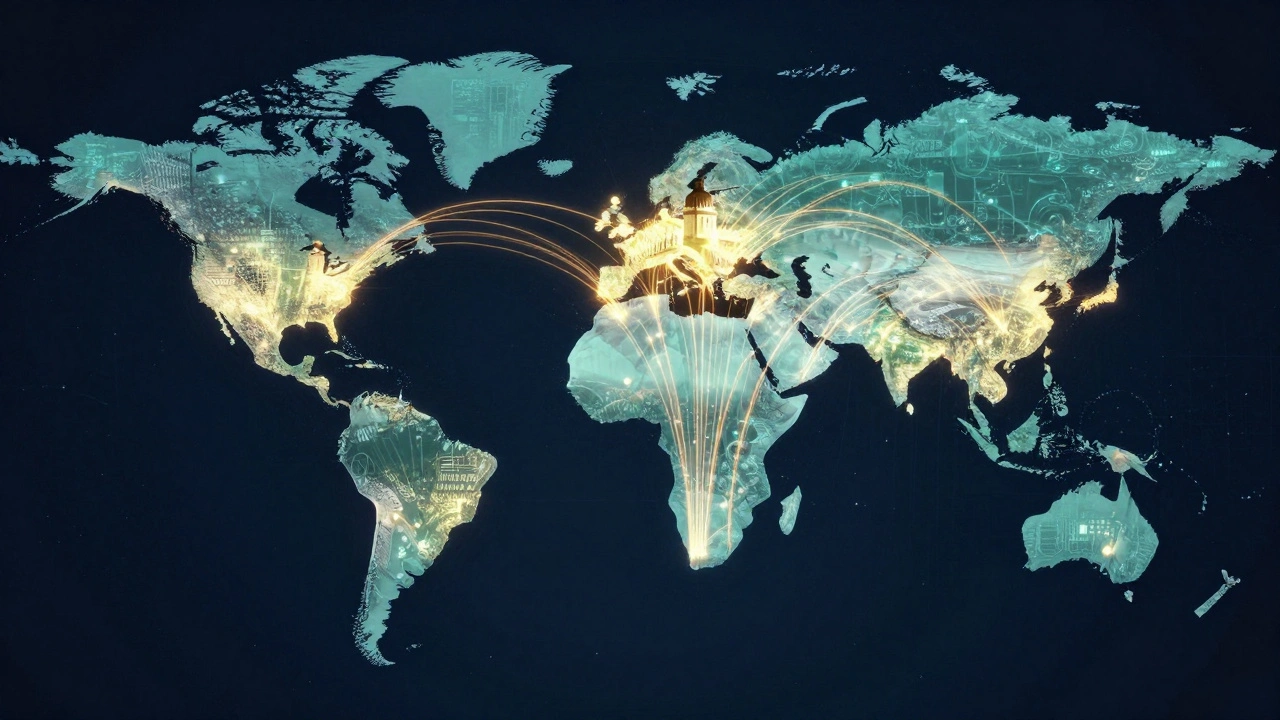
Other regions show even heavier activity. India has emerged as the most active jurisdiction in these reports. Throughout 2024, Indian authorities received user data on 14,641 separate occasions, affecting over 23,000 users. Similarly, the UK saw a jump from single-digit request fulfillment to 142 instances impacting nearly 300 users. When you see these numbers, it becomes clear that the "impenetrable fortress" image of Telegram is officially gone.
| Country | Requests/Occasions | Users Affected | Trend Magnitude |
|---|---|---|---|
| United States | 900 | 2,253 | 6,300% increase |
| India | 14,641 | 23,535 | Highest global volume |
| United Kingdom | 142 | 293 | Significant rise from low baseline |
How to Access the Reports (and Why It's Tricky)
Telegram hasn't just published a PDF on a website. They launched the @transparency bot, an automated tool designed to give users a glimpse into how often their government is requesting data. However, the experience hasn't been seamless. Many users have encountered "updating" messages, and the bot often tells users to come back in a few days to see the latest figures.
There is also a geographic restriction in place. You can't just see a global map of every request; the reports are limited to the region where the requesting user is located. This means if you're in the US, you see US data. While this protects some level of operational secrecy, it also makes it harder for independent researchers to verify the full scope of Telegram's global cooperation with intelligence agencies.
The Red Flags: What the Reports Don't Tell Us
While the existence of these reports is a step toward transparency, privacy advocates aren't convinced. There are two major holes in the current system. First, the "missing countries" problem. Critics have pointed out that while democratic nations are listed, many authoritarian regimes-which are often the most aggressive in tracking dissidents-are completely absent from the reports. If a country isn't listed, does that mean Telegram is refusing them, or are they making "shady deals" off the record?
Second, there is the issue of timing. The reports are quarterly, meaning the data is always a few months old. In a fast-moving legal environment, a three-month lag is a lifetime. Analysts argue that the current reporting system is more of a public relations move to appease European regulators than a true commitment to user privacy. After all, if the platform was truly transparent, why restrict the bot to regional views?
Practical Risks for News Operations and Activists
If you are using Telegram to coordinate news gathering, protect sources, or manage a sensitive community, the rules of the game have changed. You can no longer assume that a phone number is the only piece of identifying information at risk. Since Telegram now openly admits to sharing IP addresses upon legal request, a simple connection to the app can leave a digital breadcrumb leading straight to your front door.
To mitigate these risks, consider a few basic shifts in your workflow:
- Avoid Phone Number Dependency: Use virtual numbers or secondary SIMs for account registration if you are operating in high-risk jurisdictions.
- Network Masking: Since IP addresses are now routinely handed over, using a reliable VPN or the Tor network is no longer optional-it's a necessity for anonymity.
- Switch to Secret Chats: Remember that standard cloud chats are stored on Telegram's servers. Only "Secret Chats" use end-to-end encryption by default and aren't stored in the cloud, making them significantly harder to intercept via server-side data requests.
- Limit Searchability: Adjust your privacy settings to ensure your account isn't easily discoverable through the search function, which the CEO himself admitted is a primary target for moderation and surveillance.
Does Telegram still offer end-to-end encryption?
Yes, but only in "Secret Chats." Regular chats, groups, and channels use client-server encryption, meaning the data is stored on Telegram's servers and can be accessed by the company if they receive a valid legal order.
What exactly does Telegram share with law enforcement?
According to their updated privacy policy and transparency reports, they primarily share the user's phone number and IP address when presented with a valid judicial order regarding criminal activity.
Why did the transparency reports suddenly change in 2024?
The shift followed the August 2024 arrest of CEO Pavel Durov in France. He faced charges related to complicity in organized crime and failing to cooperate with law enforcement, which forced the platform to implement more rigorous compliance and reporting measures.
How can I check if my country is requesting data from Telegram?
You can use the @transparency bot within the Telegram app. Note that you will only see data relevant to your specific geographic region, and some data may be delayed due to updates.
Are all countries included in the transparency reports?
No. Privacy advocates have noted that several countries, particularly some totalitarian regimes, are not listed in the reports, leading to questions about whether those requests are being handled privately.