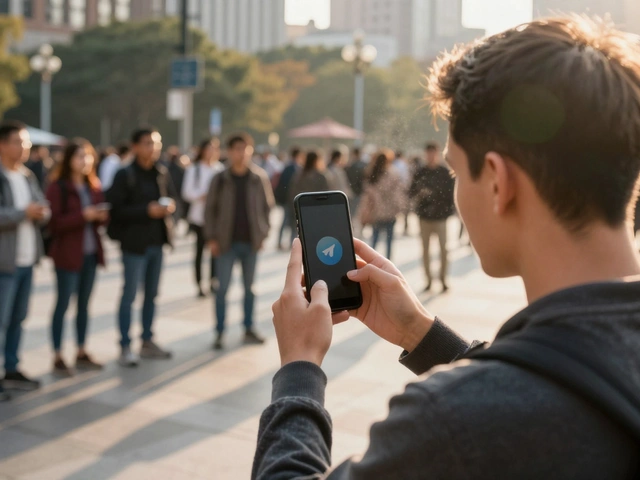
Telegram has quietly become the go-to spot for breaking stories, especially among younger users. It feels different from the crowded social media apps everyone used a few years ago. Instead of fighting for attention in a chaotic feed, the messaging platform offers clean channels where updates flow without the noise. But why is this happening right now? As we move through 2026, the answer isn't just about speed; it's about how young people want to consume information.
The Shift From Feeds to Channels
Social Media Trends have shifted dramatically by 2026. The era of the public "like" count is fading. Users are looking for smaller, safer spaces rather than broadcasting everything to the world. This change pushes traffic toward private communities and niche channels. Telegram sits right in the middle of this trend. While other platforms try to sell you a personalized ad based on your mood, Telegram lets you subscribe directly to sources you trust. It cuts out the middleman algorithms that usually decide what news gets shown.
Think about how annoying it is when a post disappears after two hours. Telegram channels keep messages accessible. For students and young professionals scanning for quick updates, this archive feature matters. You can catch up on what you missed yesterday without digging through a complex timeline. It turns news into something permanent and searchable, unlike the disappearing content seen elsewhere.
Who Is Actually Onboard?
To understand the shift, we need to look at who is using the app. As of 2026,
Age Group
Percentage of Users
Primary Usage
18-24 Years
24%
Community & Signals
25-34 Years
30%
Work & News
The data shows that roughly a quarter of users fall into the 18-24 bracket. That makes it a significant hub for Gen Z and early Millennials. They aren't just chatting with friends, though. They are following large broadcast channels. Some of these channels act like newsletters or local radio stations. This demographic overlap explains why trends start here-they see the raw info first before it hits mainstream media sites.
Privacy As A Feature, Not Just A Marketing Term
Most social networks treat user data as their main product. In contrast, Cloud-Based Messaging prioritizes anonymity. You don't need a phone number publicly displayed to join many groups. For young users constantly worried about digital footprints, this is a massive draw. When getting news, nobody wants their political preferences or current location tagged to every article they read. This privacy layer encourages honest engagement without the pressure of performing for an audience.
Additionally, End-to-End Encryption protects secret chats and calls, giving users confidence that sensitive discussions remain private. Even standard chats are cloud-encrypted, meaning only Telegram holds the server keys. While this doesn't mean everything is unbreakable, it sets a higher bar than standard SMS or basic instant messengers. Trust becomes a currency on the platform. If users believe their conversations are safe, they stay longer.
The Speed of Information Flow
News Updates move incredibly fast on this platform. Traditional journalism involves layers of approval-editors, fact-checkers, publishers. Telegram channels often cut straight to the source. In times of crisis or rapid events, users flock here because the delay between an event happening and it being posted is almost non-existent. This immediacy creates a sense of urgency. It feels like sitting in the room where the decisions are being made.
However, speed comes with trade-offs. Because anyone can open a channel and hit "Post," the barrier to entry is virtually zero. This democratization means that alongside verified journalists, you find independent creators and random observers sharing live footage. For a young audience skeptical of institutional narratives, having multiple viewpoints available instantly is appealing. They can cross-reference quickly, deciding which angle makes more sense to them.
The Risk of Unfiltered Noise
We cannot talk about News Consumption on this platform without addressing the elephant in the room. Content Moderation policies are significantly more relaxed compared to competitors. This freedom allows speech that would be banned elsewhere, but it also opens the door to misinformation. Reports indicate that the platform has become a hotspot for unverified claims and agitators. When a headline goes viral, checking its truth requires extra effort.
This creates a paradox for the average user. They get the freshest info, but they have to do their own vetting. It's a "use at your own risk" environment. Despite this, users aged 18-24 still prefer it. The reasoning seems to be that they value the unfiltered nature over the sanitized, corporate-approved news feeds found on major social sites. It forces critical thinking rather than passive consumption.

Community Dynamics vs. Algorithms
On most apps, Discovery Logic relies on engagement bait. If you linger on a story, the app shows you ten more similar ones to keep you trapped in a loop. Telegram changes the dynamic completely. You choose exactly what appears in your list. If you don't follow the channel, you don't see the story. This puts total control back in the user's hands.
Furthermore, groups function differently here. They support up to 200,000 members. These aren't small chat rooms anymore; they are mass forums. Political debates, tech support, and cultural discussions happen in real-time threads. The ability to filter keywords within a group helps manage the noise. You get the community feel without the mandatory notification spam.
A Look at Global Reach
While US-centric analysis often focuses heavily on Western social habits, Telegram's roots run deep globally. With 104 million downloads in India alone and a huge presence in Russia and Indonesia, the "young audience" isn't monolithic. In regions where censorship is a concern, this tool serves as a lifeline for genuine reporting. The user base skews male (roughly 57%), but the gender gap is narrowing as news channels become more lifestyle-oriented. The platform's longevity-launched in 2013-has helped build infrastructure that newer competitors simply haven't caught up to yet.
Is Telegram better than X or TikTok for news?
It depends on your goal. X (formerly Twitter) offers faster real-time commentary but struggles with visibility due to algorithmic filtering. TikTok provides video-first news but lacks depth for detailed reading. Telegram wins for those who want archival access, long-form text, and direct subscription without ads interfering with the flow.
Can I track down misinformation on Telegram easily?
It is harder. Because moderation is minimal, false stories spread quickly. However, many fact-checkers have set up official channels to debunk myths. You have to actively search for verification rather than relying on the platform to flag bad actors automatically.
Do bots help curate news feeds?
Yes, bots are a core feature. They can scan thousands of channels for specific keywords and send you a digest. This automates the process of finding relevant updates across multiple subscriptions without needing to check each one manually.
Is my data safe on this platform?
Telegram uses cloud encryption for all chats, protecting them from interception during transfer. However, standard chats are not end-to-end encrypted by default like "Secret Chats." For maximum security, always switch to Secret Chat mode for private sensitive info.
How much time does a typical user spend there daily?
Recent metrics show an average of 31 minutes per day. This is substantial but less than heavy social scrolling on Instagram or TikTok, suggesting focused usage sessions rather than endless mindless swiping.