Most news creators in developing regions struggle to make money from Telegram-not because people don’t care, but because the monetization tools out there were built for users in places where $5 a month means nothing. In Nigeria, Indonesia, or Peru, a family might spend $2 on data for the whole week. Charging $10 for a premium Telegram channel? That’s not sustainable. It’s not just about price. It’s about trust, access, and real value. So how do you build monetization tiers that actually work when your audience can’t afford Netflix subscriptions or PayPal fees?
Forget the $10 Model: What People in Developing Regions Can Actually Pay
Telegram channels with 10,000+ followers in the U.S. or Germany might charge $9.99/month. In Lagos, that’s two days’ worth of food. In Manila, it’s half a taxi ride to work. Realistic pricing in developing regions starts at $0.20 to $1.50 per month. Not $5. Not $10. Think pennies, not dollars. The key is volume. If you have 5,000 subscribers paying $0.50, that’s $2,500 a month. That’s more than most local news outlets make from ads.
Here’s what works in practice:
- Basic Tier ($0.20-$0.50/month): Daily headlines, one short update per day, no ads. Delivered via text or voice note. No fancy graphics. Just facts.
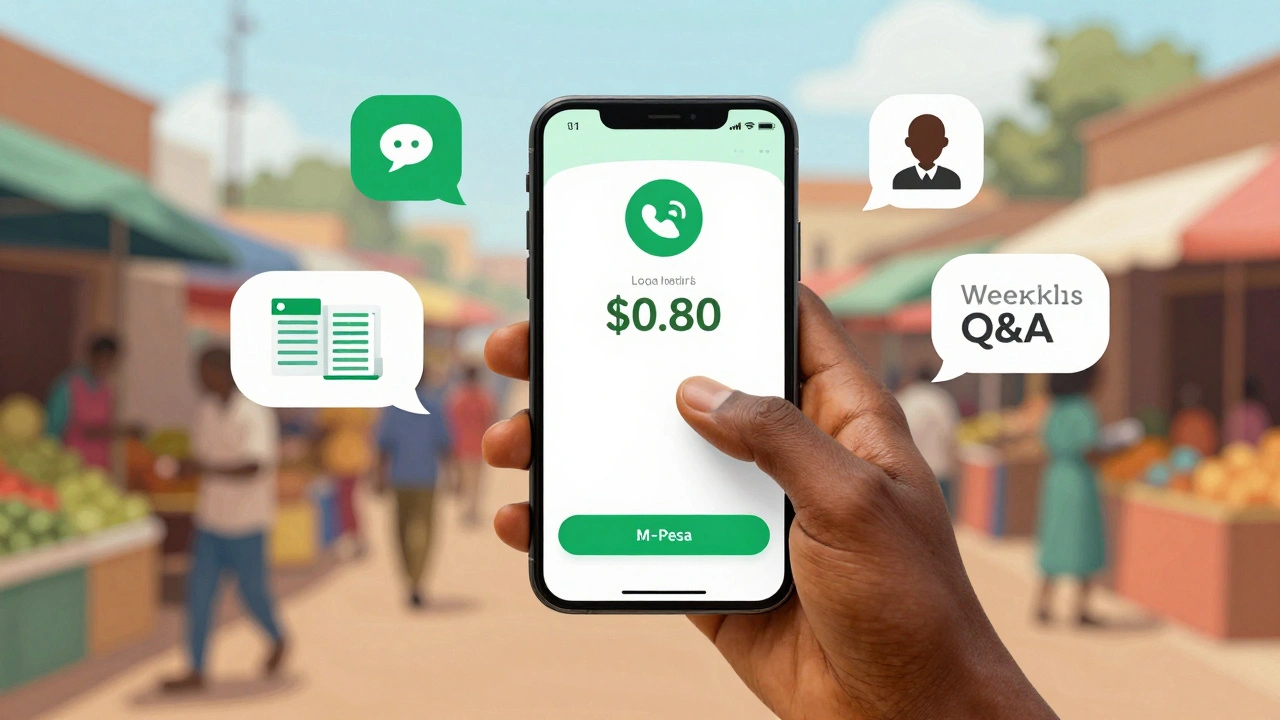
- Plus Tier ($0.80-$1.20/month): Two updates daily, exclusive local reports (like school closures, power outages, market prices), and a weekly Q&A with a local journalist.
- VIP Tier ($1.50/month): All of the above, plus early access to breaking news (5-10 minutes before public), voice summaries in local dialects, and community polls that shape coverage.
These aren’t guesses. This is what a small news channel in Accra, Ghana, tested over six months. They started with $0.50 for basic. 87% of subscribers stayed after three months. When they added voice summaries in Twi, retention jumped to 92%. People don’t want luxury-they want reliability they can afford.
How to Collect Payments Without PayPal or Credit Cards
Most monetization tools assume everyone has a bank account. They don’t. In 60% of developing countries, mobile money is the primary way people pay for digital services. In Kenya, 85% of adults use M-Pesa. In Bangladesh, bKash handles $2 billion in monthly transactions. If you’re using Stripe or PayPal, you’re cutting out 9 out of 10 potential subscribers.
Here’s how to fix it:
- Use mobile money gateways: Integrate with local providers like M-Pesa (Kenya), MTN Mobile Money (Ghana), bKash (Bangladesh), or PayMaya (Philippines). Most offer API access for small businesses.
- Accept crypto in stablecoins: USDT (Tether) is widely used in Nigeria, Vietnam, and Argentina. It’s faster than bank transfers and avoids currency conversion fees. A bot can auto-convert USDT to local currency on the backend.
- Use prepaid codes: Sell $0.50 access codes via local kiosks or phone shops. Subscribers text the code to your bot to unlock content. No app needed. No internet beyond SMS.
A news channel in Lahore, Pakistan, switched from PayPal to JazzCash (a local mobile wallet) and saw payments rise by 300% in four weeks. Their subscriber count tripled. The secret? They didn’t change the content. They changed how people paid.
Mini Apps: The Hidden Gem for Low-Cost Monetization
Telegram Mini Apps are often overlooked, but they’re perfect for developing regions. Unlike sponsored ads (which need 1,000+ members), Mini Apps have no follower minimum. You can start with 50 people. They cost almost nothing to build and generate revenue per click.
How it works:
- Create a simple Mini App-like a daily quiz on local politics or a tool that checks if a government service is still running.
- Advertise it inside your channel: “Tap here to see if your area has clean water today.”
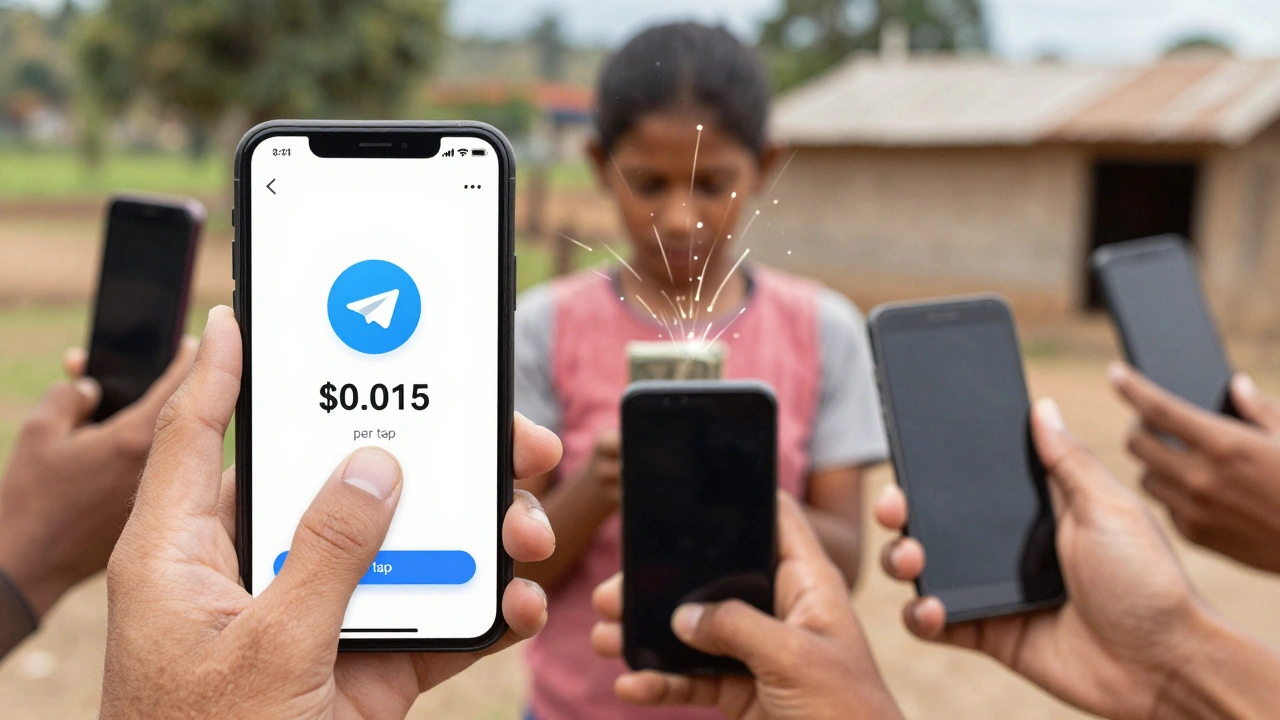
- Each tap earns you $0.012-$0.02. Sounds tiny? If 1,000 people tap daily, that’s $12-$20 a day. That’s $360-$600 a month. No subscription needed.
One channel in Guatemala built a Mini App that lets users report potholes in real time. Local councils paid them $0.03 per verified report. In six months, they earned $1,800. They didn’t ask for money. They gave value-and got paid for it.
Why Sponsored Ads Don’t Work (Yet) in Developing Regions
Telegram’s official sponsored messages sound great-50% revenue share, no upfront cost. But here’s the catch: you need 1,000 members to qualify. That’s a huge barrier for new channels. And even if you hit it, advertisers rarely target developing regions. Why? Because they don’t believe people there will click.
Here’s the truth: advertisers avoid these markets because they assume low engagement. But in places like Indonesia or Egypt, Telegram is the primary news source. People open it 10 times a day. The problem isn’t the audience-it’s the system.
Instead of waiting for global brands to notice you, build your own ad network. Partner with local businesses: a bakery in Kigali, a mechanic in Bandung, a tutoring center in Medellín. Offer them a simple deal: “Post one ad per day in your channel. Pay $5 per week. We’ll track clicks.”
One channel in Kampala, Uganda, now runs ads for 17 local shops. They earn $85 a week. No global platform. No PayPal. Just trust and a WhatsApp group to coordinate payments.
Build Trust, Not Just Content
People in developing regions don’t just want news. They want someone who won’t disappear. If you’re a news channel that pops up during a protest or flood and vanishes afterward, you lose credibility fast.
The most successful channels do three things:
- They show up every day-even when there’s no news. A simple “Good morning” update builds routine.
- They name their reporters. “This report was written by Amina from the Kano bureau.” Personal connection = loyalty.
- They let users help. “Send us a photo of the broken bridge. We’ll verify it and post it.” Ownership creates investment.
When users feel like they’re part of the story, they’re willing to pay-even if it’s 20 cents. A channel in Hanoi, Vietnam, started a “Tip Jar” bot. Users could send 5,000 VND ($0.20) to say thanks. 1,200 people did in three months. They didn’t ask for money. They just gave value.
What to Avoid
Don’t copy what works in the U.S. or Europe. Don’t use Stripe. Don’t charge $5. Don’t rely on ads from global brands. Don’t wait until you have 10,000 followers to start making money.
Start small. Start local. Start cheap. Test one tier. One payment method. One community feature. Track what sticks. Then build from there.
Real Example: The Zaria News Bot
In northern Nigeria, a former teacher started a Telegram channel to share school updates. No budget. No team. Just a phone.
Here’s what she did:
- Basic tier: $0.30/month. Daily school closures and exam dates. Sent as text.
- Plus tier: $0.80/month. Added voice notes in Hausa. Weekly interview with a local parent.
- Payment: M-Pesa via a simple bot that sent a code after payment.
- Mini App: A tool to check if a school had clean water-each click earned $0.015.
After four months, she had 4,200 subscribers. $1,100 in monthly income. She hired a part-time assistant. No investors. No loans. Just smart, simple choices.
She didn’t need to be perfect. She just needed to be there.
Can I monetize a Telegram news channel with fewer than 1,000 followers?
Yes. Telegram’s sponsored ads require 1,000 followers, but other methods don’t. Mini Apps, paid communities, and local ad networks work with as few as 50 subscribers. Focus on mobile money, prepaid codes, or micro-payments instead of waiting to hit a follower milestone.
What’s the best payment method for developing regions?
Mobile money systems like M-Pesa, bKash, or MTN Mobile Money are the most reliable. They’re widely used, don’t need bank accounts, and have low fees. Crypto (USDT) is a good second option in countries where it’s legal and widely understood. Avoid PayPal, Stripe, or credit cards-they exclude most potential subscribers.
How much can I realistically earn from Telegram news in a developing country?
With 3,000 subscribers paying $0.50/month, you’ll earn $1,500 monthly. Add Mini App clicks (1,000/day at $0.015) and you’re at $2,000. That’s enough to pay a reporter, cover data costs, and reinvest. Many successful channels in Nigeria, Indonesia, and Colombia earn between $800 and $3,000/month using this model.
Do I need to build a website or app to monetize?
No. Telegram is enough. Use its built-in tools: bots for payments, Mini Apps for clicks, and group features for tiered access. Adding a website or app adds cost, complexity, and barriers. Keep it simple. Your audience is on Telegram. Be there.
What if my audience doesn’t want to pay?
Offer value first. Give free daily updates. Be accurate, fast, and local. Then, ask for a small tip. People will pay when they trust you and see the difference. A channel in Accra found that 68% of users who got free updates for two months willingly subscribed when they added voice summaries in local languages. Trust comes before payment.