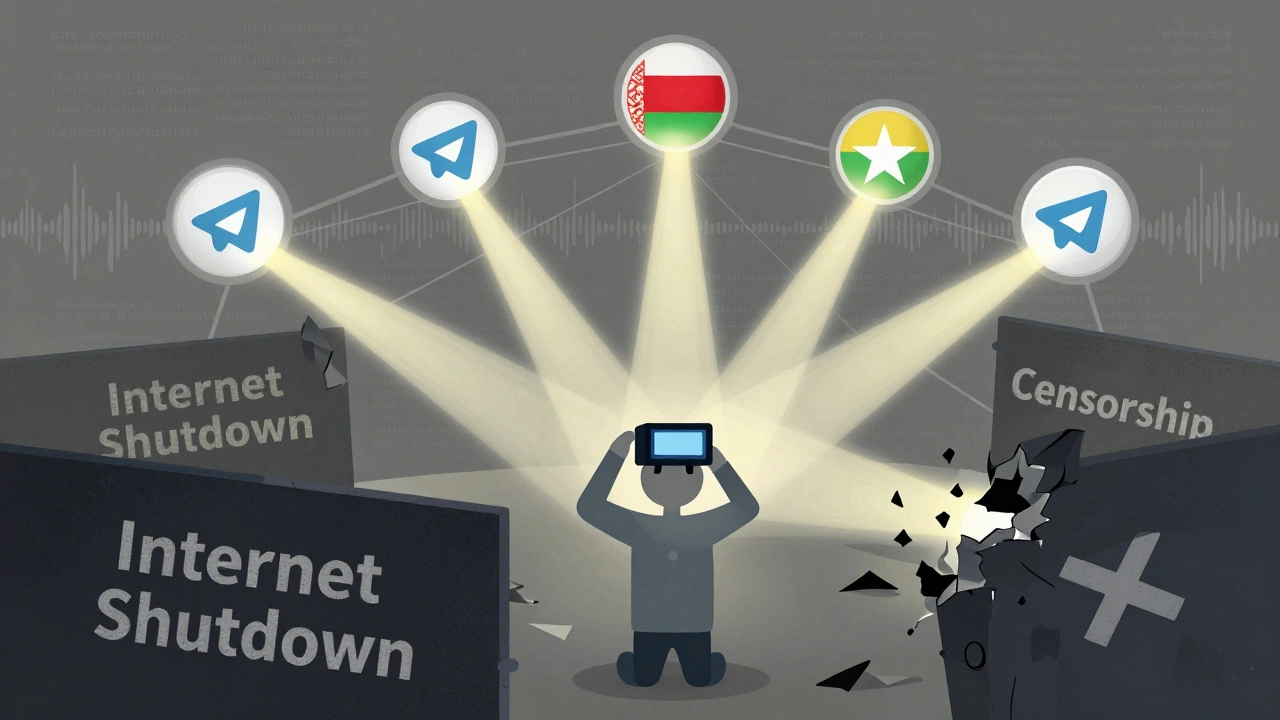
Telegram isn’t just another messaging app. By 2025, it’s become one of the most reliable ways people get news-especially when everything else goes dark. In Belarus, Ukraine, Myanmar, and beyond, when governments cut off the internet, Telegram stays up. Why? Because it doesn’t need Wi-Fi. It runs on mobile data. And it doesn’t delete videos or censor footage just because it’s uncomfortable. That’s why journalists, activists, and everyday people rely on it. But here’s the real question: Is Telegram actually accessible for people who need it most?
How Telegram Works for News
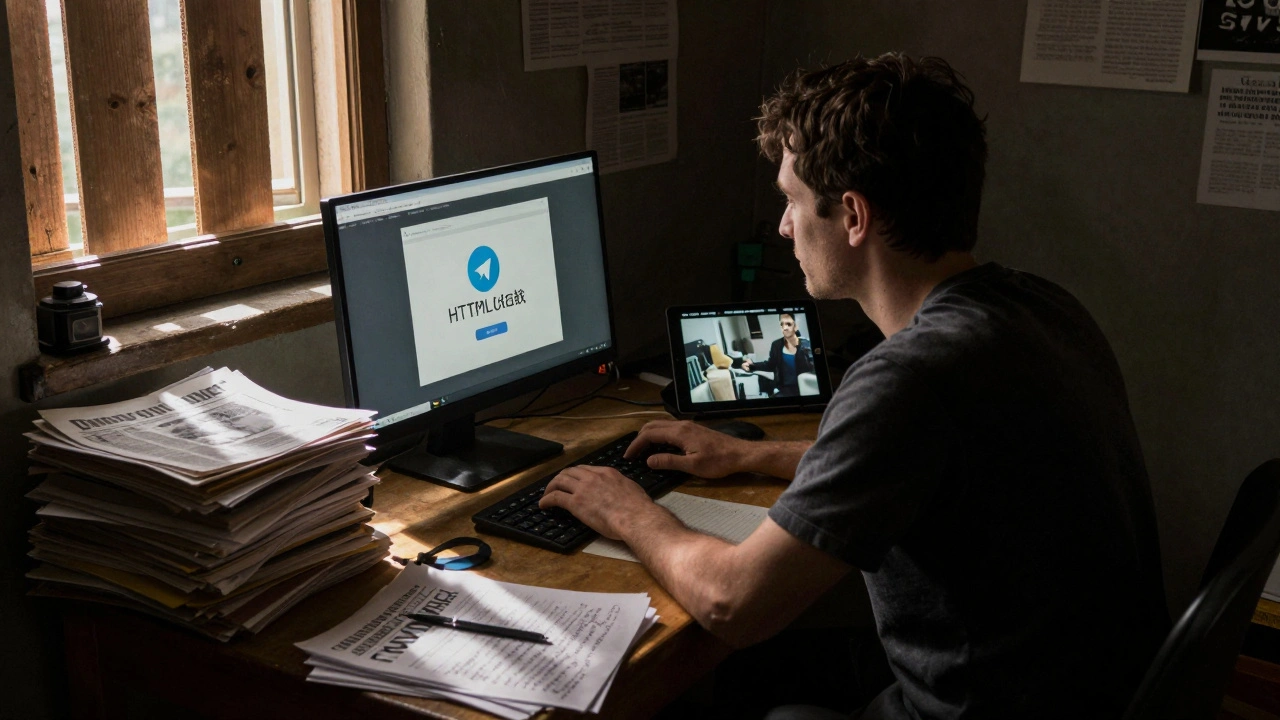
Unlike Twitter or Facebook, Telegram doesn’t show you a random feed. You choose what you see. You join a channel. You follow a group. That’s it. No algorithms deciding what you should read. No ads. No engagement bait. If you want news about the war in Ukraine, you subscribe to a channel that posts verified footage. If you want updates from a protest in Iran, you find the Telegram group where locals share photos and voice notes. It’s direct. It’s fast. And it’s built for people who need information when the system tries to silence them.Telegram’s cloud storage means your messages, videos, and documents sync across all your devices. You can start reading a news report on your phone, then switch to your laptop and pick up right where you left off. You can download videos up to 2 GB-no compression, no watermarks. That’s critical for journalists who need raw footage with metadata intact. You can archive entire channels into HTML files. That’s not possible on WhatsApp or Signal. And it’s why investigative reporters from GIJN say Telegram is their most important research tool.
Accessibility for People with Visual Impairments
For users who are blind or have low vision, Telegram’s accessibility is a mixed bag. On iOS, VoiceOver works-but only if you know the tricks. You can’t just tap a message and hear it read aloud. You have to double-tap and hold to open the context menu. From there, you can choose to copy, save, or forward. It’s not intuitive. It’s not built in. It’s a workaround.There are third-party scripts that improve VoiceOver compatibility on Telegram Web. These aren’t official. They’re made by users, shared on forums like AppleVis. Android users have it worse. Screen readers like TalkBack don’t always recognize message buttons or channel lists correctly. Many users report random crashes or unresponsive buttons. There’s no official accessibility guide from Telegram. No settings labeled “Screen Reader Mode.” No keyboard shortcuts. You have to learn this stuff from strangers on Reddit or AppleVis.
Compare that to Apple’s own apps or even WhatsApp, which now has built-in screen reader support. Telegram’s lack of native accessibility features feels like an oversight. Especially when you consider how many users rely on it for life-saving updates. If you’re visually impaired and living in a country where the internet is shut down, you shouldn’t need a hacker’s script to read the news.
Access in Restricted Environments
This is where Telegram shines brightest. In 2020, during Belarus’s protests, the government blocked Facebook, YouTube, and even WhatsApp. But Telegram? It kept working. Why? Because it uses a decentralized architecture. It doesn’t rely on a single server. Even if your country blocks the main domain, you can still access Telegram through alternative addresses or mobile data tunnels. It doesn’t need a VPN. You don’t need special software. Just the app.According to Index on Censorship, Telegram became the most trusted news source among Belarusian protesters-not because it was perfect, but because it was the only one left. In Ukraine, public Telegram groups with 200,000 members became real-time command centers for evacuation routes, medical aid, and verified war updates. Journalists used these groups to track patterns: if five different channels posted the same video at the same time, it was likely real. If only one posted it, it was probably a rumor.
Telegram’s ability to operate during internet shutdowns makes it more than a news platform. It’s infrastructure. And in places like Sudan, Myanmar, or Iran, that infrastructure saves lives. But here’s the catch: if you can’t access the app because of a disability, that infrastructure doesn’t help you.
News Quality and Misinformation
Telegram’s lack of moderation is a double-edged sword. On one hand, it lets you see unfiltered footage from conflict zones. On the other, it lets conspiracy theorists, bots, and fake news spread just as easily. The Oxford Internet Institute found that for the top twelve news channels on Telegram, junk news received a third of all views. That’s not because people are stupid. It’s because there’s no filter. No fact-checking. No labels.Users have to become their own editors. You learn to cross-reference. You check if the same video appears on verified news sites. You look at timestamps. You compare sources. You avoid channels that post 50 times a day with all-caps headlines. This takes time. It takes skill. And it’s not something you can teach in a five-minute tutorial.
Still, 68% of Telegram news users say it helped them better understand current events. And 75% expect the news to be mostly accurate. That’s higher than some mainstream platforms. People trust Telegram because it feels real. It’s raw. It’s unedited. It’s not polished by corporate PR teams.
How to Use Telegram for Accessible News
If you want to use Telegram for news-and make it work for your needs-here’s how:- Use the desktop app. It’s the only version that lets you download entire channels as HTML files. Perfect for archiving or offline reading.
- Search for Telegram links on other platforms. Look in Facebook groups, Reddit threads, or Twitter bios. People often share Telegram channel links there. Search for “t.me” in group posts.
- Follow verified channels. Look for channels with blue checkmarks, or ones that link to reputable news outlets. Avoid channels with no bio or just emoji.
- Use VoiceOver on iOS with custom gestures. Double-tap and hold to access message options. Install AppleVis scripts if you use Telegram Web.
- Turn on notifications for key channels. This helps users with cognitive disabilities stay on top of updates without scrolling endlessly.
- Join small, focused groups. Larger groups (100k+) are noisy. Smaller ones (1k-5k) often have better moderation and higher-quality info.
What’s Missing-and What Could Come Next
Telegram’s biggest weakness isn’t speed or security. It’s inclusion. There’s no built-in text-to-speech for messages. No high-contrast mode. No captioning for videos. No keyboard navigation support. No option to adjust reading speed. These aren’t luxuries. They’re necessities for millions of users.Telegram Premium offers extra features like larger file uploads and custom emojis. But nothing for accessibility. The company has never released an accessibility roadmap. No team dedicated to screen reader compatibility. No partnerships with disability advocacy groups.
That’s changing slowly. In 2023, Telegram added better media download controls. In 2024, they improved group search. But nothing for users who need it most. Analysts predict that as Telegram grows-especially in Africa and Southeast Asia-pressure will build for real accessibility features. Right now, 54% of users say they’re satisfied. That’s high. But satisfaction doesn’t mean accessibility. It just means they’re using it because they have no other choice.
Imagine if Telegram added one simple feature: a toggle to read all messages aloud with adjustable speed and voice. Imagine if videos auto-generated captions. Imagine if the app worked perfectly with any screen reader out of the box. That wouldn’t just help people with disabilities. It would make Telegram more reliable for everyone.
Final Thoughts
Telegram isn’t perfect. But it’s necessary. For people in war zones, for journalists under surveillance, for communities cut off from traditional media-it’s a lifeline. And for users with disabilities, it’s a challenge. The platform gives you power. But it doesn’t make that power easy to use.The future of accessible news isn’t about bigger apps or faster uploads. It’s about designing for the people who need it most. Telegram has the tools. It has the reach. It just needs the will.
Is Telegram accessible for blind users?
Telegram has partial accessibility for blind users, especially on iOS with VoiceOver. But it’s not built-in. Users must use workarounds like double-tap and hold gestures or third-party scripts from AppleVis. Android support is weaker. There’s no official screen reader mode, and no keyboard navigation. It works-but only if you know how to make it work.
Can you use Telegram when the internet is shut down?
Yes. Telegram can run on mobile data even when Wi-Fi and fixed internet are blocked. Unlike platforms like Facebook or Twitter, Telegram doesn’t rely on centralized servers that governments can easily shut down. In countries like Belarus and Myanmar, it became the primary news source during internet blackouts because it’s harder to fully block.
Is Telegram news reliable?
It depends. Telegram has no fact-checking system, so misinformation spreads easily. But users who cross-reference sources, check timestamps, and follow verified channels often find it more accurate than mainstream platforms. The Oxford Internet Institute found junk news got a third of views on top Telegram channels, but 75% of users still believe the news is mostly accurate because it’s unfiltered and real-time.
How do journalists use Telegram for reporting?
Journalists use Telegram to collect raw footage, communicate securely with sources via Secret Chats, and monitor public groups for emerging stories. The desktop app lets them download entire channels as HTML files for archiving. They search for Telegram links on other platforms like Facebook or Reddit to find hidden channels. Many say it’s their most important tool for investigative reporting in restricted regions.
What’s the best way to find reliable Telegram news channels?
Look for channels with verified links to known news organizations, clear descriptions, and consistent posting. Avoid channels with all-caps headlines, excessive emojis, or no bio. Search for “t.me” links in Facebook groups or Reddit threads related to your topic. Join small, active groups (1k-5k members) where users verify each other’s posts. Cross-check videos and images with trusted outlets like BBC or Reuters.
Latest Posts