More people are getting their news from Telegram than most people realize - and it’s not because they’re glued to their phones all day. It’s because Telegram quietly became the hidden backbone of daily news for millions, especially younger users who don’t trust big social media platforms. While Facebook and YouTube still lead in raw numbers, Telegram’s news channels deliver content with a 55-60% open rate - higher than most email newsletters. And here’s the twist: even though only 2% of users say they regularly get news from Telegram, over 82% of all content viewed on the platform is news-related. That gap tells you something important: people aren’t saying they use Telegram for news because they don’t think of it that way. They just open it, scroll a few channels, and move on.
Who’s Really Reading Telegram News?
The biggest surprise? It’s not the older crowd. While many assume news consumers are middle-aged or older, Telegram’s real news readers are under 35. Data from YouGov shows a 16.6-point jump in engagement among 18-34-year-olds over the last two years. That’s not a fluke. It’s a shift. Younger users see Telegram as a tool, not a social network. No ads. No algorithm pushing viral nonsense. Just channels they subscribe to - and they curate them carefully. A 22-year-old student in Chicago might follow @TelegramNews, @Bloomberg, and @Reuters, then mute everything else. She doesn’t need a feed. She needs control.
Men make up 58.6% of Telegram’s user base, but that doesn’t mean women aren’t reading news. It means men are more likely to join public channels, comment, and share. Women are just as active, but they tend to use private groups or encrypted chats for news. That’s why surveys miss them. The platform’s privacy-first design hides behavior that doesn’t fit traditional metrics.
Device Usage: Android Leads, But iOS Isn’t Far Behind
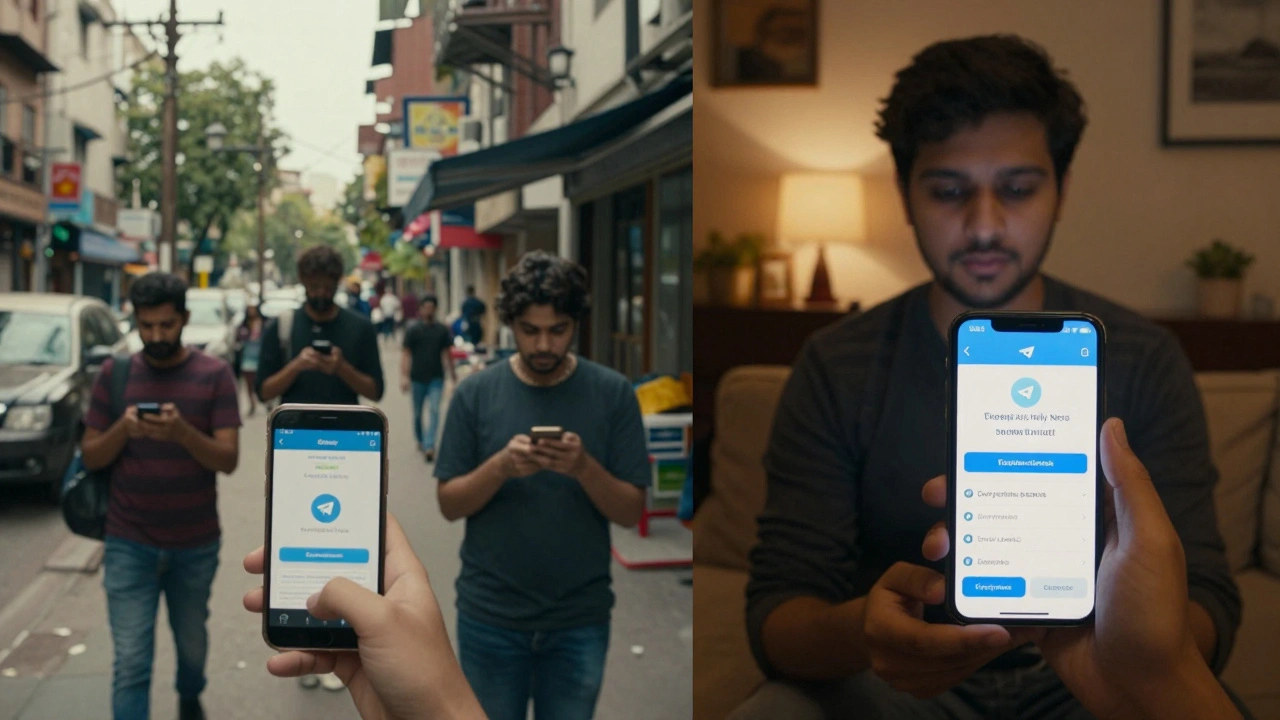
If you think iPhone users dominate news consumption, think again. Android accounts for 196 million daily active users on Telegram - that’s nearly 40% of the global user base. Why? Because in countries like India, Russia, and Brazil - where Telegram’s news adoption is highest - Android is the default phone. Over 100 million downloads in India alone in 2024 tell you where the real growth is happening.
But iOS users? They’re not lagging. They’re just quieter. Apple users spend longer sessions on Telegram - around 41 minutes per open, compared to Android’s 2.24 minutes per day. That doesn’t mean they use it less. It means they open it less often, but dive deeper. They’re more likely to read long-form articles, use bots for summaries, or interact with mini-apps that pull in live news feeds. A 30-year-old in New York might use a Telegram bot to get a 90-second daily briefing. An Android user in Delhi might scroll through 15 news channels in 10 minutes.
Why Telegram Works for News (And Why Other Platforms Don’t)
Here’s the real reason Telegram stole news consumption: it doesn’t try to be everything. Facebook wants you to like, comment, share. YouTube wants you to watch longer. Twitter wants you to argue. Telegram? It just wants you to read. No engagement metrics. No trending topics. No pay-to-play algorithms. News channels post, and you decide whether to open them. That’s why open rates are so high - 55-60%. People aren’t being tricked into clicking. They’re choosing to.
Also, Telegram’s channel system is perfect for news. You follow one channel - say, @BBCNews - and get every update, every headline, every live report. No filtering. No shadow banning. No ad interruptions. That’s why political channels hit 59% user share and educational channels hit 55%. People trust the source, not the platform.
The Hidden Role of Bots and Mini-Apps
Most people don’t realize that over 10 million bots live on Telegram - and thousands of them are news tools. There are bots that summarize long articles into bullet points. Bots that translate foreign news into your language. Bots that send breaking alerts for weather, politics, or stock markets. And 500 million users interact with these mini-apps every month. That’s not a niche feature - it’s how news is evolving.
For example, a bot called “NewsPulse” lets users type “today’s top 5” and gets back a clean, ad-free list with links. It works on Android, iOS, and desktop. No app install. No login. Just a message. That’s why users aged 18-24 are the heaviest users of bots - they want speed, not noise.

What’s Missing: The Data Gap
Here’s the problem: nobody knows the full story. Telegram doesn’t release age or device breakdowns for news consumption. No official stats. No public dashboards. Even the 1 billion users figure is an estimate. We only know what’s visible: downloads, channel sizes, open rates. Everything else is inferred.
For example, we know Russia has a 50% Telegram installation rate - but we don’t know if 40-year-olds there read more news than 25-year-olds. We know the U.S. has 10 million monthly active users - but we don’t know if they’re mostly on iPhones or Androids. That’s intentional. Telegram’s privacy policy means they won’t track that. And that’s why it works.
The Future: Private, Fast, and Fragmented
Telegram’s news model isn’t going to replace CNN or Reuters. It’s replacing the clutter. It’s the platform for people who want to cut through the noise. And the users driving that shift? They’re young. They’re mobile. They’re tired of being sold to. They don’t care about likes or shares. They care about truth, speed, and control.
As more people leave Facebook and Twitter for privacy-focused alternatives, Telegram will keep growing - not because it’s flashy, but because it’s quiet. It doesn’t scream. It doesn’t push. It just delivers. And for news consumers who value their time, that’s everything.
Why do only 2% of users say they get news from Telegram when 82% of content viewed is news?
Most users don’t think of Telegram as a "news app." They see it as a messaging tool. They follow news channels the same way they follow friends - quietly, without labeling it. So when asked "Where do you get your news?" they say "YouTube" or "Twitter," even if they read more news on Telegram. It’s a perception gap, not a usage gap.
Are Android users really the main news readers on Telegram?
Yes, in terms of raw numbers. Android has 196 million daily active users, and in countries with high Telegram adoption like India and Russia, Android dominates. But iOS users spend more time per session and are more likely to use bots and mini-apps for news. So while Android leads in volume, iOS leads in depth of engagement.
Why is Telegram popular for news in Russia and India?
In Russia, Telegram replaced social media after bans and censorship. In India, it filled the gap left by WhatsApp’s misinformation problem. Both markets value fast, uncensored, private access to news - and Telegram delivers it without ads or algorithms. Plus, Android is the main phone there, and Telegram works perfectly on low-end devices.
Do older people use Telegram for news?
Less so. Users over 35 are more likely to stick with Facebook, YouTube, or email newsletters. Telegram’s interface feels too technical to many older users. They don’t know how to subscribe to channels or use bots. But that’s changing - as younger people teach their parents, adoption among 35-50-year-olds is slowly rising.
Is Telegram Premium used mostly by news consumers?
Not necessarily. While Premium users get faster downloads and more channels, most pay for storage, customization, or ad-free chats. There’s no data showing Premium subscribers consume more news. But it’s likely that power users - who follow 20+ channels and use bots daily - are more likely to upgrade.