When a news bot sends out a daily digest to 50,000 subscribers on Telegram, how do you know if anyone actually read it? You can’t see who opened the message. You can’t track clicks like you can with email. And you definitely can’t rely on likes or shares the way you can on Instagram or Twitter. That’s where analytics dashboards built into Telegram bots come in - they turn guesswork into real data.
How Telegram Bot Analytics Work
Telegram bots don’t come with built-in analytics. That’s by design. Telegram prioritizes privacy, so it doesn’t track opens, clicks, or views like other platforms. But that doesn’t mean you’re blind. Third-party tools and custom bot setups fill the gap by collecting data through user interactions. Here’s how it works: when your bot sends a news update, it includes buttons - "Read More," "Share," "Skip," or even a quick poll. Every time someone taps one of those, the bot logs it. That’s your engagement data. You don’t need to know if they opened the message. You know if they reacted to it. Some systems go further. They track how long a user stays in the chat after receiving a message. If someone types "/start" and then leaves, that’s a bounce. If they reply with "Tell me more," that’s a strong signal. These interactions are recorded, aggregated, and displayed on a dashboard - usually updated every hour or daily.What You Can Actually Measure
Forget vanity metrics like "total subscribers." What matters is what people do after they get your news:- Command usage: How often do users type "/today" or "/politics"? If 70% of users use one command, you know what they care about.
- Bounce rate: If half your users leave after the first message, your intro isn’t working.
- Button clicks: Which link got the most taps? Was it the crypto story or the local weather update?
- Session duration: How long do users stay in the chat after receiving content? Longer = more engaged.
- Share frequency: If your news is being reposted by other channels, that’s organic reach - and it’s tracked by tools like TGStat.
For example, a news bot using Graspil’s analytics found that users who clicked the "Summary" button were 3x more likely to return the next day. That insight led to restructuring every message to put the summary first - and retention jumped by 22% in two weeks.
Top Tools for 2026
There’s no single best tool. It depends on what you’re tracking.TGStat is the most popular for channel owners. It shows daily views, subscriber growth, and how often your posts are shared across other channels. It’s simple. No coding needed. Just connect your bot, and it pulls data automatically.
Combot digs deeper into user behavior. It identifies your top 10 most active members, shows hourly activity spikes, and even rates channels by country. If you run a community, not just a broadcast, this is gold.
LiveDune stands out for teams. It lets multiple people manage content, schedule posts, and generate AI-written reports. If you have editors, translators, or moderators, this cuts hours off weekly planning.
Brand24 tracks mentions. If your news is being quoted by other Telegram channels, it finds them. That’s how you know if you’re becoming a trusted source - not just a broadcaster.
n8n + OpenAI is for builders. If you’re comfortable with workflows, you can set up a bot that pulls news from Google News, Hacker News, and Reuters, filters stories with AI, summarizes them in plain language, and sends them out daily - all while logging every user interaction. It’s complex, but it’s the most powerful setup out there.
How to Track Clicks Without Native Support
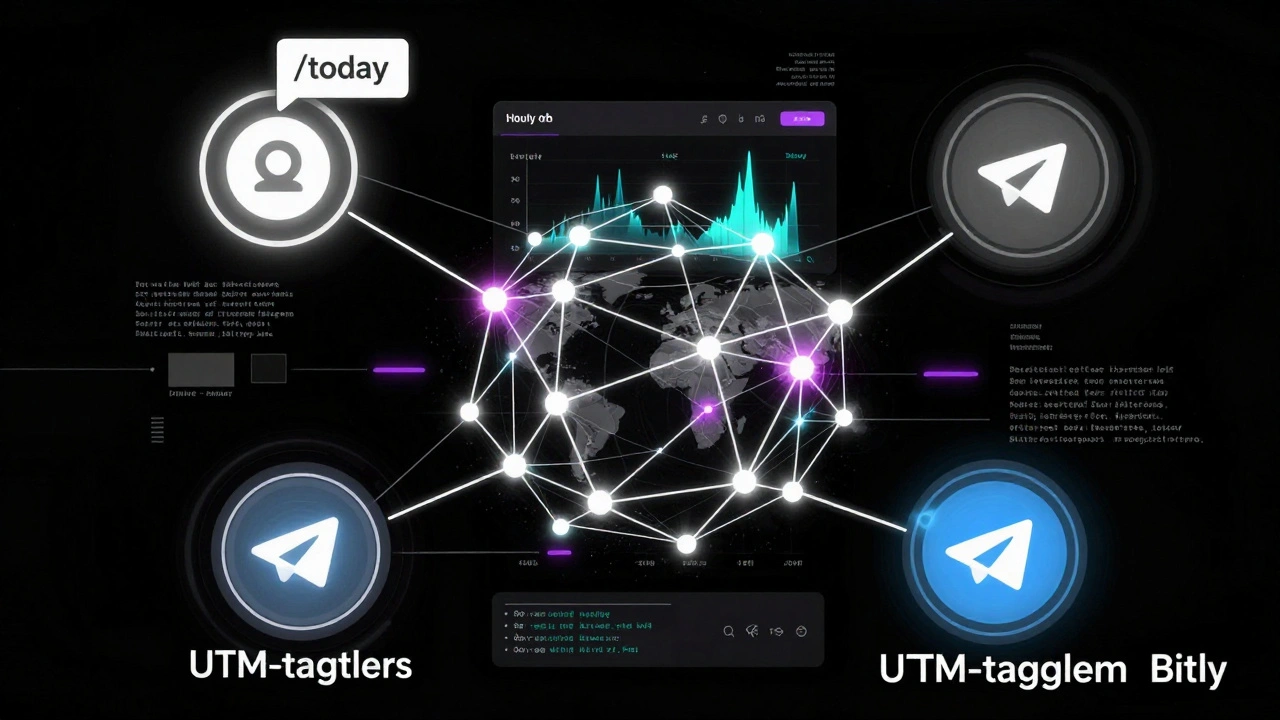
Telegram doesn’t let you track clicks on links inside messages. So how do you know if someone clicked your "Read Full Story" link? You use UTM tags. Every link you send gets a tiny code added to the end:?utm_source=telegram&utm_medium=bot&utm_campaign=daily_news. Then you use a link shortener like Bitly or TinyURL. Those services track clicks, locations, and even device types. You can see that 63% of clicks came from Android phones in India - something you’d never know otherwise.
Some bots, like BotSailor, automate this. You create a campaign, paste your link, and the bot wraps it automatically. No manual tagging needed.
Real-World Use Cases
A crypto news bot in Ukraine started using TGStat and noticed that posts about mining regulations got 4x more clicks than price updates. They shifted focus - and subscriber growth doubled in a month. A nonprofit in Brazil used Combot to find that their most active users were all under 24. They started using memes and short video summaries. Engagement jumped 68%. A journalism collective in the U.S. used n8n to automate their daily brief. They added a button: "Was this helpful? Yes / No." After a month, they had 12,000 responses. They used the feedback to rewrite headlines. Open rates went up by 31%.
What You Can’t Measure - And Why It Doesn’t Matter
You can’t know if someone read your message on a phone, tablet, or desktop. You can’t tell if they read it while waiting for coffee or while scrolling in bed. You can’t see if they shared it with a friend. But you don’t need to. What you can measure - button clicks, command use, session length - tells you what actually matters: Did they interact? If yes, they’re engaged. If no, you need to change something.Getting Started
If you’re new to this:- Start with a simple bot. Use @BotFather to create one.
- Send one message a day with two buttons: "Read More" and "Skip".
- Connect it to TGStat or Combot - both have free tiers.
- Wait two weeks. Look at which button got more clicks.
- Adjust your next message based on that data.
You don’t need to build a dashboard. You don’t need AI. You just need to ask one question: What did they do? Then act on it.
The Future Is Real-Time
The next wave isn’t daily reports. It’s real-time alerts. Imagine your bot detecting a spike in "/war" commands at 3 a.m. and automatically sending a verified update before the next morning’s digest. Or your dashboard flashing red when bounce rates jump above 40% - so you can tweak the message before the next batch goes out. That’s already happening. Tools like Brand24 and MetaCRM are adding live dashboards with anomaly detection. The goal isn’t just to measure engagement. It’s to respond to it - instantly.Telegram bots aren’t just messengers anymore. They’re data engines. And the ones that survive won’t be the ones with the most subscribers. They’ll be the ones that listen - and adapt.
Can I track who opened my Telegram news bot messages?
No, Telegram doesn’t allow tracking of message opens or views for privacy reasons. Instead, you track engagement through user interactions - like button clicks, command usage, replies, or session length. These signals are more reliable than opens because they show actual behavior, not just exposure.
What’s the easiest way to start tracking Telegram bot engagement?
Use TGStat or Combot. Both offer free plans. Just connect your bot using the provided bot token, and within minutes, you’ll see data on subscriber growth, command usage, and user activity. No coding required. Start with one button per message - "Read More" or "Share" - and see what users click.
Do I need AI to make a good Telegram news bot?
No. Many successful news bots run on simple logic: pull RSS feeds, format messages, send them out. AI helps with summarization and filtering, but it’s not required. Focus first on clear headlines, useful buttons, and consistent timing. Data from user interactions will tell you what works better than any AI suggestion.
How do I track clicks on links in my bot messages?
Use UTM parameters and a link shortener like Bitly. Add tags like ?utm_source=telegram&utm_medium=bot to your URLs. The shortener will track how many times each link is clicked, where users are from, and what device they used. Tools like BotSailor automate this for you.
Are Telegram analytics tools legal?
Yes, as long as you’re only analyzing public channels and groups. Tracking user behavior within your own bot or public channel is allowed under Telegram’s terms. You must not collect personal data from private chats or without consent. Always follow Telegram’s guidelines - they’re strict on privacy.
If you’re running a news bot, your data isn’t just numbers - it’s a conversation. Every button click, every command, every reply tells you what your audience wants. Listen to it. Adapt. And stop guessing.