Why Your Telegram Group Is Dying (And How to Fix It)
You spent weeks building your Telegram group. You posted daily. You invited friends. You even ran a few ads. But now? Only 12 people are active. The rest left. Or worse-they’re still there, but silent. This isn’t rare. In fact, it’s the norm.
Telegram has over 1 billion active users. But less than 15% of new groups survive past 90 days. Why? Because most people treat Telegram like a chatroom, not a community. They post, wait for replies, get nothing, and quit. No algorithm boosts their content. No feed pushes it to followers. If your group doesn’t create value people can see and feel, it dies.
The fix isn’t more posts. It’s better rules.
Guidelines Aren’t Optional-They’re Your Growth Engine
Communities with clear, detailed guidelines keep 37% more members than those without. They get 2.3 times more referrals. That’s not luck. That’s structure.
Think of guidelines like the foundation of a house. You don’t see them, but everything else stands on them. Without them, your group becomes chaotic. Spam floods in. Arguments explode. New members feel lost. And your best contributors burn out trying to clean up the mess.
Telegram doesn’t give you built-in moderation tools like Discord or Slack. You have to build them yourself. And the most powerful tool you have? Your rules.
What Makes a Good Telegram Guideline? Four Core Pieces
Not all rules are created equal. Vague ones like “be respectful” fail. They’re too soft. They leave room for interpretation-and chaos.
Top-performing groups use four specific components:
- Behavior standards - Not just “no hate speech.” Say exactly what’s banned: “No personal attacks, even if you’re ‘just joking.’ Criticism must focus on ideas, not people.”
- Content boundaries - How often can someone post? “One promotional message per week. No links unless approved by moderators.”
- Escalation protocols - What happens when someone breaks a rule? “First offense: 24-hour mute. Second: 7-day ban. Third: permanent removal.”
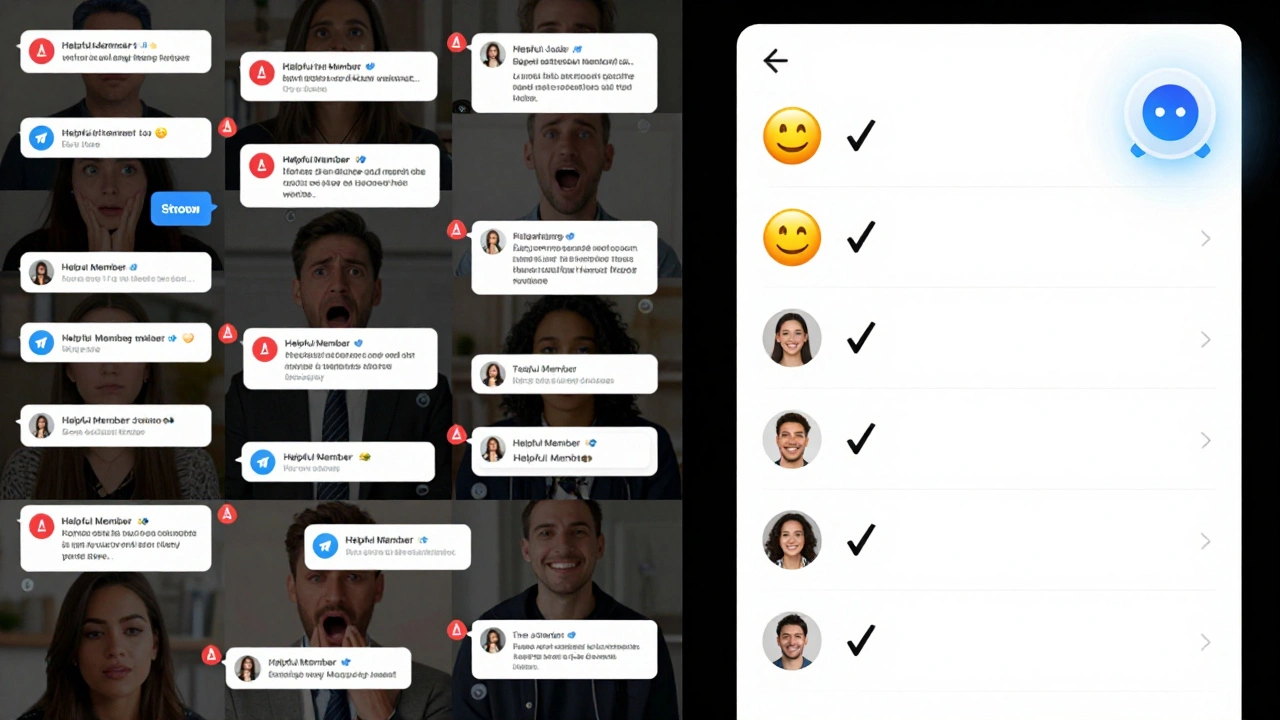
- Recognition systems - Reward good behavior. Give roles like “Helpful Member” or “Weekly Contributor.” Use custom emoji reactions (like 👍 or ❌) to silently flag rule violations. If someone gets three ❌ reactions in 24 hours, a bot warns them.
One fitness group added these rules and saw a 41% jump in meaningful conversations. Moderation workload dropped by 68%. That’s not magic. That’s clarity.
How to Set Up Your Guidelines (Step by Step)
You don’t need a team. You don’t need fancy tools. But you do need to act fast.
Here’s how to do it in under 18 hours:
- Define your niche - Who are you for? “For crypto beginners who want to learn without getting scammed.” Be specific. General groups die faster.
- Write your rules - Use a template. Nas.io’s free library has 12 proven formats. Copy one, then tweak it. Don’t start from blank.
- Pin them - Make them the first message in your group. 87% of thriving groups do this. New members see them immediately.
- Use a bot - Combot (used by 63% of large groups) auto-mutes spammers, blocks links, and logs violations. Set it up in 20 minutes.
- Train your mods - Pick 2-3 people. Give them the same rules. Tell them: “If you’re unsure, wait 15 minutes. Then ask the group.” Consistency beats speed.
- Test it - Have a friend break a rule. See how the bot and mods respond. Fix gaps before you go public.
Groups that do this in the first 48 hours keep 89% of their members at 90 days. Those that wait? Only 34% stay.
What Happens When You Don’t Have Rules
Here’s what a group without guidelines looks like after 30 days:
- 30% of members leave
- Spam bots post 50+ messages per hour
- Real members stop talking because “it’s too noisy”
- Mods are overwhelmed and quit
By day 90, engagement drops to 7% of its original level. That’s not a slow decline. That’s a collapse.
One group manager on Reddit called it “shouting into the void.” No one hears you. No one cares. And you’re left wondering why.
It’s not your content. It’s your structure.
Why Telegram Is Different (And Why That’s Good)
Unlike Facebook or Instagram, Telegram has no algorithm. No one’s feeding your posts to strangers. That sounds bad-but it’s actually your advantage.
It means your group survives on trust, not reach. If your rules create safety and clarity, people stick around. They bring friends. They refer people who care.
A study by Affiverse Media found Telegram groups with strong guidelines scored 28% higher in member satisfaction than Discord servers. Why? Because people feel in control. They know what’s allowed. They know what happens if they break the rules.
And they trust you.
The Future: Smart, Adaptive Guidelines
Static rules are fading. The next wave? Guidelines that change as your group grows.
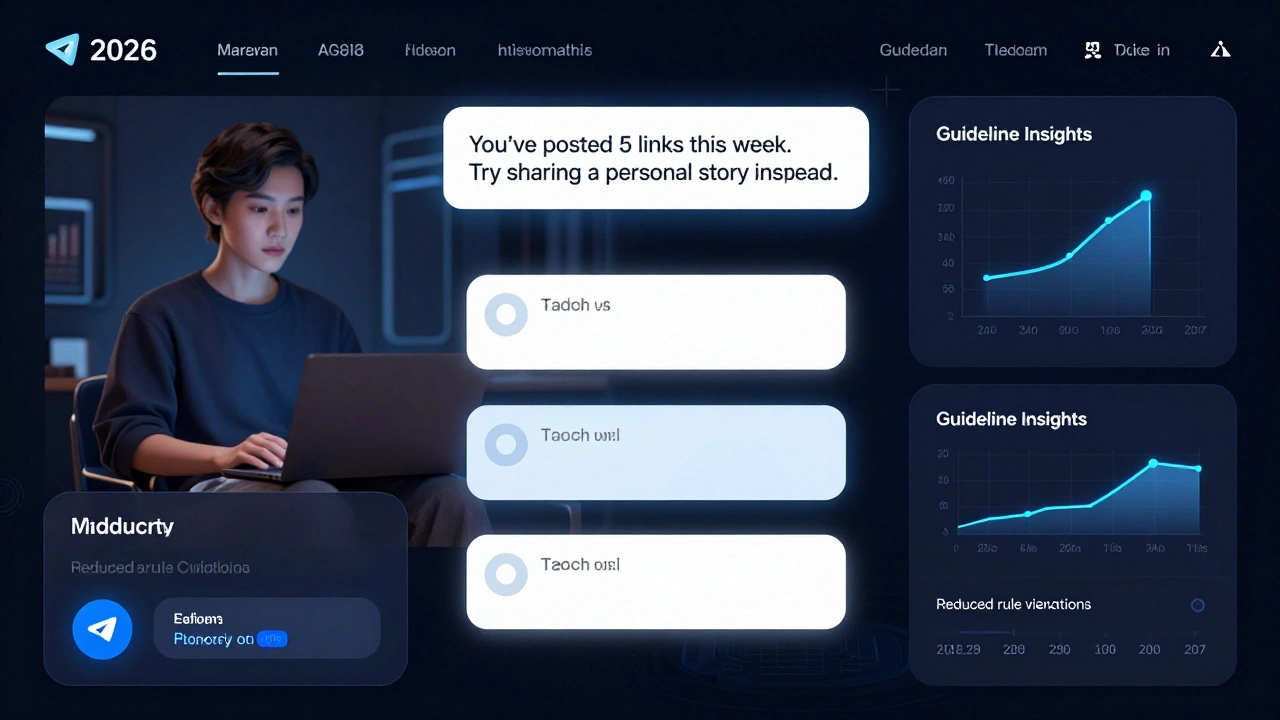
Telegram’s December 2025 update gave admins “Guideline Insights”-data on what rules are broken most often. One language-learning group used it to notice people kept posting in English when they were supposed to practice Spanish. They added a new rule: “First message each day must be in Spanish.” Engagement jumped 22%.
By 2026, AI tools will start personalizing rules. If someone’s always posting links, the bot might quietly say: “You’ve posted 5 links this week. Try sharing a personal story instead.”
But here’s the catch: 64% of users still prefer human moderation. Not robots. Not auto-bans. Clear rules, followed by fair, human responses.
So don’t automate everything. Automate the boring stuff. Keep the judgment human.
Final Rule: Start Now, Don’t Wait
You don’t need 1,000 members to start. You don’t need a team. You don’t need to be an expert.
Just write five rules. Pin them. Set up Combot. Tell your first 20 members: “This is how we keep this place useful.”
That’s it.
Telegram’s growth isn’t about viral posts. It’s about building places people want to return to. And the only way to do that? Clear, fair, and consistent rules.
Stop hoping people will behave. Start designing for how they actually will.
Do Telegram community guidelines really affect growth?
Yes. Communities with clear, specific guidelines retain 37% more members and get 2.3 times more organic referrals than those without. Guidelines create trust, reduce chaos, and make new members feel welcome-key factors for sustainable growth in Telegram’s algorithm-free environment.
What’s the most common mistake when setting up Telegram rules?
Using vague rules like “be respectful.” These lead to 3.2x more moderator interventions because people interpret them differently. Instead, be specific: “No personal attacks,” “No more than 2 promotional posts per week,” “Criticism must focus on ideas, not people.”
Should I use bots to enforce rules?
Yes-for repetitive tasks. Bots like Combot can auto-mute spammers, block links, and flag rule violations with 92% accuracy. But don’t replace human judgment. Use bots to handle the noise, so moderators can focus on fair, thoughtful responses.
How many rules should I have?
Start with 5-8. Too many overwhelm new members. Focus on the biggest problems: spam, self-promotion, personal attacks, and off-topic posts. You can add rules later as your group grows.
Can I change my guidelines later?
Absolutely. The best groups update their rules every 3-6 months based on what’s working. Telegram’s new “Guideline Insights” tool shows you which rules are broken most often-use that data to refine them. Static rules become outdated. Adaptive ones grow with your community.
What’s the fastest way to get members to read the rules?
Pin them as the first message in your group. Then use a join request filter that requires new members to click “I’ve read and agree” before entering. Groups that do this see 44% higher rule comprehension than those that just post rules in chat.
Latest Posts