Independent Telegram news channels are becoming one of the most trusted sources of information in regions where traditional media is restricted or biased. But simply posting text updates or screenshots isn’t enough anymore. Audiences are demanding more-real insights, clear patterns, and proof behind the headlines. That’s where data journalism comes in. It’s not about fancy charts or coding wizardry. It’s about using numbers to tell stories that matter, and Telegram is one of the best platforms to do it.
Why Telegram Is Perfect for Data Journalism
Telegram isn’t just another messaging app. It’s a publishing platform. Channels can have hundreds of thousands of subscribers. Posts don’t get buried under ads or algorithms. Comments are open. And best of all, users choose to follow you. That means if you deliver real value, they’ll stick around.Most independent channels post raw reports: "Police arrested 12 people in City X." But what does that mean? Is it higher than last month? Are certain neighborhoods targeted more? Without context, it’s just noise. Data journalism turns that noise into understanding.
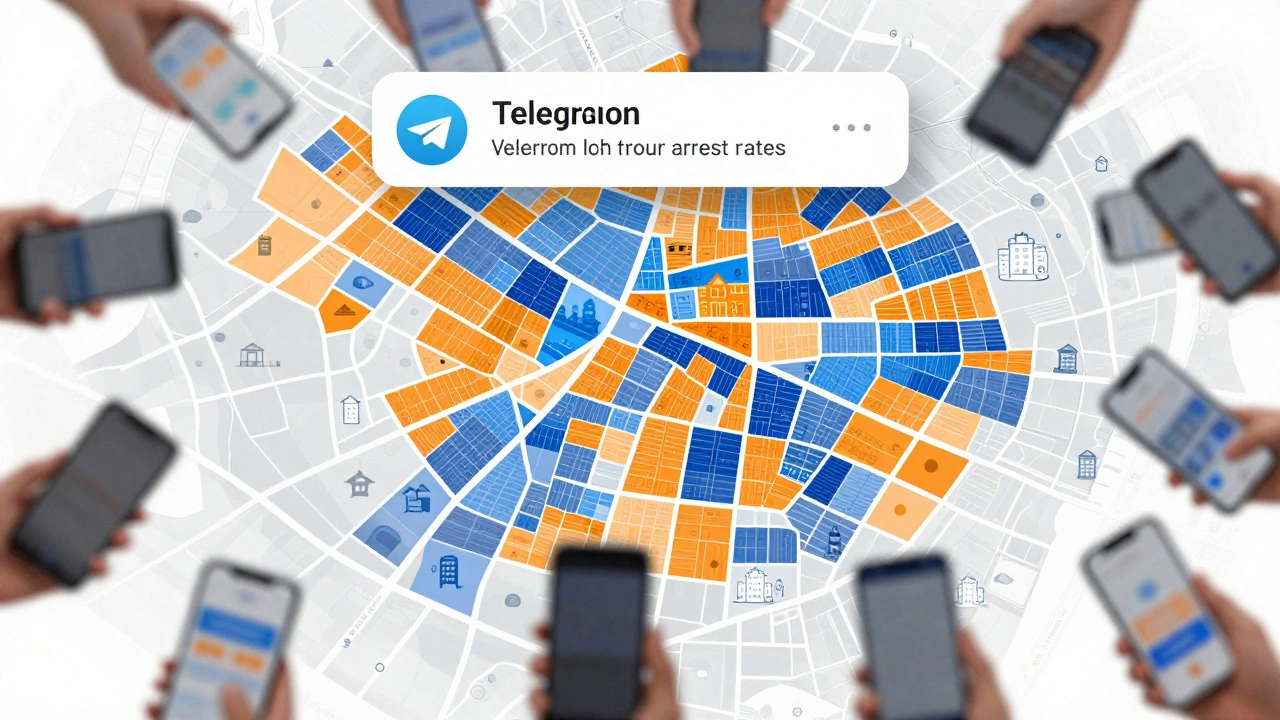
Imagine a channel that tracks local arrests over six months, maps them by neighborhood, and compares them to population density and police funding. Suddenly, readers see a pattern: areas with fewer resources have higher arrest rates-not because crime is worse, but because policing is heavier. That’s a story. And it’s one that sticks.
Where to Find the Data
You don’t need secret sources or insider access. Most of the data you need is already public-if you know where to look.- Government portals: Many countries publish open data on crime, education, healthcare, and infrastructure. The U.S., UK, and EU have robust portals. Even in countries with limited transparency, local municipalities often post budgets or incident logs.
- FOIA/RTI requests: If data isn’t online, ask for it. Freedom of Information requests work in over 100 countries. A simple form can unlock police logs, school spending, or environmental reports.
- Public records: Court filings, property records, business licenses-these are often available through local government websites. A few hours of digging can reveal hidden trends.
- Web scraping: If data is on a website but can’t be downloaded, tools like OpenRefine is a free tool that helps clean and organize messy data from websites, spreadsheets, or PDFs can extract it. Just make sure the site allows it. Never scrape private data.
One independent Telegram channel in Ukraine started tracking school closures during winter by scraping municipal announcements. Within weeks, they found that 78% of closures happened in rural areas-despite urban schools having worse heating systems. The data sparked national debate.
Cleaning Data: The Boring Step That Makes or Breaks Your Story
Data is rarely clean. Names are misspelled. Dates are in different formats. Some entries are blank. This is where most people give up.But this step isn’t optional. If your data is messy, your story is wrong.
Here’s what to do:
- Remove duplicates. One person counted as two events? Fix it.
- Standardize formats. "Jan 15, 2025" and "15/01/2025" need to be the same.
- Handle missing values. If 30% of entries have no location, ask: Is this a reporting gap-or a pattern?
- Check for outliers. One city with 10 times more incidents than others? Maybe it’s a data error. Or maybe it’s a scandal.
Use free tools like OpenRefine is a free tool that helps clean and organize messy data from websites, spreadsheets, or PDFs or Google Sheets. No coding needed. A 20-minute cleanup can save you from publishing false claims.
Turning Numbers Into Stories
Once the data is clean, ask: What’s the story here?There are six classic story types in data journalism:
- Novelty: Something no one’s reported before. "This town spends $2,000 per student-twice the state average."
- Outlier: One case that stands out. "One hospital had 40% more infections than any other. Why?"
- Trend: Change over time. "Poverty rates rose 12% in five years."
- Archetype: A pattern that represents a larger group. "Most evictions happen in apartments with no heating."
- Debunking: Proving a myth wrong. "No, crime didn’t spike after the new law."
- Forecast: Predicting what’s next. "At this rate, water shortages will hit 3 cities by 2027."
Start with a question, not a dataset. Don’t say, "Here’s a spreadsheet." Say, "Why do some neighborhoods get ignored after floods?" Then use data to answer it.
Visualizing Data for Telegram
Telegram doesn’t support interactive dashboards like a website. But you can still make data visual.Use simple, clear images:
- Bar charts: Compare two or three things. "City A vs. City B: Police response time."
- Line charts: Show change over time. "Monthly protests since 2020."
- Maps: Show where things happen. Use free tools like Datawrapper is a simple tool for creating maps and charts without coding, widely used by independent journalists to turn addresses into color-coded maps.
- Infographics: Combine text, icons, and numbers. One channel in Belarus turned tax evasion data into a comic-style graphic. It went viral.
Keep visuals simple. No 3D pie charts. No animated graphs. Telegram users scroll fast. Make your point in under 5 seconds.

Ethics Matter More Than Ever
With great data comes great responsibility.Never publish names, addresses, or personal details unless it’s in the public interest-and even then, ask: Is this necessary? Could this put someone in danger?
Ask yourself:
- Who collected this data? Why?
- Is it biased? (Example: Crime data often reflects where police patrol-not where crime actually happens.)
- Are certain groups missing? (Example: Homeless populations rarely show up in official statistics.)
- Could this be used to harm people?
One channel in Russia stopped publishing arrest data after realizing it was being used to identify activists. They switched to tracking court delays instead. Safer. Still powerful.
Start Small. Stay Consistent.
You don’t need a team. You don’t need a budget. Start with one question.Here’s how:
- Pick a local issue: potholes, school lunches, water bills.
- Find one dataset: Call your city hall. Check their website. File a request.
- Clean it in Google Sheets: Remove duplicates. Fix dates.
- Find one pattern: "Which streets have the most potholes?"
- Make one chart: Use Datawrapper. Export as PNG.
- Post it: "Here’s what we found. What do you see?"
Do this once a month. That’s all it takes. Within a year, you’ll have a reputation for accuracy. And trust is your most valuable asset.
What Happens When It Works
A Telegram channel in Kazakhstan started tracking hospital wait times using public health reports. They posted weekly updates. Within three months, their subscriber count jumped from 2,000 to 45,000. Local officials started responding to their posts. A national audit was launched. They didn’t have a press badge. They didn’t have a studio. They just had data-and a clear message.Data journalism on Telegram isn’t about replacing reporters. It’s about empowering them. It’s about turning readers into witnesses. And in places where truth is hard to find, that’s the most powerful tool there is.
Do I need to know how to code to do data journalism on Telegram?
No. Most tools like Google Sheets, OpenRefine, and Datawrapper work without any coding. You just need to be comfortable with numbers and willing to learn. Start with free tutorials on YouTube. Many are in Russian, Ukrainian, and Spanish.
Is it legal to scrape data from government websites for Telegram?
Yes-if the data is publicly available and you’re not bypassing paywalls or login systems. Most government portals encourage public use. Always check the website’s terms. If in doubt, file a formal request instead. It’s slower, but safer.
Can I use data from social media for my Telegram channel?
Be careful. Social media data is messy and often biased. People who post about crime or corruption online aren’t a random sample-they’re the ones with strong opinions. Use it as a starting point, not proof. Always cross-check with official sources.
How do I protect myself from legal threats when publishing data?
Always cite your source. Never publish private data. Anonymize names and locations unless they’re public record. Keep backups of all data and requests. If you’re in a high-risk area, use encrypted tools like Signal for communication and Tor for research. Many independent journalists use these practices daily.
What’s the best way to grow an audience with data journalism on Telegram?
Be consistent. Post every week, even if it’s small. Use clear titles: "Why 80% of our schools lack clean water." Engage with comments. Ask readers to send you data. Turn followers into sources. The most successful channels don’t just report-they build communities.