Most creators treat Telegram is a cloud-based instant messaging service that allows users to create channels for broadcasting messages to unlimited audiences like a traditional social media feed. They post whenever they have an update, hoping the algorithm will push it to the top. But here is the cold truth: Telegram doesn't have a discovery algorithm for your subscribers. It is a chronological list. If you post too much, you aren't "staying top of mind"-you're becoming a notification nuisance that gets muted or blocked.
The goal isn't to post as much as possible; it's to find the heartbeat of your channel. If you can balance value with frequency, you can achieve open rates up to six times higher than traditional email marketing. But if you miss the mark, you'll trigger notification fatigue, and your reach will plummet faster than a volatile meme coin.
The Math of Reach: How Frequency Kills (or Boosts) Views
When you send a message, it pushes your channel to the very top of your subscriber's chat list. That's a powerful position, but it's also a dangerous one. Research into channel engagement shows a very clear tipping point where more content actually leads to fewer views.
For most non-news channels, the sweet spot is one post per day. This keeps the channel visible without annoying the user. When you move to two posts a day, the second post typically sees about 20% fewer views than the first. That's usually acceptable if the content is high-value. However, once you hit four or more posts, you'll see a sharp drop-off-often 30-40% less reach for the final posts of the day.
If you are running a massive community (over 3,000 subscribers), be even more careful. Larger audiences are quicker to mute channels that feel spammy. In contrast, small channels can often get away with three posts a day without seeing a significant dip in reach. But for the vast majority of you, quality beats quantity every single time. One post that people actually read is worth more than five that get ignored.
| Posts Per Day | Reach Impact | Recommended For |
|---|---|---|
| 1 Post | Maximum Reach | General Blogs, Niche Updates |
| 2 Posts | ~20% drop on 2nd post | Active Communities, Value-Driven Brands |
| 3 Posts | Variable (Low for large channels) | Small Channels (<3k subs) |
| 4+ Posts | 30-40% reach reduction | Hard News, Breaking Alerts |
When to Break the Rules: The High-Frequency Exception
There is one major exception to the "less is more" rule: the professional news outlet. If your channel's primary purpose is to provide Breaking News, your subscribers actually want you to post frequently. They use your channel as a real-time feed to avoid missing critical updates.
In these cases, an hourly posting cadence is not only acceptable-it's expected. This applies to stock alerts, cryptocurrency updates, ecommerce flash sales, and event coverage. If your content is time-sensitive (e.g., "The Fed just raised rates" or "This 90% discount ends in two hours"), the urgency overrides the annoyance of the notification.
Before you switch to high-frequency posting, ask yourself: Does this post provide immediate utility? If the answer is "maybe," stick to a slower cadence. High frequency only works when the value proposition is timeliness.
Building an Hourly Content Block Framework
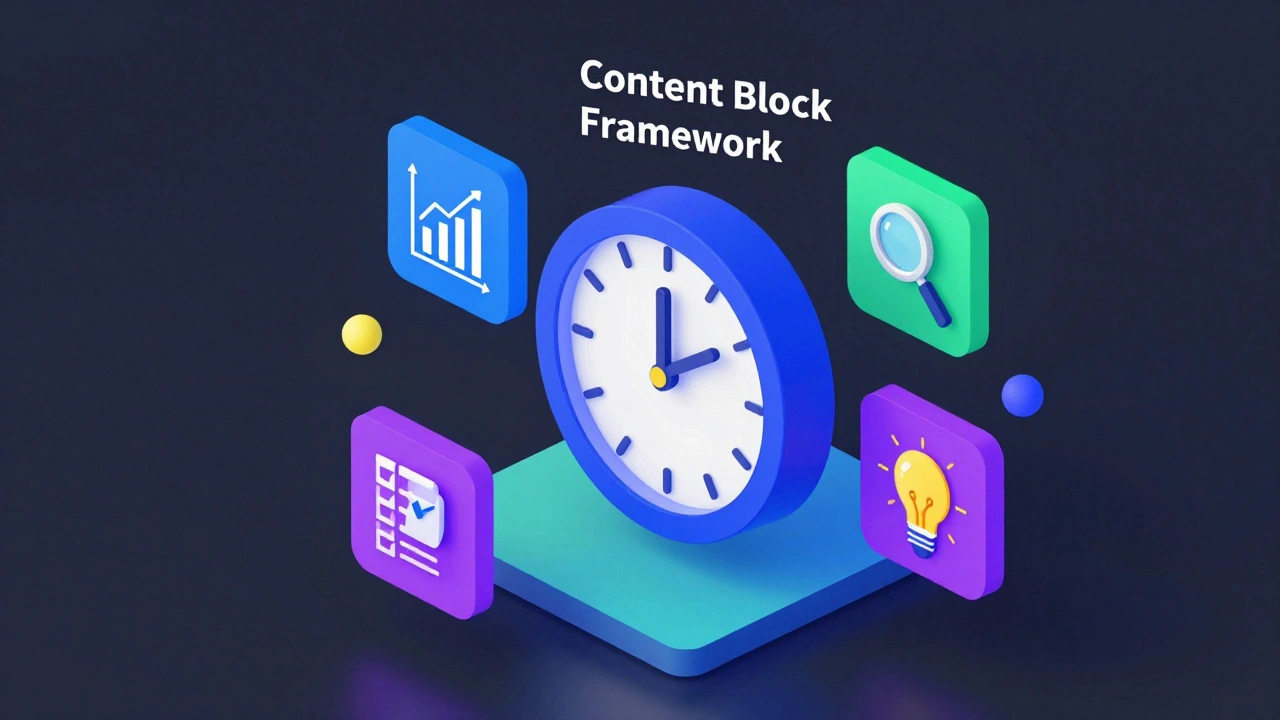
If you've decided that your audience needs frequent updates, don't just wing it. You need a framework. Without a structure, your channel becomes a chaotic stream of consciousness. Instead, create 5-8 core content categories and rotate them throughout the day.
Take a stock trading channel, for example. They don't just post random charts; they follow a rhythm:
- 8:30 AM: Pre-market updates with a brief overview of key events.
- 9:00 AM: A curated watchlist featuring 3-5 stocks with specific entry and exit zones.
- 12:00 PM: Midday analysis and a quick check on market movements.
- 3:30 PM: Trade summaries recapping winners, losers, and overall performance.
- 7:00 PM: Educational tips on trading psychology or risk management.
For those in a more general niche, you can map your posts to the user's daily biological clock. Start with a "wake-up phase" (6-9 AM) for motivation, a "productivity phase" (10 AM-1 PM) for actionable tips, an "interactive phase" (2-5 PM) for polls and quizzes, and an "evening value phase" (6-9 PM) for deep-dive case studies.
Diversifying Formats to Fight Boredom
Consistency in timing is great, but consistency in format is a death sentence. People get bored of reading walls of text. To maintain engagement, you need to leverage the full suite of Telegram's tools. This is where the Von Restorff effect comes into play: the tendency to remember the single item that differs from the rest. If every post is a text link, a single voice note will stand out and get significantly more attention.
Mix your cadence with these formats:
- Text Updates: Best for quick clarity and direct news. Keep these to about 60 words, with the most important point in the first 40.
- Voice Notes: These create a personal connection. In some health-tech segments, introducing voice notes has doubled retention because people prefer hearing a human voice over reading a script.
- Polls: These create "micro-engagement loops." A simple "Do you agree?" poll keeps the user active and signals to them that the channel is a conversation, not a lecture.
- Infographics and Memes: These are the engines of shareability. A well-designed chart is far more likely to be forwarded to another chat than a long paragraph.
The Art of the Telegram Message
Even the perfect cadence can't save a bad message. Because Telegram is a chat app, your writing should feel like a conversation, not a press release. Use a professional yet informal tone. Start with a personalized greeting, provide a sharp insight, clearly state the benefit, and end with a specific next step.
If you're running a campaign or sending a burst of messages, follow these bulk messaging parameters to avoid triggering spam filters and overwhelming your users:
- Limit yourself to 5-10 messages per day.
- Space them 2-3 minutes apart.
- Keep each message between 60 and 100 words.
- Use only one media item (image or video) per message to ensure smooth delivery.
Measuring and Adjusting Your Rhythm
You cannot set a cadence and forget it. You need to treat your posting schedule as a living experiment. Use analytics tools like TGStat.com, Telemetr.io, or Combot to track your performance.
Look for the following data points:
- Peak Engagement Hours: When are your views spiking? Adjust your most important posts to hit these windows.
- CTR (Click-Through Rate): Which formats are actually getting people to click? If voice notes have a 5% higher CTR than text, do more voice notes.
- Drop-off Points: At what point in the day do people start muting the channel? If you see a spike in "unsubscribes" after your 4th daily post, you've found your limit.
- Forward Rates: Which posts are being shared? This tells you what your audience considers "high value."
The most successful channels use a loop of Test $ ightarrow$ Analyze $ ightarrow$ Adjust $ ightarrow$ Repeat. If you notice your reach dipping on the third post of the day, try moving that content to a different time block or changing the format to a poll to spark more interest.
How many times a day should I post on Telegram?
For most channels, one post per day is the gold standard for maximizing reach and avoiding mutes. If your content is high-value, two posts are acceptable. Three posts are generally only safe for smaller communities (under 3,000 subscribers). Only news-focused or alert-based channels should post four or more times daily.
What is notification fatigue and why does it matter?
Notification fatigue happens when a user is overwhelmed by constant pings from a channel. Instead of engaging, they develop a habit of ignoring the notifications or muting the channel entirely. Once a user mutes you, your reach drops significantly because you are no longer pushing them to the top of their chat list.
Can I automate my posting cadence?
Yes, batching your content and using automation tools is highly recommended for solopreneurs and small teams. However, avoid fully "set-and-forget" automation. You should still manually intervene for breaking news or to engage with users in the comments to maintain a human feel.
Why do voice notes perform better than text?
Voice notes create a sense of intimacy and personal connection that text cannot replicate. They also act as a pattern interrupt in a feed of text, making the subscriber more likely to stop and listen. In some cases, this change in format has been shown to double retention rates.
How long should a Telegram post be?
Aim for approximately 60 words per post. To maximize engagement, ensure the most critical information or the "hook" is within the first 40 words, as this is what users see first in their notification preview.