It used to take months for someone to slide down the rabbit hole of hate. Today, it can happen in hours. Telegram is a cloud-based instant messaging service that has become a primary hub for extremist coordination due to its minimal content moderation and end-to-end encryption features. What started as a secure alternative for private chats has evolved into a complex ecosystem where violent ideologies spread faster than authorities can track them. You might think you are just scrolling through news, but algorithms are quietly curating feeds that reinforce your worst fears.
The stakes have never been higher. From the 2025 Jakarta bombing to coordinated plots across Southeast Asia, the link between online chatter and real-world violence is undeniable. This isn't just about bad actors hiding in the dark; it is about how platform design exploits human psychology. Understanding this mechanism is the first step toward protecting yourself and your community.
The Architecture of Anonymity
To understand why extremists love Telegram, you have to look at its design. Unlike other social media giants, Telegram prioritizes user privacy above almost everything else. It offers end-to-end encryption in secret chats and stores data on its own servers with limited third-party access. For regular users, this feels like freedom. For violent groups, it feels like a shield.
Research shows that since the early 2020s, extremist networks have migrated here from mainstream platforms. They seek operational security. A study of 125 channels found that nearly half were connected to known violent movements. The far-right dominates this space, with white supremacist and neo-confederate groups making up a significant portion of these networks. Because Telegram rarely complies with court orders to reveal user identities or delete content quickly, these groups operate with reduced oversight. They build large audiences without the fear of being banned overnight.
This lack of friction creates a unique environment. On other platforms, you might get flagged for posting hate speech within minutes. On Telegram, you can broadcast to thousands before anyone notices. This speed allows recruiters to scale their operations rapidly, turning isolated individuals into part of a larger, dangerous movement.
The Radicalization Pipeline
You might wonder how a normal person becomes an extremist so quickly. The answer lies in cognitive bias and algorithmic manipulation. Telegram does not have a traditional 'for you' feed like TikTok or Instagram, but its search and channel recommendation systems still exploit psychological triggers. Recruiters use confirmation bias against you. They show you content that matches your existing anger or frustration, filtering out any dissenting views.
This creates an echo chamber. When every message you read confirms that the world is against you, radical ideas start to feel logical. Add recency bias-where new, shocking content gets more attention-and you get a perfect storm. Emotionally charged posts rise to the top. Herd behavior kicks in when you see hundreds of people agreeing with extreme viewpoints. Suddenly, violence doesn't seem crazy; it seems necessary.
Adolescents are especially vulnerable. They crave belonging and validation. Extremist groups offer a sense of purpose and a clear 'us vs. them' narrative. Gaming communities often serve as entry points, where subtle ideological grooming happens alongside casual chat. What begins as a joke or a meme can escalate into full-blown radicalization in days, not years.
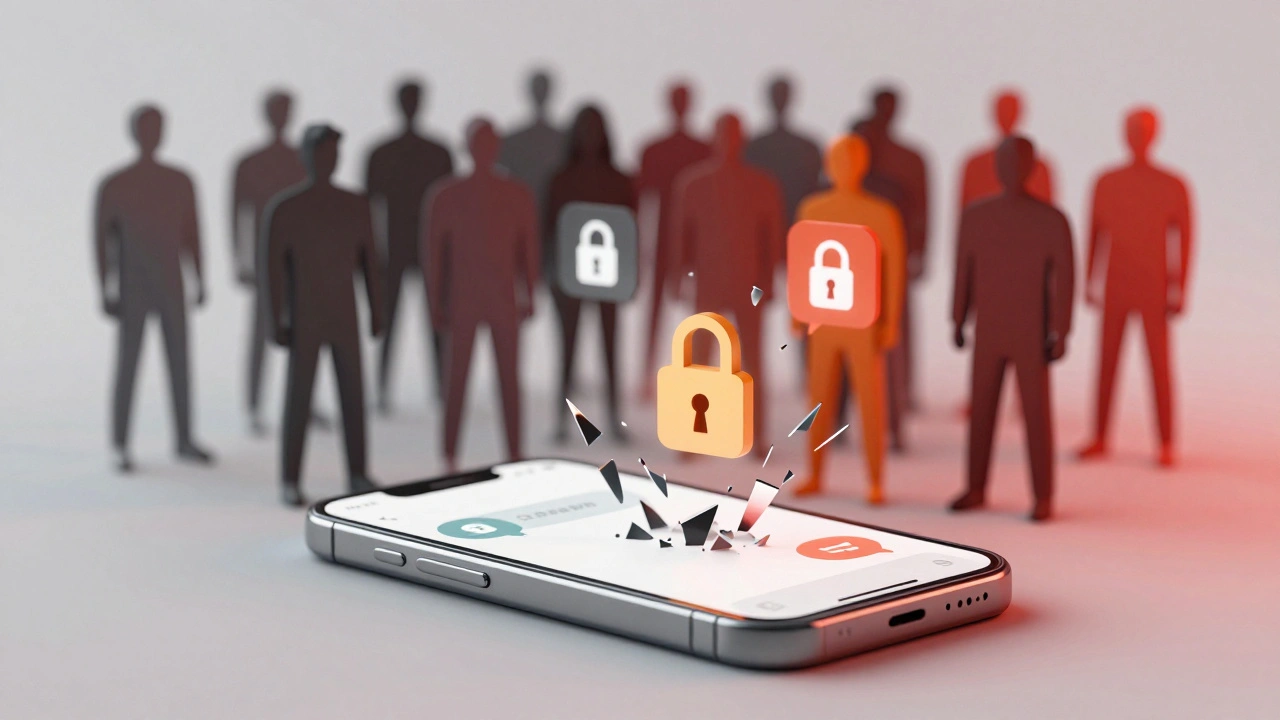
From Digital Chats to Real-World Violence
The scariest part of this trend is the direct line to physical harm. Online radicalization is no longer just talk; it is operational infrastructure. The 2025 Jakarta bombing serves as a stark example. Investigators linked the attack directly to ideological grooming conducted over Telegram. This wasn't a lone wolf acting randomly. It was a planned event fueled by online networks.
We see similar patterns across Southeast Asia. Security officials report teenagers plotting violence inspired by white supremacist material shared on Telegram. These networks are borderless. A radical idea can start in Indonesia, gain traction in Singapore, and inspire action elsewhere. The feedback loop is self-sustaining: online content provides ideology, real-world attacks generate propaganda, and that propaganda fuels more recruitment.
Historical precedent supports this. Between 2015 and 2016, ISIS used Telegram to coordinate communications. Their virtual entrepreneurs directed nearly half of IS-related attacks in Western Europe during that period. Fast forward to today, and far-right movements have adopted similar tactics. After the 2019 Christchurch attack, white supremacist channels exploded in popularity, glorifying terrorists and calling for further violence. Exposure to these channels significantly increases the likelihood that viewers will act offline.
Cross-Platform Ecosystems
Telegram rarely works alone. It is part of a larger cross-platform ecosystem. In Germany, anti-government movements like Querdenken and Reichsbürger use a 'Telegram-YouTube pipeline.' YouTube acts as the discovery engine, bringing users in with semi-legitimate conspiracy theories. Once those users are hooked, they move to Telegram for deeper, more extreme discussions.
This migration happens because major platforms enforce stricter rules. When content gets removed from YouTube or Facebook, extremists don't disappear. They retreat to protected spaces like Telegram. Here, they refine their narratives and plan actions away from regulatory reach. The pandemic accelerated this trend, as lockdowns drove more people online and increased engagement with these fringe communities.
Understanding this pipeline is crucial. Blocking one platform isn't enough. You have to disrupt the entire flow. If you only monitor public feeds, you miss the most dangerous conversations happening in private groups. The real threat lives in the encrypted channels where trust is built and plans are made.

Current Response Efforts
Efforts to combat this threat are growing, but they face massive hurdles. Etidal, the Global Center for Combating Extremist Ideology, partnered with Telegram in February 2022. By the second quarter of 2025, they had removed over 30 million pieces of extremist content and deleted more than 1,200 channels. Cumulatively, they have taken down nearly 208 million items.
These numbers sound impressive, but context matters. New content is uploaded constantly. The decentralized nature of Telegram makes complete eradication impossible. Plus, the platform's technical design favors privacy over transparency. Even when authorities identify a harmful channel, removing it doesn't stop the ideology. Users simply move to another channel, often with the same name or slightly altered branding.
Legal interventions also struggle. Telegram's history of non-compliance with court orders limits government power. Without user data, prosecutors find it hard to trace digital radicals back to real people. This gap allows networks to expand ideologically while remaining operationally secure.
How to Protect Yourself and Others
You cannot control Telegram's architecture, but you can change how you interact with it. Start by recognizing the signs of radicalization. If someone suddenly starts using aggressive language, isolating themselves, or expressing hatred toward specific groups, pay attention. Ask questions. Challenge their sources. Don't let them sit in an echo chamber unchecked.
Educate yourself about cognitive biases. Knowing that algorithms exploit confirmation bias helps you spot manipulation. When you see content designed to make you angry, pause. Ask yourself: Is this trying to provoke me? Who benefits from my anger? Critical thinking is your best defense.
Support mental health initiatives. Many recruits turn to extremism because they feel lonely or misunderstood. Community organizations and schools should provide safe spaces for discussion. Public health inoculation programs can teach teens how to recognize grooming tactics. These interventions address the root causes, not just the symptoms.
Finally, advocate for responsible platform design. Pressure companies to prioritize safety over engagement. Algorithms that reward outrage create societal harm. We need systems that promote diverse viewpoints and reduce polarization. Change won't happen overnight, but every conversation counts.
| Risk Factor | Impact on Extremism | Mitigation Strategy |
|---|---|---|
| End-to-End Encryption | Enables anonymous coordination | Monitor metadata patterns |
| Minimal Moderation | Allows rapid content growth | Partner with NGOs for takedowns |
| Algorithmic Bias | Accelerates radicalization | Digital literacy education |
| Cross-Platform Migration | Creates resilient networks | Integrated multi-platform monitoring |
Is Telegram illegal?
No, Telegram is not illegal. It is a legitimate messaging app used by millions worldwide. However, its features make it attractive to criminal and extremist groups, leading some governments to restrict or ban it in certain contexts.
How fast can radicalization happen on Telegram?
Recent studies suggest radicalization can occur in days or even hours, driven by algorithmic amplification and targeted grooming. This is much faster than the months or years typical in earlier eras.
What is the Etidal partnership with Telegram?
Etidal collaborates with Telegram to identify and remove extremist content. Since 2022, they have deleted millions of items and thousands of channels, though challenges remain due to the volume of new uploads.
Why are adolescents particularly vulnerable?
Teens seek belonging and validation. Extremist groups exploit this need by offering community and purpose. Their developing brains are also more susceptible to emotional manipulation and peer pressure.
Can I report extremist content on Telegram?
Yes, you can report suspicious channels or messages within the app. Additionally, specialized organizations like Etidal accept reports of digital extremism. Prompt reporting helps disrupt recruitment pipelines.