When the monsoon floods hit a village in eastern India last June, the first warning didn’t come from a government alert or a radio broadcast. It came from a Telegram channel called KharagpurRuralAlert, run by a retired schoolteacher who checked every message with two neighbors before posting. Within 12 minutes, over 3,000 people knew which roads were underwater, where the nearest safe shelter was, and that the local clinic had power. That’s the power of local verification networks on Telegram in rural areas.
Traditional media barely reaches these places. Newspapers don’t deliver. TV signals fade. Even SMS alerts often fail during peak hours. But Telegram? It works on cheap smartphones with spotty data. And when local people - not distant journalists - verify what’s real before it’s shared, the impact is real too.
How These Networks Actually Work
These aren’t fancy apps or custom software. They’re simple Telegram channels, run by people who live in the same village or cluster of villages. Each network covers a 5-12 kilometer radius, which matches how Telegram’s location system groups users in rural areas. This isn’t exact GPS tracking - it’s coarse location, rounded to protect privacy. Think of it like a digital neighborhood watch, but for news.
Here’s how it flows:
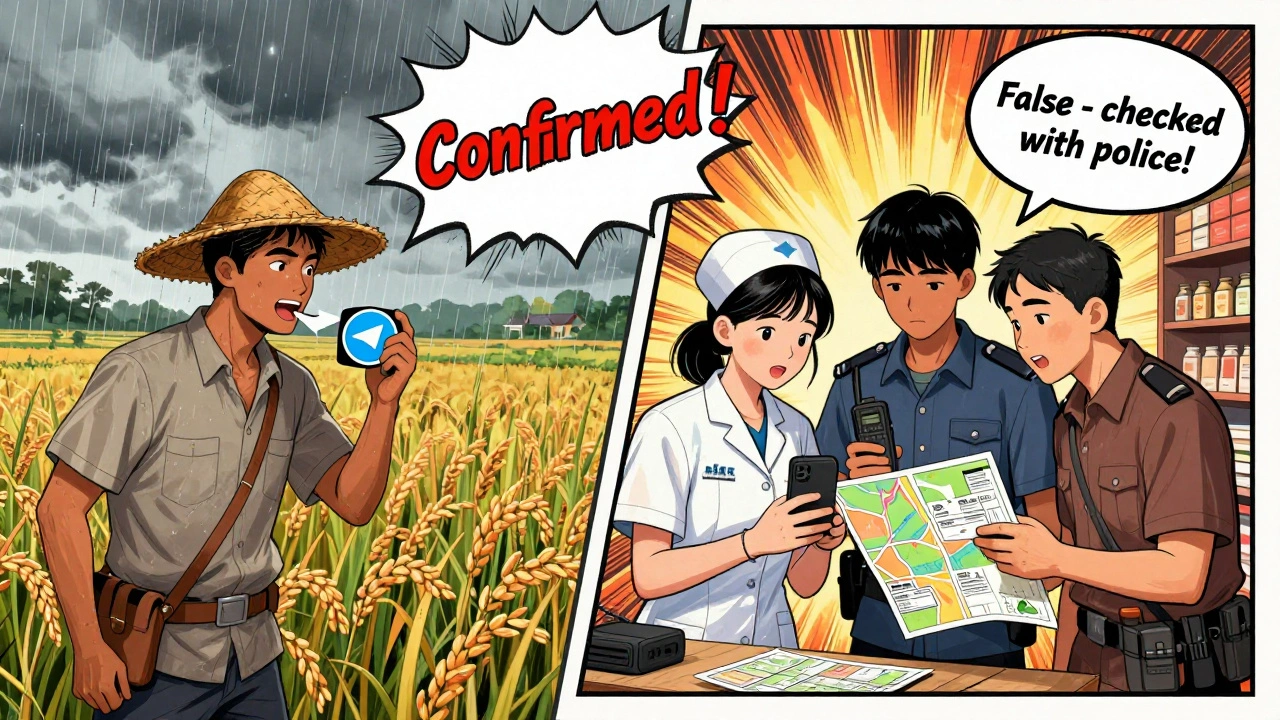
- A resident snaps a photo of a collapsed bridge or posts a voice note about a rumor of riots.
- The message goes to a small group of 2-3 trusted moderators - maybe a health worker, a farmer who runs the local shop, or a youth group leader.
- They cross-check: Did someone else see it? Is it on another channel? Did the police post anything?
- Once verified, they post it to the main channel with a clear label: “Confirmed” or “False - checked with police.”
Verification takes about 7 minutes on average for normal updates. For emergencies like fires or floods, it’s under 3 minutes. Delivery success? 92.7% - far better than SMS, which fails 15-20% of the time in these areas.
Why Telegram and Not WhatsApp or Facebook
WhatsApp is popular, sure. But its groups are private. You need an invite. You can’t find them unless someone sends you the link. In rural areas, where people move between villages or don’t know everyone, that’s a problem.
Facebook Groups? They eat up data. In places where a single video message can cost half a day’s earnings, Telegram’s MTProto 2.0 protocol uses 63% less data. That’s the difference between sharing a warning and not sharing at all.
SMS systems like FrontlineSMS work on any phone, even basic ones. But they’re one-way. No replies. No verification. Just blasts. And when false rumors spread - like “the well is poisoned” or “the government is coming to take land” - there’s no way to correct them fast.
Telegram’s public channels solve that. Anyone can join. Anyone can report. And with a small team of local verifiers, the system self-corrects. A 2025 Oxford study found these hybrid networks - human + location-based - get 89% of rumors right. Algorithm-only systems? Only 72%.
Where It’s Working - And Where It’s Not
In Georgia, the channel Gruzinfo became a lifeline during the April 2025 floods. Users reported blocked roads, broken power lines, and missing people. Moderators checked with local volunteers, police, and even drone operators. Within hours, rescue teams were redirected. A November 2025 survey showed 78% of rural Georgians now rely on it for emergencies.
In rural India, the same model is growing - but unevenly. In Maharashtra, networks are well-organized. In Bihar, they collapse during monsoon season. Why? When the internet cuts out for days, moderators can’t talk to each other. No verification. No posts. People fall back on rumors.
And trust matters. In one Nigerian village, a verification channel was shut down after residents found out the moderator was related to the local politician. People stopped believing anything posted. Now, successful networks have clear rules: no family members as moderators. No paid posts. Corrections are published openly.
Who Runs These Networks?
They’re not tech startups. They’re teachers. Nurses. Agricultural officers. People who already have the community’s ear.
A 2025 Dexatel study found 68% of verified Telegram rural networks are led by people who already run community info hubs - the schoolteacher who posts exam results, the health worker who shares vaccine dates, the extension officer who tells farmers when the fertilizer truck is coming.
Training? It takes about 14 hours total. Most learn by doing. Telegram’s interface is simple: tap to post, tap to reply, tap to report. The hard part isn’t the tech. It’s building trust. That’s why successful networks spend weeks talking to elders, holding small meetings, and explaining how verification works - not just what it does.
The Limits - And the Risks
This isn’t magic. It has real limits.
First, you need a smartphone. In rural India, only 48% of households have one. In parts of the Sahel, it’s under 30%. Without that, you’re out.
Second, verification depends on consistency. Some networks are strict. Others are loose. A 2025 Africa Check report found misinformation rates were 11% in India’s verified networks but 23% in Kenya’s - where rules are looser and oversight is minimal.
And privacy? It’s a concern. Telegram’s location system rounds your position, but if someone knows your exact home and sees you’re in a channel that only covers 8km around it, they can guess where you live. Experts like privacy researcher gruez warn this could be exploited. That’s why the International Telecommunication Union is pushing for user-controlled radius settings - like Apple’s coarse location - so people can pick “village” or “sub-district” instead of letting the app decide.
Even radio still wins in the most remote areas. In parts of Papua New Guinea and rural Mali, 98% of people still get news through community radio. Telegram can’t reach there yet. But it’s getting closer.
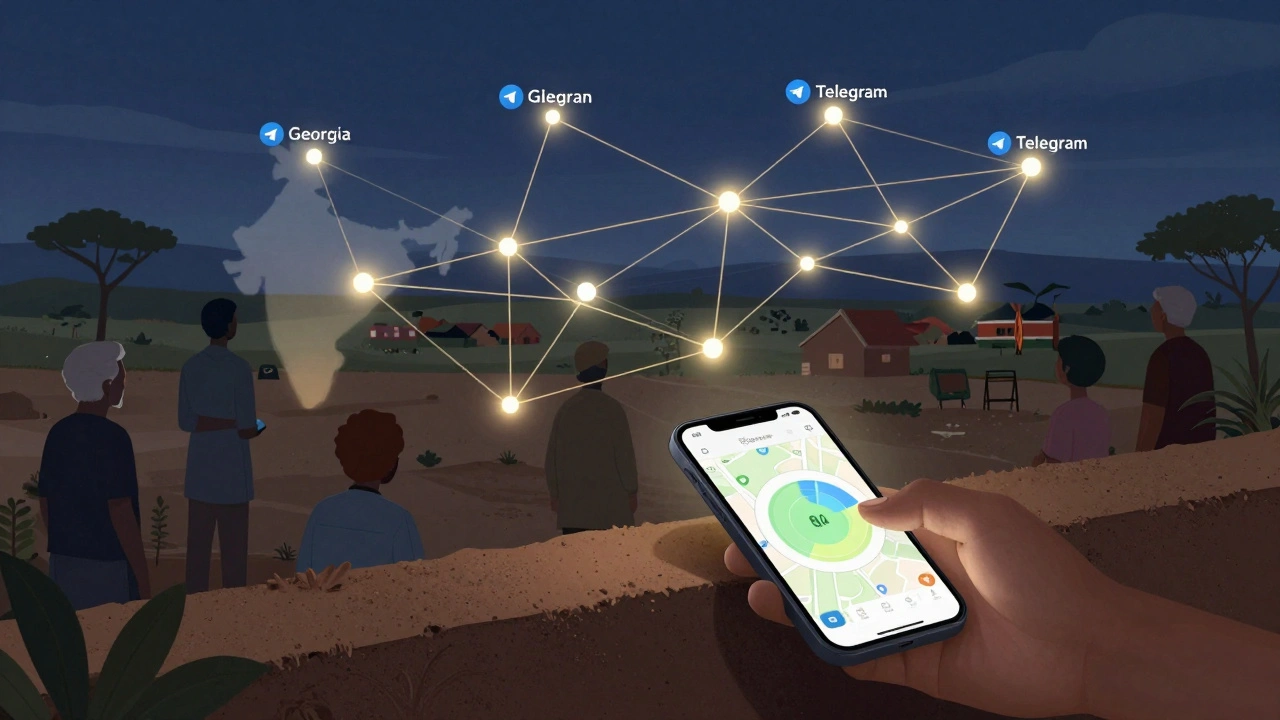
What’s Coming Next
Telegram itself is stepping in. In December 2025, they announced new tools for rural verification networks: built-in moderation dashboards, configurable location zones, and automated alerts for unverified reports. Starting January 2026, pilot programs are running in 12 districts across Africa and Asia.
The World Bank just gave $127 million in 2025 to help set up these networks. UNESCO is training older adults - because right now, only 39% of rural residents over 50 can use smartphones well enough to join.
By 2028, analysts predict these networks will be the main emergency channel in 65% of rural areas across emerging markets. That’s not a guess. It’s based on adoption curves. In 2022, there were 8 million users. Now? 28 million. And growing at 37% a year.
Why This Matters
This isn’t just about faster news. It’s about who gets to say what’s true.
For decades, rural communities got their information from distant centers - city newspapers, state broadcasts, foreign NGOs. The stories were broad. The context was missing. “Floods hit district” didn’t tell you if your lane was underwater.
Now, the person who lives next to you decides what’s real. They know the road names. They know the school’s phone number. They know who’s lying and who’s scared.
That’s not just better communication. It’s better democracy.
How do I start a local verification network on Telegram?
First, find 2-3 trusted people in your community - teachers, health workers, or community leaders. Create a Telegram channel and name it clearly, like “[YourVillage]Alerts.” Set rules: no unverified posts. Use the “coarse location” feature to limit who can join. Start small - post one verified update a day. Use the Telegram Partner Network resources for moderation templates. Training takes about 14 hours total, mostly learning how to check sources and correct mistakes publicly.
Do I need a smartphone to join these networks?
Yes. You need a smartphone with Telegram version 7.0 or higher. Basic Android or iOS phones work fine. You don’t need high-end models. But you do need internet access, even if it’s slow. In areas with no data, these networks won’t work - and that’s a major gap. Some communities use public Wi-Fi spots or share phones with neighbors to stay connected.
Are these networks safe from misinformation?
They’re better than most, but not perfect. Networks with clear rules and trained moderators catch 89% of false claims. But if moderators are biased, tired, or outnumbered, rumors slip through. The best networks publicly correct errors - posting “We were wrong” with the right info. That builds trust. Avoid networks that never admit mistakes.
Can these networks replace radio in remote areas?
Not yet. Radio still reaches 98% of people in the most isolated regions - places with no signal, no phones, no electricity. Telegram needs power and data. But in areas with even basic mobile coverage, Telegram networks are faster, more interactive, and more accurate. The future may be hybrid: radio broadcasts the alert, Telegram verifies and details it.
Is this legal in countries like India or Kenya?
Yes, but rules vary. In India, channels with over 5,000 subscribers must verify moderator identities under the 2024 Digital Governance Act. Kenya has looser rules, which led to faster growth but more misinformation. Always check your country’s digital communication laws. Most governments support these networks if they’re community-run and not political. Avoid anything that looks like campaigning or hate speech.