When the election results started rolling in on November 5, 2024, millions of viewers didn’t just watch the broadcast-they watched it with Telegram. While CNN and BBC aired the official coverage, people opened their phones and joined live Telegram channels where real-time reactions, fact-checks, and local perspectives flooded in. Comments floated on screen like digital confetti. Viewers tapped animated hearts, thumbs-ups, and question marks that briefly appeared beside the host’s face. No retweets. No trending hashtags. Just raw, unfiltered conversation happening in real time, right beside the TV.
This isn’t science fiction. It’s what’s happening now, thanks to Telegram’s November 2024 update that turned the app into a powerful second-screen companion for live news. Unlike Twitter, which feels like a chaotic town square with bots and spam, Telegram offers something quieter, more intentional. It’s not about going viral-it’s about staying informed, together.
What Makes Telegram a Good Second-Screen Tool?
A second-screen companion is any device or app you use while watching live TV or a stream. Think of it like having a friend whispering facts in your ear during a big game. Telegram became that friend for news events after its major update introduced Live Stories. This feature lets anyone-individuals, newsrooms, or community groups-start a live video stream that viewers can interact with in real time. Comments and emoji reactions appear briefly on the stream, letting the host see what’s resonating without needing to switch apps.
Here’s why it works: Telegram has over 1 billion active users, and 27% more people subscribed to news channels in 2024 than in 2023. That’s not just growth-it’s a shift in how people consume breaking news. Users aren’t just passively watching. They’re asking questions, sharing local updates, and correcting misinformation on the spot. One Reddit user, u/NewsWatcher2024, said during the election debates, “Our Telegram group had more real talk than Twitter. Fewer bots. More people who actually lived through what was being reported.”
How Newsrooms Are Using Telegram Live Stories
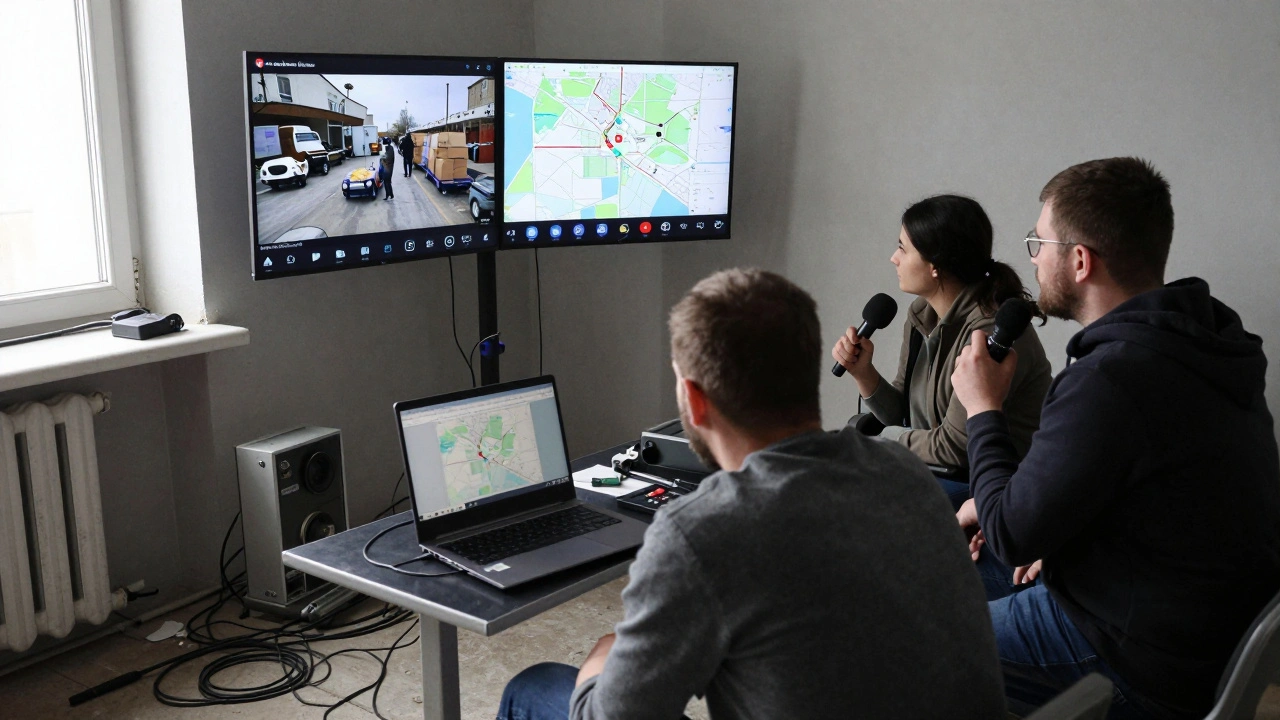
Independent news outlets and international broadcasters are the ones leading the charge. They don’t have the budgets of CNN or BBC, but they do have trust. A small news team in Kyiv started using Telegram Live Stories to cover the daily humanitarian updates from the front lines. They used OBS Studio to blend camera feeds with maps and text overlays, then streamed directly to Telegram via RTMP-a professional setup that used to require expensive equipment.
For larger organizations, the ability to pin multiple messages is a game-changer. During a major weather event, a news channel in Florida pinned three messages: one with evacuation routes, one with shelter locations, and one with verified emergency contacts. These stayed visible at the top of the chat while the live stream showed footage from the ground. Viewers didn’t have to scroll through hundreds of messages to find critical info.
Telegram also lets admins schedule repeated messages. A news outlet in Nairobi now uses this to send daily updates at 7 a.m. and 7 p.m. during election season. It’s like having a digital bulletin board that auto-updates-no one has to remember to post it.
Privacy, Control, and the Downside of No Algorithm
Telegram doesn’t push content at you. There’s no algorithm deciding what you see. That’s both a strength and a risk. On one hand, you get unfiltered perspectives. A journalist in Brazil shared raw footage of a protest that mainstream outlets didn’t cover. People in the Telegram group discussed it for hours, cross-referencing timestamps and locations. That kind of transparency is rare.
But without automated moderation, misinformation can spread fast. The Center for Journalism Ethics warned in November 2024 that Telegram’s lack of content review tools makes it vulnerable during crises. A false rumor about a power outage in Toronto spread in a local group before officials could respond. Telegram’s new Channel Post Stats help admins track how many times a message was viewed or forwarded, but they don’t automatically flag false claims.
Still, users value the control. Broadcasts can be set to private-visible only to close friends, specific groups, or everyone. Newsrooms use this to test drafts with trusted sources before going public. A reporter in Mexico used a private group to verify a story with three sources before broadcasting it live. “I wouldn’t risk it on Twitter,” she said. “There, anyone can screenshot and twist your words.”
How It Compares to Twitter and Other Platforms
Twitter used to be the go-to for live news commentary. But since its rebrand to X, the platform has become cluttered with ads, paywalled content, and automated accounts. Telegram feels like the opposite: clean, open, and focused on conversation.
Here’s how they stack up:
| Feature | Telegram | Twitter (X) |
|---|---|---|
| Live Streaming | Live Stories with emoji reactions and comments on-screen | Live video with limited interaction, no on-screen comments |
| Comment Length | No character limit | 280 characters |
| Monetization | Stars-based Gifts with auction system | Tips via Super Follows (limited adoption) |
| Privacy Controls | Custom visibility: everyone, contacts, groups | Public or protected accounts only |
| Algorithm | None-content appears chronologically | Strong algorithm favors engagement, not accuracy |
| Professional Streaming | RTMP support with OBS and XSplit | RTMP support, but less stable |
Telegram doesn’t have trending topics or hashtags, which some see as a weakness. But for news consumers tired of viral nonsense, it’s a relief. You’re not chasing what’s hot-you’re chasing what’s true.
Real User Experiences and Pain Points
Not everything is smooth. Trustpilot reviews show a 4.1/5 rating for news-related use, but complaints are consistent. The biggest issue? Notifications. During high-traffic events like natural disasters or elections, users report missed alerts. One user in Istanbul said, “I had 120 unread messages. My phone didn’t buzz once.”
Setting up professional streams is another hurdle. u/BroadcastTech on Reddit spent three days trying to get OBS to connect to Telegram’s RTMP server. “Their guide says ‘click here,’ but doesn’t say what to do if the key doesn’t work,” they wrote. Telegram’s official forum shows 63% of support requests are about configuring scheduled messages or RTMP keys. The tools are there-but the documentation isn’t user-friendly.
On the flip side, the mobile setup is simple. Open Telegram. Tap your profile. Scroll to the bottom. Click “Add a Post.” Hit “Start Live Stream.” That’s it. No app switching. No login. No ads.

What’s Coming Next?
Telegram’s founder, Pavel Durov, hinted in December 2024 that “enhanced media synchronization features” are coming. That could mean automatic alignment between live TV broadcasts and Telegram streams-like your news channel’s on-screen graphics syncing with your phone’s chat. Imagine watching a weather report, and your Telegram group auto-updates with the exact same radar map.
Telegram also processed $1.2 billion in digital transactions in Q4 2024 through its Stars cryptocurrency. That money is fueling development. New features like hyper-speed scrolling and calendar views for shared media are already helping users organize news clips. And with 68% of TV viewers using a second device during major events, the market is wide open.
Regulatory pressure is growing, especially in the EU under the Digital Services Act. Telegram will need to improve moderation without losing its open nature. But for now, it’s the only platform where news organizations can build real communities without being owned by an ad-driven algorithm.
How to Start Using Telegram for Live News
If you’re a viewer: Find a trusted news channel. Search for “live news” or “breaking news” in Telegram. Join a group. Turn on notifications. During an event, keep the stream open and react with emojis to show you’re listening. If you see something questionable, ask for sources-not just retweet it.
If you’re a news creator: Start small. Use your phone to go live during a local event. Use the “pin message” feature to share key info. Invite a few trusted people to join the stream and moderate comments. Once you’re comfortable, connect OBS for better video quality. Use scheduled messages for daily updates. Track your post stats to see what’s working.
You don’t need a team. You don’t need a budget. You just need to be there-when it matters.
Can I use Telegram Live Stories on my computer?
Yes, but not directly. Telegram’s Live Stories feature is mobile-only for now. However, you can use desktop apps like OBS or XSplit to stream to Telegram via RTMP. This lets you broadcast from your computer with professional cameras, graphics, and audio. You’ll need to generate an RTMP key from your Telegram channel’s Live Settings panel and paste it into your streaming software.
Is Telegram better than WhatsApp for live news?
Telegram is far better for live news. WhatsApp doesn’t support live video broadcasting, pinned messages, or public channels with thousands of members. Telegram’s infrastructure is built for public broadcasting and group interaction. WhatsApp is designed for private chats. You can’t build a news community on WhatsApp the way you can on Telegram.
Do I need to pay to use Telegram for news?
No. All core features-Live Stories, pinned messages, scheduled posts, and RTMP streaming-are free. Telegram’s Stars cryptocurrency is optional and used only if you want to accept tips or sell digital gifts. Most news organizations use Telegram without spending a cent.
How do I know if a Telegram news channel is trustworthy?
Check the channel’s history. Look for consistent posting, clear sourcing, and transparency. Trusted channels often link to official reports or cite names and locations. Avoid channels that only post sensational headlines with no details. Also, check if they’re verified by other known outlets. If a channel is being shared by established journalists or media organizations, it’s more likely reliable.
Can I watch a Telegram Live Story after it ends?
Yes, but only if the host saves it. Live Stories disappear after 24 hours unless the creator manually saves them as a video message in the channel. For news use, it’s best practice to save important streams. Some newsrooms automatically archive their live events as video posts for later reference or fact-checking.
Final Thoughts
Telegram isn’t replacing TV news. It’s enhancing it. It’s giving viewers a voice without drowning them in noise. It’s letting local reporters reach global audiences without corporate gatekeepers. And it’s doing it without ads, without algorithms, and without selling your data.
The future of live news isn’t in flashy graphics or viral clips. It’s in quiet, reliable spaces where people can talk, ask questions, and find truth together. Telegram is building that space-one live stream at a time.