When you're reporting the news in a country where the government is blocking messaging apps, your phone isn't just a tool-it's a target. In Russia, as of February 10, 2026, Telegram-the platform millions rely on for real-time news-is being actively restricted. Roskomnadzor, the state telecom regulator, claims Telegram refuses to remove "criminal" content. But for journalists, activists, and independent reporters, the real issue isn't content moderation-it's control. Telegram is one of the last open channels left. And when that channel gets cut, the truth goes dark too.
Why Telegram Matters in Censored Spaces
Telegram isn't just another app. In Russia, it's used by military personnel, journalists, local newsrooms, and even government workers who need to share information without being monitored. Unlike WhatsApp or Viber, which have been blocked outright in recent years, Telegram offered end-to-end encryption for secret chats, public channels with millions of subscribers, and file-sharing that worked even when internet speeds dropped. By 2026, it had become the backbone of underground news networks. When Roskomnadzor started throttling connections, over 11,000 users reported service failures in the first 24 hours. That wasn't just an outage-it was a signal.
What makes Telegram different from other platforms? It doesn't store messages on servers by default. Secret chats are device-to-device encrypted. Channels can be accessed without logging in. And because it uses a decentralized network of servers, blocking it requires cutting off massive chunks of the internet-like the 19 million IP addresses Russia tried to block in 2018, which also took down Amazon Web Services and Google Cloud services used by banks and retailers. That’s how powerful Telegram is: it’s not just a messaging app. It’s infrastructure.
The Cost of Speaking Out
If you run a news channel on Telegram in a restrictive environment, you’re already in the crosshairs. In 2026, Telegram was hit with fines totaling 64 million rubles (around $828,000) for "failing to self-regulate." That’s not about compliance-it’s about intimidation. The state doesn’t just want you to stop posting. It wants you to fear posting.
Journalists who use Telegram to report on protests, military movements, or corruption face real risks. Arrests have increased. Devices are seized. Family members are questioned. In 2024, Signal was blocked. In 2025, WhatsApp calls were throttled. In December, Viber vanished. Each step was a warning: if you use this, you’re making yourself visible. And visibility means danger.
But here’s the thing: stopping won’t save you. Silence is the goal of censors. The only way to fight back is to adapt-and adapt fast.
Five Safety Protocols for News on Telegram
There’s no perfect system. But there are proven practices. Here’s what works right now in restrictive environments like Russia’s:
- Use Secret Chats, Not Regular Ones-Regular Telegram chats are stored on cloud servers. That means if your device is seized, or if Telegram is forced to hand over data (which it refuses to do), your messages could be exposed. Secret chats are end-to-end encrypted, leave no trace on servers, and can be set to self-destruct. Always use them for sensitive conversations.
- Separate Your Identity-Never use your real name, phone number, or location in your channel bio. Create a new Telegram account with a burner number from a prepaid SIM bought in another city. Use a pseudonym. Link it to a non-traceable email. Treat your news channel like a front-because it is.
- Backup Everything, Everywhere-Don’t rely on Telegram to save your posts. Use encrypted cloud storage (like CryptPad or Tresorit) to archive your content. Also, upload critical reports to decentralized platforms like IPFS. If Telegram goes down, your archive stays alive. One journalist in Novosibirsk lost 300 reports in a single raid-because she didn’t back up. She’s not reporting anymore.
- Use a Reliable VPN-And Know Which Ones Work-After the February 2026 restrictions, AmneziaVPN saw a surge in users. Why? Because it’s designed to evade detection. It doesn’t advertise itself. It uses obfuscation techniques that look like regular internet traffic. Avoid free, popular VPNs-they’re monitored. Stick to open-source tools with a track record in censorship-heavy regions. AmneziaFree, Outline, and Psiphon have proven resilience.
- Have a Backup Channel-Don’t put all your news in one place. Create a mirror channel on a different platform. Use Matrix, Signal (if accessible), or even a simple static website hosted on a CDN. Post updates in both places. If one goes dark, the other survives. In Iran, after Telegram was banned in 2018, news outlets switched to Twitter and Instagram. They kept reporting. They still do.
What Doesn’t Work
Some tactics sound smart but fail in practice.
- Using government-approved apps-Russia pushed MAX as the "alternative" to Telegram. Experts call it a surveillance trap. Every message, location, and contact is logged. It’s not a replacement-it’s a trapdoor.
- Posting from public Wi-Fi-Cafes, libraries, and hotels are monitored. Even if you use a VPN, your device’s MAC address or login patterns can be tracked. Always use personal, encrypted networks.
- Assuming encryption is enough-End-to-end encryption protects messages, but not metadata. Who you talk to, when, and how often can still be analyzed. That’s why separating identity and using burner devices matters more than ever.
What Happens When Telegram Goes Down?
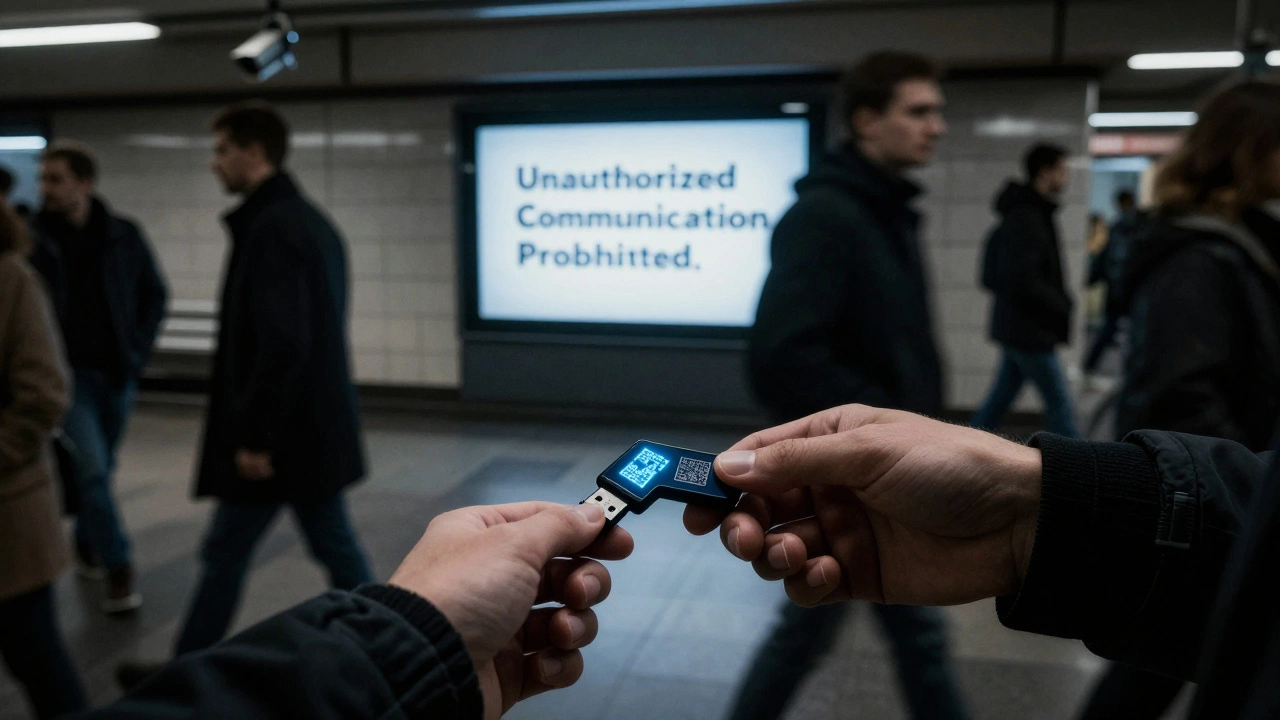
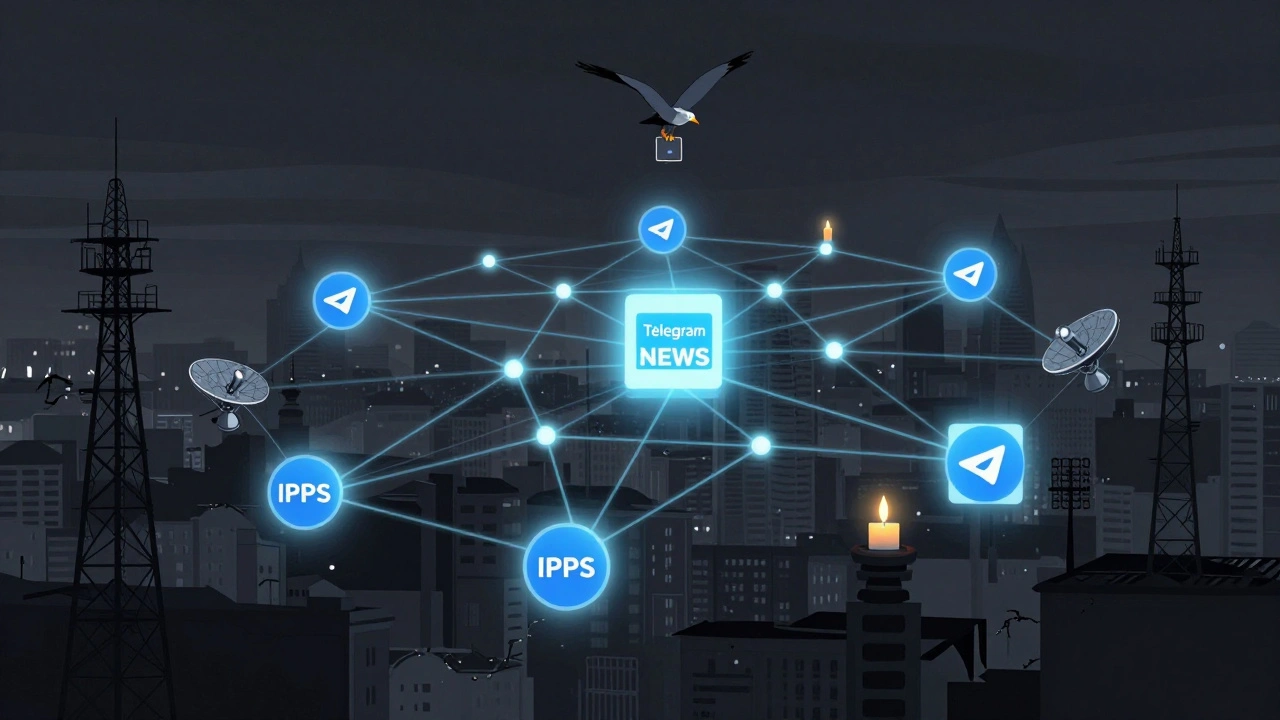
When Russia blocked Telegram in 2018, the internet didn’t break. But it got slower. More expensive. More unpredictable. People started using SMS, USB drives, and even radio broadcasts to share news. One group in St. Petersburg printed QR codes on flyers and posted them in subway stations. Scanning one took you to an archived Telegram channel on IPFS.
Telegram’s collapse isn’t the end-it’s a trigger. It forces innovation. In 2026, Russian users turned to decentralized networks, mesh networks, and even satellite messaging devices. The state can block apps. But it can’t block human ingenuity.
Global Lessons
Russia isn’t alone. Brazil fined Telegram $185,000 a day in 2023 for not cooperating with neo-Nazi investigations. Iran banned Telegram in 2018 and failed. China blocks it entirely-but millions still use it through smuggled apps. Each case teaches the same thing: censorship doesn’t stop information. It just makes it harder to find.
Telegram’s founder, Pavel Durov, once said: "If you try to silence people, they’ll find a way to speak louder." That’s not just a quote. It’s a strategy. The best safety protocol isn’t technical. It’s psychological. Keep going. Keep sharing. Keep adapting.
What You Can Do Right Now
If you’re a journalist or news operator in a restrictive environment:
- Set up a secret Telegram chat with one trusted colleague today.
- Back up your last 10 posts to an encrypted cloud.
- Download AmneziaFree or Outline on your phone.
- Create a second news channel on a different platform.
- Teach one other person how to do this.
Information is the first casualty of censorship. But it’s also the weapon that brings it down.
Is Telegram still usable in Russia after the February 2026 restrictions?
Yes-but only with circumvention tools. Telegram itself isn’t fully blocked, but access is severely throttled. Most users rely on VPNs like AmneziaVPN or Outline to restore connection speeds. Without these tools, loading messages takes minutes-or fails entirely. The app still works, but only if you bypass state filters.
Can Russian authorities track who runs a Telegram news channel?
They can try. If you use your real phone number, name, or location, tracking is easy. But if you use a burner number, a pseudonym, and secret chats, they’ll need physical access to your device or network logs to link you to the channel. Most successful underground reporters use multiple layers of anonymity-burner devices, public Wi-Fi, and encrypted backups-to make tracking nearly impossible.
Why not use WhatsApp or Signal instead?
Both have been blocked in Russia. Signal was banned in August 2024. Viber was blocked in December 2024. WhatsApp has been slowed down since December 2025. These apps are easier for governments to cut off because they rely on centralized servers. Telegram’s decentralized structure makes it harder to fully shut down, which is why it remains the most resilient option-even under pressure.
What happens if my Telegram channel gets taken down?
If your channel is removed, your content isn’t lost-if you backed it up. Archive your posts on IPFS, CryptPad, or a static website. Use a mirror channel on Matrix or a simple WordPress site. Some Russian news teams now maintain three parallel channels: one on Telegram, one on Matrix, and one on a decentralized web host. If one dies, the others keep publishing.
Are there legal risks for using Telegram to report news?
Yes. In Russia, distributing content deemed "extremist" or "false" by Roskomnadzor can lead to fines, detention, or criminal charges. Journalists have been charged under anti-extremism laws for sharing protest footage or military casualty reports. There’s no legal shield. Your protection comes from operational security-not the law.
Can I trust VPNs like AmneziaFree?
AmneziaFree is open-source and designed specifically for censorship evasion. It doesn’t log traffic, doesn’t require registration, and uses obfuscation to hide VPN traffic as normal internet use. It’s been tested in Russia, Iran, and Belarus. It’s not perfect, but it’s among the most reliable free tools available. Avoid commercial VPNs-they’re often monitored or sold data.
Why did Russia target Telegram instead of other apps?
Telegram has the largest user base among encrypted platforms in Russia-over 60 million monthly users. It’s used by journalists, soldiers, opposition groups, and even state employees. Its decentralized structure makes it hard to control. Unlike WhatsApp or Viber, Telegram doesn’t comply with data requests. And its founder, Pavel Durov, has publicly refused to build backdoors. That’s why it became the primary target.
Is there a way to report news without using Telegram at all?
Yes-but it’s harder. You can use Matrix, Briar, or even encrypted email with PGP. Some reporters use offline methods: USB drives passed between couriers, printed flyers with QR codes, or shortwave radio broadcasts. These are slower and less scalable, but they’re nearly impossible to block. The trade-off is speed versus security.