When you’re far from home, knowing what’s happening in your hometown isn’t just about staying informed-it’s about staying connected. For millions of people living outside their home countries, Telegram has become the go-to lifeline for regional news, cultural updates, and community-driven information. Unlike mainstream media that often overlooks minority voices, Telegram channels let diaspora communities publish, share, and verify news in their own language, on their own terms.
Why Telegram Works for Diaspora News
Telegram isn’t just another messaging app. It’s a broadcast tool built for communities that need to speak without being filtered. Most social media platforms use algorithms that bury niche content. But Telegram channels? They deliver every post directly to subscribers. No engagement metrics. No shadow banning. Just pure, unfiltered delivery. This matters most for diaspora groups. Imagine a Georgian family in Berlin trying to find out if their cousin’s village in Georgia got electricity back after a storm. Or a Russian-speaking Ukrainian in Warsaw needing to know if schools in Lviv reopened. Mainstream news won’t cover that. Local newspapers won’t translate it. But a Telegram channel? It will. The platform’s encryption also helps. In countries where governments monitor online activity, encrypted channels let people share sensitive updates-like protests, aid distribution, or safety alerts-without fear of being tracked. After Russia’s invasion of Ukraine in 2022, Telegram use among Ukrainians jumped from 20% to 60%. People in occupied areas used it because it was one of the few platforms still working. Military units coordinated through private channels. Families verified rumors by checking with relatives still in Ukraine.Real Examples: How Communities Run Their Own News
One of the clearest examples is Paper Kartuli a Telegram-based media project founded by Russian journalists who moved to Georgia after 2022. They don’t just report news-they help newcomers navigate life in Tbilisi. Their channel tells you how to register a marriage in Georgia, where to find Ukrainian humanitarian aid, and which local cafes support displaced families. They publish in both Russian and Georgian, with plans to add English. Eight people run it. No big funding. Just community-driven reporting. Then there’s Volna a Telegram channel started in Vilnius, Lithuania, by Russian-speaking media makers who left Russia. It’s not just news-it’s cultural glue. Volna publishes daily digests in Russian, explains Lithuanian school rules, teaches a new Lithuanian word every day, and covers local events for Russian-speaking emigrants. The founders openly say they want to build a network of similar channels across Europe: Latvia, Poland, Georgia, Turkey, and beyond. By 2023, they added podcasts and YouTube, but Telegram remained the core. Another project, unnamed but active across Armenia, Georgia, Russia, and Bulgaria, runs a channel with 15 regular contributors. They post short guides on local festivals, stories from refugees, and reports on domestic violence cases that mainstream media ignore. They also use Instagram and a website for longer stories, but Telegram is where the real-time updates happen.More Than News: Preserving Culture and Language
These channels don’t just report the news-they preserve culture. In places where diaspora children grow up speaking only the language of their new country, Telegram becomes a way to keep dialects alive. A channel might post a poem in the Talysh dialect of Azerbaijan. Another might share a recipe from a village in Moldova that’s been passed down for generations. Community moderators aren’t just editors-they’re archivists. They collect oral histories, record interviews with elders, and document traditions that schools don’t teach. One channel in Bulgaria started posting weekly audio clips of Romani folk songs. Within months, it had 12,000 listeners from Romania, Serbia, and Ukraine. People started sending in their own recordings. Now it’s a living archive. This participatory model is key. Unlike TV or newspapers, where you’re a passive viewer, Telegram lets you shape the content. You can suggest topics. You can submit photos. You can correct a mistake. You can even help translate. That’s why these channels have such high trust levels. People know who’s behind them. They’ve met the admins at community dinners. They’ve seen them at cultural fairs.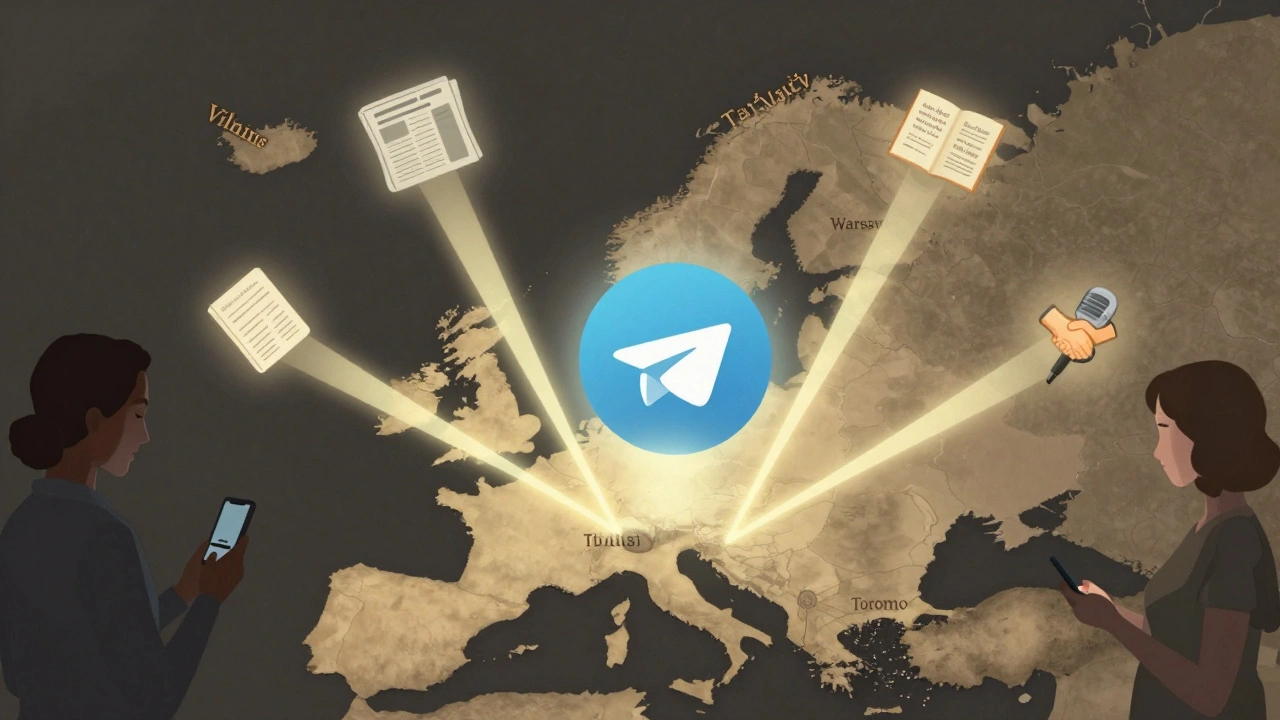
The Dark Side: Misinformation and How Communities Fight Back
It’s not all clean. Telegram’s privacy features also make it a breeding ground for rumors. A Harvard study analyzed over 450,000 messages from 24 Telegram groups serving Latinx communities between 2020 and 2021. They found that false stories often started on Telegram, then spread to WhatsApp and YouTube. Spanish-language videos, copied from Fox News, were uploaded within minutes with misleading captions. But here’s the twist: the same communities that fight misinformation are the ones who built these channels. Leaders of diaspora groups told researchers they use Telegram to counter lies-not by shouting louder, but by sharing facts faster. One group in California used a rural public health model: they trained 30 volunteers as fact-checkers. Each one had a list of 10 trusted sources. When a rumor popped up on Telegram, they’d reply within 15 minutes with a verified link. No drama. Just clarity. Another group in Germany created a simple rule: "If it’s about politics, verify with two sources. If it’s about family, check with a cousin." They printed this on flyers and handed them out at community centers. Now it’s part of their channel’s pinned message.What Makes Telegram Different from WhatsApp or WeChat
You might wonder: why not use WhatsApp? Or WeChat? Those are popular too. The difference is scale and control. WhatsApp groups max out at 1,024 members. Telegram channels can have millions. WhatsApp is for private chats. Telegram channels are for public broadcasting. You can’t search old messages on WhatsApp easily. On Telegram, you can scroll back years. You can also pin important updates, add polls, and schedule posts. WeChat is powerful in China, but it’s heavily monitored. Telegram works in Russia, Belarus, Armenia, and even parts of Central Asia where other platforms get blocked. Its servers aren’t tied to any single country’s laws. That’s why it’s the only platform where a channel from Yerevan can reach someone in Toronto and someone in Moscow all at once.
The Future: From Channels to Networks
These projects aren’t staying small. Paper Kartuli is planning an English-language podcast. Volna is building a website with interactive maps of Russian-speaking neighborhoods in Europe. The Armenia-Georgia-Bulgaria channel is starting a monthly live stream with Q&A sessions for diaspora youth. What’s clear is that Telegram isn’t replacing traditional media. It’s filling the gaps. Where newspapers won’t go, Telegram goes. Where TV ignores local stories, Telegram amplifies them. It’s not perfect. But for people who’ve lost their homeland, it’s the closest thing to a digital village square.Why do diaspora communities prefer Telegram over Facebook or Twitter?
Telegram doesn’t use algorithms that bury posts based on likes or shares. Diaspora communities need their news seen, not hidden. On Facebook, posts about regional elections in Georgia might only reach 5% of subscribers. On Telegram, every update goes straight to everyone. Also, Telegram allows multiple languages in one channel, while Facebook often pushes content into language-specific groups, fragmenting the community.
Can Telegram channels be trusted as a news source?
Some can, some can’t. The most trusted Telegram channels are run by journalists, former media workers, or community leaders who have clear sourcing rules. Many post their sources directly in messages. Others have a "fact-check pinned" update. But because Telegram is encrypted and open, anyone can start a channel. That’s why users rely on reputation-knowing who runs it, how long it’s been active, and whether it’s been cited by other trusted groups.
How do these channels handle misinformation?
They fight it with speed and trust. Instead of waiting for official corrections, community moderators reply within minutes with verified links, photos from local sources, or recordings from eyewitnesses. Some channels even have a "Myth vs Fact" section in their bio. Others train volunteers to monitor false claims and respond in real time. The key is not censorship-it’s community-powered verification.
Are these Telegram channels only for Russian speakers?
No. While many started in Russian, projects like Paper Kartuli now publish in Georgian and English. Others serve Armenian, Ukrainian, Georgian, and Bulgarian speakers. The language used depends on the community. A channel in Vilnius might be mostly Russian, but one in Yerevan could be in Armenian with English translations. The goal isn’t language purity-it’s accessibility for those who need it.
Do these channels make money?
Most don’t rely on ads. Paper Kartuli and Volna get small grants from diaspora foundations or crowdfunding from readers. Some accept donations through PayPal or cryptocurrency. Others partner with local businesses-like a Georgian café sponsoring a weekly "City Guide" post. Profit isn’t the goal. Sustainability is. They aim to cover costs, not grow into corporations.