Running a news channel on Telegram is like being in a digital hurricane. Information hits you in real-time, often from anonymous sources, and if you share something false, your credibility vanishes in a single click. For those of us working without a giant newsroom or a team of editors, the pressure to be fast while remaining accurate is intense. The problem isn't just finding the truth; it's building a system that filters out the noise without burning you out.
You can't manually verify every single message that pings your phone. To survive as a solo journalist, you need a Telegram fact-checking workflow that combines quick mental frameworks with automated tools. This isn't about academic research; it's about creating a repeatable assembly line for truth that lets you move as fast as the platform does.
| Tool Category | Recommended Tool/Method | Best For... |
|---|---|---|
| Rapid Assessment | SIFT Method | Quickly vetting a source's reliability |
| Claim Database | Google Fact Check Explorer | Seeing if a claim was already debunked |
| Technical Verification | Metadata Extractors | Checking when/where a photo was taken |
| Scale/Automation | Python + Google Cloud API | Scanning thousands of claims automatically |
The Mental Framework: SIFT and Lateral Reading
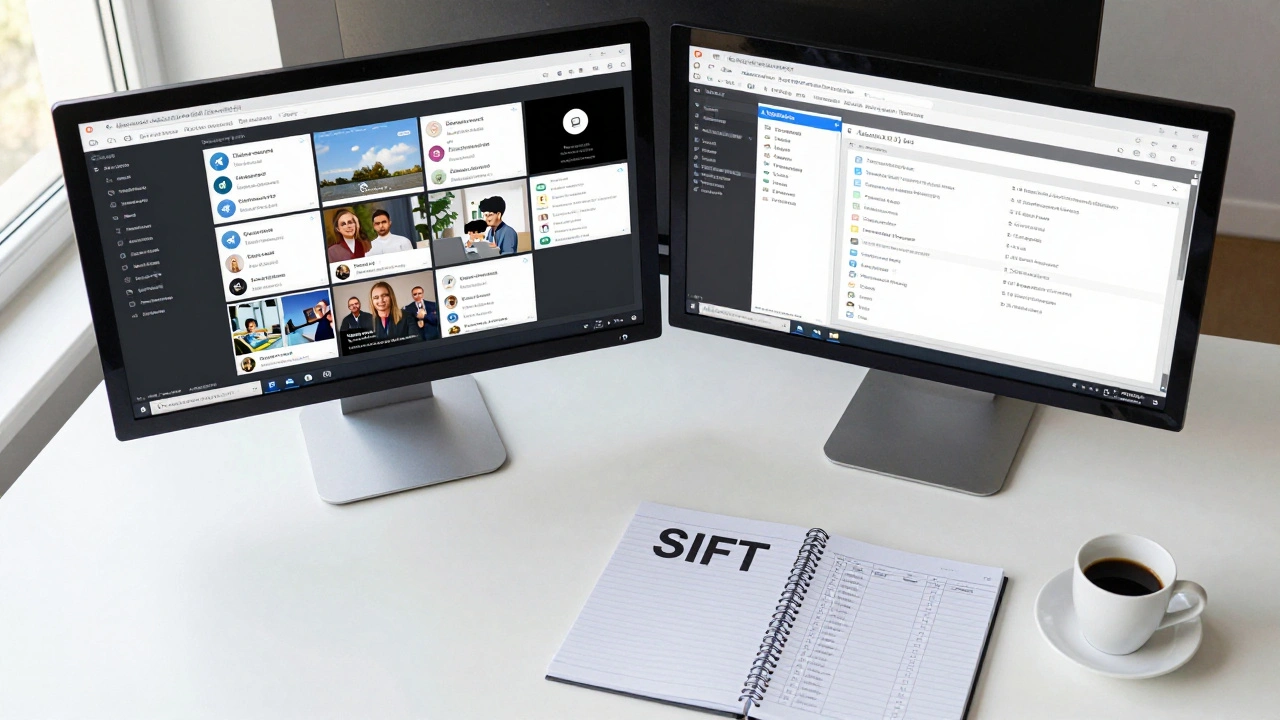
Before you touch a single tool, you need a way to think about information. Most people just look at a post and ask, "Does this look real?" That's a mistake. Instead, use the SIFT method, which is a four-step process designed for rapid digital verification. It stands for Stop, Investigate the source, Find better coverage, and Trace claims back to the original context.
Stop means resisting the urge to share immediately. If a post triggers a strong emotional response-like anger or shock-that's your signal to pause. Next, use lateral reading. Instead of staying on the Telegram channel to see if it looks "professional," open five new tabs and search for what other people are saying about that specific channel. If the only people praising the source are other anonymous Telegram accounts, you've got a red flag.
You also need to know what you're fighting. There is a big difference between misinformation (someone sharing a mistake in good faith) and disinformation (a deliberate attempt to deceive). If you identify a pattern of disinformation, the goal shifts from correcting a single fact to exposing the narrative intent behind the lie.
Setting Up Your Monitoring Station
Monitoring Telegram is a challenge because the platform is fragmented. You can't just follow a single feed. To do this effectively, you need to move beyond passive consumption. Start by building a list of "seed channels"-known credible sources and known disinformation hubs. By watching both, you can see how a false narrative travels from a fringe group to a mainstream audience.
For those who can handle a bit of tech, there are AI-driven tools available on GitHub designed specifically for disinformation monitoring. These tools use a modular architecture, meaning you can update specific parts of the system without breaking the whole thing. They are particularly useful for "prebunking," which is the act of warning your audience about a likely lie before it even arrives. If you see a specific narrative gaining steam in a foreign language channel, you can warn your followers before it's translated and blasted across your feed.
Automating the Heavy Lifting
As a solo journalist, your biggest enemy is redundancy. You shouldn't waste two hours debunking a video that a team in another country already proved was fake three days ago. This is where automation becomes a force multiplier.
The Google Fact Check Explorer is a searchable database of claims already verified by independent fact-checkers. By using the Google Cloud Console to get an API key, you can use software like Postman or Python to run keywords through this database automatically. Instead of manual searching, you can set up a script that flags any incoming Telegram message containing keywords that match a known debunked claim.
When you finally publish your own findings, don't just write a post. Use the Fact Check Markup Tool to generate ClaimReview code. This makes your work machine-readable, meaning other AI tools and search engines can find your debunk and cite it, which increases your reach and helps stop the spread of the original lie.
The Solo Journalist's Daily Workflow
To avoid burnout, you need a strict sequence of operations. Don't jump between tasks; follow these five stages in order:
- Monitoring: Spend 30 minutes scanning your seed channels and AI alerts. Look for spikes in specific keywords.
- Selection: Pick 2-3 narratives that have the most potential to mislead your specific audience. Ignore the noise; you can't fix everything.
- Coordination: Check the Fact Check Explorer and collaborative networks like Eurovision News Spotlight to see if the work is already done.
- Verification: Use the SIFT method, check metadata on images, and find the original source of the claim.
- Dissemination: Post the debunk with clear evidence and the ClaimReview markup for search engines.
If you're dealing with a massive amount of data-say, a leak of 5,000 messages-don't read them one by one. Use a Large Language Model (LLM) to cluster the data. Ask the AI to identify the top five recurring themes or the most frequent sources of the claims. This allows you to attack the root of the disinformation campaign rather than playing "whack-a-mole" with individual posts.

Avoiding the Solo Trap
The biggest risk for the solo journalist is the lack of a second pair of eyes. Without an editor, you are prone to confirmation bias-you might accidentally believe something just because it fits the story you're trying to tell. To counter this, create a "devil's advocate" step in your process. Force yourself to find one piece of evidence that proves your conclusion wrong before you hit publish.
Also, be mindful of the emotional toll. Monitoring disinformation hubs can be draining. Set boundaries on when you are "on the clock" for monitoring, or you'll find yourself checking Telegram at 3 AM, which is when most mistakes happen. Reliability is more valuable than being first by ten minutes.
What is the fastest way to verify a viral image on Telegram?
Start with a reverse image search using Google Lens or Yandex. If the image appears in a context from three years ago or from a different country, it's likely being used out of context. Then, check the metadata using an EXIF viewer to see if the original upload date matches the claim being made.
How do I find the original source of a forwarded message?
Telegram's forwarding chain often hides the original sender. Try copying a unique string of text from the message and searching for it in quotes within the Telegram global search or a web search. Often, the original post will appear in a smaller, more niche channel before it was blasted to larger ones.
Is it possible to automate fact-checking without knowing how to code?
Yes. While Python is powerful, you can use tools like Postman to interact with the Google Fact Check Explorer API through a visual interface. Additionally, using the Fact Check Markup Tool allows you to create professional, machine-readable debunks without writing a single line of HTML.
What is the difference between prebunking and debunking?
Debunking happens after a lie has spread; you provide evidence to prove it's false. Prebunking is proactive; you warn your audience about the *techniques* being used (like emotional manipulation or fake experts) so they are psychologically inoculated against the lie before they even see it.
How can I avoid burnout while monitoring disinformation?
Strictly separate your monitoring hours from your personal time. Use automated alerts for high-priority keywords so you don't have to scroll through toxic channels constantly. Finally, join a collaborative network of journalists to share the load and get peer support.
Next Steps for Your Workflow
If you're just starting, don't try to implement all of this at once. Start by applying the SIFT method to every post you share for one week. Once that becomes a habit, set up your Google Fact Check Explorer account to stop redundant work. Finally, look into the GitHub repositories for Telegram-specific AI tools to scale your monitoring. The goal is to move from reactive sharing to a systematic, evidence-based operation.